FMC Corp Acquires New Herbicide Rights

Cindy Zimmerman

fmc-logoFMC Corporation has acquired all global rights to a new and proprietary herbicide from Kumiai Chemical Industry Co., Ltd., and Ihara Chemical Industry Co., Ltd.

The new herbicide is highly effective in controlling broadleaf weeds and will be initially developed for use in corn, cereals, soybeans and sugarcane in key countries around the world.

“We are very pleased about the prospects of this new molecule given its potential across many crops, application flexibility and co-mixture opportunities,” said Mark Douglas, president, FMC Agricultural Solutions. “This acquisition continues our strategic partnership with Kumiai and Ihara, two premier research companies that have developed a rich chemistry pipeline for new crop protection products that are critical for increased food production.

“FMC’s global organization will develop the full potential of this new chemistry, part of a robust pipeline of six new active ingredients that includes other herbicides, insecticides and fungicides,” said Douglas. “This core pipeline of new active ingredients is complemented by our development of biological crop protection products, seed treatment technologies and new formulations with strong sustainability profiles.”

Kumiai and Ihara discovered the chemistry in their research laboratories and partnered with FMC during the last two years to evaluate and develop the commercial potential for this new active ingredient. FMC owns all intellectual property rights to the new molecule. Terms of the agreement were not disclosed.
FMC, Herbicide

Crowdsourcing Comes to Agriculture

Jamie Johansen

harvest fundersWe are all familiar with crowdfunding campaigns, however in the past they have mainly been found in the techie world. That is no longer the case. Now projects related to livestock, irrigation system or anything on the farm might be made possible thanks to newly launched Harvest Funders.

Crowdsourcing.org said the platform got its start when founder Jesse Lasater heard that a friend of his couldn’t get a loan to put in a new sprinkler system for his farm. Around the same time, one of Lasater’s cousins wrapped up a fairly lengthy but ultimately unsuccessful stay on The Voice, a singing competition. Looking to parlay that modest success into a career, the cousin took to Kickstarter to raise cash without giving up creative control to a record label.

Initially, the plan was only to help people in his area, near Bayfield, Colorado. But he then realized that the site can help farmers nationwide. After building the site from scratch with help from a developer team, Harvest Funders was ready for launch on March 25, the National Agriculture Day.

Lasater said he surveyed farmers across the nation and found that 40 percent of individuals surveyed had been denied for an agricultural loan. Part of that is the fact that the industry is relatively risky — a farm can have a great year and follow it up with a terrible one, something that scares off potential investors or lenders. Reward-based crowdfunding can help alleviate that need for cash.

Harvest Funders allows both fixed and flexible funding campaigns, and has a fairly standard fee structure. The projects that meet their goal give up 5%; those that fall short but go the flexible funding route give up 8% (fixed funding campaigns that don’t meet the goal don’t keep any of the money and thus pay no fee). There’s also a PayPal transaction fee.

Ag Groups, Farming

Novus Shares Enzyme Research

Jamie Johansen

ippe-15-85-editedDuring the 2015 International Production & Processing Expo (IPPE), Dr. Jeffery Escobar, who heads up the physiology research at Novus International, headlined the Novus Forum on the protease enzyme.

“Protease is an enzyme that creates proteins. It will take protein into either peptides or amino acids and is ultimately what the animals are going to use for growth and to deposit muscle.” Jeffery says the use of protease is complex, “but the simple way to look at it is there are different approaches we can take. One option is to manage the variability and quality of the ingredients and the amount of digestible amino acids that the animals can obtain and another option is to use protease to enhance the gut environment of the animals.”

Learn more as Jeffery shares some problems producers might see in their animals that protease can help solve in my complete interview: Interview with Dr. Jeffery Escobar, Novus International

Photos from the event can be found here:
2015 International Production and Processing Expo Photos

Coverage of the International Production and Processing Expo is sponsored by
Coverage of the International Production and Processing Expo is sponsored by NOVUS
Agribusiness, Animal Health, Audio, IPPE, Novus International, Nutrition

Which Tractor is Your All Time Favorite?

Jamie Johansen

New Holland ZimmPollOur latest ZimmPoll asked the question, “What’s your favorite Super Bowl party food?”

The XLIX Super Bowl is a wrap and so is our most recent ZimmPoll. Chips and dip topped the charts, but wings were a close second. I couldn’t agree more with those who responded to our poll. I love chips and dip of any kind. I have always preferred salty and savory over sweets. Your favorite team may not have won, but let’s hope you walked away with a satisfied, full belly.

Here are the poll results:

  • Chili – 17%
  • Wings – 24%
  • Chips & Dip – 27%
  • Sliders – 3%
  • Anything with bacon – 18%
  • Potato Skins – 8%
  • Hot Dogs – 3%

Our new ZimmPoll is now live and asks the question, Farm & Ranch Magazine compiled a list of the Top 10 Tractors of All Time. Which is your favorite?

Recently, the Farm & Ranch Living magazine asked their readers to share their favorite tractor of all time. Their compiled list inspired our very own, Leah Guffey, to chat with them about their readers favorite tractors in a recent Hick Chick Chat. Using their list of tractors, we want to know which is your all time favorite.

ZimmPoll

USDA Offers Beginning Farmers and Ranchers Grants

John Davis

usda-logoThe U.S. Department of Agriculture is giving beginning farmers and ranchers a little help getting started. This news release says $18 million in grants to educate, mentor, and enhance the sustainability of the next generation of farmers are being made available through the the National Institute of Food and Agriculture (NIFA).

“As new farmers and ranchers get started, they are really looking to their community for support. The Beginning Farmer and Rancher Development Program empowers these farmers and ranchers to bring innovative ideas to the table when it comes to addressing food security, creating economic enterprises, and building communities,” said Deputy Secretary Krysta Harden. “As we celebrate the first anniversary of the 2014 Farm Bill, programs like these are evidence that an investment in beginning farmers and ranchers is an investment in our future”.

The BFRDP program, first established by the 2008 Farm Bill, aims to support those who have farmed or ranched less than 10 years with workshops, educational teams, training, and technical assistance throughout the United States. NIFA awards grants to organizations that implement programs to train beginning farmers and ranchers. Today’s announcement was funded by the 2014 Farm Bill, which continued authorization of this program.

The 2014 Farm Bill mandated at least five percent of BFRDP funding support veterans and socially disadvantaged farmers. Among today’s announcement, more than 15 percent of the funded projects have a substantial component that supports veterans and farming, while about 50 percent of the projects focus mainly on socially disadvantaged farmers and ranchers. A fact sheet with a complete list of awardees and project descriptions is available on the USDA website.

Applications for the 2015 grant cycle are due to USDA by March 13, 2015.

Agribusiness, USDA

Fertilizer Safety Alliance Announced

Chuck Zimmerman

Fertilizer Safety AllianceHere is the list of organizations involved with today’s alliance signing to advance fertilizer safety.

The Agricultural Retailers Association
The Fertilizer Institute
International Fire Fighters Association
National Volunteer Fire Council
Ammonia Safety and Training Institute
Fertilizer Safety and Health Partners Alliance
Occupational Safety and Health Administration
Environmental Protection Agency

In the photo is Chris Jahn, President, TFI; Dr. David Michaels, Assistant Secretary of Labor for Occupational Health and Safety, Department of Labor; Daren Coppock, President & CEO, ARA; and Mathy Stanislaus, Assistant Administrator, Office of Solid Waste and Emergency Response, EPA, as they sign the Fertilizer Safety and Health Partnership Alliance agreement Tuesday, Feb. 2, 2015 in Washington, D.C.

“Over the last several months, we’ve partnered with OSHA and EPA on the Ammonium Nitrate Chemical Advisory, and others to get safety messages out to our members,” said ARA President and CEO Daren Coppock. “But, we discovered that there was no official communication agreement between OSHA and ARA to ensure workplace safety.”

In early 2014, ARA began working with OSHA to set up an alliance program to improve communication between retailers and first responders regarding workplace hazards and the safe handling of fertilizers. Since then, EPA and trade organizations such as The Fertilizer Institute, the National Volunteer Fire Council and the Ammonia Safety and Training Institute joined the effort.

The alliance will develop several projects to strengthen fertilizer safety efforts:
– Present a joint commitment to worker safety and health to prevent workplace fatalities, injuries, and illnesses.
– Conduct best practices seminars on effective emergency response procedures for between volunteer fire fighters and industry partners.
– Create online compliance assistance tools and resources for retailers and first responders.
– Produce case studies focusing on injuries and fatalities in the agricultural retail industry that result from ammonia releases or Ammonium Nitrate fires.
– Update and promote Ammonium Nitrate Guidance and Government Alerts.

Ag Groups, ARA, Fertilizer, Safety

WOTUS Interpretive Rule Withdrawn

Cindy Zimmerman

epa-army-corpsThe Environmental Protection Agency and the U.S. Army Corps of Engineers have at least ditched part of the WOTUS rule.

The Interpretive Rule Regarding the Applicability of Clean Water Act Section related to the proposed Waters of the United States (WOTUS) was officially withdrawn by EPA and the Corps in a memo last Thursday, January 29. Congress requested asked for the withdraw of the interpretive rule in the “Cromnibus” funding legislation passed at the end of December.

The goal of the interpretive rule was to clarify normal farming activities exempt from the Clean Water Act but National Corn Growers Association president Chip Bowling says it actually made it less clear. “We hope that the withdrawal of the interpretive rule will allow us to get to the true matter at hand: how the Clean Water Act is administered,” said the Maryland farmer who brought EPA officials out to his farm last fall to discuss the proposed rule. “Farmers are committed to improving water quality and conservation practices. We look forward to working with Administrator McCarthy and the EPA as they finalize the WOTUS rule, to ensure it is clear and workable for farmers.”

National Milk Producers Federation is also pleased. “Our concern with the initial proposal from last year is that it could have altered the long-standing and productive relationship between farmers and the USDA’s Natural Resources Conservation Service, in a way that would have made it harder for farmers to implement water conservation measures,” said Jamie Jonker, NMPF’s Vice President for Sustainability & Scientific Affairs. “We’re pleased the EPA and Army have recognized that this regulation could have backfired, and that they’ve taken the necessary step to withdraw it.”

The interpretive rule was just part of the larger WOTUS proposal issued last year which is still under review by both EPA and the Army Corps of Engineers, as well as by Congress.

Corn, Dairy, EPA, NCGA, USDA, Water

Budget Proposes One Food Safety Agency Under HHS

Cindy Zimmerman

President Obama’s proposed budget released today would combine USDA’s Food Safety and Inspection Service with Food and Drug Administration (FDA) and other agencies’ efforts into a single agency under Health and Human Services (HHS).

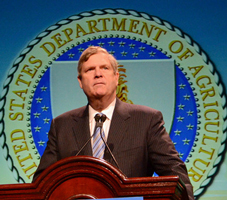
vilsack-usdaAgriculture Secretary Tom Vilsack spent much of a 45 minute press conference about the budget talking about and defending that proposal. “What the president is asking for is the ability to reorganize,” said Vilsack. “We want to make sure that we have as effective and efficient a system as possible.”

Answering questions from Washington journalists about whether food safety would be better handled by USDA, or if HHS was the best agency for the job, Vilsack said it wasn’t a “turf issue.”

“The point is, you’re going to have a better food safety system,” he said. “You all are asking questions in the old way of thinking. This is a new way of thinking … at the end of the day we’re focused on food safety.”

Pressed for details about the reorganization, Vilsack said Congress needs to act first to give the president the authority. “The bottom line is that we’ve got 15 different agencies involved in food safety,” said Vilsack. “The point of this is to get this on the table so people can have a conversation about it.”

Secretary Vilsack answers reporter questions on 2015 budget

Vilsack outlined USDA’s $156 billion share of the $4 trillion Obama budget proposal, which is three percent more than last year but includes a $1.6 billion cut in the crop insurance program.

Secretary Vilsack outlines 2015 administration budget for USDA
Audio, USDA

Deere Kicks Off Drive Green Events for 2015

Jamie Johansen

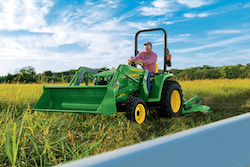
OverallIn what has become an annual tradition across the country, hundreds of local John Deere dealerships are again hosting Drive Green Demo Days events. This year’s Drive Green events will focus on the tractor buying experience, not only giving guests the opportunity to check out a wide variety of equipment and implements, but also the many different attachments that are available to help them get more from and do more with their equipment.

In addition to featuring a wide selection of John Deere utility tractors, lawn and garden equipment, Gators and other products, Drive Green event attendees may also test drive the latest equipment and compare them with competitive models. They’ll also receive special discounts on John Deere equipment and attachments and have a chance to win a John Deere 3032E Compact Utility Tractor with loader and rotary mower package for attending.

This is the seventh consecutive year that Drive Green events have been held by dealers from February through October. These events give residential and rural property owners, farmers and ranchers, commercial landscape and grounds care operators and interested consumers a chance to see firsthand the newest John Deere utility tractors, including the popular 1 Family Sub-Compact, 3E Series and 5E Series Tractors.

According to Steve Geick, tactical marketing manager with John Deere, the Drive Green events have grown to become a popular event for thousands of customers across the United States and Canada over the past several years.

“From the beginning, Drive Green was designed to give customers a complete, positive equipment buying experience where they could test drive the tractors for themselves, get all their questions answered and compare our products to similar competitive models,” Geick explains. “Many John Deere dealerships across the country have tied their Drive Green events in with local activities to make them even bigger events for their communities and more interesting and fun for customers.”

The theme for this year’s Drive Green program is “See it. Drive it. Own it.” In addition to learning more about the equipment and attachments, customers who attend receive a $500 coupon that can be applied toward the purchase of a new tractor, as well as special discounts on attachments.

John Deere dealer experts will be on hand at all events to demonstrate the equipment and answer questions. Admission is free and no pre-registration is required to attend.

Agribusiness, John Deere

New “The Food Journal and Food, Nutrition & Science”

Chuck Zimmerman

ZimmCast 464This week we’re going to learn about a new publication that has been created by a partnership between The Lempert Report and The Center for Food Integrity. I spoke with Phil Lempert, founder of Food Nutrition & Science and CEO of The Lempert Report, to learn what the target of this new publication is.

Supermarket GuruHe says The Food Journal and Food, Nutrition & Science, now at www.FoodNutritionScience.com, provides readers with a greater analysis of issues related to all aspects of the food industry. “We’re excited to work with leaders in the industry to create The Food Journal and Food, Nutrition & Science and to provide valuable information to industry insiders as well as consumers.”

Published twice monthly, the new publication includes in-depth interviews and fact-based reporting about important food system issues from farm to table. It also includes farmer interviews and videos and corporate sustainability features highlighting how readers’ favorite brands are lowering their environmental foot print.

Center for Food IntegrityThe first issue examines the decline in the bee population and how this affects the food chain. It also looks at potential causes and what organizations are doing to save the bees. Other features include a video tour of farmer Karen Bohnert’s 500-cow registered Jersey dairy farm and results from a recent study published in The American Journal of Clinical Nutrition that suggests fiber intake and fruit consumption are significantly associated with a lower risk of death among the elderly.

You can listen to this week’s program here: Food Journal and Food, Nutrition & Science

Subscribe to the ZimmCast podcast here.

The ZimmCast

sponsored by
The ZimmCast podcast is sponsored by GROWMARK
Locally owned, globally strong.
Audio, Food, Media, ZimmCast