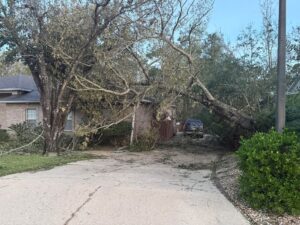
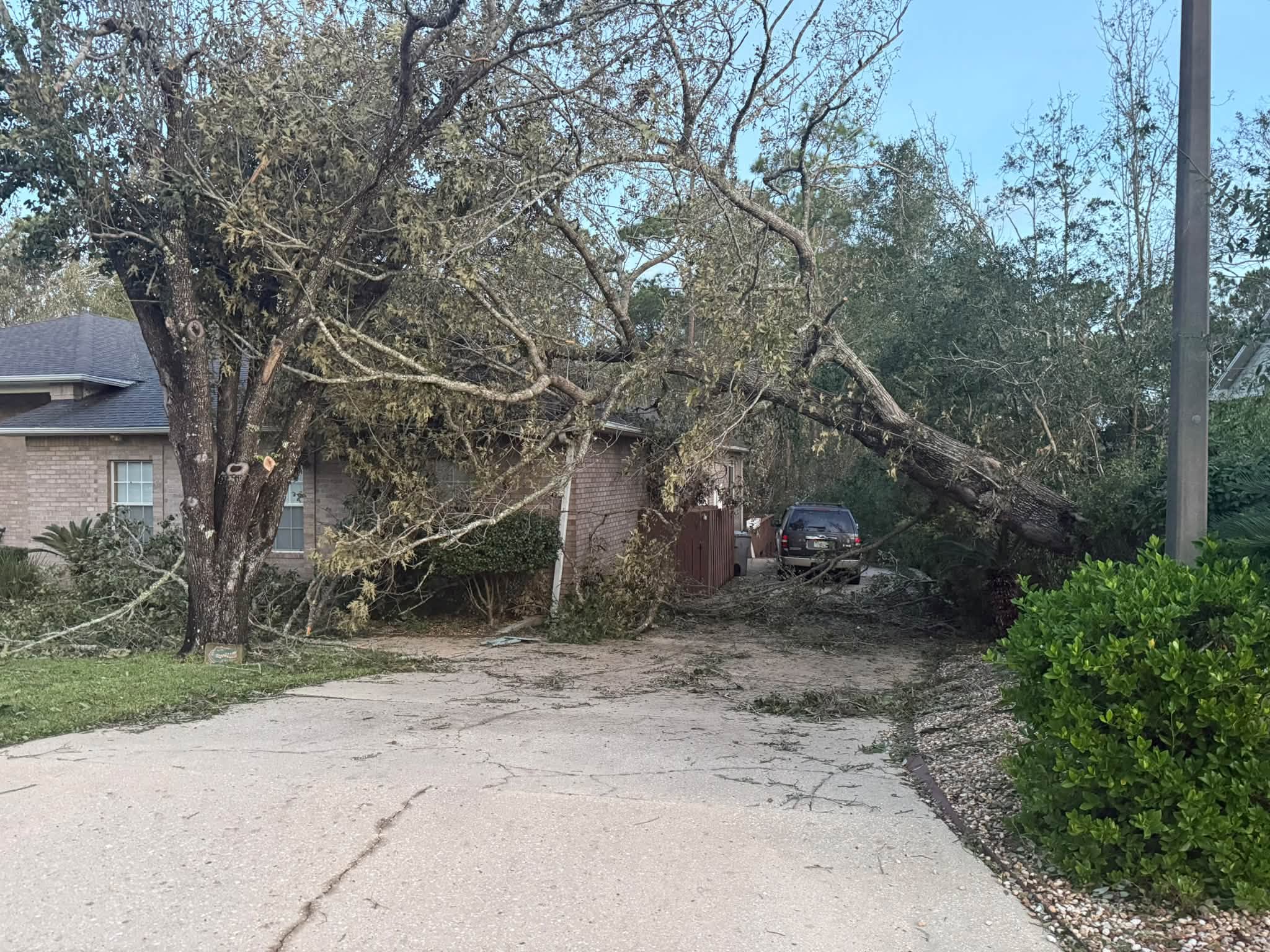
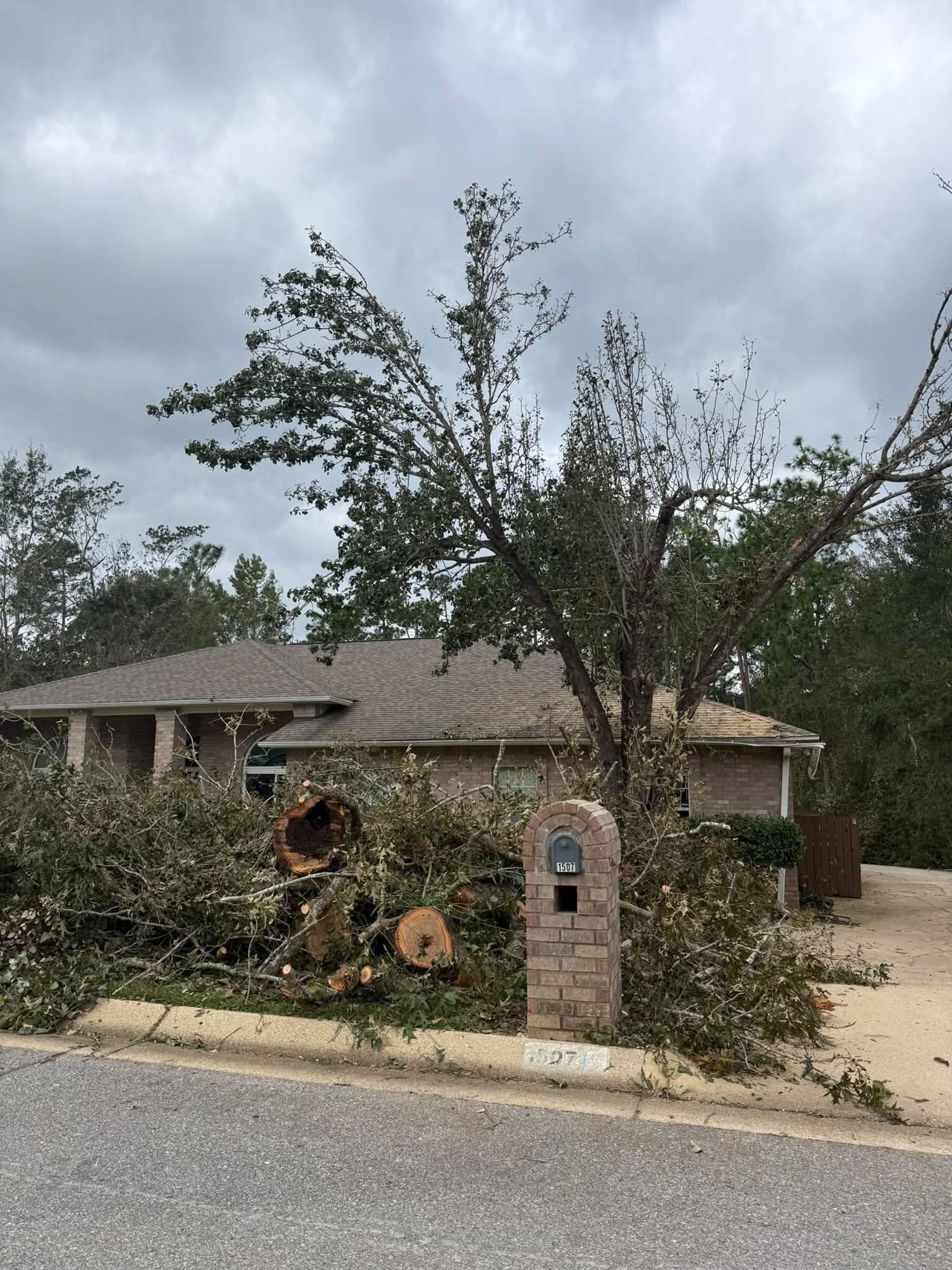
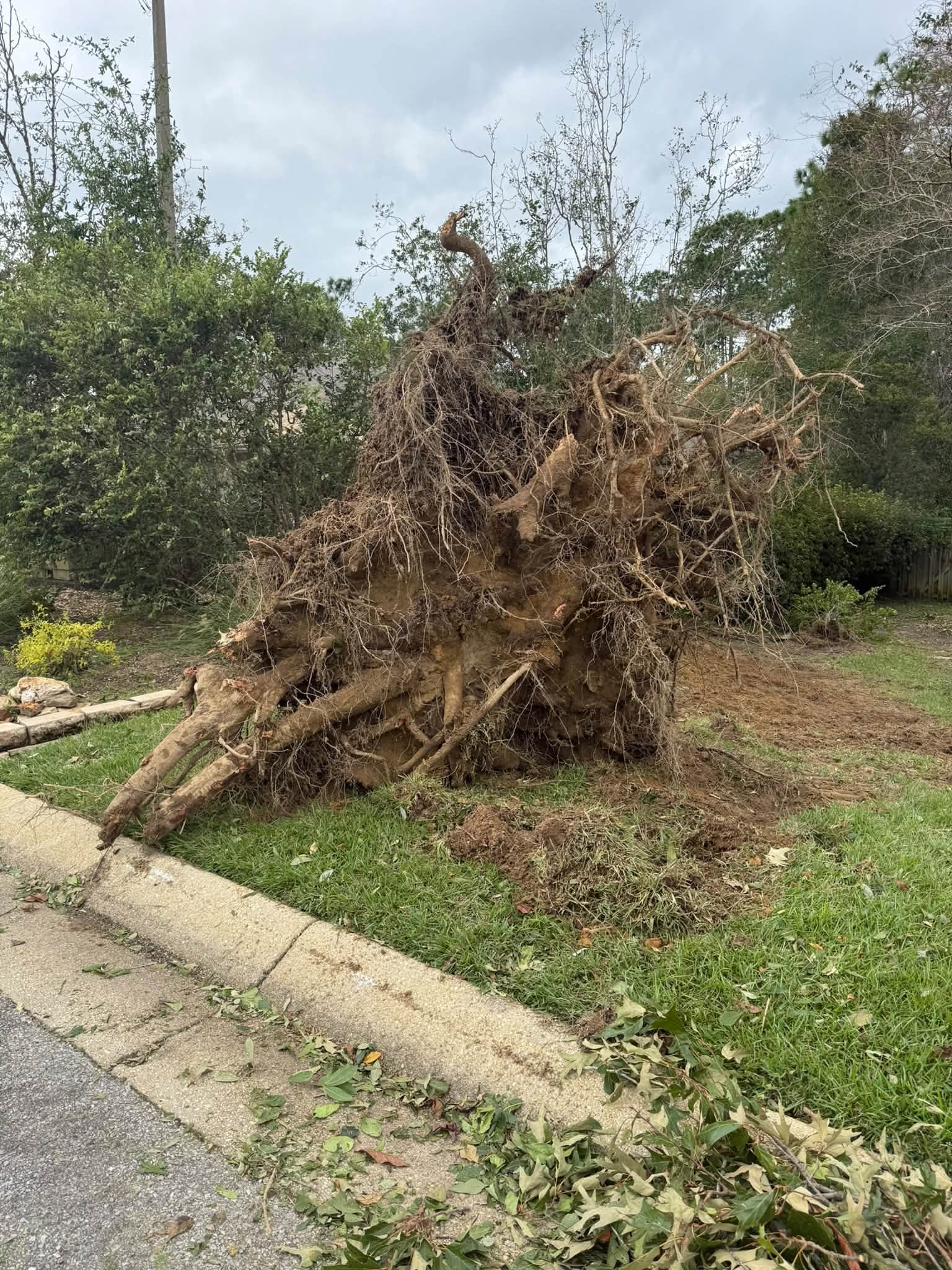
Hurricane Isaias damage at ZimmComm HQ in Pensacola
The hurricane with a name no one can pronounce took a pretty serious toll on the Florida panhandle, especially around Pensacola, where we are located.
We have lived in Florida most of our lives, except for 20 years in Missouri, and this was definitely the most intense hurricane we have ever experienced. Sally in 2020 did hit us pretty hard – and we did lose our bridge to the beach for eight months – but this storm was different. The winds were more like a tornado than a hurricane and the damage is widespread, mostly trees, signs, and fences. Really not as much roof and home damage as you might expect.
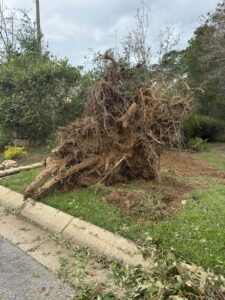
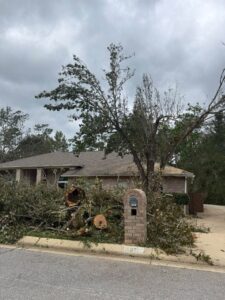 The tree on our roof punched a small hole right on the edge of the attic and took down the gutter. The tree was a huge oak and was completely uprooted, as were many trees in the area. The soft woods, like southern pines and crepe myrtles, fared better than the hard woods like the oaks and magnolias. Every single road in the entire county has downed trees piled on the sides.
We did lose power for three days, which was a day and a half less than with Sally, but there are many in our neighborhood still in the dark. Fortunately, we did have a generator and plenty of propane to cook with and heat water.
 Crop damage is being assessed in both Florida and Alabama. The Alabama Cooperative Extension System is working with local farm organizations and state and federal government agencies to document agricultural damages made to crops, livestock, buildings, and equipment. Most common losses are fences, timber, and cotton crops still in the field.
As to the name of this storm, Isaias, the Spanish form of the name Isaiah and pronounced (ee-sah-EE-ahs), we are with Governor DeSantis. “I don’t know how to pronounce this, because it’s not normal,” DeSantis said. “I’m calling it Isaiah. You guys can call it what you want. I know that’s not how you pronounce this, it’s something else but it’s weird and I’m just going to keep butchering it…so I’m calling it Isaiah.”
Mainly we are just calling it “the hurricane” – which is sad because we like to be on a first name basis with our storms here in Florida. Still, we are safe and sound and that is what matters. Thanks to all of you who were thinking of us and praying for us.

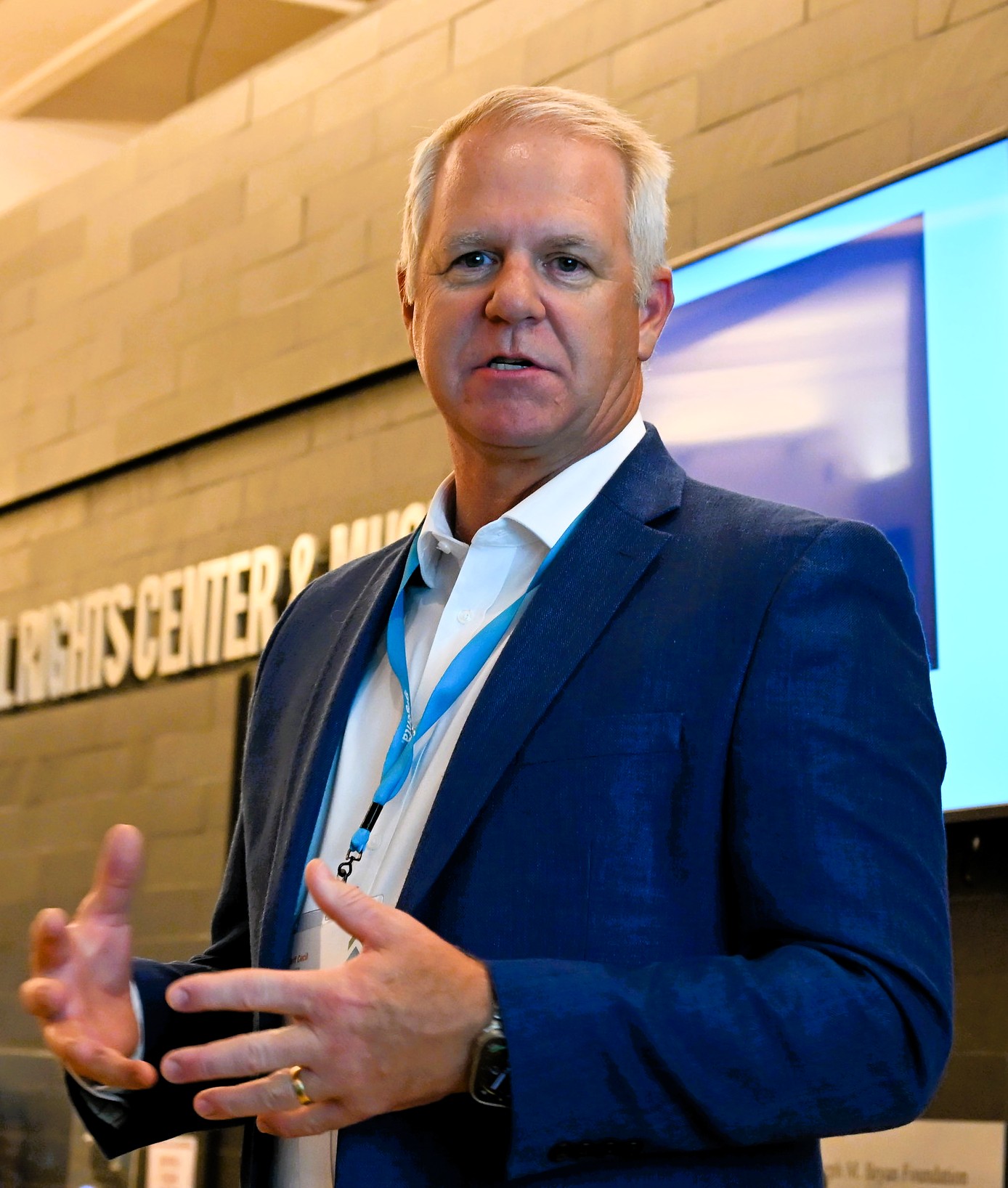
 After nearly four decades of pioneering work in water science, Dan Snow, director of the Water Sciences Laboratory at the University of Nebraska–Lincoln, part of DWFI, is preparing to step down and transition into retirement.



 Deltapine® celebrated World Cotton Day this month by announcing the recipients of its