

The Passing of Jim Stewart
 From the KFYO website: The legendary Jim Stewart, former KFYO Ag Director and beloved voice in Texas radio, passed away yesterday, June 4, 2026.
His family says that he was surrounded by loved ones and passed peacefully at home.
Stewart was a voice for West Texas agriculture and joined KFYO as Farm Director in 1981. This began a remarkable run of more than 20 years at KFYO.
He hosted his final KFYO show on February 21, 2003, and returned to Lubbock radio in 2005, serving as Ag Director for AM 580 KRFE for several years.
You can find the obituary here.
Visitation will be held at Resthaven Funeral Home & Cemetery, 5740 West 19th Street, Lubbock, TX 79407, US, on June 9, 2026, from 5:00 pm to 7:00 pm.
A Funeral Service will be held at Lone Star Cowboy Church, 1309 E FM 1585, Lubbock, TX 79423, US, on June 10, 2026, from 10:00 am to 11:00 am.
ZimmCast 759 – AgGateway Mid-Year and AI
 Hello and welcome to the ZimmCast. I’m Chuck Zimmerman.
In this episode I’m sharing my preview interview for the AgGateway Mid-Year Meeting with President/CEO, Brent Kemp. Additionally I’ve got a few comments regarding AI, or Artificial Intelligence, for those of you who haven’t heard of it. But really, AI, is moving fast and besides it is a topic for the AgGateway meeting.
I’m slow in producing a ZimmCast episode for several reasons. One is that I haven’t been traveling for work. But additionally, I’ve done a little research about how AI has affected things like agricultural marketing and communications.
Additionally, I did a post on AgWired titled “Safeguard the Human Person in Time of AI.” I hope you enjoy it and feel free to comment. I focused on the encyclical letter published by Pope Leo. It’s not just about AI but really is about people.
So, let’s get started with my interview with Brent.
Listen to the episode here:
ZimmCast 759 - AgGateway Mid-Year Mtg and AI (14:15)
That’s the ZimmCast for now. If you have some exciting news in the agrimarketing world, feel free to contact me for the next episode. Just email Chuck at chuck@zimmcomm.biz.
We hope you enjoyed it and thank you for listening.
Subscribe to the ZimmCast in:
USDA Ramps Up New World Screwworm Fight
 USDA confirmed the detection yesterday of a New World screwworm in a three-week old beef calf in Zavala County, Texas, about 60 miles from the Mexico border, and today officials laid out plans to keep it from spreading.
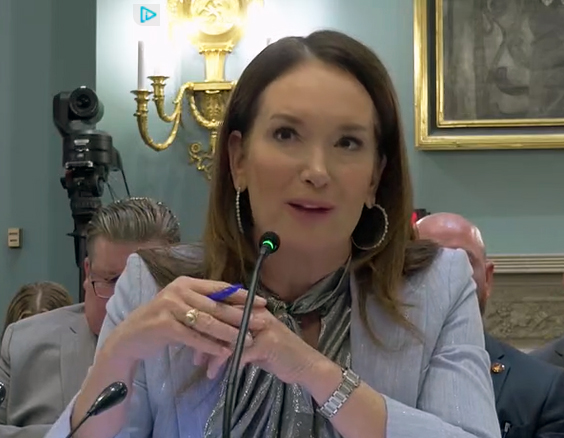
Secretary of Agriculture Brooke Rollins updated the House Agriculture Committee Thursday morning. “It is a vexing challenge that we thought we had beaten in the 1960s and 1970s. Unfortunately, that was wrong as the screwworm began to make its way back towards us in 2021. The way we defeated it before, you need about 400 million sterile flies per week to actually mate with the bad flies, sterilize them….Because over years, we had taken, we as a country, we as a hemisphere, had taken our eye off the ball thinking it was eradicated. We got down to only 100 million sterile flies in production a week in a facility in Panama.”
Rollins says the administration has fast-tracked a facility being built right now in Mission, Texas. “That facility will come online next year. When it does, it’ll produce about 300 million flies per week in addition to the 100 million from Panama. And then we outfitted an additional Mexican facility in Matapa for another 100 million,” said Rollins.
Sec. Rollins at House Ag hearing 3:07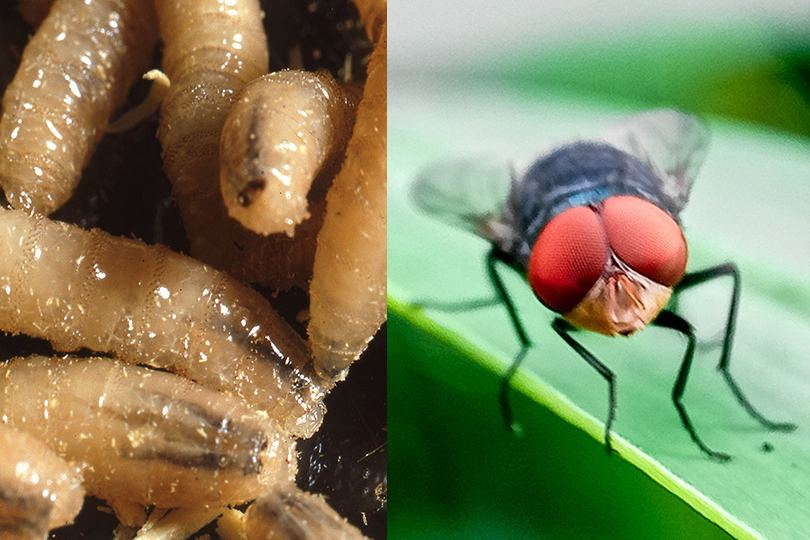 In the meantime, Rollins says they will be focused on trapping, surveillance, and treatment. She participated in a press call with USDA and state officials on immediate actions being taken.
“We have a unified incident command team with the Texas Animal Health Commission and have deployed APHIS as of yesterday immediately down to the area. We’ve established a 20 kilometer control area, a zone around the detection and implement quarantines, movement controls and surveillance in this area. We’ve expedited the targeted release of millions of sterile new world screw worm flies by immediately deploying 4 million as of yesterday, ground release chambers in the area in addition to the 4 million sterile flies per week already being released aerially in the area,” said Rollins.
She was joined Dudley Hoskins, Under Secretary for Marketing and Regulatory Programs; and APHIS Associate Administrator/NWS Directorate Rear Admiral Michael Schmoyer; as well as Dr. Bud Dinges, Texas Animal Health Commission Executive Director. Listen to their comments below.
USDA NWS press update 21:49BarnTools Launches Barn360 Biosecurity
 BarnTools today announced the launch of Barn360, a biosecurity platform that expands the BarnTools connected farm system into real-time biosecurity enforcement for swine and poultry operations.
The launch marks a significant expansion of BarnTools’ role in livestock production. Already trusted for real-time monitoring across critical farm systems, including feed, water, power, temperature, and environmental conditions, BarnTools now brings biosecurity into the same connected operational view.
With Barn360, producers can manage important biosecurity information in the same BarnTalk app they already use to monitor environmental conditions, bringing more of the farm into one connected system.
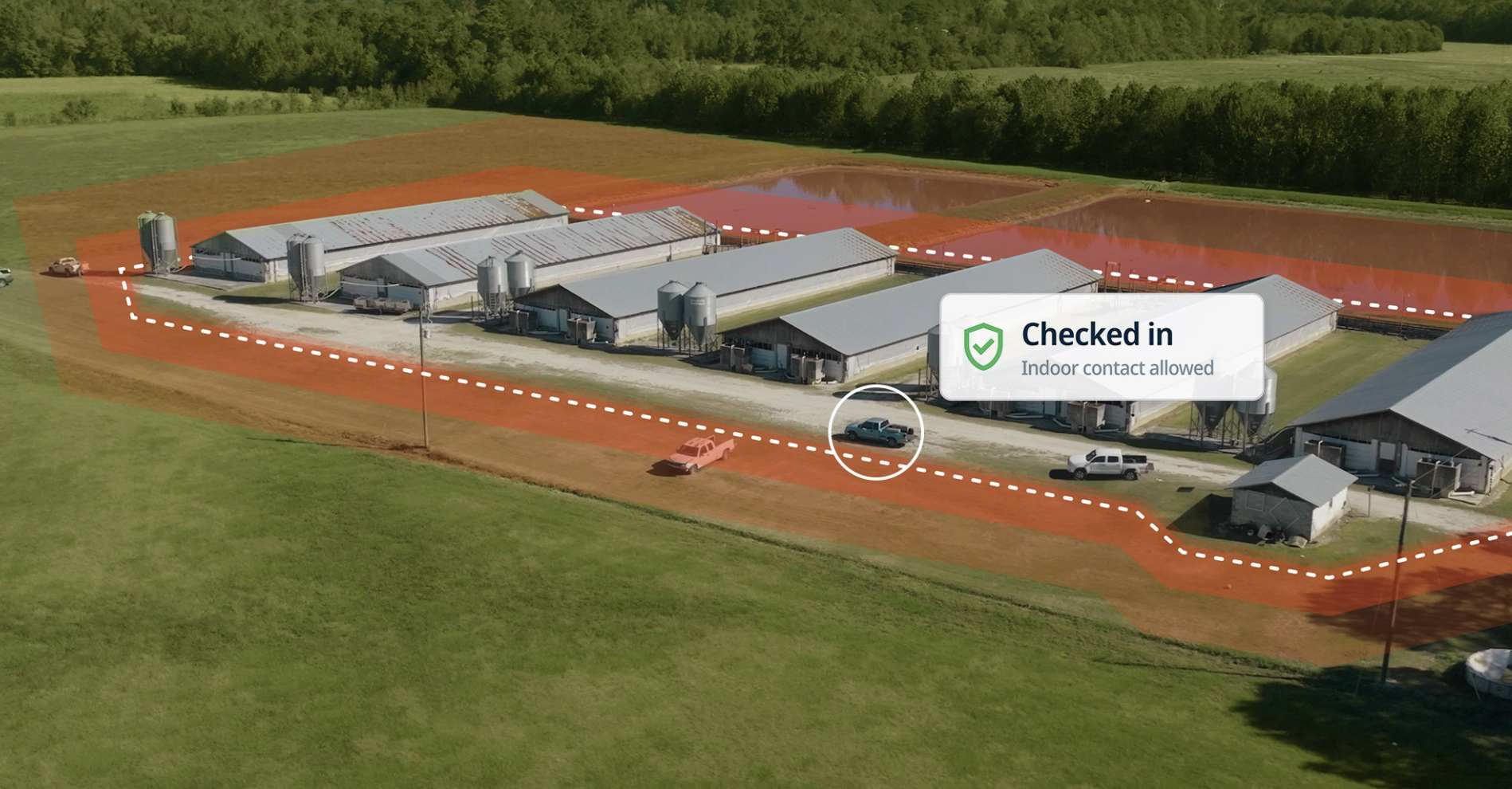 Unlike standalone biosecurity tools, Barn360 is built as part of the BarnTools platform. By connecting biosecurity with real-time monitoring across feed, water, power, and environmental systems, BarnTools gives producers a more complete view of farm operations in one place. This integrated approach helps livestock teams manage risk, respond faster, and improve accountability without adding another disconnected system to their workflow. Barn360 is included as part of BarnTools’ enterprise platform, giving producers access to biosecurity capabilities without additional per-animal or per-site costs.
Barn360 will be showcased at World Pork Expo this week in Des Moines, Booth V310. Visit https://barntools.com/barn360 to learn more.
Animal Ag News 6/3

USDA Launches Great American Cotton Plan
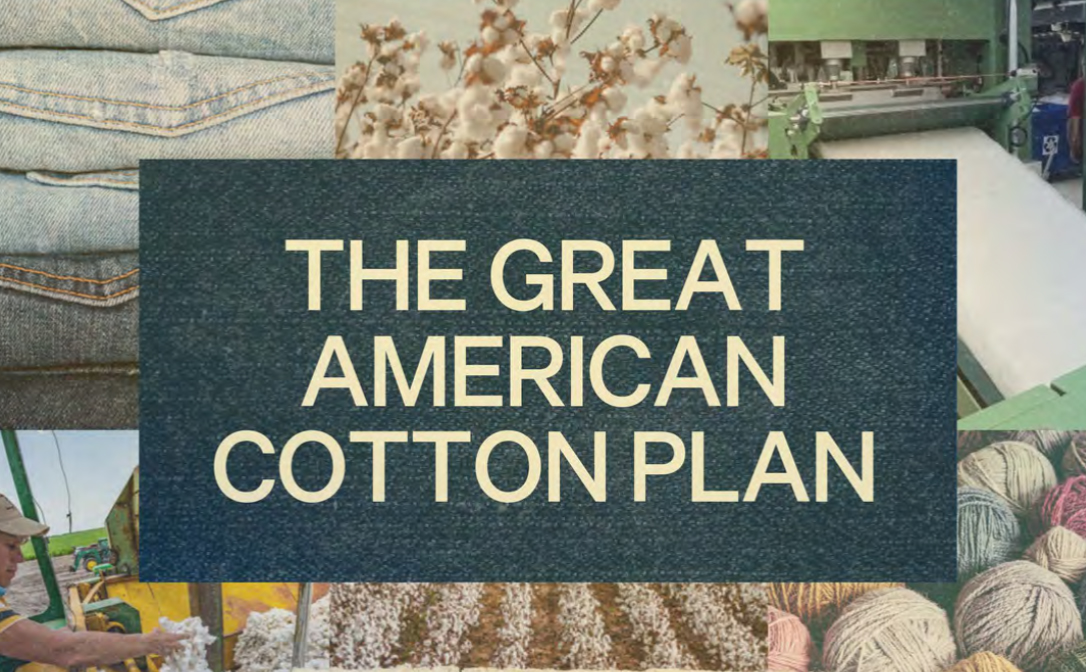 USDA unveiled the Great American Cotton Plan Thursday, an initiative to “strengthen the cotton farm economy, restore domestic textile manufacturing, expand cotton trade opportunities, and increase demand for products made with American-grown cotton.”
The announcement comes as cotton producers face a fifth consecutive year of negative returns driven by rising input costs, trade distortions, and increasing competition from synthetic materials. As part of the plan, USDA will elevate the “Plant Not Plastic” initiative to encourage consumers to purchase products made with healthy natural American cotton fibers rather than synthetic plastic-based alternatives.
USDA forecasters estimate that producers could lose approximately $2.6 billion across 9 million planted acres during the upcoming crop year. Since 1980, the number of U.S. cotton gins has declined from 2,254 to 446, while domestic textile production facilities have sharply contracted over the last two decades.
The National Cotton Council (NCC) commended USDA for initiating the Great American Cotton Plan and welcomes the support of America’s cotton farmers, strongly supporting the bipartisan Buying American Cotton Act (BACA) which would help increase domestic demand and production of U.S. cotton, encourage investment in U.S. textile mills, and create jobs here at home.
“Measures like BACA, along with the USDA’s Great American Cotton Plan and other recently implemented cotton initiatives, demonstrate key progress for America’s cotton industry,” said NCC Chairman Nathan Reed. “At a time when cotton producers are facing pressure from high input costs and market uncertainty, these steps are critical to the long-term success of our industry.”
Listen to Secretary Rollins’ announcement here:
Sec. Rollins announces cotton plan 3:42
Alltech ONE 2027 Getting Closer
 It’s just a year now for the Alltech ONE Conference 2027.
ONE is coming home.
The Alltech ONE Conference (ONE) returns to its hometown — Lexington, Kentucky — for an immersive exploration of the bold ideas shaping the future of agri-food.
Set for May 24-26, 2027 at the Central Bank Center in downtown Lexington, Kentucky, ONE 2027 will feature:
Inspiring keynote speakers
Dynamic tracks and workshops
Leading-edge insights from global leaders across agriculture, business, technology and sustainability
With the theme “Together, bright becomes brilliant,” this world-class event will spotlight the power of connection, collaboration and bold thinking to address agriculture’s most significant challenges and unlock its greatest opportunities.
Together, we will explore what’s next for our industry — and for our planet.
Whether you are returning to ONE or joining us for the first time, this world-class event promises to inspire, challenge and connect.
Don’t miss a moment. Sign up now for exclusive updates, speaker announcements, registration info and more.
Safeguard the Human Person in Time of AI
 Before you make a judgement of this document I recommend you read it. What is it? Just published, it is The Encyclical Letter Magnifica Humanitas ENCYCLICAL LETTER of His Holiness Pope Leo XIV On Safeguarding The Human Person In The Time of Artificial Intelligence.
I’ve talked with quite a few people about AI and all the agents that can come into play in just about every business of any kind. When it comes to agriculture it seems like just all the releases sent to me include the new AI built into their products. In fact, that’s basically the purpose of the release. Some have strange names and I don’t know how they work or if they are working well. When it comes to journalism, including ag journalism, we know that it can make writing a story simple and fast. But what is this doing to people who hold jobs and are now no longer necessary?
The first sentence of the introduction of the Encyclical is “Humanity, created by God in all its grandeur, is today facing a pivotal choice: either to construct a new Tower of Babel or to build the city in which God and humanity dwell together.”
What do you think about AI and humanity of today? You might already understand this or perhaps you haven’t spent any time with it. However, I think it’s worth thinking about what all this means, either for work or for family.
Here are some excerpts in the encyclical I picked out.
- Therefore, the primary choice is not between a “yes” or “no” to technology, but rather between constructing Babel or rebuilding Jerusalem; between a power that claims to dominate the heavens and a people who work together in the presence of God to rebuild the walls of fraternal coexistence.
- I limit myself to recalling a few essential elements for a moral and social discernment that safeguards the primacy of the human person, in order to ensure that it will always be human intelligence, with its conscience and freedom, that guides technical innovations and responsibly determines their use and limits.
- The speed and simplicity with which information, complex analyses, media content and practical assistance can be accessed undoubtedly makes life easier. Yet they can also encourage excessive reliance and the search for ready-made answers, and weaken personal creativity and judgment.
- Here, the danger is not so much that a person may believe they are communicating with another person, but rather that they may gradually lose the very desire to form genuine human connections.
- Indeed, entrusting an algorithm in practice with the power to select who is worthy or not, without anyone bearing responsibility for that judgment, is to hand over the task of redefining the boundaries of human possibilities.
- Disarming AI means freeing it from the mentality of “armed” competition, which today is not limited simply to the military context, but is also an economic and cognitive phenomenon. This entails a race for ever more powerful algorithms and larger datasets, driven by the desire to secure geopolitical or commercial dominance. To disarm means discrediting the assumption that technical power automatically confers the right to govern. To disarm does not mean rejecting technology, but preventing it from dominating humanity.
- Disinformation did not begin with AI, yet today it finds a powerful amplifier in AI. The ability to manipulate content, images and videos exposes people to biased or misleading perspectives.
- Online phenomena such as grooming, blackmail and the sexual exploitation of minors are not uncommon, and are made more insidious by the use of fake profiles, algorithms that facilitate dangerous contact, and AI tools capable of manipulating images and videos. Having a personal mobile device at too early an age and using it without adult supervision can exacerbate young people’s vulnerabilities, foster addiction and expose them to isolation, bullying and cyberbullying, as well as to pressures to share intimate images or sensitive information.
Industry Ag News 5/26