
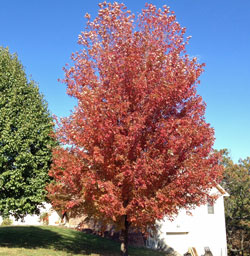
 I think the fall colors are fading here in mid Missouri. We have had some real contrasts this year and it seemed to me like the trees turned color in a couple of waves instead of all at once. Here’s our maple tree when it was in full color.
So, have you wondered about the science behind leaf changing? Then read about it on the USDA Blog.
Daylength (or more correctly, the length of nights) is the real cause of trees’ transition to autumn colors. (Read more here about how longer nights translate into the vibrant color of autumn.)
So what role does frost play in the changing color of autumn leaves? Frost actually ruins vivid fall colors by causing cells in the leaf to rupture and die.
The appearance of fall colors shifts each year due to weather. Heavy cloud cover limits ultraviolet light, so the chlorophyll lasts longer, and leaves stay green longer. High night temperatures cause cells to burn accumulated sugars, so less red and purple pigments are formed and yellow and orange are the predominant colors. Drought stress or a windy interlude cause leaves to drop prematurely.
The ideal conditions are warm, sunny days and cool nights with little wind or drought stress.



 On the same day the world was officially proclaimed home of seven billion souls, the United Nations General Assembly officially declared 2012 as the International Year of Cooperatives with the theme of “Cooperative Enterprises Build a Better World”.


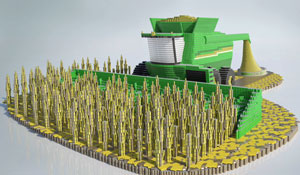 We’re talking about 300,000 cans of food here to replicate a full-sized S-Series combine in a field. It would be a world record. Kind of like what America’s farmers do every year – set new records in feeding the world.