Plant Health Benefits of F500 Fungicides

Cindy Zimmerman

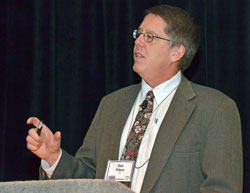
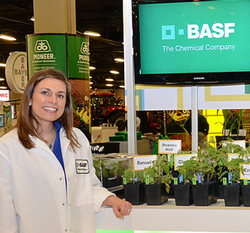
During the National Association of Farm Broadcasting Trade Talk, BASF was pleased to announce new research showcasing the Plant Health benefits of fungicides containing F500® fungicide, like Headline, and how they can help growers increase yield and profit potential. The research, which was conducted by BASF in the field and in greenhouse settings, shows that BASF fungicides increase net photosynthesis in corn and soybean plants, which increases energy production, leading to increased yield potential.

“Over the last two years we’ve really been digging into the growth efficiency portion of the plant health message,” said Jennifer Holland, Ph.D., Technical Market Specialist, BASF. “Specifically we found that plant health fungicides can increase the photosynthesis of the plant and that’s important to growers because photosynthesis drives energy in the plant and that ultimately allows the plant to put more energy towards grain fill at the end of the season, increasing profitability.”

This year, BASF conducted a greenhouse study on the Plant Health benefits of fungicides in varying water conditions. In the study, conducted under water-stressed conditions, plants treated with a fungicide containing F500 were nearly 30 percent more efficient at net photosynthesis than the untreated plants. The fungicide-treated plants were able to handle stress better than untreated plants, which can lead to higher yield potential.

Jennifer says they also found that Headline also helps increase roots, which is tied to nutrient uptake, water uptake and standability.

Listen to my interview with Jennifer here: Dr. Jennifer Holland with BASF

2012 NAFB Convention Photo Album

Audio, BASF, Crop Protection, NAFB

Genuity Roundup Ready 2 Yield Soybeans Benefit Farmers

Cindy Zimmerman

A soybean systems trial program conducted by Monsanto in the Delta this season compared Genuity® Roundup Ready 2 Yield® soybeans with Monsanto’s Roundup Ready PLUS™ Weed Management Solutions to the LibertyLink soybean/herbicide system with favorable results.

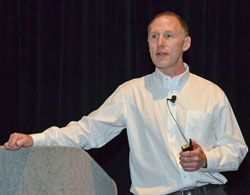
Tony White, Monsanto Soybean Traits Product Development Manager, announced that the Genuity Roundup Ready 2 Yield soybean system had an average yield advantage of 6 bushels per acre compared with the LibertyLink system in the trial program. Results were based on 20 farmer side-by-side plot locations in Arkansas, Tennessee, Mississippi, Kentucky and the Missouri Bootheel during 2012.

“This soybean systems comparison proves that farmers don’t have to sacrifice yield to achieve effective weed control,” White said. “By planting high-yielding Genuity Roundup Ready 2 Yield soybean varieties and following Roundup Ready PLUS weed management recommendations, farmers can successfully control tough weeds, including pigweed, and maximize their yield opportunity.”

White noted at current soybean prices of about $15 per bushel, that 6-bushel-per-acre yield advantage equals additional revenue of $90 per acre for the Genuity Roundup Ready 2 Yield system versus the LibertyLink system.

White said for 2013, the side-by-side trial program will be expanded to the central Midwest, where many farmers are facing challenges with waterhemp and marestail. Trial plots are planned in eastern Kansas, central Missouri, southern Illinois, southern Indiana and Ohio.

Soybean

Optimum AQUAmax For Water-Limited Environments

Jamie Johansen

Drought hasn’t yet been moved to the back burner as companies like Dupont Pioneer make it a priority to engineer products to help farmers in times of uncontrollable circumstances. National Association of Farm Broadcasting’s Trade Talk gave agri-businesses a voice to share their latest products.

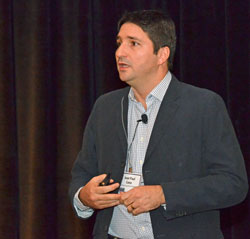
I sat down with Janelle Buxton, Marketing Communication Manager in Corn for Dupont Pioneer. She was excited to share a fairly new product farmers can take advantage of, Optimum AQUAmax. This corn hybrid is for water-limited environments, but also increases yield in normal conditions.

“One of the primary products that I work on is a drought tolerant corn hybrid. It’s one of Pioneers newest elite class of hybrids. Essentially what these Optimum AQUAmax products do is help deliver yield advantage in water-limited environments, much like the year we have had would be considered water limited. It then offers top-end yield potential in more normal growing conditions. Optimum AQUAmax products were launched in January 2011 in the western US in those areas that are chronically dry and then expanded to about 2 million acres in 2012.”

“In yield performance we saw that in over 11,200 on-farm grower competitive trials, with similar traited products, we saw a yield advantage of Optimum AQUAmax of about 8.9% in those water-limited environments. In more favorable growing conditions we saw 1.9% yield advantage.”

Listen to my complete interview with Janelle here: Janelle Buxton - Dupont Pioneer

2012 NAFB Convention Photo Album

Agribusiness, Audio, BASF, Corn, NAFB, Pioneer

I Want a Deep Fried Turkey

Chuck Zimmerman

Thought I’d share this entertaining safety message for all of you who will be frying turkeys this week. Watch and see how long it takes for the song to get out of your head.

Families have a new person to be thankful for this Thanksgiving season…William Shatner. In 2011, State Farm® teamed up with Shatner to produce a short video called “Eat, Fry, Love: A Cautionary Tale” that dramatized an actual accident where the celebrity was burned in a turkey fryer mishap on Thanksgiving.

As a result of the video and safety campaign last year, State Farm grease and cooking related fire claims occurring on Thanksgiving Day were carved in half, resulting in the lowest number of Thanksgiving Day cooking fire claims in a decade. It seems that William Shatner really DID help save the world from exploding turkeys.

“I love to fry turkey and have been doing it for years but I am not immune to frying accidents,” says Shatner. “People need to remember that hot oil and turkey can be a dangerous combination.”

To get the safety message out in 2012, State Farm worked with John Boswell, aka melodysheep on YouTube, to auto-tune the Shatner turkey fryer video. Called ” Eat, Fry, Love: A Cautionary Remix ,” Boswell injected the perfect blend of creativity and repetition to create a Thanksgiving safety anthem sure to have families clamoring for a moister, tastier turkey.

Food, Video

Zimfo Bytes

Melissa Sandfort

    Zimfo Bytes

  • Sun-Maid celebrates its 100th anniversary by giving away over a thousand customer prizes this holiday season.
  • The Agricultural Business Council of Kansas City is seeking nominees for 2013 Agricultural Leadership and Excellence Award. Nominations should be submitted by Dec. 10, 2012 to Erica Venancio at erica.venancio@agbizkc.com.
  • Four Case IH products have been selected to receive the prestigious 2013 AE50 awards.
  • Higher commodity prices and solid volume growth in most GROWMARK business units produced record sales for GROWMARK, as officials reported audited financial results for the fiscal year which ended Aug. 31, 2012.
Zimfo Bytes

USDA End-of-Year Surveys on the Way

John Davis

In a year in agriculture with this many ups and downs, good information becomes an even bigger commodity. That’s why the USDA is sending out its end-of-year surveys soon. Cindy caught up with Bob Bass, the Director of National Operations for the USDA’s National Agricultural Statistics Service (NASS) during Trade Talk at the National Association of Farm Broadcasting convention, and he said the country’s farms and ranches have seen a wide range of conditions this year.

“It’s very important that we get a handle on the final production, and that includes the actual harvested acres and final yield,” as well at what stocks are in storage out there, Bass said. About 73,000 scientifically selected farms and ranches will be surveyed, representing the 2.2 million operations nationwide. “That’s why it is so important that we get an accurate and timely response from everyone of those selected samples.”

Bass added that NASS will be changing when they release some of their reports, with the monthly crop reports moving from 8:30 a.m. EST to Noon EST after the first of the year. “That’s at the request of data users across the country and the world… it’s a global economy now.” Livestock reports will remain at 3 p.m. EST.

Listen to Cindy’s interview with Bob here: Interview with Bob Bass, NASS

2012 NAFB Convention Photo Album

Audio, NAFB, USDA

The Advantage of AgVantage FS

Cindy Zimmerman

The first stop on the GROWMARK media tour through Iowa last week was in the little town of Chapin, just south of Mason City, where the main work horse grain facility of AgVantage FS is located.

The facility handles 10-12 million bushels a year – about 40% of the co-op’s total. “We’re an operating division of GROWMARK,” explained Grain Marketing & Operations Manager Kevin Gray, pictured below left with regional grain manager Barney Bartels. “We cover 32 counties, 27 in Iowa and five in southeast Minnesota, stretching from the Mississippi River to Alexander on the west side.”

Kevin says the co-op covers a large geography with 14 grain elevator locations. “Customer service is the number one priority for us,” Kevin said. “We want to keep our customers profitable, we want to make sure they’re competitive, we try to reduce their risk and we want to make doing business with AgVantage grain division as comfortable and easy as possible.”

Listen to my interview with Kevin here: Interview with Kevin Gray

Despite the drought this year, the facility still managed to bring in quite a bit of grain, since the impact of the drought on the region can be summed up in one word – variable. “We’ve seen a range from 30 bushels per acre (corn) to basically 130 bushels per acre,” said Barney. “You go to the south, we’ve seen a range of 100-200 bushels an acre.”

Barney says the original bins at the Chapin facility were put up in 2003, with another 2.2 million bushels of space added in 2006. Grain from the AgVantage FS supplies a number of ethanol plants in the region and much of it is sent southwest for dairy markets.

Listen to my interview with Barney here: Interview with Barney Bartels

For more detail, listen to Kevin’s overview here: AgVantage FS Chapin Grain Facility

GROWMARK Iowa Media Tour Photos

Audio, Cooperatives, Ethanol, Grains, GROWMARK

Cost About Same to Gobble Up Thanksgiving Dinner

John Davis

It will cost you about the same to gobble up your Thanksgiving Day turkey dinner this year as it did last year.

“Our meal for 10 people that includes a 16-pound turkey, mashed potatoes, cranberries, relish tray, pumpkin pie… the whole nine yards… this year we think is going to cost us $49.48. And that’s only about 28 cents more than we were last year,” explained Bob Young, economist for the American Farm Bureau Federation during an interview at Trade Talk at the National Association of Farm Broadcasting convention. That translates to less than a 1-percent price increase… not too bad when you consider how some commodity prices spiked due to the drought. In fact, Young pointed out that about the only thing that went up in the Thanksgiving basket was the price of the turkey, increasing just 4 cents a pound. “Given what feed prices did this year, that’s a pretty amazing thing.” Dairy products with the meal actually went down in cost, as farmers in that sector suffered the effects of the drought.

Young went on to point out that overall, the value of the U.S. crop this year increased from this summer’s estimates from about $63-65 billion to today’s $85 billion, because of the high prices when estimates pushed prices for the commodities up and then harvests turned out better than expected. He said while some sectors really took a hit from the drought, such as dairy and hogs, some areas that got good corn crops enjoyed quite a windfall from the higher prices.

Read more about AFBF’s Thanksgiving dinner estimates here.

Listen to Cindy’s interview with Bob where he also discusses the impact of the drought this year and concerns about an increase in the estate tax: Interview with Bob Young, AFBF economist

2012 NAFB Convention Photo Album

AFBF, Audio, Food, NAFB

NPPC Talks Trade Agreement With EU

Jamie Johansen

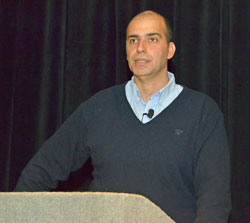
Trade and pork exports were among the topics addressed by the National Pork Producers Council during Trade Talk at National Association of Farm Broadcasting convention. Nick Giordano, Vice President and International Trade Counsel for NPPC, sat down with me to discuss NPPC’s role in protecting US pork producer’s interests both inside the US and abroad.

“National Pork Producers Council is often at the tip of the spear on trade issues because trade is so important to pork producers. We’ve been working closely with other agricultural groups for example, potential trade talks that might get started with European Union. We want to make sure as a threshold issue that pork and other food in ag products are included within the scope of the discussions.”

A coalition of U.S. food and agricultural organizations, led by the NPPC, sent a signed letter yesterday to the Office of the U.S. Trade Representative, stating it is important that any FTA with the EU be comprehensive and address impediments to trade in agricultural products.

“Carried out properly,” wrote the coalition to U.S. Trade Ambassador Ron Kirk, “a U.S.-EU FTA would generate economic growth and create many thousands of new jobs on both sides of the Atlantic.”

The EU’s past FTAs have excluded agricultural goods it produces, and its regulatory measures often conflict with World Trade Organization rules, including regulations on “genetically modified” crop approval and labels, which restrict U.S. corn, soy and refined corn product exports, and on production methods in poultry, beef and pork.

Listen to my complete interview with Nick here: Nick Giordano - NPPC

2012 NAFB Convention Photo Album

Audio, NAFB, NPPC, Pork, Swine, Trade

EPA Denies Ethanol Waiver Request

Cindy Zimmerman

The Environmental Protection Agency (EPA) has denied a petition by the governors of poultry producing states that would have waived the Renewable Fuel Standard (RFS) and its requirement for ethanol in the nation’s fuel supply.

In its decision to deny the request, EPA said Friday that the RFS itself is not causing economic harm and that suspending the standard would reduce corn prices by only 1%. “We recognize that this year’s drought has created hardship in some sectors of the economy, particularly for livestock producers,” said EPA’s Gina McCarthy in a statement. “But our extensive analysis makes clear that congressional requirements for a waiver have not been met and that waiving the RFS will have little, if any, impact.”

The ethanol industry is obviously pleased with the decision and so are corn farmers. “The National Corn Growers Association supports the Environmental Protection Agency’s decision to deny the Renewable Fuel Standard waiver request,” said NCGA President Pam Johnson “We believe Administrator Jackson appropriately recognized petitioners did not properly prove severe nationwide economic harm had occurred thereby creating no justification for a waiver of the RFS.”

“The RFS is working as designed,” said Renewable Fuels Association president Bob Dinneen. “The flexibility that is built into the RFS allows the marketplace to ration demand, not the government. Indeed, the ethanol industry has responded to the market by reducing output by approximately 12%.”

Listen to or download interview with Bob Dinneen. RFA reacts to RFS Waiver Denial

Livestock and poultry producers, however, are not so happy. A coalition of livestock, poultry and dairy organizations issued a statement expressing “extreme disappointment” with the denial.

“We are extremely frustrated and discouraged that EPA chose to ignore the clear economic argument from tens of thousands of family farmers and livestock and poultry producers that the food-to-fuel policy is causing and will cause severe harm to regions in which those farmers and producers operate,” the coalition said.

In fact, dozens of poultry, pork, beef and dairy operations have filed for bankruptcy, been sold or simply gone out of business over the past several months because of rising feed grain prices.

“How many more jobs and family farms have to be lost before we change this misguided policy and create a level playing field on the free market for the end users of corn?” the coalition asked. “It is now abundantly clear that this law is broken, and we will explore remedies to fix it.”

Audio, Beef, Corn, Dairy, Ethanol, Feed, Livestock, NCGA, Pork, Poultry, RFA