
USDA Unveils New Risk Management Programs

Cindy Zimmerman

usda-logoAgriculture Secretary Tom Vilsack today unveiled the new programs included in the 2014 Farm Bill to help farmers better manage risk. The new programs, Agricultural Risk Coverage (ARC) and Price Loss Coverage (PLC), represent the end of direct payments by offering farmers protection when market forces cause substantial drops in crop prices and/or revenues. Producers will have through early spring of 2015 to select which program works best for their businesses.

Stressing that the programs are “farm by farm and crop by crop” decisions, Vilsack announced that new tools are now available to help provide farmers the information they need to choose the new safety net program that is right for their business.

“One of the Farm Bill’s most significant reforms is finally taking effect,” said Vilsack. “These new programs help ensure that risk can be effectively managed so that families don’t lose farms that have been passed down through generations because of events beyond their control. But unlike the old direct payment program, which paid farmers in good years and bad, these new initiatives are based on market forces and include county – and individual – coverage options.”

Farm owners may begin visiting their local Farm Service Agency (FSA) offices starting September 29 if they want to update their yield history and/or reallocate base acres, the first step before choosing which new program best serves their risk management needs.

Learn more from Secretary Vilsack in this teleconference held with reporters this morning: Secy Vilsack announces new farm programs


Audio, USDA

Crop Yield Analysis to Be Unveiled During Global Water Event

Joanna Schroeder

The sixth annual Water for Food Conference is around the corner taking place in Seattle, Washington October 19-22, 2014. One focus will be how to produce enough food for more than the estimated 9 billion people living on the planet by 2050.

Water for food logoOn October, 20, 2014 at 7:30 am PT, a new crop analysis will be unveiled. The results of the six-year collaborative research project, “The Global Yield Gap and Water Productivity Atlas,” will be shared. The Atlas is designed to help farmers policy makers, foundations and private sector organizations identify regions with the greatest potential to sustainably produce more food with strategic use of inputs such as water, fertilizer or better seed.

The event will bring together more than 250 world experts working to overcome the urgent food challenge of sustainably producing enough food to meet the demands while conserving natural resources and ecosystems. The conference will feature presentations by world-renowned experts, including:

  • Robb Fraley, Executive Vice President and Chief Technology Officer for Monsanto
  • Roberto Lenton, Founding Executive Director, DWFI
  • Jeff Raikes, Co-Founder, Raikes Foundation; Former CEO of the Bill & Melinda Gates Foundation
  • Jeremy Bird, Director General, International Water Management Institute, Sri Lanka

Hosts for the event include Robert B. Daugherty Water for Food Institute (DWFI) and the Bill & Melinda Gates Foundation. Registration is still open. Click here for more information and online registration.

Agribusiness, Conservation, Education, Events, Water

Canadian Farm Writers Conference Preview

Cindy Zimmerman

ZimmCast 451This week on the ZimmCast we are previewing the upcoming Canadian Farm Writers Federation 2014 conference in Charlottetown, Prince Edward Island October 2-5. That’s just a week from now, but if you have ever wanted to learn more about eastern Canadian agriculture, this would be the event to do it – and they would be happy to welcome more attendees!

cfwfI talked to this year’s CFWF conference chairperson Allison Finnamore, who has become a good friend of ours through the International Federation of Agricultural Journalists. She has put together a great agenda that includes learning more about the island’s biggest crop, potatoes, as well as interesting farming ventures such as mussel production.

case-logoWe will be bringing you coverage of the event next week, thanks to the generous sponsorship of our friends at CASE IH, and the capable freelancer abilities of Canadian Trudy Kelly Forsythe of Cultivating Communications. But, if you’d rather see it in person and you’ve got the time next week – check out the registration information on-line.

Listen in to this week’s program here: Canadian Farm Writers Federation conference preview

Subscribe to the ZimmCast podcast here.

The ZimmCast

sponsored by
The ZimmCast podcast is sponsored by GROWMARK
Locally owned, globally strong.
Audio, Case IH, Media, ZimmCast

Wyffels Hybrids’ Growth Spurs Organizational Changes

Jamie Johansen

Screen Shot 2014-09-25 at 11.35.50 AMStarting the season with its third-largest sales increase in company history, Wyffels Hybrids announced key changes to its sales and marketing department, including opening a new vice president of sales and marketing position.

“Our business is growing and we need to be able to continue to service our customers with the quality and expediency they have come to expect,” said Bill Wyffels, president of Wyffels Hybrids. “We are re-structuring our leadership at the sales level to support a growing customer base and provide direction and assistance to our field sales staff.”

Brian Humphries has been named the eastern business manager, providing leadership to the field sales team east of the Mississippi River. Humphries started with the company as a district sales manager more than 20 years ago and has steadily increased his roles and responsibilities.

Adam Ploog has been named the western business manager, for the areas west of the river. Ploog has been with the company for 10 years, most recently as a region manager in Iowa.

Bill Wyffels said the company’s growth also allowed them to increase their efforts in training and development. Dr. Brent Tharp has filled the new position of agronomy and product training manager. Tharp will be responsible for the development and execution of agronomy product training for the field sales staff and for assisting with other training events. Tharp has been in the product development group at Wyffels Hybrids for nearly 10 years.

“The new roles for Brian, Adam and Brent are critical steps for strengthening our teams, which will raise the quality of the service we deliver to customers,” Wyffels said. “We are also creating the new position of vice president of sales and marketing to continue to develop our company for future, sustainable growth.”

Agribusiness, Agronomy, Seed

Could Medicinal Marijuana Be Next Major Cash Crop

Jamie Johansen

New Holland ZimmPollOur latest ZimmPoll asked the question, “How will low crop prices impact next year?”

Corn and soybean prices have dropped dramatically this year with record crops but the question is how much will that impact plans for next season. Will farmers plant less, buy less, or just hope prices will go back up next year? It looks like most feel farmers will be buying less and therefore equipment sales will be down. But overall we can expect to see fewer of all things.

Here are the poll results:

  • Lower planted acreage – 28%
  • Lower equipment sales – 38%
  • Less use of new traits – 10%
  • No impact – 19%
  • Other – 5%

Our new ZimmPoll is now live and asks the question, When do you think medicinal marijuana will become a major cash crop?

More and more states are legalizing the use of medicinal marijuana and a few are even legalizing it completely. What does this mean for agriculture? Are we looking at the next major cash crop or will this trend fade?

ZimmPoll

Where The Deer And The Antelope Play

Melissa Sandfort

IMG_20140919_150033_608Today Aunt Jeanette writes:

Dan and I have spent a good share of September traveling. Our adventure at the beginning of the month took us to Baltimore, Gettysburg and Washington D.C. We had a fantastic time enjoying seafood, watching a Nationals baseball game, touring the battlefields of Gettysburg, experiencing the National Aquarium, and visiting Fort McHenry, where preparations were underway to celebrate the 200th anniversary of the writing of The Star Spangled Banner.

We arrived back home after an interesting layover in Chicago’s O’Hare airport, unpacked, caught up on a few things, and checked on the crops. Fortunately they were not quite ready to harvest.

This enabled us to make a trip to western Nebraska to stay with our two oldest grandchildren while their parents and our youngest grandson traveled to Montana to buy cattle. After the kids left for school, the first thing on our agenda was to take our morning walk. We started walking, just enjoying the beautiful scenery, different animal tracks, and gorgeous weather. At one point we could see where there had been an old building spot. The first words that came out of my mouth were, “Wouldn’t this be…” Before I could finish, Dan’s answer was, “No!” I just hate it when he reads my mind!

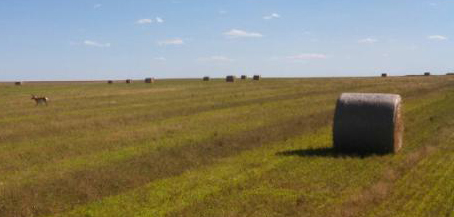
Dan likes to be busy so our son had told him there were some bales that could be stacked if he wanted. While he was stacking the bales, this antelope appeared and watched him work. The antelope was gracious enough to pose for this picture before ambling off to check out the rest of the field.

I still think a little cabin where we could watch the deer and the antelope play is a good idea!

Until we walk again …

Uncategorized

New Global Alliance for Climate Smart Agriculture

Cindy Zimmerman

climate-smart-agThe inaugural meeting of the Global Alliance for Climate Smart Agriculture was held this week in conjunction with the UN Climate Summit in New York City.

“I am glad to see action that will increase agricultural productivity, build resilience for farmers and reduce carbon emissions,” said United Nations Secretary-General Ban Ki-moon. “These efforts will improve food and nutrition security for billions of people.”

“Farmers are on the front line of the climate change agenda. Farmers are not only directly impacted by climate change, but are also vital in implementing solutions we need to in order to adapt and mitigate,” said Peter Kendall, president of the World Farmers Organisation (WFO). “We must reposition farmers at the centre of the agriculture sector to become more resilient to climate risks.”

Agriculture Secretary Tom Vilsack represented the United States at the meeting.”Farmers, ranchers and other producers in the U.S. and around the world are feeling the impact of climate change now,” said Vilsack.”The Global Alliance for Climate Smart Agriculture offers the opportunity to collaboratively share knowledge, make investments and develop policies that will empower all producers to adapt to climate change and to mitigate its consequences. Long term global food security depends on us acting together now.”

Also participating in the meeting was National Corn Growers Association board member Paul Taylor of Illinois. “With increasing public focus turning to the climate, farmers must take a seat at the table to ensure our interests and concerns on this topic are accurately represented,” said Taylor. “American corn farmers have a dynamic story of constant improvement to share. We have a long history of finding innovative ways to meet ever-evolving challenges and activities such as this help us engage in a productive dialogue about this issue.”

The Global Alliance was formally launched by the Prime Minister of the Netherlands and includes more than 20 nations and 30 organizations and companies.

Corn, Farming, International, NCGA

FFA Membership at Record Level

Cindy Zimmerman

Membership in the National FFA Organization is exploding.

ffaMembership in the student organization that was founded 86 years ago now stands at 610,240 – which represents an increase of more than 30,500 since last year. The number of new, local FFA chapters throughout the country grew to 7,665.

“FFA, through agricultural education, is preparing our youth to ensure the security of our country’s food, fiber and natural resources for years to come,” said National FFA Organization CEO Dr. Dwight Armstrong. “Through real-world experiences, the nation’s agriculture teachers are helping students develop the technical knowledge, skills and problem-solving capabilities to be the industry’s leaders of tomorrow. FFA members will be tomorrow’s advocates for agriculture.”

The Texas FFA Association added more members than any other state, with 8,364 members. Total FFA membership in the Lone Star state stands at 103,379 with 1,021 chapters. California, with 76,470 members, is the country’s second-largest FFA association, followed by Georgia with 37,698 members, Missouri with 25,935 members and Oklahoma with 25,561 members.

The 87th annual National FFA Convention and Expo is coming up October 29 – November 1 in Louisville, Kentucky and AgWired is pleased to be able to provide coverage of our future agribusiness professionals, thanks to the generous sponsorship of our friends at FMC Corporation.

Education, FFA, FMC

Zimfo Bytes

Talia Goes

Zimfo Bytes

  • McCormick Company, one of the 10 oldest integrated marketing communications agencies in the U.S., opened an office in the Indianapolis area with the goal of further enhancing service to current clients as well as to support Indiana and nearby state agribusinesses.
  • Lessing-Flynn Advertising has bolstered its creative services team by adding Brandie Blevins, another gifted and versatile graphic designer to its art department.
  • Charleston|Orwig announces the addition of Kimberly Keller as Sr. Director of Reputation Management.
  • DuPont Nutrition & Health (DuPont), a leader in specialty ingredients for food and dietary supplements, is expanding its manufacturing facility in Madison.
Zimfo Bytes

Nutrient Management with N-Watch

Cindy Zimmerman

This is the second of a four part series on Nutrient Management sponsored by FS/GROWMARK

howard-brownTwo years ago, GROWMARK started a pilot program in the state of Illinois called N-Watch to help farmers determine the concentration, form and location of plant-available nitrogen. It started with about 45 sites in Illinois and it has grown quite a bit since then.

“Right now we’re a little under 400 sites,” said Dr. Howard Brown, GROWMARK director of nutrient management and environmental stewardship. “We go from western Iowa, all the way up to the southern part of Ontario, down into Ohio and Indiana. So, we’re really excited about where we’re currently at with the program and there’s a lot of interest growing with farmers who want a new management tool to monitor the dynamics of plant available nitrogen.”

The objectives of the program are to quantify the form of available, soil-applied nitrogen (N), where it is located, and what happens to the concentration of available N over time in the upper 0-12 and 12-24 inch profiles of the soil. “Basically we break it into two different types of sampling,” Brown explains. “One we refer to as the inventory and the other is the tracking.”

Inventory sampling takes a look at a cross section of a field to measure plant available nitrogen every three inches for 30 inches. “Starting after harvest, this allows us to inventory residual nitrogen as we’re moving into the time of year when there will be no crop cover,” said Brown. The program then tracks the nitrogen by taking composite samples every 2-4 weeks until it freezes, and then in the spring to see if the residual nitrogen is still there.

Listen to Howard explain more about this program and its role in nutrient management on the farm. Interview with Howard Brown, GROWMARK

As this series continues, we will hear about the impact of N use beyond farm economics, and developing nutrient management plans. Read the first post in the series on Illinois’ nutrient loss reduction strategy here.

Nutrient Management Series

sponsored by
Nutrient Management Series is sponsored by GROWMARK
Audio, Conservation, GROWMARK