New Sponsor for Great American Wheat Harvest

Talia Goes

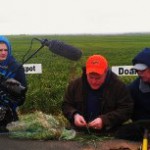
OKWheatMikeSchulte_(2)To help support the creation and educational purposes of the Great American Wheat Harvest documentary film, independent filmmaker, Conrad Weaver of ConjoStudios, LLC announces the Oklahoma Wheat Commission board has approved and appropriated funding to become one of the film’s executive sponsors.

Weaver received the announcement while filming during a wheat field day near Sentinel and Elk City, Okla.; and with U.S. Custom Harvesters Inc., board member, Dan Misener of Misener Family Harvesters. In 2012, the Great American Wheat Harvest received a letter of support to endorse the film’s mission from the Oklahoma Wheat Commission.

The Oklahoma Wheat Commission now joins other Great American Wheat Harvest major sponsors including: John Deere, MacDon Industries, U.S. Custom Harvesters Inc., Association of Canadian Custom Harvesters, and media partner, AgWired, a silver level sponsor.
Agribusiness, Harvest, Wheat

Keeping Seed Treatments Where They Belong

John Davis

becker-haleYou’ve spent some good money to treat those seeds before you plant them in the ground. But the dust that forms when the treated seeds rub together and rub off those expensive treatments is more than a loss of protection and an irritant for workers – it’s like money blowing away in the wind. Charlie Hale, marketing strategy and support lead for Becker Underwood says that’s why having the right polymer is so important.

“You might think of the polymers as glues that glue those solids on to the seed surface, but they are also designed these days to help fill in the spaces between the particles to make the seed smoother,” cutting down on that friction that creates that dust. Charlie adds that Becker Underwood’s new Flo Rite® 1706 plantability polymer does all that and gives you more uniform plant distribution out in the field. He also points out that losing protection for that seed also means a loss in yield potential. “With
today’s prices for grain, we lose significant amounts of money, just because we haven’t kept that protection on the seed.”

Charlie says Becker Underwood has two formulations for legumes, two for corn and another one on the way for cotton. He says this is the third generation of the Flo Rite products for soybeans and corn, so his company has some experience to bring to the table. They’ve got it down to producing almost no dust, no matter how aggressively it gets rubbed.

He cautions that growers who think they can cut down on dust really aren’t gaining anything. “Yeah, [a half rate] does [cut down on dust]. But you still are losing protection.” You want to put on and keep on everything that you’ve invested. And he thinks the latest Flo Rite polymer will be near zero dust. “You get pretty close to that.”

Listen to Cindy’s interview with Charlie here: Charlie Hale, Becker Underwood marketing and support lead

Becker Underwood media tour photo album

Agribusiness, Audio, BASF, Seed

Barriers to Using Precision Ag

Melissa Sandfort

Insights WeeklyHave you seen Joe Neighbor in town at the local precision ag dealer, asking questions, smiling and nodding his head, followed by a hand-shake … then a month or so later, in the cab of his tractor multi-tasking on different screens while talking on his smart phone? Did you wonder how he knew what questions to ask regarding what was best for his operation and better yet, how he ever got started?

Well, Ag Leader Technology has been in the precision ag field for more than 20 years and would like to address a few of these common adoption hurdles.

Obstacle #1: COST
Up front, precision ag might feel like a large chunk of change. There’s the investment cost of the equipment, the time involved for you to learn how to use the equipment, and the time it will take to see your return on investment.

Time is of the essence, especially during busy planting and harvest seasons. Talk to your Ag Leader dealer today about what’s right for you. They offer the complete package of precision farming tools, allowing you to get started with technology based on your comfort level and your needs.

They also have a leasing program that might be right for you.

Read More

Ag Leader, Agribusiness

40 Under 40 Award: Nominate Today

Talia Goes

40under40Vance Publishing’s 40 Under 40 Awards will recognize the young leaders in our industry who will be instrumental in meeting the 2050 challenge. Vance is seeking the most innovative people in agriculture under the age of 40 – from animal and crop production, biotechnology and University researchers to food and nutrition technology, agricultural equipment, agronomy and beyond.

To be eligible for the 40 Under 40 Awards, individuals must be nominated by a colleague or fellow professional active within America’s food system. Nominees must be 40 years or younger by July 30, 2013. Deadline for nomination is July 30, 2013.

Examples of qualifying businesses:

  • Produce production or production supply, transportation (fresh cut or processing)
  • Food animal production – Farm, ranch, feedlot, dairy, pork production unit, crop farm, veterinarians, nutritionists, consultants
  • Processors – packers, meat or milk processors, retailers,fruit and vegetable processors
  • Food safety, quality and production research
  • Food (fruit and vegetable, food animal) transportation
  • Associations and non-governmental organizations
  • Academia and extension
  • Government and allied industry organizations
Agribusiness

Dairy Leaders Celebrate Sustainability Award

Talia Goes

Milk AdWinners of the dairy industry’s prestigious Sustainability Awards join the ranks of celebrities, athletes and influencers – from country music singer Miranda Lambert to movie star Salma Hayek to actor and father Taye Diggs – by donning the famed Milk Mustache for their own ad. The dairy industry leaders were recognized yesterday for their efforts to advance sustainability at the U.S. Dairy Sustainability Awards in Washington, D.C.

This marks the second year MilkPEP, most known for the National Milk Mustache “got milk?” Campaign – a multi-faceted campaign designed to educate consumers about the health benefits of milk – has sponsored the Sustainability Award Milk Mustache ad.

Advertising, Agribusiness, Dairy, Sustainability

How Modernization Protects Flocks

Jamie Johansen

13cms-90 Society today wouldn’t be where it is if it wasn’t for modern medicine. The same thing applies for poultry production. The modernization of the poultry industry keeps the birds safe and ensures a safe food supply.

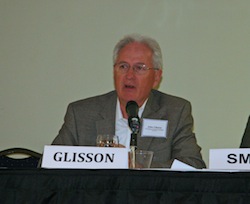
I talked with Dr. John Glisson, Director of Research Programs for US Poultry & Egg Association after he served on one of the panels discussing chicken issues in the news during the recent Chicken Media Summit. As a veterinarian, he discussed issues poultry companies face each day to ensure a nutritious, wholesome and safe product. Bio security and the use of antibiotics were a few of the hot topics brought up.

“Something that’s currently in the news right now is Avian Influenza in China and it’s potential to infect people. We use bio security to keep that virus out of our system. Most of the time that virus is spread by wild birds or by people. We don’t allow any wild birds or people onto the farms. So, here in the United States we have managed to radicate that type of virus from the whole system. We also have a program constantly monitoring every single broiler flock that goes to market in the United States and testing it to make sure it is free from Avian Influenza. So, not only have we removed the virus, we have a very intensive early warning system if it ever comes in.”

“The perspective is that we are raising 8 billion chickens a year in the United States. Some of them get sick. We try everything possible not to allow them to get sick and we have incredible disease prevention programs. Because the last thing we ever want to happen is for a flock to get sick. But occasionally it happens. What are we going to do then? Let me die? No, we can’t. We have to treat them, but when we use the antibiotics we use it very responsibly. Each antibiotic has a FDA required withdrawal period. It may say on there “can’t be used in birds within 10 days of slaughter.” And what that has established to do is make sure if we use antibiotics on birds and withdrawal the antibiotic the correct length of time, there will be none in the meat. And so, we use them sparingly and very safely.”

Listen to my interview with John here: John Glisson

Check out photos from the event here: 2013 Chicken Media Summit Photo Album

Audio, Chicken Media Summit, Food, Poultry

Wrapping up 2013 Agri-Marketing Conference

Chuck Zimmerman

Paul RedhageThe 2013 Agri-Marketing Conference was a success by all measurements says current President, Paul Redhage, FMC. We got together at the close to wrap things up and in my interview with Paul below you’ll hear all about it.

Listen to my interview with Paul here: Interview with Paul Redhage

Now it’s time to look ahead to 2014 when we come to the Sunshine State in Jacksonville. The Florida Chapter is working on some serious hospitality and a unique farm tour. More information on that will be announced later. We certainly hope to see you there.

2013 Agri-Marketing Conference Photo Album

Ag Groups, Audio, NAMA

So what was it really like?

Melissa Sandfort

After listening to hours worth of stories from my grandfather about old farm machinery, hand tools and butchering livestock, it dawned on me I’d never asked the most generic question of the farmer sitting in front of me: What was it like to be a farmer back in the 30s and 40s?

And by that I mean, describe a typical day. When did it start and end and all the good things in between. I could see him looking for the best way to communicate that “feeling” in words and in a little over a minute interview (and a few cuts and edits on my part), he was able to sum it up like this:

Listen to Grandpa explain

I’m not sure that tells the whole story. That’s just the spine on the novel – the words and pages are written in the wrinkles on his hands and the crease in his brow as he recalls threshing season, hot/humid summer days, and the kindness of rural neighbors “back in the day”. That’s where the real story takes shape.

He talks about growth and change, so much of both he never dreamed he’d see in his lifetime (of course, his own father said that!). He says he’s still amazed that farmers have 2,000 acres when the typical farm size back then was 80-160 acres as that’s all they could manage.

He gazes out the picture window at the field across the road……..

Then chuckles in agreement when I say, “You ate such large meals but still managed to stay thin – that’s how hard you worked.”

Until we walk again …

Uncategorized

Pinot, Pigs & Poets Chef Competition

Talia Goes

Pinot, Pigs & PoetsThe Nebraska Pork Producers Association is excited about expanding their continued sponsorship of this year’s Pinot, Pigs & Poets event at Happy Hollow Club on June 6, 2013 at 6 p.m. The philanthropic event will feature premium Pinot Noir wines, cutting-edge pork dishes and entertainment provided by slam poets from the Nebraska Writers Collective.

The Nebraska Pork Producers Association has been a sponsor of Pinot, Pigs & Poets since the event’s inception in 2010. In 2013, they are enhancing their sponsorship by involving the Taste of Elegance competition. The top chef will win a trip to the 2014 Pork Summit at the Greystone Campus of the Culinary Institute of America in St. Helena, California.

All proceeds from Pinot, Pigs & Poets support the Completely KIDS organization and their weekend and after-school food programs for Omaha children in need at local schools and shelters. Completely KIDS serves over 2,000 children in its after-school programs and provides over 30,000 meals a year. Last year Pinot, Pigs & Poets raised over $140,000 for these programs.

Agribusiness, Events, Pork

Celebrity Media Attention

Talia Goes

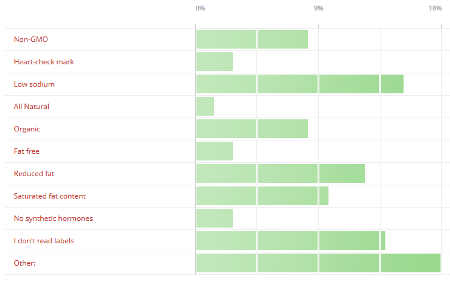
Our latest ZimmPoll asked the question, “What is the #1 thing you look for on a food label?”

Our poll results: Nineteen percent said other, sixteen percent said Low Sodium, fourteen percent Don’t Read Labels, thirteen percent said Reduced Fat, ten percent said Saturated Fat Content, and we had a tie at nine percent saying Non-GMO and Organic. Three percent said Heart-check Mark, Fat Free, and No Synthetic Hormones and one percent said All Natural. The majority of our viewers chose Other. Based on responses, “other” constituted calories, carbohydrates, and ingredients. Evidently our viewing audience has a different outlook than the audience being interviewed by media about the “big debates” such as antibiotics, hormones, and non-GMO foods.

Untitled

Our new ZimmPoll is now live and asks the question, “Does celebrity media attention sway your purchasing/listening/watching decisions? (e.g. Carrie Underwood supporting HSUS)?” Recently in Tennessee, Carrie Underwood has been a big voice for HSUS by publicly pressuring the Governor to veto a bill that would possibly end undercover investigations of animal abuse in the state. Carrie has used Twitter to its fullest, tweeting “@BillHaslam It’s not all about big business. Please look out for the little guys! Show TN that you have a heart…#NoAgGag”. She goes on to explain to questioners and agvocates that she is not against agriculture just against animal abuse. Would you not purchase a ticket to a Carrie Underwood concert based on her recent rant? Let us know.

ZimmPoll is sponsored by New Holland Agriculture.

ZimmPoll