
Saski Receives Cotton Genetics Research Award
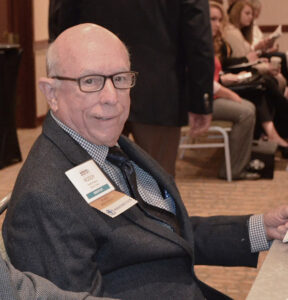
Over his career, Dr. Saski has authored or co-authored 126 scientific journal articles and has a patent pending for his team’s work related to an improved transformation and regeneration system for upland cotton. Dr. Saski’s program is guided by the theme, “Building Better Cotton,” and his accomplishments speak to that. Dr. Saski developed strong relationships with public and private breeders and led a Beltwide collaboration to rapidly address FOV4 with three prominent manuscripts and the public release of six highly resistant FOV4 upland lines. Dr. Saski has also contributed significantly to the development of genomic resources that currently enable cotton improvement.
The Cotton Genetics Research Award was established in 1961 to recognize and encourage basic research in cotton genetics, cytogenetics, and breeding. It is administered by the Joint Cotton Breeding Committee, consisting of representatives of the NCC, the USDA, state experiment stations, Cotton Incorporated, and commercial breeders.
U.S. Cotton Trust Protocol Appoints Co-Directors
The U.S. Cotton Trust Protocol has announced the appointment of Marjory Walker and Liz Hershfield as co-directors to accelerate the program’s growth by advancing market adoption, developing new market-driven offerings, and fostering greater collaboration across the entire cotton value chain.
Walker and Hershfield will oversee distinct but complementary pillars of the program. Walker will lead the operational and programmatic framework, providing strategic oversight for the Standards & Assurance, Field Programs, Communications & Marketing, and Operations teams. She will be responsible for ensuring the integrity of the Trust Protocol’s verification process and evolving its standards to incorporate regenerative practices, while advancing its mission through risk mitigation, clear messaging and stakeholder engagement. Concurrently, Hershfield will lead the Trust Protocol’s global market development and supply chain teams, overseeing traceability systems, operations, training, and assurance to ensure integrity and member adherence across the supply chain, deepening engagement with mills, manufacturers, brands, and retailers, and connecting sustainability outcomes with enhanced value for members.
In addition to their new Cotton Trust Protocol roles, Walker will continue to serve as Vice President of Council Operations and Director of Communications for the National Cotton Council (NCC), while Hershfield will remain the Executive Director of Cotton Council International (CCI), the export and promotion arm of NCC.
Walker recently gave an update on the protocol program, which celebrated five years in 2025.
Marjory Walker, Cotton Trust Protocol - interview 3:44
Western Ag Network and Ag Information Network Announce Merger
Western Ag Network (WAN) and Ag Information Network (AIN) announced a strategic merger this week under Nemetz Communications, Inc., bringing together two respected agricultural media organizations to create a comprehensive ag broadcast platform focused in the West and Southeast.
“This merger reflects a shared commitment to elevate the accessibility and depth of agricultural information across the West and beyond,” said Russell Nemetz, President/Owner of Nemetz Communications, Inc. “We’re combining the strengths of two respected networks to create a stronger, more connected platform—without losing the authenticity and credibility our audiences expect.”
With more than 200 radio affiliates across 17 states and a combined legacy of trusted agricultural journalism, the unified network offers an expanded, streamlined, and highly efficient channel for delivering agricultural news, market reporting, and industry insights to producers, communities, and national agribusiness partners alike.
WAN, originally founded as the Evan Slack Network, has long served as a cornerstone of agricultural reporting across the West. AIN brings decades of authoritative regional programming and deep relationships within specialty crop sectors. Together, the two networks combine complementary strengths to serve a broader and more diverse agricultural landscape.
Together, WAN and AIN now deliver agricultural news, markets, weather, and rodeo coverage to more than 200 affiliates across Alabama, Arizona, California, Colorado, Florida, Georgia, Idaho, Montana, Nebraska, Nevada, New Mexico, North Dakota, Oregon, South Dakota, Utah, Washington, and Wyoming.
Cropin Launches AI-first Agrifood ‘Ecosystem’
Cropin, the world’s largest deployed AI platform for food and agriculture, has launched a unique agrifood ‘ecosystem’ connecting agriculture and the digital world by combining data from the field onwards with artificial intelligence.
Cropin founder Krishna Kumar says Cropin Ecosystem will provide a plug-and-play model to help agri-food businesses at every stage in the chain better navigate the complex challenges of data interoperability, climate-change risks, supply chain disruptions and geopolitical uncertainties.
“These pressures are affecting the availability of fresh produce and agricultural commodities, operational margins, pricing strategies, growth opportunities and the ability to meet rising customer demand for sustainably produced food, all while complying with evolving traceability and sustainability regulations,” he points out.
The culmination of partnerships that Cropin has facilitated through its existing platforms, the system draws its inspiration from the Silicon Valley convergence model, uniting leading technology providers, strategic consulting, ERP integrations and satellite and weather intelligence partners into a single, intelligent platform that guarantees surety of supply and builds resilience across the food chain.
Cropin points to the model not only enabling businesses to focus on their core operations with confidence – with Cropin Ecosystem managing the complexity of upstream agricultural processes and supply chain uncertainties – but also offering customers the rich content, knowledge and services of technology and domain experts.
Find out more here: https://www.cropin.com/cropin-ecosystem/
Acre Blitz Launches ESA Compliance Platform
Acre Blitz has launched a new platform to help growers and advisors comply with complex Endangered Species Act (ESA) requirements on pesticide labels.
Acre Blitz has created two products that work together: the ESA Field Exchange, where growers document their field-level mitigations, and the ESA Check API, which delivers that data to applicators, retailers, cooperatives, and crop consultants at the moment they need it.
“The compliance burden falls on whoever pulls the trigger, but the practices that earn mitigation points are controlled by the grower,” says Kim Brown, co-founder of Acre Blitz. “We built these tools so both sides have access to the same information. Growers document once, applicators can verify in seconds, and everyone has a record.”
How it works:
Growers sign up for the ESA Field Exchange for free at acreblitz.com/esa-field-exchange. They bulk import fields from shapefiles, add products they commonly apply, and the program automatically pulls county-level mitigation points, soil types, hydrologic zone, and slope. Available runoff mitigation points are assigned automatically.
Growers can see which fields meet point requirements and which need additional practices like cover crops, non-irrigated land, or buffer strips. The platform generates runoff mitigation reports pre-filled with their data. Growers choose which fields to share via the ESA Check API, making their documented mitigations visible to their trusted advisors.
Retailers, cooperatives, and crop consultants can also use the ESA Field Exchange as a free tool to help growers get set up, instead of staff spending hours going through the ESA flowchart for every field.
The ESA Field Exchange is free for growers. Retailers, cooperatives, crop consultants, and ag-tech platforms can integrate the ESA Check API into their existing workflows. Learn more at acreblitz.com.
Trump Spotlights Deere Announcement in Iowa
When President Donald J. Trump spoke in Iowa yesterday, he made the announcement that John Deere is building two new major factories in the United States, a state-of-the-art distribution center near Hebron, Indiana, and a cutting-edge excavator factory in Kernersville, North Carolina, both set to open in the next year.
“We got the chairman of John Deere here…it’s a great company. Great company. And you just said you’re opening up two massive plants because of tariffs,” Trump said during remarks in Clive, Iowa on Tuesday.
The new Indiana facility will provide product support through parts availability for ag, turf, construction, forestry, mining and turf customers, while the excavator factory will be the first to make excavators entirely in the United States of America.
Trump also touted trade deals he has made to benefit farmers, ranchers, and agricultural producers. “Japan will now allow the United States to supply up to 100% of automobile ethanol and import Large amounts of aviation biofuels from the United States…The United Kingdom will import nearly $1 billion of ethanol. That’s part of their deal,” said Trump. “Australia is allowing American beef into its market for the first time in more than 20 years…China has agreed to purchase over $40 billion of U.S.-grown soybeans…The European Union will dramatically increase purchases of American pork, dairy, and soybean oil.”
Listen to the first half of the president’s remarks here:
President Trump in Iowa 26:03
Preview Interview of 2026 CattleCon
The National Cattlemen’s Beef Association (NCBA) is gearing up for CattleCon 2026 in Nashville, set to take place next week despite recent winter weather challenges.
NCBA Senior Executive Director of Meetings and Events Kristin Torres confirmed that downtown Nashville is recovering well from the ice storm that still has thousands of residents without power. “It does look like it’s going to be chillier than we’d maybe like, but for sure the facilities are all up and running,” said Torres. “Downtown Nashville’s coming back from the storm, most of the bars and restaurants, and all the hotels are open.”
A major highlight this year is the shift to an all-inclusive registration model. Whether attending the full convention or a single day, registrants gain access to everything—Cattleman’s College (previously a separate ticket), general sessions, receptions, the expansive trade show, and more.
Torres says the trade show is completely sold out and expanded to nearly eight acres. It goes beyond traditional exhibits with daily receptions, provided lunches, and on-floor education. Attendees can watch live cattle handling demonstrations in the arena, join sessions in the Learning Lounge and Cattle Chats areas, or catch programs on the new Marquee Stage.
The speaker lineup promises high energy and industry insights. Dale Earnhardt Jr. headlines the opening general session, followed by leadership expert John Acuff, market updates from CattleFax, and a fun closing session with Grammy-winning Jimmy Urie on storytelling through song. Nashville flair shines through special events: Boots on Broadway, an exclusive night at Luke Combs’ Category 10 honky-tonk on Wednesday, and a memorable Grand Ole Opry finale featuring Don Schlitz, The Castellows (cattle-farming trio), The SteelDrivers, and headliner Vince Gill.
With over 8,000 already registered—a record high—Torres urges early online signup at convention.ncba.org, though on-site registration remains available. CattleCon welcomes all in the beef industry, regardless of operation size, offering networking, education, and a voice in the future of beef production.
Interview with Kristin Torres (7:26)Here’s where you can find registration here.
Drought and Heat in Cotton Belt Outlook
While much of the southern Cotton Belt is in a deep freeze right now, the big concern in the forecast for this season is drought and heat.
Eric Snodgrass of Nutrien Ag Solutions told cotton growers at the 2026 Beltwide Cotton Conferences that much of the weather risk facing the Cotton Belt in 2026 can be traced to the Pacific Ocean—specifically the ongoing influence of La Niña. Right now, that pattern is working against the southern U.S., keeping the jet stream north and leaving much of Texas, the Delta, and the Southeast drier than normal during winter and early spring.
Snodgrass explained that La Niña winters typically limit moisture recharge across the Cotton Belt, and that’s exactly what’s happening this season. “If you wanted to start 2026 without worrying about drought, you’d want the jet stream coming out of Hawaii,” he said. “That’s what El Niño does. La Niña does the opposite.” The result has been persistent dryness, low river levels along the Mississippi, and limited opportunities to rebuild soil moisture before planting.
Looking ahead, there is some cautious optimism. Forecast models suggest La Niña may weaken and transition toward El Niño by late spring or early summer. That shift would improve moisture prospects in parts of the country, but Snodgrass stressed that El Niño alone does not guarantee summer rainfall for cotton. ENSO patterns matter most in winter, not midsummer.
For summer, the biggest risk factor is the position of high pressure—especially whether the Bermuda High shifts west into Texas, creating what meteorologists call a “Texas Ridge.” When that happens, heat and drought dominate across the Cotton Belt. “Ridges ultimately dictate the pattern of the atmosphere,” Snodgrass said, noting that this setup can shut down rainfall even in otherwise favorable years.
Severe weather remains another concern this spring, particularly across the Delta and Mid-South, where tornado and hail risks have increased in recent years. Snodgrass emphasized that growers should stay flexible and monitor changing patterns closely. “All of this can change rapidly,” he said, underscoring that ocean temperatures and atmospheric ridges—not long-range forecasts—will ultimately decide how the 2026 cotton season unfolds.
Listen to the full presentation:
Eric Snodgrass, Nutrien Ag Solutions - presentation 45:35