WTO Announces Decision on COOL

Cindy Zimmerman

cool-usdaThe United States’ Country of Origin labeling (COOL) is still not cool with the World Trade Organization (WTO).

In the compliance panel report released today, the WTO found that “the amended COOL measure violates Article 2.1 of the TBT Agreement because it accords to Canadian and Mexican livestock less favourable treatment than that accorded to like US livestock.”

In particular, the compliance panel concluded that the amended COOL measure increases the original COOL measure’s detrimental impact on the competitive opportunities of imported livestock in the U.S. market, because it necessitates increased segregation of meat and livestock according to origin; entails a higher recordkeeping burden; and increases the original COOL measure’s incentive to choose domestic over imported livestock.

National Cattlemen’s Beef Association (NCBA) President Bob McCan of Texas says the expected ruling
“brings us all one step closer to facing retaliatory tariffs from two of our largest trading partners.”

McCan added that “NCBA has maintained that there is no regulatory fix to bring the COOL rule into compliance with our WTO obligations or that will satisfy our top trading partners. We look forward to working with Congress to find a permanent solution to this issue, avoiding retaliation against not only beef, but a host of U.S. products.”

Later today, members of the COOL Reform Coalition will be holding a webinar to respond to the announcement.
Beef, NCBA, Trade

Nephew Gets His First Deer

Chuck Zimmerman

Joe Gets a DoeIt’s deer season at The Pig (short for Crystal Pig Hunt Club). This is my annual woods time to just get away from it all. However, look for lots of good fresh content on AgWired!

On opening day Saturday Paul, Luke, Joe and I were on location. We all got a doe that day! Now, it’s time for a buck. We’re not in the rut yet. We’ve seen over 30 does and only 2 bucks so far.

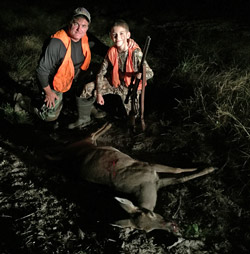
In the pick, Joe gets his first deer, pictured with his Dad and my brother Paul. You want to talk about excited. He got it with his first shot too.

So, we’ve had some good fresh venison on the grill and in a stew and I think some more recipes are coming.

Now back to the hunt.

Hunting

PERC: Winter Propane Woes a Thing of the Past

John Davis

propane-logo1Last winter’s propane shortages that hit farmers and rural residents hard for their business and home heating needs should not be repeated this winter. The Propane Education & Research Council (PERC) is citing U.S. Energy Information Administration information that expects a warmer winter and a propane stocks up 17 percent from a year ago in the Gulf Coast and Midwest, along with a 12 percent increase in production from 2013.

“These are positive signs,” said Roy Willis, president and CEO of the Propane Education & Research Council, “but our industry is working hard to ensure our customers are prepared. Propane retailers across the country remain focused on safety and encouraging customers to consider early fills, automatic refills, and payment programs now before cold weather hits.”

PERC launched a $5.5 million consumer safety and preparedness campaign in early September directing residential heating customers and agribusiness operators, among others, to propanecomfort.com. On the site, propane customers can take a quiz to determine if they are prepared for winter and review energy efficiency tips. Visitors can also sign up for news updates from PERC.

“Preliminary numbers for the campaign show that nearly 20,000 customers have already taken advantage of our online resources and we expect to see continued engagement as we get closer to winter,” said Willis.

PERC will TV ads through Thanksgiving in 30 states most affected by deliverability challenges and temporary price increases last winter.

Propane

Bayer Showcases Food Chain Partnership at PMA Convention

Cindy Zimmerman

bayerBayer CropScience showcased its latest global Food Chain Partnership projects at the PMA Fresh Summit Convention & Expo this past week. The annual conference brings together decision makers at every level of the produce supply chain, including growers, importers and exporters, processors and retailers.

“To continue to meet the needs of our growers, we must first understand the needs of the food value chain and those consumers at the very end of it,” said Silke Friebe, head of global Food Chain Management at Bayer CropScience. “Having this understanding allows us to provide growers with the tools to meet those needs, from planting to harvest and storage.”

“Bayer CropScience is focused on providing growers with new technology and expertise in seeds and crop protection,” said Rob Schrick, strategic business management lead for horticulture at Bayer CropScience. “That’s why we’re putting more than a billion dollars a year into research and continually providing new products that improve the health, quality and yield of crops.”

During Fresh Summit, representatives from Bayer CropScience discussed the Food Chain Partnership’s impact on the produce market, as well as the wide range of solutions available to fruit and vegetable growers.

Bayer, Food, Produce

Zimfo Bytes

Talia Goes

Zimfo Bytes

  • Jerry Stoller, founder and president of Stoller Group, announced the groundbreaking at the site of the company’s future headquarters in Spring Valley Village in Houston, Texas.
  • Alltech Crop Science continues to expand its reach in fields and groves across the globe with the recent purchase of Improcrop in South Africa.
  • Wheat Growers officially broke ground for a state-of-the-art shuttle loader grain handling, fertilizer and agronomy facility in Kennebec, South Dakota.
  • FLM+, a hybrid strategic consulting, marketing and communications company, announces the addition of five new team members to serve the company’s growing client roster.
Zimfo Bytes

Barn Owls are Sustainable Rodent Control

Cindy Zimmerman


2014 CTIC Conservation in Action Tour Photo Album

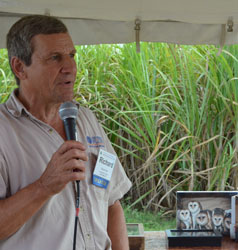
ctic-14-raid-owlsBarn owls are being used in the Everglades Agricultural Area as sustainable rodent control – and it’s working amazingly well!

Richard Raid, a plant pathologist with the University of Florida, told us all about these hungry little raptors during what was arguably the most interesting stop on the 2014 CTIC Conservation in Action Tour of the Everglades Agricultural Area. Raid says the barn owl project started 10 years ago and has helped sugarcane growers drastically reduce their use of rodenticides. “One of the growers used to have about 4,000 acres of sugarcane and … used 8-10 tons of rodenticides a year and he said he had less rodent damage with the barn owls than he ever did with rodenticides,” he said.

Raid says baby barn owls, the size you can see at the end of the video and in the photos, swallow entire rats whole and eat 4-5 per night! They regurgitate the fur and bones and you can learn more about what they do with that in the video. It’s gross, but Raid says the kids they teach about barn owls love it! “With kids, cute it good, but gross is better!”


Conservation, CTIC, Sustainability, Video

TekWear Selected for Ag Accelerator Program

Jamie Johansen

Screen Shot 2014-10-16 at 4.50.43 PMTekWear, LLC is one of 11 ag technology start-up companies selected to participate in the premier three-month VilCap USA: Agriculture 2014 entrepreneurial development program in Louisville, Ky. The program supports early-stage ventures that increase agricultural resource efficiency and helps find business solutions to challenges facing farmers, ranchers, and rural, low-wealth populations.

Bruce Rasa, CEO and founder of TekWear, LLC, says being selected for VilCap USA: Agriculture 2014 is a tremendous opportunity to be exposed to and learn from the best business minds, investors, and industry experts in the country. Rasa and three core staff members will be participating in the three-month program, the 28th such program launched by Village Capital worldwide.

“Entrepreneurs who participate in this peer-review program receive the top-level business coaching and mentoring needed to take their companies to the next level,” Rasa explains. “Few business-development incubators in the country provide the intensive training and exposure VilCap USA does, or have shown the success this program has had in supporting early-stage agricultural technology ventures.”

TekWear, LLC, a leading developer of apps for wireless wearable devices used in agriculture, joins 10 other young ag venture companies all focused on finding, developing or marketing innovative products, or providing solutions to a wide variety of agricultural and food production challenges. In addition to the business development training, two participating businesses ranked highest by their peers will each receive a $50,000 investment from Village Capital and Radicle Capital. VilCap USA: Agriculture 2014 is part of the SOURCE Initiative, which is a nationwide partnership between Village Capital, The Hitachi Foundation, and Investors’ Circle. The program receives further support from the Blue Sky Network and VentureWell, as well as a powerful network of Kentucky-based mentors and advisors.

Agribusiness, Apps, Technology

A Year’s Supply of Bacon Up for Grabs in Wisconsin

Jamie Johansen

BRBaconFestOrganizers of the Madison Bacon Festival, a Blue Ribbon Bacon Festival event, recently announced two sizzling contests – the Wisconsin Bacon Royalty Contest and a Bacon Eating Competition. Wisconsin’s bacon-enthusiasts can enter the contests beginning October 13. Applications will be narrowed down to a total of 20 finalists who will each receive FREE tickets to the Madison Bacon Festival taking place on November 1. During the festival, the Wisconsin Bacon King and Queen will be crowned and at 3 p.m. the amateur eaters will compete for the Wisconsin Bacon-Eating Trophy presented by Farmland.

The grand prize package for the Madison Bacon King and Queen include: a crown, sash, two VIP tickets to the Blue Ribbon Bacon Festival in Des Moines, IA on Saturday, Jan. 31 and bacon for a year valued at $300 in the form of gift certificates.

The grand prize package for the Wisconsin Bacon Eating Champion includes: a glorious trophy presented by Farmland, two VIP Tickets to the Blue Ribbon Bacon Festival in Des Moines, IA on Saturday, Jan. 31 and $500 in Farmland Bacon in the form of gift certificates.

The Madison Bacon Festival is organized and promoted in partnership between the Blue Ribbon Bacon Festival and the Madison community, the uniquely quirky celebration will provide participants with Wisconsin’s largest bacon showcase, bacon lectures, bacon-inspired dishes, bacon competitions, an annual bacon queen contest, live entertainment and bacon fellowship.

The Blue Ribbon Bacon Festival started as a groups’ passion for “all things bacon” and has evolved into America’s premier bacon festival. In 2001, a group of guys began celebrating bacon during an annual weekend retreat in Spirit Lake, IA. Six years later, they pursued a deeper understanding of their favorite meat by earning “All About Bacon” diplomas from Living History Farms. On March 1st, 2008, officially organized under the Bacon Board and led by Brooks Reynolds, they went on to found a festival: a multi-city festival with the mission of improving the enjoyment of all things bacon by providing education, recognition, advocacy and research on behalf of the masses, everyone, everywhere, all of them. They are serious. Seriously, dudes.

Ag Groups, Food

Enlist™ Weed Control System Approved

Jamie Johansen

enlistThe Enlist™ Weed Control System is now approved for use with registration by the Environmental Protection Agency of Enlist Duo™ herbicide for use with Enlist corn and soybeans.

EPA’s decision is the final step in the federal regulatory process for the Enlist system. The Enlist corn and soybean traits were deregulated by USDA last month. With regulatory approvals now in place for Enlist corn and soybean traits and Enlist Duo herbicide, Dow AgroSciences will release its 2015 market intentions for Enlist in the coming weeks.

The National Corn Growers Association (NCGA) applauded news of the approval which will provide farmers with a valuable tool to combat instances of weed resistance. “The battle for approval of all components of this important technology has taken both determination and patience,” said NCGA Trade Policy and Biotechnology Action Team Chair John Linder, a farmer from Edison, Ohio. “This final step should place a necessary, new tool in the hands of corn and soybean farmers in immediate need of new systems to combat growing weed pressures throughout the Corn and Cotton Belts.”

“The registration of Enlist Duo herbicide means that America’s soybean farmers are a step closer to having access to another integral mode of action with which they can fight yield-robbing weeds,” said American Soybean Association President and Iowa farmer Ray Gaesser. “We now look to our key export partners to approve this trait so that we can realize the full market potential of this product, without fear of jeopardizing our trading relationships with partially approved traits.”

Enlist Duo™ herbicide is a proprietary blend of new 2,4-D choline and glyphosate. By combining two modes of action, Enlist Duo will control and help prevent further development of herbicide-resistant weeds. Enlist Duo herbicide has also been optimized for on-target application utilizing Dow’s proprietary Colex-D™ Technology, which will provide both stewardship and user benefits. Dow has made significant investments in existing and new assets to reliably supply high quality 2.4-D for current market needs, and 2,4-D choline for new Enlist Duo demand.

Agribusiness, Corn, NCGA, Soybean, weed management

Learning About Everglades STAs

Cindy Zimmerman


2014 CTIC Conservation in Action Tour Photo Album

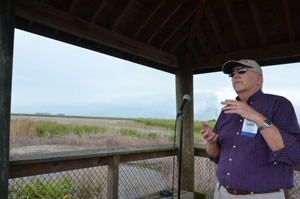
ctic-14-larryThis may just look like a swamp but it’s actually a very sophisticated stormwater treatment area in the Everglades Agricultural Area (EAA) which is one of several designed to remove phosphorus from urban and agricultural runoff. These public works projects are the second point of cleanup for the water, while the farmers are the first point.

The 2014 CTIC Conservation in Action tour spent some time learning about these specially constructed wetlands areas from folks with the South Florida Water Management District on our first stop. Over the past 20 years, phosphorus concentrations in water heading for the Everglades have been reduced from 170 part per billion to less than 20.

Lawrence Gerry, STA coordinator for the SFWMD, who gave an overview of the created wetlands and how it all works together with varying hydrology, vegetation and wildlife. “These are probably the most highly managed treatment wetlands in the world,” said Larry. Watch the video below to learn more and check out the post on Precision.AgWired.com to hear from other SFWMD experts.


Conservation, CTIC, Video, Water