Support is growing for the new global agriculture trade show set to debut January 2010 in Orlando. AG CONNECT Expo 2010 made several announcements this week about support for the show.
 For starters, the American Society of Agricultural and Biological Engineers (ASABE) will co-locate its annual Agricultural Equipment Technology Conference (AETC) with the new international agriculture exhibition. It will also conduct its annual AE50 “innovation” awards program at AG CONNECT and spotlight the AE50 winning products at the show.
The North American Equipment Dealers Association (NAEDA) joins a growing list of industry groups that have endorsed and will participate in the show. NAEDA will also serve as a major organizer of the AG CONNECT Expo “Preview Day” that will allow dealers and their customers to interact with key decision makers from manufacturers in attendance. That will be held on January 12, the day before the show officially gets underway. In addition, the Western Canadian Wheat Growers Association announced their support of the show this week.
 Last, but definitely not least, AG CONNECT Expo 2010 has been selected to be part of the U.S. Department of Commerce’s International Buyer Program, which will help to recruit international attendees and encourage connections with exhibitors who sell to the global marketplace. This is a huge deal for the international show, according Charlie O’Brien, vice president of agricultural services with the Association of Equipment Manufacturers (AEM) which owns and operates AG CONNECT Expo. “With the involvement of IBP, attendees and exhibitors at AG CONNECT Expo will benefit from potential trade leads and matchmaking opportunities, international insights into key ag issues, as well as the opportunity to learn different business practices in the context of a global agriculture trade show,” said O’Brien.
AG CONNECT Expo 2010 will be held January 13-15 at Orlando’s Orange County Convention Center. Registration officially starts June 1, but exhibit space sales are already up for grabs. Find out more here.

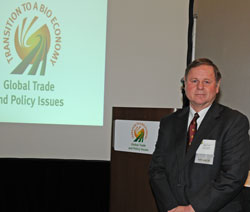 Wally Tyner is an energy economist with the Dept. of Agricultural Economics at Purdue University. He’s one of the first speakers on the Farm Foundation,
 I’m glad to find out that the
  I’m heading east out of a sunny St. Louis in just a few minutes to Washington, DC. I’ll be covering Farm Foundation’s
 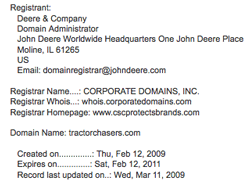 Alert AgWired reader Michael Kopka has pointed out,
  I’ve heard of storm chasers, but this is the first I ever heard of “tractor chasers.”
 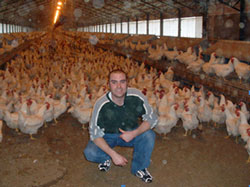 The staff of
 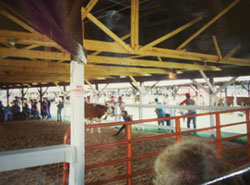 O&B serves as the agency of record for several agricultural clients, including the United Soybean Board and the Propane Education and Research Council, so it was a good way to help the staff get back to their ag roots and recognize the importance of the industry.