
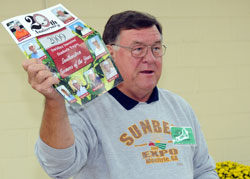
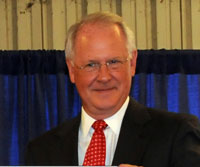
 He says he’s been the media director for Sunbelt Ag Expo for 32 years and he’s Mr. Peanut. Actually he’s Tyron Spearman, Spearman Marketing. Tyron also reports for Southeast AgNet.
At Expo Tyron coordinates all the requests of the media here covering the event. In the photo he’s giving us an overview of the show during our media breakfast. Tyron says the show is “excellent.” The weather has cleared up from the rain of last week and he thought the setup went a lot easier than normal. He says the first day crowd was estimated between 40 – 50,000 which was very good for an opening day. The challenge now is the good weather which has farmers out in their own fields. I asked him about the peanut crop and he says that after the largest crop in history last year the crop was reduced this year. Challenges during the planting season meant that there are actually 3 separate crops being harvested this year with the last one coming in later in November.
You can listen to my interview with Tyron below:
Sunbelt Ag Expo 2009 Photo Album
AgWired coverage of Sunbelt Ag Expo is sponsored by  .
.
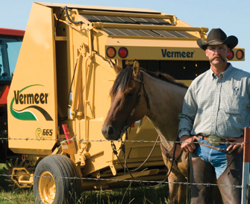 According to Vermeer Forage Marketing Manager Dan Belzer, the new Rancher 665 baler design fills a niche many cow-calf producers have been asking for – basically, the ability to produce bigger bales with a “right-sized” baler that requires less horsepower. “Now, with a minimum 60 hp tractor, every day cow-calf producers can roll up large-diameter bales, which they can easily move around with their medium-sized loaders. Also, because the Rancher 665 baler is ‘right-priced’, it’s very competitive with used late-model balers in the same class, which gives Rancher 665 baler owners the extra peace of mind of having new product warranty.”
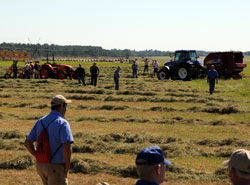 Field demonstrations are in full swing at Sunbelt Ag Expo. I’ve updated the photo album for you and am taking off but have a lot more to post.
 Some classes are now requiring students to read books like
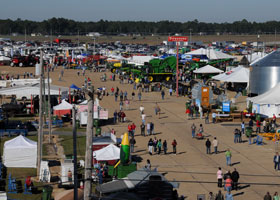 The old water tower on the grounds of the Sunbelt Ag Expo makes a good platform to look out over the show. I climbed it last year for the first time and again this year.
 The main sponsor of the
 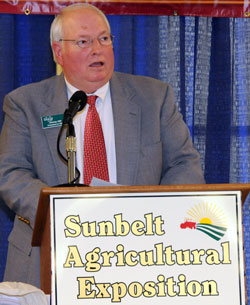 The emcee for the Willie B. Withers luncheon at Sunbelt Ag Expo was Mr. Jimmy Hill, President/CEO,
 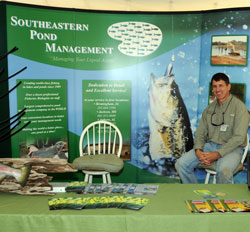 There’s more than one way to farm fish. Usually you think ponds of tilapia or catfish right? Well there’s also sports fishing pond management of game fish like bass and bluegill. At Sunbelt Ag Expo they have a “fishing ponds” exhibit area. One of the exhibitors is
 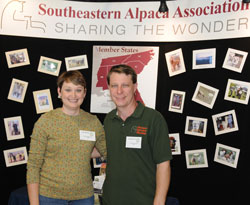 At this year’s Sunbelt Ag Expo, Alpacas are popular, especially baby ones. Promoting them is the