Zimfo Bytes

Melissa Sandfort

    Zimfo Bytes

  • The Department of Justice’s Office of Juvenile Justice and Delinquency Prevention has awarded two grants totaling $6.3 million to National 4-H Council.
  • Engle Creative Solutions, LLC announced the launch of its new website. In addition, the company introduced its new logo and tag line: Stand out in a crowded world.
  • Bayer announced the re-launch of its professional products website. The newly designed site will incorporate new user-friendly features.
  • USDA announced that the public comment period on the new animal identification rule that has been proposed has been extended until Dec. 9.
    Zimfo Bytes

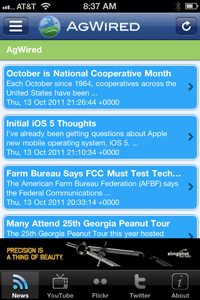
    Free AgWired App

    Chuck Zimmerman

    Hey iPhone fans. Today’s release and delivery of the new iPhone 4S makes it a great time to get the free AgWired app. And you Android folks don’t worry. We’ve got you covered too. Sorry Blackberry users. We have felt your pain this last week.

    So here’s where you can go to join the thousands of people getting AgWired on their smartphones:

    AgWired App in iTunes Store

    AgWired App in Android Market

    The AgWired App allows you to easily keep up to date wherever you are and provides multiple ways to to see news filtered by key word categories. Additionally, the app has a built in mechanism to provide you with the latest news produced by the ZimmComm News Network on alternative energy, the dairy industry and the latest in precision agricultural farming.

    When you open up the app you use the drop down menus to find the latest news from AgWired, Domestic Fuel, Precision Pays and World Dairy Diary. Thank you.

    Apps

    October is National Cooperative Month

    Cindy Zimmerman

    Each October since 1964, cooperatives across the United States have been celebrating the cooperative difference, business model and the contributions of cooperatives to their communities, during National Cooperative Month.

    One of the best examples of an agricultural cooperative that makes a difference is GROWMARK, based in Bloomington, Illinois, and chairman of the board Dan Kelley says cooperatives touch our lives in many ways.

    growmark annual meeting 2011“Cooperatives have a long history going back to England in the mid-1800s when producers would get together to help market their products and that has resulted in the cooperative system here in the United States,” he said. “If you think of products like Welch’s grape juice, Florida’s Natural, SunMaid Raisins – those are cooperatives that have a national brand and market in some cases world wide.”

    Dan says cooperatives in general are important to not only the economy of the United States, but the entire global economy, which is why they are looking forward to being a part of the United Nations International Year of Cooperatives, which officially begins on October 31. “What we intend to do is participate with other cooperatives here in the United States through the National Council of Farmer Cooperatives,” Dan says, adding that they will be focused on telling the cooperative story to a broader audience.

    Dan says cooperatives are especially important to developing countries and some GROWMARK board members and managers were able to go to Ghana earlier this year to offer some advice to producers there. “It was an eye-opening experience to see people who are getting by on a subsistence standard of living and with some minor improvements could really improve their lives,” he said.

    Listen to my interview with Dan here: Dan Kelley Interview

    Audio, Cooperatives, GROWMARK

    Initial iOS 5 Thoughts

    Chuck Zimmerman

    I’ve already been getting questions about Apple new mobile operating system, iOS 5. That’s what happens when you tweet that you’ve got it!

    Like many people yesterday, I was frustrated getting the update on my iPhone 4. It took about 2 hours to get it downloaded and then I couldn’t get the update installed due to Apple server overload. So I waited until this morning and then had no problem.

    Here are a couple of initial thoughts for you:

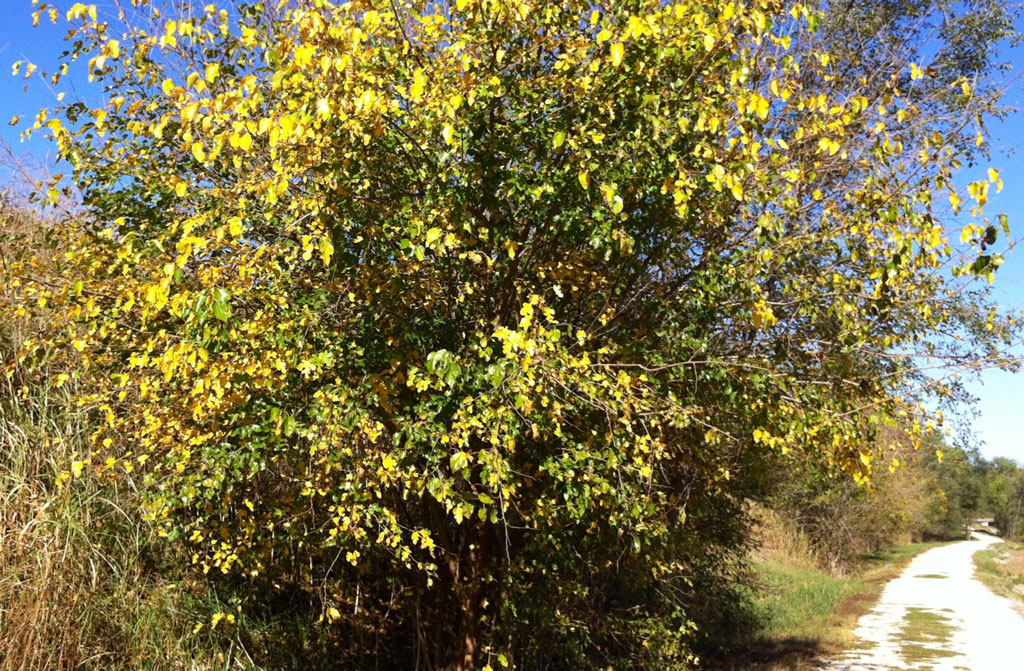
    1. I really like the changes in the camera functions. Now you can crop, enhance and Tweet, all built in. The photo here is one I took and did all three functions while out jogging on the Katy Trail (I stopped for a few seconds :)) a while ago. Click on the photo for a larger version. When the phone is asleep you can just double click the home button, click the camera icon that now appears and you’re ready to shoot. No waking the phone up, finding and opening the camera app. The volume up control now lets you snap the shutter too which is a big help.

    2. I was very confused about where my music went since there is no longer an iPod app. There is now one called Music instead. It only has your music. Videos have been moved to the Videos app. Makes sense and I breathed a sigh of relief. At first I thought it might have had something to do with the whole iCloud thing and music that you purchased through iTunes. The majority of music in on my computer came from CD’s that I own.

    Other than that about all I can add right now is that there have been a lot of app updates. Getting those and updating them via iTunes took quite a while this morning. I know this isn’t a lot of information but those are just a few initial observations.

    Tomorrow I am supposed to get my new iPhone 4S. After I get that set up I’ll share more.

    Apps

    Farm Bureau Says FCC Must Test Technical Fixes for GPS

    Cindy Zimmerman

    afbfThe American Farm Bureau Federation (AFBF) says the Federal Communications Commission (FCC) and an independent technical company must complete comprehensive and rigorous testing on all proposed technical fixes to ensure there is no interference between broadband and GPS signals that could be created by a broadband network being developed by LightSquared.

    “It is critical that costs for resolving this issue are not passed along to farmers and ranchers through higher GPS or equipment costs,” AFBF President Bob Stallman said during a House Small Business Committee hearing on Wednesday. “LightSquared should cover the expense of all technical fixes related to the interference issue to ensure the cost is not passed along to farmers and ranchers.”

    Many farmers rely on GPS for precision agriculture. This includes using GPS for accurate mapping of field boundaries, roads and irrigation systems; for precision planting; and for targeting the application of fertilizer and chemicals that combat weeds and crop diseases. GPS also allows farmers to work in their fields despite low-visibility conditions such as rain, dust, fog and darkness.

    “While the deployment of broadband services is important for economic development, better education and improved health services in rural America, the use of precision agriculture is vital to America’s farmers and ranchers as they continue to feed, fuel and clothe the world,” Stallman said.

    AFBF submitted comments to the FCC
    in July urging the agency to ensure there is no interference with GPS receivers prior to granting LightSquared permission to operate its high-powered base stations.

    AFBF, Precision Agriculture

    Many Attend 25th Georgia Peanut Tour

    Cindy Zimmerman

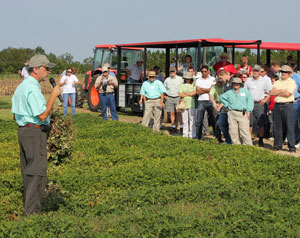
    The 25th Georgia Peanut Tour this year hosted participants from 12 states and international attendees from Belgium, Canada and Argentina.

    The event, held at the end of September in the Southwest area of Georgia, allowed many first time attendees to actually walk through a peanut field and see peanuts plowed up with a digger at harvest. The tour included stops in some of the top ten peanut producing counties in Georgia including Decatur, Seminole, Miller and Early counties.

    The Georgia Peanut Tour brings the latest information on peanuts while giving a first-hand view of industry quality and infrastructure from production and handling to processing and utilization. The 2011 tour included farm visits, peanut harvest clinics, production research at the University of Georgia Attapulgus Research and Education Center, peanut handling and grading facilities and on-farm demonstrations. The tour also included a visit to LMC and American Peanut Growers Group in Donalsonville, Ga., Birdsong Peanuts, JLA and Olam Edible Nuts in Blakely, Ga.

    The Georgia Peanut Tour is coordinated by the Georgia Peanut Commission, the University of Georgia Tifton and Griffin Campus, Southwest Georgia Research and Education Center in Plains, Attapulgus Research and Education Center and the USDA ARS National Peanut Research Laboratory in Dawson, Ga.

    See photos from the tour by the Georgia Peanut Commission on Flickr and find out more on the Georgia Peanut tour blog.

    Peanuts

    Giving Walnuts a Black Eye

    Melissa Sandfort

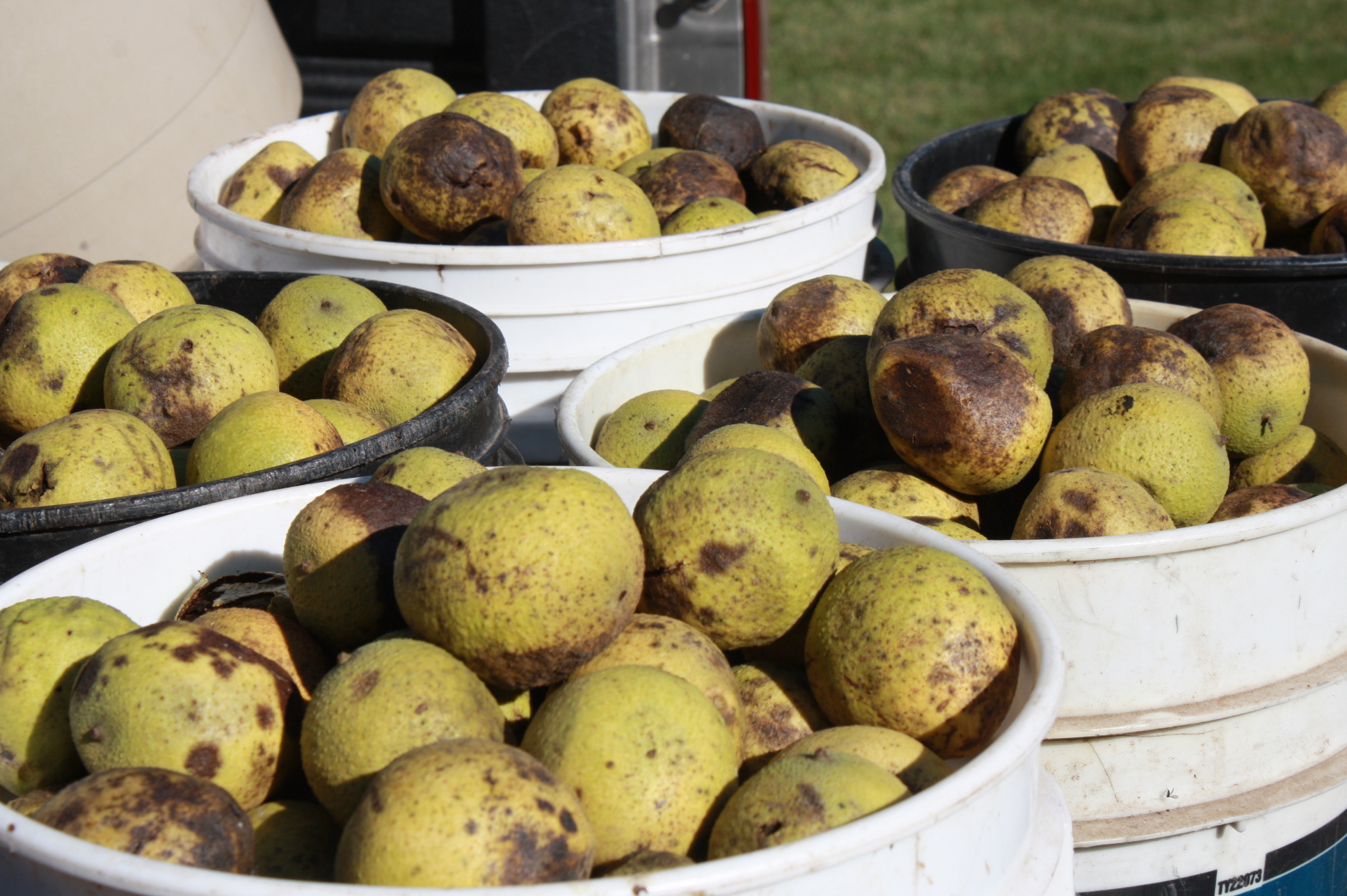
    Some cookies and bars are just better with walnuts. English walnuts, that is. But each year, my grandparents spend countless hours collecting, sifting, shelling and selling black walnuts. This is also the time of year that, when Grandma sends cookies home with you, you inspect them first and if they pass the non-black-walnut smell test, they’re safe to eat.

    I know I’m being biased about my particular taste preferences, but I compare it to black licorice, which I also don’t like.

    We have five very large black walnut trees along the creek in our yard and one of these days, I’ll put my son to work helping me pick them up for Grandpa. Not that I want to contribute to the cookie fear factor, but Grandpa is 89 and I figure I’m more able to bend over for an hour picking the darn things up. (Boy how I wish I could turn those into English walnut trees.)

    The things we do for our grandparents!

    Until we walk again …

    Uncategorized

    Agriculture Groups Praise Passage of Trade Pacts

    Cindy Zimmerman

    Agricultural interests have been trying for nearly five years to get Washington to act on three free trade agreements and finally in just over a week they have been sent to Congress and passed by significant majorities.

    The trade agreements with South Korea, Panama and Columbia were each voted on separately and passed in rapid succession Wednesday, first by the House and then by the Senate. The votes in the House were 278-151 for South Korea, 300-129 for Panama and 262-167 for Colombia. In the Senate, it was 83-15 for South Korea, 77-22 for Panama and 66-33 for Colombia. The president is expected to sign them.

    Farm groups were quick to praise the long-awaited action that is expected to mean increased exports for a variety of agricultural commodities.

    “The three free trade agreements with Korea, Colombia and Panama provide great opportunities for America’s farmers,” said National Corn Growers Association President Garry Niemeyer of Illinois, adding that U.S. farmers have been standing by watching other nations receive increased access to these markets as the FTAs waited in limbo.

    National Cattlemen’s Beef Association
    (NCBA) President Bill Donald of Montana was pleased to see Congress put differences aside to pass the trade deals. “For too long, the trade agreements have been collecting dust,” he said, noting that cattlemen have a lot to gain when the agreements are fully implemented by reducing and eliminating import tariffs on U.S. beef imposed by Colombia (80 percent), Panama (30 percent) and South Korea (40 percent).

    Pork producers also have much to gain under the agreements, according to National Pork Producers Council president Doug Wolf of Wisconsin who called passage of the FTAs “one of the greatest victories ever for the U.S. pork industry” since it is expected to add more than $11 to the price producers receive for each hog marketed.

    Agriculture Secretary Tom Vilsack says passage of the agreements means over $2.3 billion in additional exports for American agriculture as a whole. “Immediately upon implementation of these agreements, the majority of American products exported to Korea, Colombia and Panama will become duty-free,” said Vilsack. “With record agricultural exports supporting more than a million jobs here at home, passage of these deals will contribute to a positive U.S. trade balance, create jobs, and provide new income opportunities for our nation’s agricultural producers, small businesses, and rural communities.”

    The only question is, what took so long?

    NCBA, NCGA, NPPC, Trade

    Soybean Harvesting

    Chuck Zimmerman

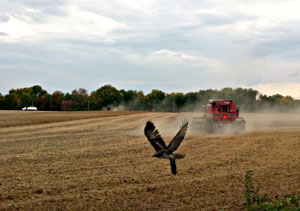
    It is very dry here in mid Missouri. At times you can’t even see a combine as it moves through a soybean field. I saw these guys hard at it while I was biking along the Katy Trail yesterday. So I shot a couple of video clips with my phone.

    The interesting part was when I looked at the video I found that a hawk had flown in between me and one of the combines. And the hawk had what looks like a small rabbit in its talons. You can see it in the video about half way through.

    Soybean, Video

    Blog Action Day and World Food Day Coincide

    Chuck Zimmerman

    Let’s talk about food. Okay. We can do that. In fact, we love to talk about food and the farmers who produce it. Here in the USA we’re very blessed to have the the most abundant, safe and affordable food supply in the world. We also ship more of it in the form of food aid around the world than any other country. So if we’re going to talk about food let’s not forget the farmers who produce it!

    Since Sunday, October 16 is World Food Day, the folks at Blog Action Day decided to make food their topic. AgWired is signed up. Maybe you should too.

    For 2011, our Blog Action Day coincides with World Food Day, so our topic of discussion for this year will be food. Take the first step now and sign-up your blog to Blog Action Day and then look at our suggested topics for some food flavoured inspiration to discuss.


    World Food Day, October 16th, is a worldwide event designed to increase awareness, understanding and informed, year-around action to alleviate hunger.

    Food