
Drink Orange Juice, Be Happy

Chuck Zimmerman

According to new research from the Florida Department of Citrus, drinking orange juice “actually made participants feel positive, carefree and rejuvenated.”

Through a patented research process designed to reveal unconscious emotions, consumers shared their thoughts and feelings about orange juice and its role in their lives. Findings showed that while participants view their daily life as a “hard road,” the simple act of drinking orange juice provides a momentary “escape” to a more positive mindset. The rejuvenating feelings they get from a glass of orange juice helps give them the energy and resolve to take on the day.

Research participants shared positive emotions about orange juice through analogies and memories. For example, one respondent likened orange juice to a “water station” in the marathon of life, while another described life as an everyday battle in which orange juice helps to “carry you through the day and help you win the war.” Another participant shared, “orange juice almost makes me feel like a child again, where I was comfortable, cozy, and secure.”

The link between orange juice and a more positive outlook revealed through in-depth interviews with a small group of participants was also supported by a recent survey of 1,002 adults nationwide, which showed more than half of the respondents believe drinking a glass of orange juice provides an energizing boost, while 33 percent said it is a simple way to help improve their mood. Furthermore, when American adults drink orange juice, 56 percent of those surveyed said they feel rejuvenated, followed by calm, positive, happy and alive.

This sounds like a good alternative to “energy” drinks and a lot less expensive.
Ag Groups, Citrus, Food

Pheasant Hunting Success

Chuck Zimmerman

You may find it hard to believe but I enjoyed a couple days off the grid. Only used my computer to import photos from my camera and a couple of the guys I was hunting pheasant with. It was a nice break but I’m back at ZimmComm World Headquarters and ready to rock and roll.

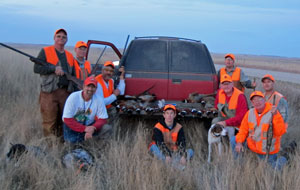
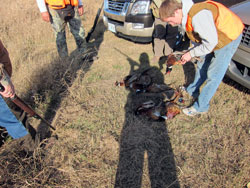
This is our group with most of a day’s batch of feisty pheasants. Central South Dakota conditions were just about perfect. Sunny, dry but very dusty. The birds were there but we had to cover a lot of ground to find them. But after is was over we all had our daily limits of roosters!

We hunted on a row crop/livestock farm. It is a beautiful operation. Most of the birds we found were in Conservation Reserve Program fields with shoulder high grass. That made for some leg muscle burn! The farm is a good example of how serious farmers take responsibility for good care of the land they tend. They’re helping feed many other people, taking care of the environment and providing an opportunity for outdoor recreation. It doesn’t get any better than that.

Hunting

Zimfo Bytes

Melissa Sandfort

    Zimfo Bytes

  • Canada’s Outdoor Shows Limited has been acquired by Vancouver-based Glacier Media.
  • As part of the inaugural “Yield Signs 4 Success” Program, SFP recently announced the National 4-H Council won its 30-Day Facebook Challenge. SFP will donate $2,000 to 4-H to further its agricultural education endeavors with America’s youth.
  • ABS Global, Inc. is pleased to announce Chris Berning has joined the North America team as Business Development Director.
  • The Verifi bed bug detector is a breakthrough in bed bug inspection technology.
Zimfo Bytes

UN Kicks off International Year of Cooperatives

Cindy Zimmerman

On the same day the world was officially proclaimed home of seven billion souls, the United Nations General Assembly officially declared 2012 as the International Year of Cooperatives with the theme of “Cooperative Enterprises Build a Better World”.

“This Day of 7 Billion – is not about one newborn, or even one generation,” Secretary-General Ban Ki-moon said. “This is a day about our entire human family.”

According to the U.N., one billion of the seven billion souls on the planet belongs to a cooperative and such cooperatives, especially in agriculture, are important to alleviating poverty and increasing economic opportunities in less developed countries.

According to the latest Global300 report, released today and prepared by the International Co-operative Alliance, the world’s largest 300 co-operatives generate revenues of $1.6 trillion—equal to the GDP of the world’s ninth largest economy. Most of the 300 largest cooperatives are found in the developed economies of France, Germany, Japan, Netherlands and the United States, with 30 per cent engaged in the agriculture and food sectors, 23 per cent in retailing, 22 per cent in insurance and 19 per cent in banking.

Among the successful cooperatives that will be participating in the yearlong cooperative celebration is GROWMARK. More than 150 representatives of the world’s largest co-operatives are in New York City for the official launch and side events this week.

GROWMARK is a member of the National Cooperative Business Association (NCBA) and the Canadian Cooperative Association (CCA) – both of which are supporting the campaign – and member cooperatives are being encouraged to participate on a local level with promotional materials, such as window clings, posters and other graphic pieces. GROWMARK will publish a 2012 calendar with photos that exemplify the cooperative spirit.

Cooperatives, GROWMARK

Black and Blue

Melissa Sandfort

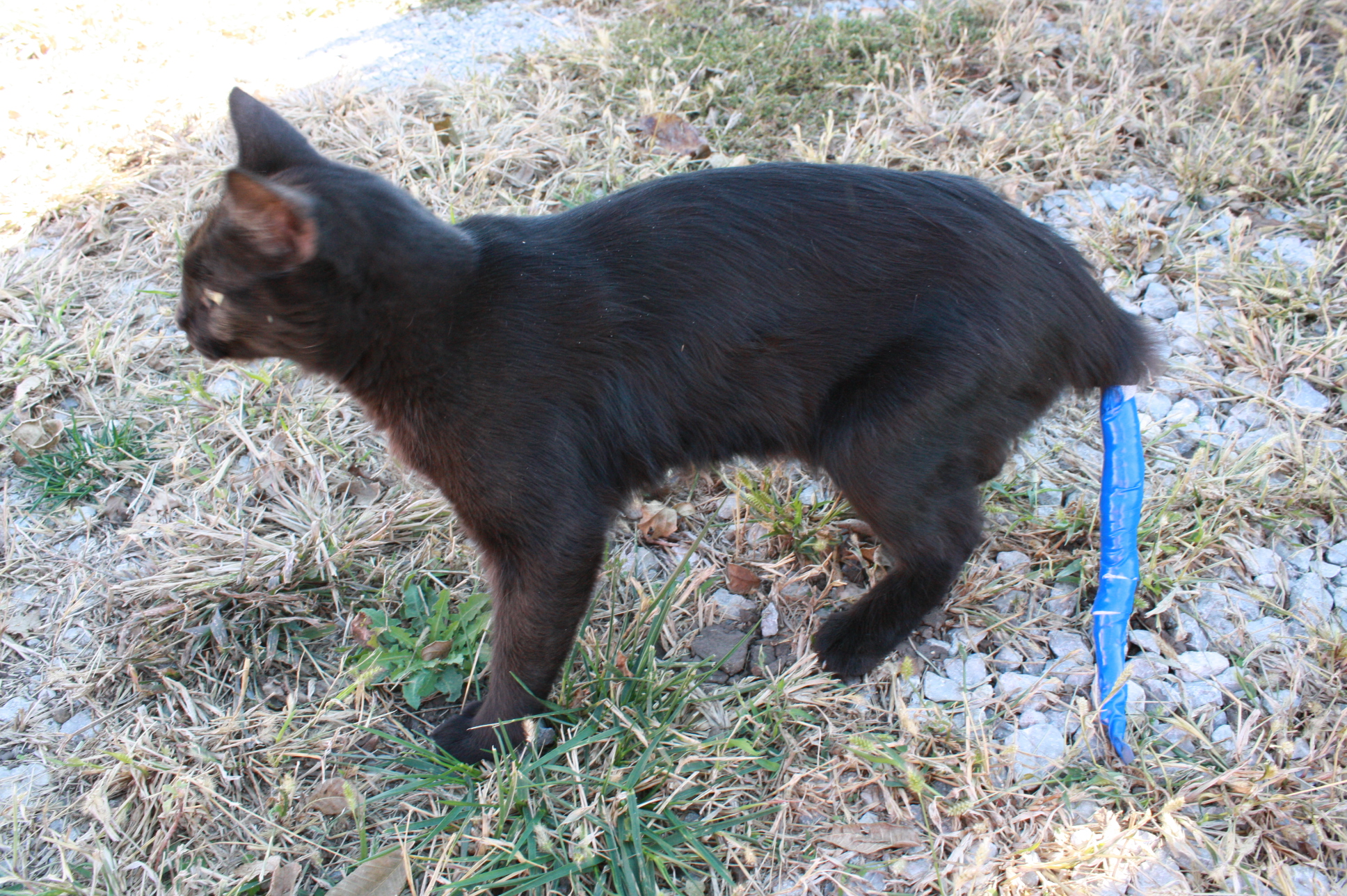
I’ll spare you the details. Let’s just say black kitty had a bout with my husband’s truck. May have been a fan belt, may have been the motor, we’re not really sure. But we found two large tufts of fur laying in the driveway and a black kitty missing the back 2/3 of her tail. Well, the fur anyway.

She was making quite a mess around the house. I spent the better part of an hour on my hands and knees scrubbing the cement with Clorox water to remove the blood stains and we knew we had to do something to help.

So we played veterinarian for a day.

I flopped her on her side and grabbed her legs. It probably looked like I was calf-tying her. She didn’t put up much of a fight to my surprise. My husband then wrapped gauze around her tail, followed by blue electrical tape. It was either a black and blue kitty or a Halloween kitty (his second color choice was orange tape). Given the time of year, we should’ve picked orange.

She seems to be fine and leaving the tape alone. But it’s a sad, sad sight to see this kitty and I think she’s embarrassed because she’s hiding in the trees out front. Hopefully she’ll heal and we’ll see if the fur grows back.

Farm cats. Gotta love ‘em.

Until we walk again …

Uncategorized

Annual Pheasant Hunt

Chuck Zimmerman

Hello from beautiful South Dakota. It’s pheasant hunting time for the AgriBlogger and a small group of guys.

We’ve got very marginal internet access so I’ll be a little “quiet” over the weekend. But things will ramp back up after getting home on Monday.

Right now it’s time to start getting ready for another day of exercise and good fellowship!

Uncategorized

Zimfo Bytes

Melissa Sandfort

    Zimfo Bytes

  • Agriculture.com recently released an updated mobile version of the leading agriculture site, m.agriculture.com, which now features an up-to-the-minute markets ticker, video, upgraded weather coverage and in-depth news and markets analysis.
  • Eighteen months after the introduction of the iPad, 11% of U.S. adults now own a tablet computer of some kind. But a majority says they would not be willing to pay for news content on these devices, according to the most detailed study to date of tablet users and how they interact with this new technology.
  • A total of 25 county Farm Bureaus from across the country were recognized by the American Farm Bureau Federation for innovative program ideas in this year’s County Activities of Excellence program.
  • Merck Animal Health has launched EXPERTIS Udder Health, an innovative farm management tool for veterinarians to better enable them to monitor and improve udder health in dairy cattle.
    Zimfo Bytes

    Why You Should Donate to the NAFB Foundation

    Cindy Zimmerman

    If you need some extra incentive to donate to the National Association of Farm Broadcasting Foundation – here it is.

    Make your donation of $100 or more to the NAFB Foundation, and your name will be entered in a chance to win an iPad 2 tablet!

    The real reason you should donate is because the NAFB Foundation helps ensure a strong future for the farm broadcasting profession and industry. The NAFB Foundation is the nonprofit charitable and educational arm of NAFB. It is focused on enhancing the value of agriculture, food production and rural lifestyle through the various forms of broadcasting, while assisting and benefiting industry partners, students, future broadcasters and the general broadcast audience.

    So when NAFB president Tom Steever or one of the other officers calls and asks you to donate this year, just say yes. And you might win a new iPad.

    NAFB

    John Deere Kicks Off “CAN DO” Project

    Cindy Zimmerman

    John Deere is trying to build a combine out of cans.

    We’re talking about 300,000 cans of food here to replicate a full-sized S-Series combine in a field. It would be a world record. Kind of like what America’s farmers do every year – set new records in feeding the world.
    The John Deere Project ”CAN DO” combine sculpture and food donation program are designed to raise awareness of the essential role farmers and ranchers play in producing safe, healthy and abundant food for a growing world population, while supplying much needed food supplies to a local food bank during the holiday season. The more than 300,000 cans of food needed to complete the sculpture are donated by John Deere with delivery from Hy-Vee Food Stores. When completed, the sculpture will be 60 feet wide, 80 feet long and 16 feet tall and will weigh nearly 170 tons. The sculpture depicts John Deere’s new S-690 Combine, which is the world’s most powerful combine that can harvest more than 350 acres of grain a day.

    Project “CAN DO” also gives consumers a chance to be a part of building the can sculpture by ‘virtually’ creating cans of food, explains Richard Williamson, art director for John Deere Ag and Turf. “Anyone interested in participating can go to the John Deere Facebook page www.facebook.com/johndeere to submit their name and a photograph, which will be wrapped around their virtual personalized food can as part of a virtual sculpture.”

    Helping to design the combine sculpture is a team from the Chicago office of architectural firm, RTKL. John Deere employees and retirees will also volunteer to assist with the overall project. The combine can sculpture will be on display at the John Deere Pavilion in downtown Moline, Ill., from mid-November to mid-December. All the canned food will be donated to the River Bend Foodbank when the sculpture is dismantled.

    Find out more from John Deere.

    Learn how this project came to be in this video:

    John Deere, Video

    FS PARTNERS Pioneering QR Codes in the Field

    Cindy Zimmerman

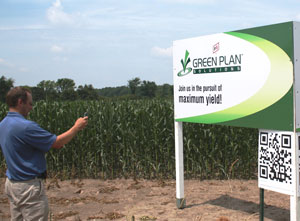
    FS PARTNERS in Ontario is pioneering a new use for QR codes in the field so farmers can access updated information about test plots. In case you are not yet familiar with them, QR is short for Quick Response and they are those bar code looking things you can read with a smart phone that are starting to pop up every where these days.

    Juli Paladino, FS PARTNERS retail energy administrator in Ontario, helped develop the use of this communications technology for Pursuit of Maximum Yield corn and soybean plots. “So, you’re at a Pursuit of Maximum Yield site, you’re going to scan it and it’s going to take you right to information on our field trials,” she explains. That information can include seed information, treatments, planting dates and even audio updates tailored specifically to that particular site.

    As smartphones become more prevalent, people are becoming more familiar with using QR codes to get information, but Juli says they have actually been around for a while. “Originally they were developed in 1994 by Toyota in Japan to track parts,” she said. “It’s been a very commonplace technology in Japan and Asia.”

    While consumers in the United States has been slower to adopt the use of QR codes, Juli says farmers are quicker to pick up on new technology. “Farmers are at a higher rate than the general public to be adopting mobile phone technology. They’ve got the smart phone and they’re ready to use it.”

    FS PARTNERS used the QR codes at plots in Ontario this year and Juli expects to see more widespread use of the technology at the Pursuit of Maximum Yield plots in the Corn Belt next year. The Pursuit of Maximum Yield is an FS Green Plan Solutions on-farm discovery program geared toward increasing yield per acre to meet the demands of a growing world population.

    Listen to or download my interview with July here: Juli Paladino Interview

    Audio, Farming, GROWMARK, Technology