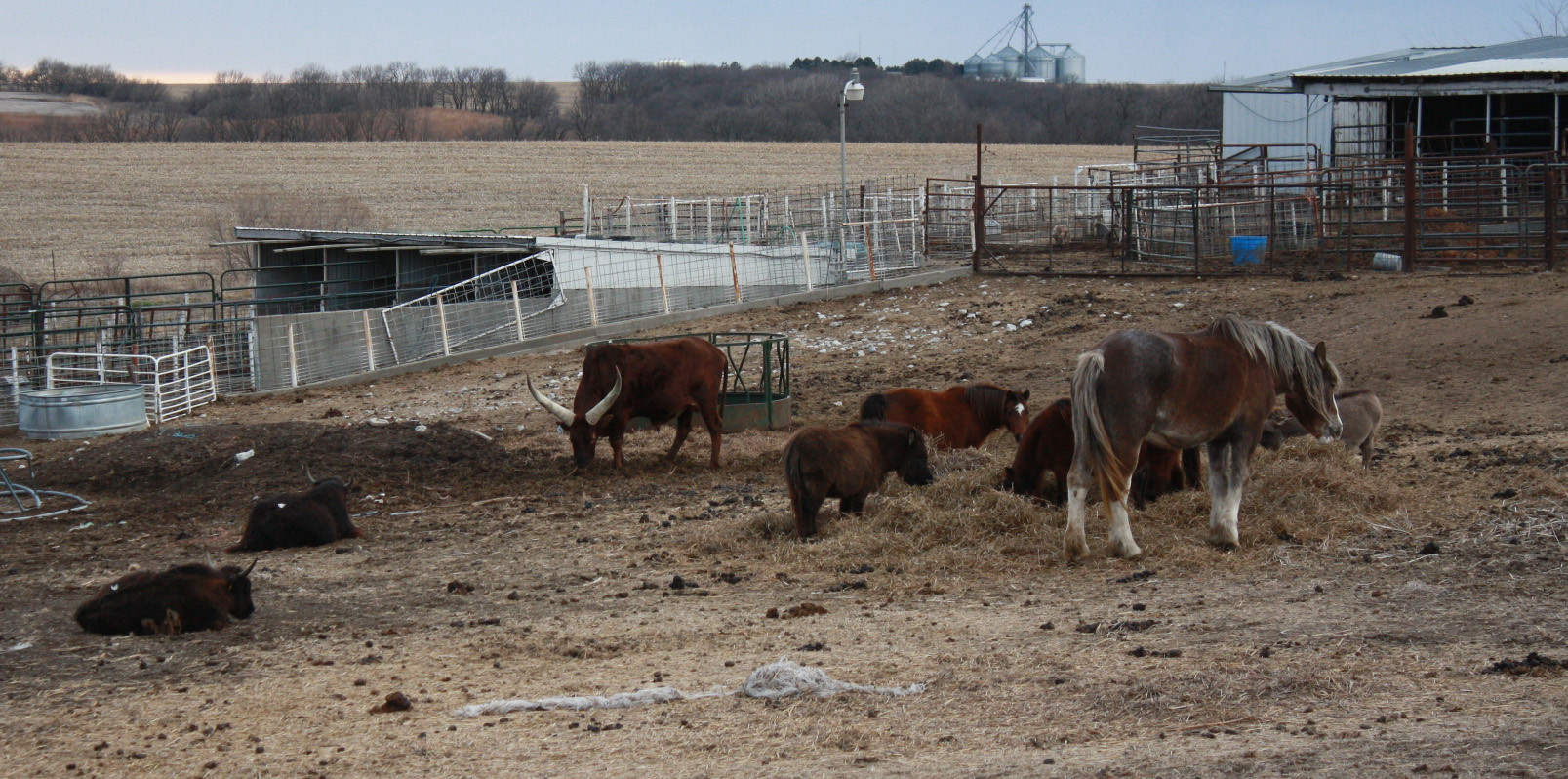
Last year was a challenging year for corn growers, but the winners in the 2011 National Corn Growers Association (NCGA) National Corn Yield Contest proved that good yields are still possible with good crop protection.
 Nearly two-thirds (61%) of the winners for last year’s growing season used a BASF Crop Protection product to achieve their outstanding yields, according to the folks at BASF Crop Protection. They report that half of the 18 national winners applied Headline® fungicide or Headline AMP™ fungicide to their winning cornfields, and contest winners also used other BASF crop protection products including Guardsman Max® herbicide and Status® herbicide.
 In the national 2011 NCGA Yield Contest, BASF Crop Protection products helped to capture three first-place finishes, four second-place finishes and three third-place finishes. Headline AMP was overwhelmingly the fungicide of choice, helping yield four of the top five overall national winners.
For the third consecutive year, David Hula of Charles City, Virginia, had the highest overall yield. By producing 429.02 bushels per acre (bu/A), Hula’s winning fields more than doubled the national yield average. Hula utilized Headline AMP on his winning cornfields.
“I’ve used Headline on my winning yields for the past two years. This year I used Headline AMP, which includes the same active ingredient as Headline fungicide but with an added triazole, and my corn looked better than ever,” Hula said. “Each year, BASF fungicides prove an ability to fight disease, provide Plant Health benefits and help maximize yields. There are a lot of things when you’re growing corn that aren’t predictable, but the fungicides from BASF always provide consistent reliability.”
Winners in the contest will be recognized on Friday, March 2, at the National Corn Yield Contest State Award Winners Breakfast during the 2012 Commodity Classic in Nashville.
 Contrary to popular belief, eating beef is not bad for the environment and Dr. Jude Capper with the Department of Animal Sciences at Washington State University has
  American consumers have never had a safer supply of beef, but there’s always room for improvement, according to Dr. Guy Loneragan, professor of food safety and public health at Texas Tech University,
 Guy says that there are several ways producers can do even more to avoid problems on the pre-harvest level. “The first thing I would say is for producers to stay engaged and be engaged, because knowledge is a very powerful weapon,” he said. “Beyond that, the industry has invested quite heavily into the development of several promising controls, like pro-biotics – the beneficial bacteria we find in yogurt, some strains appears to be quite effective in cattle too.”
 More than 200 young people from 25 states participated in the youth cattle judging contest held in conjunction with the 2012 Cattle Industry Convention and
  NCBA youth programs were championed by former NCBA President Andy Groseta of Cottonwood, Ariz., who prompted the organization to develop additional programs for youth in the cattle industry. The judging contest has grown significantly since first introduced at the 2009 Cattle Industry Convention, where 60 young people competed.
  Dr. Lowell Catlett, New Mexico State University economist and futurist, has been looking into the agricultural crystal ball for nearly 30 years. I remember seeing him speak back when Timbuk3 had their one-hit wonder
  One thing that makes him so entertaining is his facial expressions – that’s why I wanted to use several photos here. He makes his points without the aid of power points – he certainly doesn’t need them!
 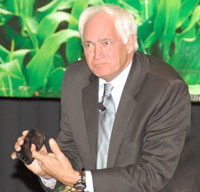 Lowell also talked about how smart phones are helping farmers. “You’ve got the ability to take that mobile technology and do plant diagnostics with it,” he said. In the future, he sees the use of open source hardware (not just software) and 3D assembly that could allow manufacturing to actually be done on site with local materials, like building tractors on farms in developing nations.