Zimfo Bytes

Melissa Sandfort

Zimfo Bytes

EPA Denies NRDC Petition

Cindy Zimmerman

The Environmental Protection Agency (EPA) has denied a 2008 petition by the Natural Resources Defense Council (NRDC) seeking to cancel 2,4-D herbicide registrations and revoke all the tolerances for use.

“The impact of this decision should not be understated,” said Jim Gray, executive director of the Industry Task Force II on 2,4-D Research Data. “EPA’s comprehensive review of one of the most extensive scientific data bases of a pesticide confirmed the Agency’s previous finding that the 2,4-D tolerances are acceptable.”

In the decision, EPA noted that based on “studies addressing endocrine effects on wildlife species and the adequacy of personal protective equipment for workers, the Agency concluded that the science behind our current ecological and worker risk assessments for 2,4-D is sound and there is no basis to change the registrations.”

“This has been one of the most widely used and successful herbicides in history and growers along with other users around the U.S. and the world can continue to use it with confidence”, added Gray. “EPA’s most recent decision is consistent with findings of other authorities such as the World Health Organization, Health Canada’s Pest Management Regulatory Agency and the European Commission.”

The US EPA conducted a thorough evaluation of all of the available information, including GLP studies, peer-reviewed studies, as well as the anecdotal information submitted by the pressure groups. This determination follows the 2005 Re-registration Eligibility Decision which encompassed 17 years of scientific evaluation.

As EPA correctly notes, “2,4-D is a phenoxy herbicide and plant growth regulator that has been used in the U.S. since the 1940s. It is currently found in approximately 600 products registered for agricultural, residential, industrial, and aquatic uses.” The original patent for 2,4-D was actually issued in 1945 and today it is one of the most widely used herbicides in the world for a variety of crops including wheat, corn, rice, soybeans, potatoes, sugar cane, pome fruits, stone fruits and nuts. In addition, 2,4-D controls invasive species in pastures, aquatic areas and federally protected areas and broadleaf weeds in turf grass.

Give EPA some brownie points for this decision!

Crop Protection, Environment

Founding Fathers Beer Helps Armed Forces Relief Trust

Chuck Zimmerman

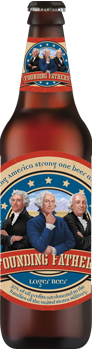
Here’s a beer our Founding Fathers would be proud of. It’s named, “Founding Fathers Beer.” Right now distribution is limited but there are a number of states where you can find it. If you do find and purchase some Founding Fathers Brew you’ll be helping a good cause. Listen to their new jingle: Founding Fathers Beer Jingle
Founding Fathers Beer, a new American lager both owned and brewed in the United States that will donate half of its profits to the families of military troops, is now available in Tennessee. Operation Homefront Tennessee and the Armed Forces Relief Trust will receive 50 percent of the profits from Founding Fathers Beer sold in Tennessee.

Founding Fathers Products, a company dedicated to producing products that represent the ideals embraced by early America, launched Founding Fathers Lager in Minnesota and North Dakota last November, and recently debuted Founding Fathers Light Beer. Both the Lager and the Light are available in Tennessee, and will soon be available in Alabama, Florida, Georgia, Pennsylvania and South Carolina.

“The largest breweries in America are now foreign-owned,” said Phil Knutsen, founder and CEO. “Founding Fathers is not only owned and brewed in America, but half of the profits will go to those serving in our armed forces and their families. We are thrilled to be introducing a new American beer choice that will both taste great and compete with the major, national foreign-owned brands.”

Founding Fathers was established in 2009 by Knutsen and a team of investors who believe retail shelves need more American-made products that serve an important cause.

Audio, Food

BASF Applies to Register Engenia Herbicide

Cindy Zimmerman

BASF Crop Protection has submitted application for the registration of new Engenia™ herbicide, a technologically advanced dicamba formulation.

Farmers will be able to use the new product in combination with other herbicides and agronomic practices, under a weed control system enabled by dicamba-tolerant crops currently in development.

“Farmers fighting against herbicide resistance have an important new tool in Engenia which, field research shows, will offer excellent weed control and crop safety, as well as low-volatility characteristics for improved on-target application,” said Paul Rea, Vice President, U.S. Crop Protection, BASF.

Engenia will deliver broad-spectrum burndown of more than 100 annual broadleaf weeds, including tough, glyphosate-resistant weeds like Palmer amaranth, waterhemp, marestail, velvetleaf, morningglory and giant ragweed. In fact, field research demonstrates that Engenia is more effective than 2,4-D on many problem weeds, such as velvetleaf, marestail, giant ragweed and morningglory.
A registration decision by the U. S. Environmental Protection Agency (EPA) for Engenia is anticipated in a parallel time frame with commercialization of a dicamba-tolerant soybean system.
Commercialization of the dicamba-tolerant system for soybeans is expected in the U.S. mid-decade, with cotton, corn and canola to follow.
(Read more from BASF)

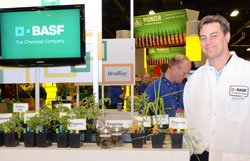
We had a chance to see how Engenia works at the 2012 Commodity Classic, with the help of BASF ag biologist Chad Brommer, who explained how the product is researched and tested in the lab. We shot a little video of Chad doing some show-and-tell, which you can see below.

BASF, Commodity Classic, Video

Total Grain and Fertilizer on Track

Cindy Zimmerman

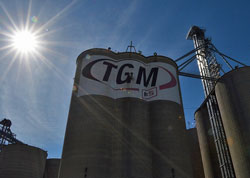
Total Grain Marketing (TGM) handled 70 million bushels of grain at its 31 locations in Illinois last year and this year is likely to be even more.

During the recent GROWMARK media tour, we visited TGM and South Central FS in Casey (that’s pronounced Cay-zee) and learned about that facility in particular which was created when the two entities joined in 2010 as part of the GROWMARK and FS member companies partnership that was started in 2006.

“We have an 8 million bushel elevator, it is on the CSX railroad, we are a 90 car unit train express load shipper, and handle about 16 million bushels of grain a year,” South Central FS CEO Randy Handel said. That express loading process can rival a pit stop in the Indy Car Series. “We have 15 hours from when the train comes to load it, grade it and put the train back together and have it ready for the CSX to take,” he says, noting that they can load 1,000 bushels a minute – or 90 cars in six hours or less.

Randy says the venture between South Central and TGM has been very successful. “It’s been a win-win for our local grain producer in that it has helped enhance their margin, it’s been profitable for us as a company, but we’re a local cooperative so in turn it’s profitable for our owners and members,” he said. Most of the grain goes to the southeast to the poultry market and ADM and Bungee on the bean market.

We also got to visit the brand new GROWMARK-owned fertilizer facility on the same site. “It is a 25,000 ton dry fertilizer blend facility and a 10,000 ton solution facility and this is the first spring we are using it,” Randy said. The fertilizer facility also benefits from being right on the rail line. “It’s a very good location being on the CSX track and it’s good sharing the resources with our grain elevator and it’s a very strategic location.”

Listen to my interview with Randy Handel here: South Central FS CEO Randy Handel

See more photos from the TGM visit here: GROWMARK 2012 Media Day

Audio, Fertilizer, Grains, GROWMARK

McCormick Opens Indiana Office

Chuck Zimmerman

McCormick Company has opened a new office in central Indiana. Seated is Norm Cosand, VP/Group Director & Manager of the new office. I’m just wondering if Norm’s desk is always that clean!

Located at the Delaware Crossing I business complex on 10150 Lantern Road in Fishers, Ind., it is one of six McCormick offices in the United States, Canada and France.

“Opening an office in the Indianapolis area is a natural way to enhance our service to clients in Indiana and nearby states,” says Norm Cosand, vice president / group director and manager of McCormick’s new office. “Our locally based staff will partner with specialists in our other offices to bring smart thinking and metrics-based results. Ultimately, we’re building on McCormick’s 86-year reputation for helping clients grow through brand differentiation.”

Founded in 1926, McCormick Company is the 10th-oldest integrated marketing communications agency in the United States, according to the American Association of Advertising Agencies. Today, McCormick is an independent, employee-owned agency that provides strategic and creative expertise to help its clients grow. McCormick (www.mccormickcompany.com) has locations in Amarillo, Texas; Des Moines, Iowa; Indianapolis, Ind.; and Kansas City, Mo.; as well as in Canada and France.

Agencies

MustangRed Communications Announced

Chuck Zimmerman

Our friend Sally has just announced her new business, MustangRed Communications. Go Like her on Facebook.

Greetings friends! I’m excited to announce the launch of my new company, MustangRED Communications! MustangRED consists of myself and my large network of agribusiness marketing communications specialists, including graphic designers, Web developers, media experts, trade show exhibit and materials vendors and many others.

MustangRED will offer a wide variety of marketing and communications services for agribusiness, including strategic planning, public and media relations, trade show and event marketing, crisis planning and management, issues management and social media monitoring, strategy and management.

The MustangRED network offers expertise in the areas of agricultural chemical, animal health (including swine, poultry, beef, equine and pet), agricultural equipment, fertilizer, seed/biotech and many other agricultural market segments.

In addition to a wide array of marketing communications services, MustangRED will also provide a robust selection of communications training courses, including:

Media relations and effective interview techniques
Optimizing trade show booth staff efficacy
Crisis management
Issues management
Social media policy development for business
Evaluating the ROI of social media

To learn more about the products and services that MustangRED Communications can provide, contact me at sally@mustangred.com or via telephone at (785) 218-9759. Or, if you’ll be at the National AgriMarketing Conference next week, say “Hi!” and I’ll be happy to tell you all about it!

Thank you for your support!
Sally Behringer
President and CEO
MustangRED Communications

Uncategorized

Monsanto Broadens Roundup Ready Plus Platform

Cindy Zimmerman

Monsanto has broadened its Roundup Ready PLUS™ platform to provide growers with additional post-emergence herbicide options this spring.

The company’s Weed Management Solutions platform now includes two more post-emergence herbicides for use in soybeans to handle those tough-to-control weeds, such as waterhemp and Palmer amaranth pigweed.
According to Dr. Rick Cole, Weed Management Technical Lead for Monsanto, Midwestern soybean growers are becoming increasingly aware of the threat of weed resistance to various herbicides, and the best way to manage weed resistance is to use residual herbicides this spring.

“Farmers need to be proactive in taking steps now to manage establishment of tough-to-control weeds, including those resistant to glyphosate or other types of herbicide chemistries,” Cole says. “This is true whether they have experienced weed resistance or not.”

The additional post-emergence herbicides for Roundup Ready PLUS in 2012 include Cobra® and Flexstar®. Cobra is an excellent fit for northern states due to its activity on waterhemp, while Flexstar will be offered for use in the Mid-South region of Arkansas, Mississippi and west Tennessee because of its efficacy against Palmer amaranth pigweed.

“We listened to our customers, who were concerned about what options farmers might have to fall back on if there wasn’t sufficient rain to activate our lineup of pre-plant and pre-emergence residual herbicides,” Cole says. “In the event of dry conditions, growers will now have more post-emergence residual herbicide options in soybeans.”

Read more from Monsanto here.

Soybean

Just Say NO to No HFCS

Cindy Zimmerman

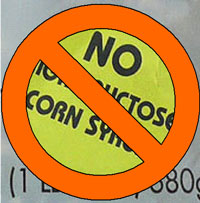
The National Corn Growers Association (NCGA) is urging the food industry to stop the anti-high fructose corn syrup marketing “scam.”

In recent letters to food marketers, NCGA called on them to stop marketing products as not containing high fructose corn syrup, implying there is something especially unhealthy or unnatural about corn sugar.

“Such innuendos are not scientifically supportable and they are offensive to the hundreds of thousands of U.S. consumers that grow corn as well as the many others in rural communities,” NCGA CEO Rick Tolman wrote in letters to the chief marketing officers at Welch Foods and Dean Foods, producers respectively of Welch’s Natural Spreads and TruMoo Chocolate Milk, just two examples of anti-HFCS marketing. “Your focus on health and nutrition are commendable and supportable. Those points can all be well made without the reference to HFCS.”

While the March 21 letters did lead to a dialog with Dean Foods, their response to-date has been unsatisfactory, Tolman noted in a follow-up letter.

“As you pointed out, you are a significant user of HFCS in other products and are familiar with the science supporting the manufacturing, safety, and functional properties of HFCS. Therefore, you know there is no scientific basis for the preference you see from consumers. It is a misperception. A big part of that problem is that the type of advertising you are doing with respect to HFCS perpetuates this misperception. That is our concern. You are using a misperception to differentiate your product and therefore helping to perpetuate that misperception.”

Read the letters here.

Corn, Food, NCGA

From Arkansas Farm to BASF Weed Control Expert

Cindy Zimmerman

We have interviewed Dr. Dan Westberg many times over the past several years about BASF Crop Protection products, particularly his work with Kixor herbicide technology. But, we took a few minutes to get to know dapper “Dr. Dan” a little better at this year’s Commodity Classic.
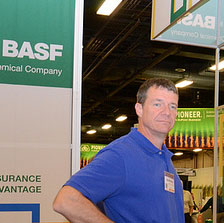
Dan’s interest in weeds goes back to his roots. “I grew up on a small farm in northwest Arkansas and I started to work when I was in college at the (University of Arkansas) Altheimer lab with the weed science group,” Dan said. “So I got very interested in weed science and controlling weeds in row crops and helping growers solve the problems that they had.” He got his Masters in Weed Science at Arkansas and his PhD from North Carolina State University and then took a field position with Sandoz.

He joined BASF 21 years ago when the company bought the Sandoz corn business, and that allowed young Dr. Westberg to see the world. “For the first couple of years I got to travel internationally to develop markets outside of the U.S.,” he said. “It was a great opportunity to visit Brazil, Argentina, virtually every country in Europe, particularly France and Germany.”

In 2002, Dan became responsible for the global development of Kixor herbicide technology and was able to play a role in its launch. “You don’t get the opportunity more than once in a career to work from start to finish with an active ingredient, so it’s been really rewarding,” he said.

Now the weed control expert’s big focus is on helping farmers fight glyphosate resistant weeds. “Glyphosate-resistant Palmer Ameranth has really taken over the mid-south and the southeast to the point that growers are losing some of their fields to this weed,” he said. “And this last year in 2011 was a tipping point for waterhemp in many areas of the Midwest. Certainly the southern third to half of Illinois and Missouri are probably already there with the level of problems that they have with waterhemp and it’s something that we need to start dealing with proactively.”

BASF has a number of tools in its herbicide portfolio to deal with problem weeds. “It actually represents ten different sites of action that we can bring to bear on these weed populations. It’s the most that anybody has in the country,” Dan says, noting that they can tailor specific programs to different areas of the country. BASF’s pre- and post-emergence products include Verdict, Status, Op-Till Pro, and Armezon – among others.

Learn more about Dr. Dan Westberg and BASF herbicides in this interview: BASF's Dr. Dan Westberg

Audio, BASF