2012 Cattle Industry Summer Conference

Chuck Zimmerman

The 2012 Cattle Industry Summer Conference is underway in Denver, CO. The opening general session is going on right now.

I’ll be Beef Board Blogging once again for the Cattlemen’s Beef Board and will have stories to share here on AgWired soon. We’ve got a Beef Board Update session coming up where I’m sure I’ll get some interviews to share.

Photos are being uploaded here: 2012 Cattle Industry Summer Conference Photo Album

Beef, Cattle Industry Conference, NCBA

Raven Offers Solutions for Farmers Worldwide

Cindy Zimmerman

Raven Industries is helping farmers all over the world be more productive and efficient with precision agriculture solutions.

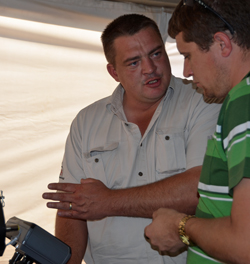
At this week’s Raven Innovation Summit, I talked with Karl Erichsen of Effective Farming Solutions in Middleburg, South Africa who has been a distributor for 12 years.

Karl says precision farming is very important in South Africa because of the wide variety in soil depth and classification. “That’s where precision farming technology is working in South Africa,” he said. “We’re bringing a whole new dimension to farming in South Africa.”

Like anywhere else, Karl says guidance systems are in most demand. “We use unskilled operators to run the tractors,” he said. After guidance, variable rate application is most popular in South Africa.

Karl says cellular connectivity provided by Slingshot has really taken off in his country. “Slingshot is a game changer in South Africa,” he said. Slingshot allows them to not only provide RTK corrections to tractors, but also remote support. “The farmer is far from the office, it’s 5-6 hours drive, now we can remotely lock in to the unit and help him to solve the problem,” said Karl.

Listen to my interview with Karl here: Karl Erichsen, Raven Dealer, South Africa


2012 Raven Innovation Summit Photos

Audio, International, Precision Agriculture, Technology

My First Shot

Melissa Sandfort

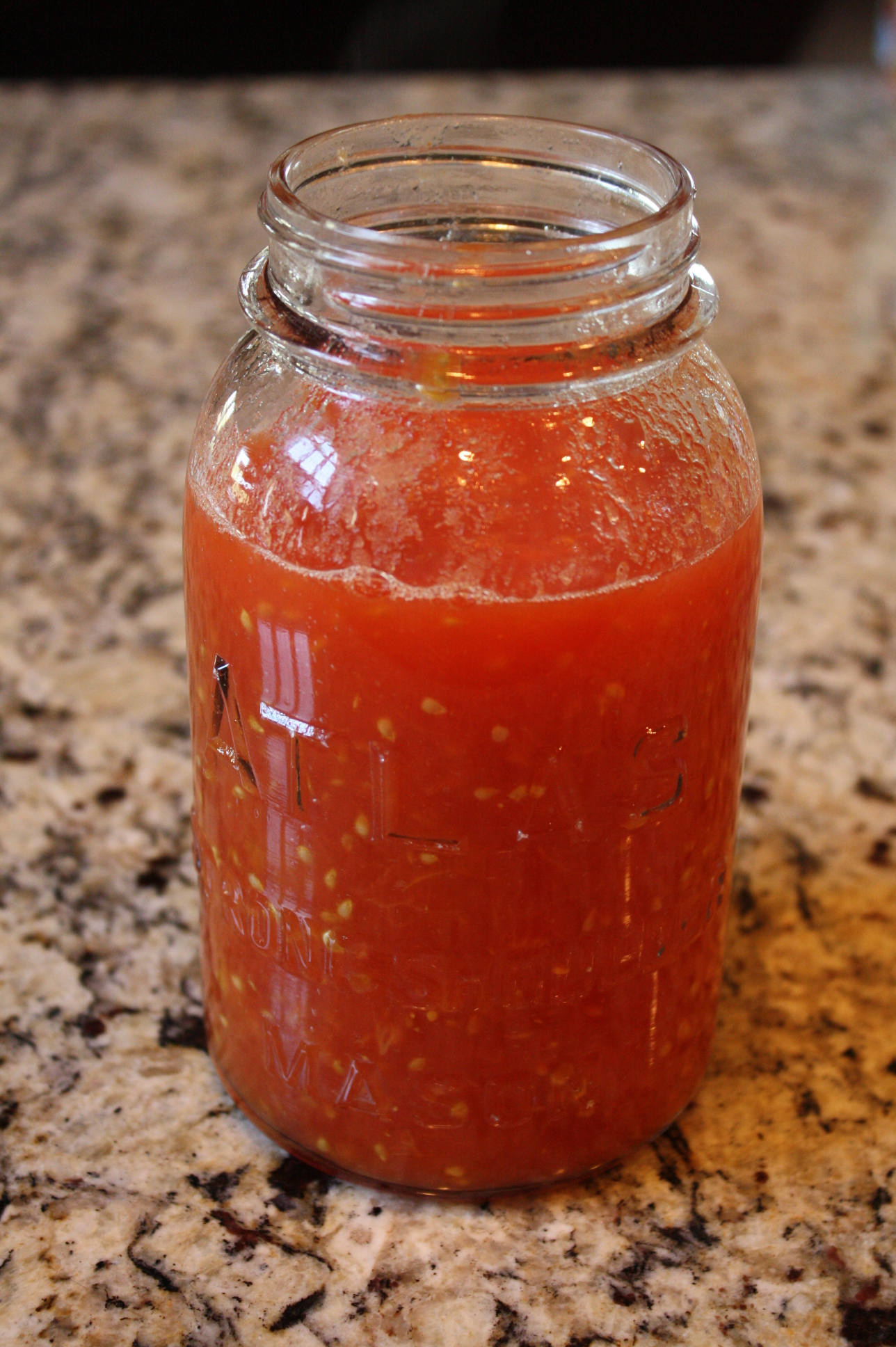
One jar – that’s all I got – and it wasn’t even a full jar but it made me proud. This was my first attempt at stewed tomatoes from the fresh ones I harvested from my garden. And I’ve got about 20 more tomatoes ripening in the window by the washer and dryer. It’s been so hot outside that I pick them once they show the least bit of pink and bring them inside to finish ripening.

Instead of pressure-cooking the jar to seal the lid, I’m freezing it. My husband makes fun of me because I freeze everything, but I’ve never heard him complain about my cooking! I already have plans for these tomatoes, and if the winter is as cold and snowy as they’re predicting, homemade chili will hit the spot.

It’s amazing what memories certain smells will evoke. As I was peeling the tomatoes it reminded me of being at my grandma’s house growing up. She was always cooking and freezing corn, stewing tomatoes, making applesauce or doing something else to preserve food. I appreciate her efforts more now because the freshness of summer lasts a little bit longer, and I see that by doing this, my recipe box has a little more variety during the cold winter months.

Until we walk again …

Uncategorized

MAPPing… Mobile App’ing… MapShots’ Software

John Davis

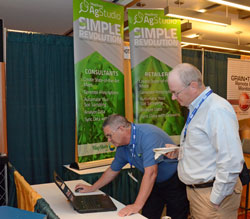
Conferences are always great for seeing the latest and greatest in equipment and software, and the International Conference on Precision Agriculture in Indianapolis, IN was certainly no exception. Making the rounds through the vendors’ displays, Chuck caught up with Tim Taylor from MapShots, who told him about the latest apps his company has to work with their precision agronomy software AgStudio, designed to capture various types of precision ag data.

“We’re releasing a web-based version of AgStudio, which provides access via the Internet to customers’ data, and then we have a mobile application platform announcement, which is primarily for field mapping and soil sampling applications and that allows for wireless work order and data exchange between the field and the AgStudio office application,” Taylor said, adding that they hope to have it out by the end of August.

He said they want these new applications to lessen the need for the manual transfer of data from a data device, such as a USB drive, to the hardware back in the office by providing that wireless, automatic transfer, saving a step or two for the producer. “It’s just a matter of time before we no longer have to deal with the data cards.”

The AgStudio mobile app right now is just for Apple products, but Taylor said they’re looking at expanding it into the Android market as well.

Listen to Chuck’s interview with Tim here: Interview with Tim Taylor from MapShots

11th International Conference on Precision Agriculture Photo Album

AgWired coverage of the International Conference on Precision Agriculture is sponsored by John Deere
Ag Groups, Agribusiness, Apps, Audio, International, Precision Agriculture

USDA Apologizes for Meatless Mondays Gaffe

Cindy Zimmerman

After an internal USDA newsletter promoting “Meatless Mondays” was made public Wednesday, Agriculture Secretary Tom Vilsack personally apologized to the president of the National Cattlemen’s Beef Association and said the document was not only pulled from the website, it was edited and re-sent to USDA employees without suggestions that meat production was bad for the environment and human health.

“We appreciate USDA’s swift action in pulling this disparaging statement off its website,” said NCBA president J.D. Alexander. “We appreciate USDA making this right. The agency is important to all cattlemen and women, especially as we face unprecedented challenges, including drought and animal rights extremist groups spreading fiction to consumers who need to know the importance of beef in a healthy diet.”

“USDA did right by scrapping this statement and acknowledging the important role of America’s farm and ranch families in providing food for the world. USDA denouncing support of the Meatless Monday campaign is an important step in correcting misinformation about the safety and sustainability of U.S. beef production.”

Thanks to Secretary Vilsack and other USDA representatives for responding so quickly. Let’s hope they find a new editor for the “Greening Update” newsletter!

NCBA, USDA

Ag Day Poster Art Contest Begins Aug. 1

Melissa Sandfort

The Agriculture Council of America and Successful Farming are encouraging young artists to celebrate modern agriculture through the first ever National Ag Day Poster Art Contest. A winning original piece of art will be chosen as the Official National Ag Day poster.

The contest begins August 1 and is open to amateur artists enrolled in high school or college. The contest theme is Generations Nourishing Generations. Entries will be screened by a nine member jury. Finalists will then be judged through online voting to determine one winner.

In addition, the artwork and a profile of the artist will be prominently featured in Successful Farming magazine and Ag Day correspondence. The winner will receive a $1,000 scholarship from Successful Farming. The artist will receive a portion of the proceeds from limited edition prints and the original artwork will be on display in a public location.

The deadline for submitting entries is Midnight (CST), Oct. 31, 2012. For rules on the National Ag Day Poster Art Contest visit www.agday.org.

Ag Day, Agribusiness

Most Favor Splitting Nutrition Out of Farm Bill

Melissa Sandfort

Our latest ZimmPoll asked the question, “Should nutrition programs be split out of the Farm Bill?”

Our poll results: Seventy-seven percent said yes and twenty-three percent said no. What do you think? With all those nutrition programs is it really a “farm” bill?

Our new ZimmPoll is now live and asks the question, “How will drought impact the Renewable Fuel Standard?” With corn prices up nearly 50 percent in the last month and forecasts saying it will go higher in the near future, this summer is proving to be a rough one. Here are a few more stats: 1,000 counties in 26 states are deemed “natural disaster areas” because of drought; 61 percent of the land in the lower 48 states is currently affected by drought; 30 percent of the corn crop is in poor or very poor condition. So what do you think – will the drought and effect on the corn crop impact the RFS?

ZimmPoll is sponsored by Rhea+Kaiser, a full-service advertising/public relations agency.

ZimmPoll

USDA “Meatless Mondays” Uproar

Cindy Zimmerman

An internal USDA Greening Update newsletter that promotes “Meatless Mondays” caused a bit of an uproar on Wednesday.

The National Cattlemen’s Beef Association (NCBA) sent out a news release linking to the newsletter and questioning USDA’s commitment to the livestock industry. The newsletter talked about various “greening” initiatives by the agency and suggested that “one simple way to reduce our environmental impact while dining at our cafeteria is to participate in the “Meatless Monday” initiative.” But it didn’t stop there:

The production of meat, especially beef (and dairy as well), has a large environmental impact. According to the U.N., animal agriculture is a major source of greenhouse gases and climate change. It also wastes resources. It takes 7,000 kg of grain to make 1,000 kg of beef. In addition, beef production requires a lot of water, fertilizer, fossil fuels, and pesticides. In addition there are many health concerns related to the excessive consumption of meat.

Within an hour after the NCBA release went out, USDA pulled the newsletter from the initial link and a statement was sent out by USDA press secretary Courtney Rowe. “Today, we have received a number of inquiries regarding a rumor that USDA is encouraging “Meatless Mondays,” she wrote, adding a statement from an unnamed USDA spokesperson that “USDA does not endorse Meatless Monday. The statement found on the USDA website was posted without proper clearance and it has been removed.”

The offending document was found on another link, and you can read the whole thing here where we uploaded it to our server. Just deleting the document from the link does not address this issue at all, since this is an internal newsletter that was sent to USDA employees. That makes this more than a “rumor.” While the Secretary may have been unaware of this gaffe and it may not be “official” USDA policy, the message has been sent to USDA employees that meat is bad for the environment. Not only does this have to be pulled, action should be taken against whoever wrote it and an immediate retraction should be made in a new “Greening Update.”

This is animal activism in a government agency that should be supporting all of agriculture and it is unacceptable.


Animal Activists, Animal Agriculture, Livestock, NCBA, USDA

Raven Makes Connections with Slingshot

Cindy Zimmerman

Slingshot® was officially introduced by Raven at AG CONNECT Expo in January 2010. Just two and a half years later, this innovative use of wireless connectivity over cell phone networks is helping farmers all over the world get cost effective secure access to critical operating data.

“It allows data to move from the tractor to the farm or to the office much more effectively and easily,” Slingshot Sales Specialist Colin Pollock. “A fringe benefit of that is the ability to deliver RTK corrections over it as well, to improve the positional accuracy in the field.”

Colin says adoption of Slingshot continues to grow among both growers and retailers. “Slingshot is really gaining traction this year,” he says, noting that 35 companies have signed on now to develop software for the product. For example, a company can develop a prescription file for a chemical application that can be transmitted immediately to a field computer.

Colin also notes that Slingshot is brand agnostic and is compatible with RTK corrections on competitive products.

Listen to my interview with Colin here: Colin Pollock, Slingshot Sales Specialist


2012 Raven Innovation Summit Photos

Audio, Farming, Precision Agriculture

No Hormones Used in Chicken/Turkey Production

Chuck Zimmerman

Think chickens are raised by giving them hormones? You’d be wrong. Simply not true. The U.S. Poultry & Egg Association has put together a video you can share to set the record straight.

One of the most common, and frustrating, questions for U.S. poultry producers is why hormones are used to produce today’s poultry products. Of course, the actual answer is NO HORMONES are used. To address this continuing misinformation, U.S. Poultry & Egg Association has prepared a new video to explain the scientific, economic and legal reasons hormones are not needed or used by the U.S. poultry industry. There are two versions of the video (long & short). The short version is precise and gets to the gist of the video’s message quickly. The long version provides more detail for those who are interested. This is the long version.

Ag Groups, Food, Poultry, Video