2012 World Food Prize Laureate

Cindy Zimmerman

The 2012 World Food Prize Laureate is credited with revolutionizing food production through micro-irrigation to allow farmers to produce “more crop per drop.”

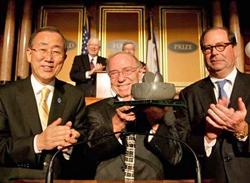
Dr. Daniel Hillel is pictured here during the World Food Prize ceremony last week flanked by UN Secretary-General Ban Ki-moon and World Food Prize Chairman John Ruan III. An Israeli-American, Dr. Hillel began his pioneering scientific work in Israel and laid the foundation for maximizing efficient water usage in agriculture, increasing crop yields, and minimizing environmental degradation.
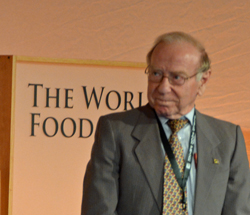
I had a chance to sit down with Dr. Hillel for a few minutes to talk about what led him to his work in the field of micro irrigation and could have easily spent an hour or more listening to the 82-year-old weave his tale of moving from Los Angeles to the Holy Land when he was just a baby and living in a kibbutz as a boy.

“At age 8, I was given a spade and asked to go to the field and help to irrigate young saplings,” he told me. “As I stood there barefoot, feeling how the trickling waters running down the furrow softened the harsh clods and watching the frothing water irrigate the tender saplings, in the midst of this vast expanse of desolation, it just captivated me and that determined my professional life.”

As you listen to this story, you can really picture Dr. Hillel’s early life and feel it. It’s worth 15 minutes just to hear it. Read more about him from the World Food Prize.

Listen to my interview with Dr. Hillel: Dr. Daniel Hillel interview

View the World Food Prize Photo Album here.

AgWired coverage of the World Food Prize is sponsored by Elanco


Audio, Elanco, Farming, Food, Irrigation, World Food Prize

Effective Control of Resistant Weeds in Soybeans

Melissa Sandfort

Results from more than 300 soybean field trials conducted in 2011 and 2012 show soybean growers there’s hope for control of resistant weeds. Engenia herbicide, a technologically advanced dicamba formulation developed by BASF, demonstrated effective control of key broadleaf weeds including glyphosate resistant Palmer amaranth, waterhemp, marestail, and common and giant ragweed.

BASF anticipates the commercial launch of Engenia herbicide in the U.S. in 2014, in a complimentary time frame with the commercialization of dicamba-tolerant soybeans. BASF expects Engenia herbicide use on cotton in 2015 following the commercialization of dicamba-tolerant cotton.

Once registered, growers will be able to use Engenia herbicide as part of the dicamba-tolerant cropping system, currently in development, to protect yield potential and manage increasingly complex weed challenges.

Agribusiness, BASF

Zimfo Bytes

Melissa Sandfort

    Zimfo Bytes

  • Those interested in viewing the National FFA Convention & Expo will have both broadcast and digital viewing options, thanks to a new partnership between iHigh.com, Alltech and Rural Media Group, Inc., who have joined forces to launch MyRURALTV.com on iHigh.com.
  • The Iowa-Nebraska Equipment Dealers Association has introduced new themes for the Nebraska and Iowa Power Farming Shows: “MORE POWER TO YOU”.
  • The Illinois Soybean Association has launched an interactive Weed Management Map to help the state’s soybean farmers more effectively combat glyphosate resistance.
  • The National FFA has set a membership record: During the 2011-12 school year, 16,939 students joined the National FFA Organization and raised total membership to 557,318 students in seventh through 12th grades in the U.S., Puerto Rico and the Virgin Islands.
Zimfo Bytes

Support for Plumpy’nut Increases

Joanna Schroeder

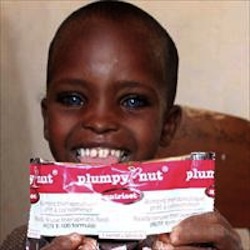
It was announced during the Borlaug Dialogue in Des Moines in conjunction with the World Food Prize 2012 last week, that the makers of Plumpy’nut, Nutriset, will contribute an additional $5.8 million over the next two years to combat severe acute malnutrition in the developing world. The main ingredients include peanuts, vegetable oil, sugar, vitamins, minerals, cocoa, whey and maltodextrin. Easy to digest, high in protein and high in calories, fats and carbohydrates, the product has helped to save many children’s lives.

The money will go to the members of the PlumpyField network, a network of 11 small, local private manufactures, two international nongovernmental organizations and more than 500 locally based employees. The network helps to produce and distribute Plumpy’nut and other products.

“Nutriset’s pledge to significantly increase our environment in our PlumpyField members will help to create local solutions to devastating food crises,” said Nutriset CEO Adeline Lescanne. “We hope the $5.8 million will provide our partners with the tools they need to combat current famines and help promote the nutritional autonomy of all afflicted regions of the world.”

View the World Food Prize Photo Album here.

AgWired coverage of the World Food Prize is sponsored by Elanco
Elanco, Peanuts, World Food Prize

FFA Growing Young Agvocates

Chuck Zimmerman

Young agvocates will get some social media training at the 2012 FFA Convention. I’ll be some of them could teach the teachers! What do you think?

FFA members will learn how to apply their technology skills to advocate for agriculture by hosting at social media training during the 85th National FFA Convention and Expo on Monday, Oct. 22.

Two two-hour sessions will teach participants how social media play a role in leadership on a global, national, state and local level. Students will learn more about the need for advocates in agriculture and how they can authentically tell their story using social media.

“Last year’s inaugural social media training resulted in FFA leaders engaging in relevant, meaningful conversations about agriculture and food,” said Shane Jacques, education specialist with the National FFA Organization. “This year’s sessions will focus on developing new leaders who are confident to communicate on behalf of the industry they love.” Read More

Ag Groups, FFA, Social Networking

Elanco President Shares Significance of an Egg

Cindy Zimmerman

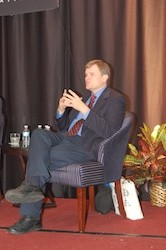
At the closing day for the World Food Prize symposium Friday, Elanco President Jeff Simmons shared his thoughts on the significance of a single egg.

“What’s in an egg?” Simmons asked during comments before a panel discussion on the importance of food productivity to meet tomorrow’s demand. “It’s the calories, the nutrients, the nutrition to totally change a kid. One a day – that’s all we need.”

Jeff talked about how the production of eggs is not at a level that can address the demands of a growing population and in fact is actually declining. “There are less eggs per person than there were a year ago – we are going backwards in eggs,” Jeff explained, noting that there are currently 6.5 billion hens in the world producing about 174 eggs and the current trend is losing an egg per hen per day. He adds that the reasons for the negative trend can be attributed to disease, lack of innovation, and misguided animal welfare policies.

Giving closing comments at the end of the panel, Jeff encouraged those who attended to take home this message. “Don’t leave the World Food Prize 2012 without getting out of your bubble,” he said.

Listen to Jeff’s opening and closing comments here: Elanco's Jeff Simmons World Food Prize address

Jeff is a very well paid corporate executive, but he is so passionate about this topic he is not just talking about it, he is living it and “getting out of his bubble.” He and his family, which includes six children between the ages of 7 and 16, are doing a month long “hunger challenge.” This first week, the family ate nothing but rice and beans all week. Next week, they will live on a “food stamp diet” of $4.16 per person – for the whole week. “The hunger inside of you is the solution to the hunger outside in the world,” Jeff said.

You can follow the egg story and Jeff’s hunger challenge in his own family by following him on Twitter – @JeffSimmons2050. He says 2050 is a key time. “We’re going to have this food security – safe, abundant, affordable food – solved by then,” Jeff said. “We have to, we will and American agriculture will lead the way.”

Elanco’s blog about feeding a hungry planet, PlentyToThinkAbout.org, is also now on Twitter – @plntytothinkabt.

Listen to my interview with Jeff here: Jeff Simmons interview

View the World Food Prize Photo Album here.

AgWired coverage of the World Food Prize is sponsored by Elanco

Audio, Elanco, Food, Poultry, World Food Prize

Mission: Possible with O.H. Kruse

Chuck Zimmerman

Let’s meet O.H. Kruse Grain & Milling. I have chosen to accept the mission. That is Mission: Possible. It’s the first ever company Dealer Appreciation Day. I’ll be there providing coverage next Tuesday, October 23.

You can get a preview of what will be taking place via my interview this morning with Clark Springfield, Division Manager, Western Feed Supplements, Western Milling. He says the feed industry is operating under unprecedented conditions. Commodities are at all-time record high prices, feed prices are at historical highs and customers are more price sensitive than ever before.

The goal for the Mission:Possible event is for attendees to become relevant to their customers and to grow their business under these adverse conditions. So there will be lots of educational seminars as well as feed mill tours and some fun and fellowship. It’s going to be an action packed day!

The keynote speaker will be Ross Shafer. We met him during this year’s Agri-Marketing Conference. Looking forward to visiting with him again.

Listen to my interview with Clark here: Interview with Clark Springfield

Here are some ways you can stay connected with O.H. Kruse:

O.H. Kruse App: iOS Android
Text KRUSE to 68398
Facebook
Event Page

Agribusiness, Animal Health, Audio, Feed

UN Secretary-General at World Food Prize

Cindy Zimmerman

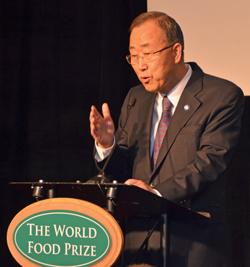
United Nations Secretary-General Ban Ki-moon addressed the big ceremony last night at the World Food Prize and stuck around to also speak at breakfast this morning for those not able (or willing) to attend the gala at the state capitol.

During his brief address at breakfast, Ban talked about how making sure everyone in the world has enough to eat is a mission that all should share. “The United Nations cannot do it alone,” he said. “The United States cannot do it alone, let alone the state of Iowa, however much you produce agricultural product.”

Ban stressed the importance energy to food security. “Energy is like the golden thread which weaves and connects all the challenges we have – food, water, health and even gender issues,” he said. “Therefore we are putting highest priority on energy as part of comprehensively addressing food prices.”

Listen to Ban’s comments here: UN Secretary-General Ban Ki-moon

View the World Food Prize Photo Album here.

AgWired coverage of the World Food Prize is sponsored by Elanco

Audio, Elanco, Energy, Food, International, World Food Prize

Zimfo Bytes

Melissa Sandfort

    Zimfo Bytes

  • Sixteen farmer-leaders will be sworn in as directors of the United Soybean Board in December, after their recent appointments by U.S. Agriculture Secretary Tom Vilsack.
  • Nominations are open for the Siehl Prize for Excellence in Agriculture 2013 awards.
  • The National Corn Growers Association Nominating Committee is now accepting applications from members for the 2014 Corn Board.
  • Agriculture Secretary Tom Vilsack has appointed three producers to serve on the Mushroom Council.
Zimfo Bytes

Total Factor Productivity Key Indicator of Growth

Joanna Schroeder

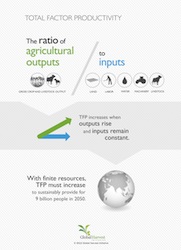
Productivity is back on the policy agenda with rising food prices, heightened concerns about resource scarcity and increase risk from climate change, according to Dr. Keith Fuglie with the U.S. Department of Agriculture. During the release of the 2012 GAP Report published by Global Harvest Initiative during the 2012 World Food Prize, Fuglie said it’s being realized more and more that we will need to rely on total productivity growth to meet the rapid demand that is projected for global agriculture. For this to happen, agriculture will need to focus most heavily on raising yield.

The total factor productivity (TFP) concept really looks at the questions of can we get more output without having to intensity outputs (fertilizer, water, etc.)? Can we get more total output from the current bundle of resources (technology, and improved efficiency)? From this bundle of land, labor, capital and energy, can we grow output without raising this total bundle?

Fuglie says this is Important from a policy perspective because TFP is really being driven by a different set of economic and policy instruments. Primarily TFP over the long-run is conditioned by what our investments are in research and extension- getting the right technologies to the right people at the right time.

The GAP Report concludes that the majority of growth came from productivity growth in developing countries, such as Brazil and China who have increased their TFP growth strategy. One significant factor – investments and research have a critical role to play in determining whether productivity is growing.

In terms of the GAP report, the question was asked, what rate of growth productivity do we need to double output by 2050? Can this be done with just a TFP strategy and what policies would need to be in place? At least for this decade we’re on the path to double in 40 years if the current rate is maintained. However, we’ll need to maintain or accelerate research and investment and it needs to be more equitably distributed worldwide.

Listen to Dr. Keith Fuglie’s presentation here: Total Factor Productivity on Policy Agenda

View the World Food Prize Photo Album here.

AgWired coverage of the World Food Prize is sponsored by Elanco
Elanco, World Food Prize