Soil Health Demo Farmers At #SHPSummit16

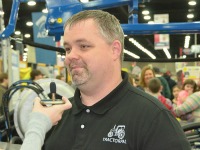
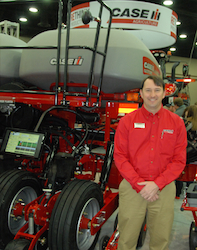
Taylor Truckey

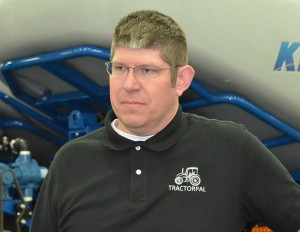
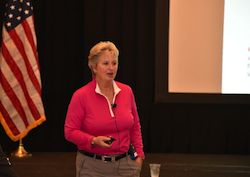
Gordon Smiley

Gordon Smiley

The Soil Health Partnership (SHP) has a number of their demo farmers, the farmers who are implementing field size research trials over the next 5 years, at the Soil Health Summit this week. Hear from a few of them about their experiences so far in the program, and their hopes for what the next few years will bring.

Gordon Smiley is new to the demo farmer program, but he, and his brother he farms with, aren’t new to cover crops. “We’ve actually been doing cover crops for five years so we feel like we’re going to move along; we’re going to explore single species and multiple species.” Most farmers begin with a conventional tillage vs no-till field size strip trial, but with Gordon’s experience, they are going to take the research a little further.

With the cattle that they also have on the farm, Gordon is looking forward to implementing the relationship between livestock and cover crops in a few ways. “With the livestock operation, we’re really excited about the manure application being taken up by the cover crops in the fall so we don’t have to worry about nutrient release.”

Gordon and his brother both carry spades in their pickups and have made it a running contest to see how their soil is building. Recently they dug up a couple of corn plants with root systems 26 inches and 22 inches in length. Gordon explained, “That tells us it’s coming out of an earth worm channel. That’s very exciting.”

Listen to the rest of Gordon’s interview: Interview with Gordon Smiley, Indiana Farmer

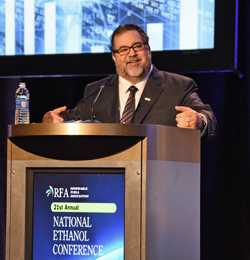
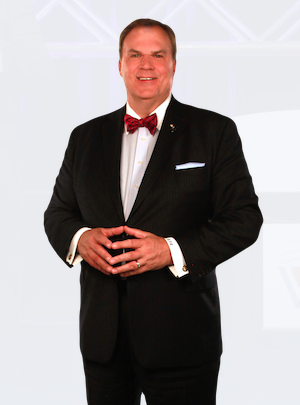
Roger Zylstra

Roger Zylstra

Roger Zylstra, who farms 50 miles east of Des Moines, enrolled in the program in 2015 as well. The driving force behind his decision to join was wanting to improve their soil. As a former grain and livestock operation, Zylstra’s crop rotation used to be include hay; since they’ve sold the cows that isn’t the case any longer.

“One thing I was noticing was that I didn’t think my soil structure was holding as good as i would have liked it to on some of our more rolling ground that we farm. I decided that this a program that could help us identify and improve our soil structure.”

A year ago Zylstra did a small cover crop field on their own, and they have a neighbor who has been implementing cover crops. Zylstra was pleased with the results and is looking forward to learning from the members Soil Health Partnership as the next few years play out.

Zylstra is also a member of the Iowa Corn Board.

Listen to the rest of Roger’s interview: Interview with Roger Zylstra, Iowa Farmer

2016 Soil Health Summit Photo Album

Conservation, Farming, Soil, Soil Health Partnership, Sustainability

A Zippy 500th ZimmCast

Cindy Zimmerman

ZimmCast 499We wanted our 500th ZimmCast to be something special so we felt it appropriate to spotlight the new president of the American Farm Bureau Federation who has a name that is sure to be unforgettable – Zippy Duvall of Georgia. Yes, Zippy is a nickname, one that Duvall has had from infancy, although he is proud that he has two namesakes that share his given name Vincent, which they do use. He and his wife, Bonnie, have four children – Vince, Corrie, Zeb and Zellie. Gotta love the whole Z thing they have going there!

afbf-zippyDuvall, who served as president of Georgia Farm Bureau for nine years, was elected as AFBF’s 12th president at the organization’s 97th annual convention in Tampa. He is a poultry, cattle and hay producer and has been a Farm Bureau member since 1977. He loves farming, his family and his faith and he is very serious about the future of agriculture. I caught up with him on his first full day in the AFBF Washington DC office this week, getting right into the swing of things with ZEST!

We are pleased to welcome Zippy Duvall as the new president of AFBF and look forward to seeing him often in the years to come down the AgriBlogging highway.

Listen to this week’s Zippy ZimmCast here: ZimmCast with new AFBF president Zippy Duvall

2016 AFBF Convention photos

The ZimmCast

sponsored by
The ZimmCast podcast is sponsored by GROWMARK
Locally owned, globally strong.
AFBF, Audio, ZimmCast

Soil Health Makes Financial Sense #SHPSummit16

Taylor Truckey

kevin-coffman-right-agritalkMonsanto has been a part of the Soil Health Partnership since its inception. Kevin Coffman, Market Development Lead in the Ag Sustainability Strategy division of Monsanto, elaborated on the plans of the Partnership with AgWired’s Chuck Zimmerman during the 2nd Soil Health Summit held in Indianapolis this week.

Kevin Coffman, a member of the steering committee for the Soil Health Partnership, said the conversation first began 3-4 years ago. The Soil Health Partnership came about as part of the sustainability conversation, but one of the big goals was to drive profitability for growers for many decades to come while becoming more sustainable and improving soil quality.

“We started this out with the idea of going 5 years, but I’m sure this will go a lot longer than 5 years. The outcome that matters is what works on a growers farm. We can talk about trying to have a better sustainability footprint, but if we also don’t improve the economic profitability of a farm, we really haven’t moved the needle much.” explained Coffman.

There have been a lot of conversations in recent years around topics like soil quality, water quality, and sustainability. Those involved in the launch of the Soil Health Partnership were trying to figure out how to get the ag groups having these conversations coalesced around a single idea that could actually drive decisions on the farm.

“One of the things that’s really intriguing around this idea of soil health is ‘what is it’. What are the pieces that drive soil health? Within Monsanto we’ve got a lot of people researching hybrids, but we haven’t really sat around thinking ‘how do I improve soil?'” Coffman continued, “That’s the interesting thing. If you think about agronomic practices, with cover crops being a part of it, tillage practices, reduced tillage, different nutrient management strategies, can you improve the health of soil over time, thereby driving yields longer term? It sounds like a perfect fit for us to be involved in.”

When asked about the best case outcome of the five year initiative, Kevin again tied in the importance of finding the economic value for growers. “The best outcome is the ability to say ‘these practices drive these kinds of outcomes’ as far as profitability and environmental outcomes, so we have a more informed decisions of what will work and what won’t work.”

Learn more in this interview: Interview with Kevin Coffman, Monsanto

2016 Soil Health Summit Photo Album

Audio, Soil, Soil Health Partnership, Sustainability

The Economics of Cover Crops

Cindy Zimmerman

wally-tynerAt the first Soil Health Summit last year, I talked with Purdue University agricultural economist Dr. Wally Tyner about the need to quantify the economic benefits for farmers of using cover crops. This year, Chuck talked with him again about where they are at with that initiative.

“We’ve designed some new studies…to get statistically, economically valid comparisons on farm fields without cover crops and with cover crops,” said Dr. Tyner. “We just got funding for that project.”

Tyner says the new study will be recruiting about 70 farmers from 18 Indiana counties, one third that use cover crops and two-thirds who do not. “We’ll be getting five years of historical data on five fields and then three more years during the project – eight years of data – so that will give us over 2,000 field years of data and that should be enough for us to make valid statistical comparisons,” he said.

Listen to Chuck’s interview here: Interview with Dr. Wally Tyner, Purdue University

2016 Soil Health Summit Photo Album

Audio, cover crops, Soil, Soil Health Partnership, Sustainability

FFA State Officers Return from South Africa

John Davis

ffa-ilsso1Seventy-five FFA members from 23 states have returned from a 12-day educational and cultural experience in South Africa. This news release from the group says they participated in the 2016 International Leadership Seminar for State Officers, an experience that allows FFA members to experience foreign culture, learn about international agriculture and become more knowledgeable of the global marketplace.

The group traveled throughout five of the country’s nine provinces while surveying the agricultural landscape. FFA officers met with government and U.S. Embassy officials to learn about U.S.- South African trade relations, toured crop and livestock operations, met with business and industry leaders and explored a private game reserve, which is home to lions, leopards, elephants, rhinos and buffalo. The group also met with fruit exporters and olive oil producers and much more.

“This seminar exposes students to culture and food production practices beyond what they are accustomed to in the United States,” said Shane Jacques, education specialist with the National FFA Organization. “Our hope is that through a structured experience like ILSSO, these students will see that study abroad opportunities or global internships and careers are not only attainable, but essential to providing a sustainable talent pipeline for agriculture and feeding the world.” Jacques added that, on average, nine out of ten students who participate in the program admit that they would be receptive to living and working abroad as a result of this experience.

Prior to departing the United States, the students completed ten weeks of online coursework related to cross-cultural adaptability. The program was made possible by corporate sponsors Bunge North America and John Deere.

Ag Groups, FFA, John Deere

#SHPSummit16 Hears From Indiana Farmers

Taylor Truckey

Carrie Sanders, left, shown with her husband, right

Carrie Sanders, left, shown with her husband, right

Carrie Volmer-Sanders farms with her husband and parents in Northeast Indiana/Northwest Ohio, and they have implemented cover crops on their farm for about 5 years now. Sanders works for The Nature Conservancy which is where she first heard about the project.

“There are a couple of goals being a part of this. Some include sharing the information with local farmers about the Soil Health Partnership and using cover crops; having them touch, feel, and see what they can do for the soil and what they can do for farms.” The Sanders’ family farm was one of the first involved and got started with SHP in 2014. A sentiment echoed between many of the demo farmers is the excitement for what they’re going to see take place in their fields over the next few years and how they can share that insight with other growers.

“We can share the data with other farmers about look, this is what it’s done for the microbes, this is what it’s done for the yields, it’s done this for our investment.” The Sanders’ farm has shared yield data the last few years to help show the potential of implementing cover crops. Carrie is excited about working with AgSolver to aggregate the data collected through the project to really understand it and to be able to share that information with interested growers.

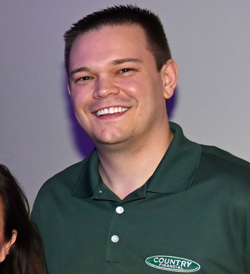
Mike Buis

Mike Buis

Mike Buis is looking forward to what the next few years will bring as he learns from the members of the Soil Health Partnership and fellow demo farmers. “Listening to a lot of the speakers today, we’re looking at the economic value, we’re looking at saving the soil, and we’re looking at different cover crop variations.”

Buis hasn’t had a lot of experience with cover crops as of yet, but has been researching and reading about the possibilities with implementing cover crops. “I’ve been reading about it and have other friends who have tried it, liked it, and have improved their yields on a lot of their marginal ground. We have real good ground, we have some marginal ground, and we have overflow ground. We’re trying to improve our soil.”

Buis’ farm in Central Indiana had 8 inches of rain in June and 8 inches of rain in July so they experienced a loss of nitrogen and soil. Buis elaborated, “If we want to hand this ground to our younger generations, then we need to protect it.”

Mike signed up in 2015 and is excited to hit the ground running in 2016 as they start planning.

Listen to the rest of Carrie’s interview: Interview with Carrie Sanders, The Nature Conservancy

Listen to the rest of Mike’s interview: Interview with Mike Buis, Indiana Farmer

2016 Soil Health Summit Photo Album

Conservation, cover crops, Farming, Research, Soil, Soil Health Partnership, Sustainability

Soil Health Stewardship Program Benefits Growers

Taylor Truckey

Illinois farmer David Brown (R) and another SHS participant on AgriTalk

Illinois farmer David Brown (R) and another SHS participant on AgriTalk

While at the Soil Health Summit, David Brown, a farmer from Illinois, spoke with AgWired about his involvement in the Soil Health Partnership Stewardship Program.

“We’re learning so much from it,” said Brown. “When the opportunity presented itself, I thought ‘we have to do this’. It’s a learning opportunity for us and if you don’t learn, you’re standing still.”

Brown is involved in the Conservation Stewardship Program with the USDA in addition to the Soil Stewardship Program and says the stewardship program is a true partner in the research and data collection that comes out of the field trials.

When asked about what he looked to gain from the program, Brown said, “I hope to find out that we should have been doing this all along. This is not new.” As a young child he asked his father why there were drilling alfalfa seed on a certain field. Even then, he was hearing words like fertility, soil health, and other benefits like getting a crop off as well with cover crops. “I hope we find out that this is what we should have been doing all along; improving our assets.”

Central Illinois land values have climbed over $13K/acre and Brown offered a unique look at why farmers should place value on soil health in their operations. “Where the farmstead sits, that 80 acres is worth over $1M. When you get your envelope from the stockbroker every month you open that to see how your stocks and assets did. Every day we on television we hear how NASDAQ and Dow Jones are doing, yet we walk across that farm and we don’t think about what is underneath our feet and the asset that is there. How am I taking care of that? Am I improving it? Am I making it worth that 13K/acre? It’s an asset, and I’m here to learn if this is what we need to be doing,” he explained.

Brown emphasized that the partners in the Soil Stewardship Program are knowledgeable and more than willing to share their experiences and information. David encouraged growers to try a few acres if they were unsure. “Just see what you can do. It’s kind of fun to watch things green at a time of year when things shouldn’t be green.”

Learn more in this interview: Interview with David Brown, Illinois Farmer

2016 Soil Health Summit Photo Album

Farming, Soil, Soil Health Partnership, Sustainability

Deputy Secretary Harden to Leave USDA

Cindy Zimmerman

hardenUSDA Deputy Secretary Krysta Harden today announced plans to depart the agency at the end of next month.

“Today is bittersweet for me as I announce my decision to step down as Deputy Secretary at the end of February,” said Harden in a statement. “I am proud of what our Department has accomplished since 2009 to bring economic opportunity that will help rural America thrive for generations to come. And although I will not be part of the many great and transformational things USDA will accomplish over the next year, I am more committed than ever to USDA’s mission. We have worked hard over the past seven years to make USDA truly the People’s Department, as demonstrated by this Administration’s commitment to bring young people, women, veterans and equal access to the forefront of food and agriculture policy.”

Harden thanked President Obama and Secretary Vilsack “for the opportunity to be part of their team” but made no mention of what she intends to do when she leaves the post. Since 2009, Harden has held USDA leadership positions as Assistant Secretary for Congressional Relations and Chief of Staff to the Secretary and was was sworn in as the Deputy Secretary on August 12, 2013. “My work at USDA on behalf of our farmers, ranchers, producers and rural communities has been the greatest honor of my professional life,” Harden concluded in her statement.

Agriculture Secretary Tom Vilsack announced today that Michael Scuse, the current Under Secretary for Farm and Foreign Agricultural Services (FFAS), will serve as Acting Deputy Secretary of Agriculture upon Harden’s departure. ” I speak for thousands of colleagues across the USDA, the federal family, and our nation’s food and agriculture sector, when I say she will be missed. I appreciate her service and wish her well in her future endeavors,” said Vilsack.

USDA

#SHPSummit16 Focuses On Field Research

Taylor Truckey

shs16-toweryThe Soil Health Partnership knows that further research is needed to show farmers the benefits of soil health. Dan Towery, Field Manager with the Soil Health Partnership in Indiana, spoke with Chuck Zimmerman at the Soil Health Summit this week in Indianapolis about the purpose of the Summit as well as the field research trials they are currently conducting.

“We’re going to discuss with growers, university folks, and folks from the private sector, this whole idea of soil health,” said Towery. “We’re looking at the whole gamut; the agronomic, the economic, and the environmental pieces and how they all fit together. The whole idea is to give growers the assistance that they need to make some of these changes in their production.”

With commodity prices being low, growers are looking at how to best manage costs while keeping inputs low, and Towery acknowledged that there can be added expenses when focused on improving soil health, but there is also opportunity and money to be made.

The Soil Health Partnership has multiple demo farms where they have replicated strip plots in partnership with local growers. The growers decide what they want to compare. Typically, most are looking at a conventional tillage system compared to no-till with cover crops. Over a 5 year effort, SHP will track inputs and management decisions and by the end, SHP hopes to be able to show that farmers increased their profit margins and relate it back to what happened in the soil. An example of factors they will be monitoring are increasing the active organic matter portion and improving filtration.

Field-size strip plots and weather inconsistencies allow for error in a given year; devoting five years to the replicated research projects will allow for a better synopsis of the impact of soil health. The demo fields are from 20 to 80 acres in size with 8 strips total, 4 control and 4 adaptive management.

Learn more in this interview: Interview with Dan Towery, Soil Health Partnership

2016 Soil Health Summit Photo Album

Audio, Soil, Soil Health Partnership

The Nature Conservancy Supports Soil Health

Cindy Zimmerman

shs16-clemensThe Nature Conservancy (TNC) provides technical support for the Soil Health Partnership (SHP), and it’s something that fits in well with the organization’s mission “to conserve the lands and waters on which all life depends.”

“The Nature Conservancy has been working in agriculture for several decades,” says Larry Clemens, TNC North American Agriculture Program Director. “We’ve been wanted to scale up our partnerships and our collaborations, so when the Soil Health Partnership was forming it was a great opportunity … to get good information and good science out to growers in the Midwest about soil health practices.”

Clemens adds that soil health is a global priority for TNC. “We really see in the future that soil health is going to be key to increasing our production and feeding the world,” he said during an interview at the second Soil Health Summit this week in Indianapolis.

The SHP is a true partnership between environmental interests like TNC, farmers through the National Corn Growers Association, and industry with funding from Monsanto and The Walton Family Foundation, and Clemens says it has long term implications for the future. “As we think about feeding our world, soil is truly the foundation and when it’s not healthy, the rest of our ecosystem is likely not going to be healthy,” he said.

Listen to Chuck’s interview with Larry here: Interview with Larry Clemens, The Nature Conservancy

2016 Soil Health Summit Photo Album

Audio, Corn, Environment, NCGA, Soil, Soil Health Partnership