AFBFA Announces First Peas to the Table Contest

Joanna Schroeder

Peas_twitter2During the recent Young Farmers & Ranchers Leadership Conference held in Kansas City, Missouri, Miss America 2016 Betty Cantrell announced the First Peas to the Table Contest. The new national competition, according to Julie Tesch, executive director of the American Farm Bureau Foundation for Agriculture, encourages children aged kindergarten through 5th grade to plant, raise and harvest peas this spring.

“It was an honor to have Miss America 2016 Betty Cantrell join us in launching the First Peas to the Table Contest,” Tesch said. “We know from experience that getting your hands dirty is the best way for children to learn! Through this contest, we aim to provide fun, hands-on learning opportunities for students across the country.”

The contest ties directly in with the book “First Peas to the Table,” by Susan Grigsby, which won the Foundation’s 2016 Book of the Year. The Foundation created the contest to help students understand the importance of healthy foods and agriculture in their everyday lives, and to increase their understanding of how plants grow.

The student team that grows the greatest amount of peas (measured in cups) using no more than 20 pea seeds during the official contest period will be declared the winner and receive the grand prize – a visit from Cantrell. Peas may be grown in any manner including in a hot house, hoop house, indoor pot, planter or outside garden. The contest runs March 1 – May 16. Click here for the official entry form, guidelines and rules.

In conjunction with the contest, Tesch encourages educators to invite local farmers and ranchers to speak in their classrooms about food production and the importance of agriculture. Contacting your county Farm Bureau office is a good way to find local farmers.


AFBF

CIRB Emerging Leaders Build a Career

Kelly Marshall

cirb-16-konstanty AgWired had the chance to talk with James Konstanty, one of the Crop Insurance and Reinsurance Bureau’s Emerging Leaders program members, at their recent annual meeting. The program, now in it’s pilot year, did a great job giving the participants an understanding of the background of crop insurance, Konstanty tells Chuck Zimmerman. The group traveled to Kansas City and Washington D.C., met with many groups and talked with leaders in the industry.

But for professionals already attacking their jobs with enthusiasm, how does understanding crop insurance affect their career?

“It is mostly about seeing how crop insurance got to where it is today,” Konstanty says. “All the work that it has taken to get it to this place today and how you really have to support that effort going forward because, since it is government program it can be attacked from all sides. And so I think we have a good thing going here and it is really of value to the farmer and want to make sure it doesn’t get taken away.”

Konstanty says the experience helped him really see that crop insurance is a great business, well-thoughtout to help growers overcome a myriad of obstacles to keep on farming. Learning about the public/private relationship and seeing how well developed, not just accidentally evolved, the program was designed to be helps him appreciate the work he is doing.

Hear more about the program in Chuck’s interview here: James Konstanty, CIRB Emerging Leaders Program

2016 CIRB Annual Meeting Photos

CIRB, Insurance

Kenna Lewis Earns Top Honors at YF&R

Kelly Marshall

AFBFKenna Lewis, a senior at Cal Poly San Lois Obispo, was named the American Farm Bureau Young Farmer & Rancher Collegiate Discussion Meet winner.  The meet, designed to simulate a committee meeting to  exchange ideas and find solutions to a topic of concern to agriculture, was held last week at the #ShowMeYFR Annual Leadership Conference.

Lewis is currently working towards a degree in agricultural communication.  Her success has earned her a $2,500 scholarship from the competition sponsor, CHS Foundation.

In addition to Lewis, three finalists participated in three rounds of discussion before making it to the Final Four round. Finalists were Tanner Beymer, University of Idaho; Kole Kelley, Adams University; and Kelly Wilfert, University of Wisconsin-Madison. They each received $1,000 courtesy of CHS Foundation.

Fifty competitors from 35 states participated in this year’s AFBF Collegiate Discussion Meet. All competitors received $250, courtesy of CHS Foundation, in recognition of their efforts and making it to the national level.

Before being announced the winner Lewis took part in four rounds of the discussion meet.  The final discussion centered around the topic of protecting a farmer’s ability to access new technology while ensuring public acceptance and encouraging innovation.

AFBF, Ag Groups

PERC Offers Propane Farm Incentive Program

Kelly Marshall

propane-logoThe Propane Education & Research Council (PERC) announces the release of the 2016 Propane Farm Incentive Program.  This nationwide research and demonstration provides farmers with purchase incentives of up to $5,000 toward new propane-powered farm equipment.

Sponsored by PERC, the 2016 Propane Farm Incentive Program offers incentives of $300 per liter of engine displacement for irrigation engines, $30 per kilowatt for prime power propane generators, and 10 cents per square foot for propane-powered agricultural heating systems. The incentive program helps offset the upfront costs of new agriculture equipment in exchange for real-world performance data and customer feedback.

“New generation propane-powered farm equipment is extremely efficient, reliable, and cost-effective,” said Cinch Munson, Director of Agriculture Business Development at PERC. “The Propane Farm Incentive Program helps farmers experience the many benefits of propane equipment first-hand, while providing us with valuable information to continue to improve new propane technology.”

The 2014 program resulted in 40 percent reduction in fuel costs by changing over to propane-powered irrigation engines and created 20 percent fewer emissions versus gasoline engines.

Apply online or to see a list of eligible equipment, please visit www.propane.com/farmincentive.

Agribusiness, Energy, Propane

Common Ground Takes Families Out To Ranch

Lizzy Schultz

CGlogo CommonGround has launched a new video on animal welfare, highlighting how ranchers care for their animals. The short piece features Colorado CommonGround volunteer and rancher Kelsey Pope and her mother, Cindy Frasier, and helps consumers that are actively looking for the story behind their food.

The video shows Pope and her family out together working on their ranch. Together, Frasier and Pope share a multigenerational perspective on the importance of animals to their family, particularly animal health, and how it impacts them as American ranchers on a family farm.

“The animals make our family what it is,” Pope says. “We love being able to work with the animals every day, being out there with them and getting to know their personalities. They are the reason we are able to do what they do and, in turn, our animals take care of us.”

With about 39 percent of corn demand generated by livestock use, helping consumers address their concerns about animal welfare directly supports the interests of American farmers as well as ranchers. By sharing all of the stories behind the food on American families’ plates, farmers can work to create the transparency consumers increasingly desire.


Ag Groups, Animal Agriculture, Animal Health, Video

Senate Ag to Consider Labeling Bill

Cindy Zimmerman

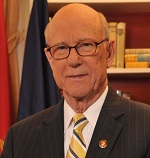
The Senate Agriculture Committee will meet this week to consider a draft bill proposed by Chairman Pat Roberts (R-KS) to address labeling for genetically modified foods.

roberts2Roberts calls the Biotechnology Labeling Solutions legislation draft “a framework to find a solution for a patchwork of laws.” With a labeling law in Vermont set to be implement in July, Roberts says they are out of time and must take action now. The draft bill would “require the Secretary of Agriculture to establish a national voluntary labeling standard for bioengineered food” under the Agricultural Marketing Act of 1946.

Several agricultural organizations expressed support for Roberts’ bill. “The introduction of Roberts’s proposal is an important first step to restoring sanity to America’s food labeling laws,” said National Corn Growers Association President Chip Bowling of Maryland. “(S)tates such as Vermont are quickly moving toward costly, confusing mandatory labeling legislation. It is imperative that the Senate takes up this issue quickly to avoid a situation in which all American consumers pay a high price and gain little actual information.”

“Chairman Roberts’ bill is one that moves the food production industry in a direction of greater transparency, while at the same time protecting farmers’ ability to use what science has repeatedly proven to be a safe and sustainable technology,” said American Soybean Association President Richard Wilkins of Delaware.

Both ASA and NCGA are members of the Coalition for Safe, Affordable Food which has been working with Senate leadership to come up with a federal labeling program to avoid a patchwork of state and local legislation. The hearing on the Chairman’s mark will be held Thursday, February 25 at 10 am Eastern.

Corn, GMO, NCGA

CIRB Talks Changes in Crop Insurance

Kelly Marshall

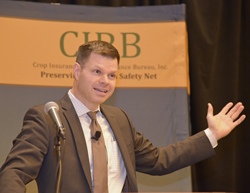
cirb-16-willis Brandon Willis, an administrator at the USDA’s Risk Management Agency, recently addressed the Crop Insurance and Reinsurance Bureau’s annual meeting and talked about the changes crop insurance has undergone.

Some of those changes include lower premiums for beginning farmers and ranchers. That group saved $12 million in insurance premiums last year, allowing them to have more coverage than they otherwise could have afforded. New crops have also been added to the insurance program, providing a safety net for more growers.

When asked about changes in the future of the crop insurance Willis was optimistic.

“I think [crop insurance] is going to fare very well because it has a story to tell.  Farmers lives are impacted everyday.  The amount of financial stress many would be going through if we didn’t have crop insurance is a story we need to talk more about.  What we often forget about is what would happen if we didn’t have crop insurance.  We would have a lot of people who are no longer farmers.  And so I think we have a great story to tell and I think we need to do a better job of telling it.”

Listen to Chuck Zimmermann’s full interview here: Brandon Willis, Risk Management Agency

2016 CIRB Annual Meeting Photos

CIRB, Insurance

Corn Growers Focused on Expanding Trade

Lizzy Schultz

usgc-ncga-bowling Remarks made by National Corn Growers Association (NCGA) President Chip Bowling at the U.S. Grains Council’s 13th International Marketing Conference this week emphasized the importance of trade to corn growers.

“We have set an ambitious goal of building demand in the years ahead, and it’s a goal we cannot meet without looking outside our nation’s borders,” Bowling said. “Exports or corn and corn products will play a critical role in increasing competitive market demand, and we’re working with the U.S. Grains Council and other partners – as one team – to sustainably meet growing needs for food and fuel worldwide.”

Bowling’s presentation focused on the recent growth in ethanol exports, noting the work of the US Grains Council and its partners, Growth Energy, the Renewable Fuels Association and USDA’s Foreign Agricultural Service. NCGA’s newest plan intends to work with the Grains Council and other value chain stakeholders to increase exports of corn and corn products by 25 percent by 2020.

Bowling also stressed the need to pass the Trans-Pacific Partnership (TPP), stating his belief that the TPP will set a precedent for future trade agreements, including the Trans-Atlantic Trade & Investment Partnership (TTIP).

“We are very pleased with how our relationship with the U.S. Grains Council has evolved and grown over the years,” Bowling said. “Now that we are sharing offices in our nation’s capital, the opportunities for collegiality and collaboration have only strengthened.”

Ag Groups, Ethanol, Exports, NCGA

Celebrate National FFA Week

Kelly Marshall

ffaNext week, February 20-27, more than half a million students will celebrate the role of agriculture in our daily lives.  National FFA Week encourages students to raise awareness and share the message of agriculture throughout the country.  The week, chosen to encompass George Washington’s birthday, runs Saturday to Saturday.

The weeklong tradition, which began in 1948, was designated by the National FFA Board of Directors in recognition of Washington’s legacy as an agriculturalist and farmer. FFA was founded by a group of young farmers back in 1928. Its mission is to prepare future generations for the challenges of feeding a growing population. Founding members of the organization taught generations that agriculture is more than planting and harvesting — it involves science, business and more.

Today, FFA continues to help the next generation rise up to meet new agricultural challenges by helping members develop their own unique talents and explore their interests in a broad range of career pathways. Members progress to enjoy careers as biologists, chemists, veterinarians, engineers and entrepreneurs.

Across the national FFA chapters will be sharing the message of ag with students and with their communities, as well as recruiting new members.  The six national officers will visit chapters across the country, and alumni and sponsors will also advocate for ag education.

Tuesday, February 23 is “Give FFA Day,” a day to encourage the public to support causes that will impact FFA members.  Donations can be made at FFA.org/giveFFAday.

Use the hashtag #FFAweek on social media, and follow along with Tractor Supply Company, the official sponsor of FFA week.

Ag Groups, Education, FFA

More Bayer LibertyLink Real Yield Game Winners

Chuck Zimmerman

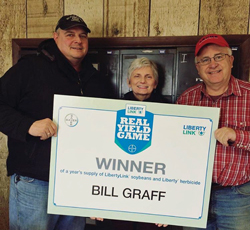
Bayer LibertyLink WinnerThanks to social media we can share a picture of one of the second round of winners in the Bayer CropScience LibertyLink Real Yield Game. Here’s Bill Graff who won a year’s supply of LibertyLink Soybeans and Liberty herbicide. He’s also going to Commodity Classic!

So here’s the list of final winners:

Winner #4
William Graff, Illinois
Year’s supply

Winner #5
Janson Patterson, Alabama
Year’s supply

Tractor Winner
Rick Juchems, Iowa

I believe the big winner will be announced at Commodity Classic and we’ll let you know who it is. Congrats to all winners.

Agribusiness, Bayer, Soybean