
IFAJ 2016 Young Leaders Chosen

Kelly Marshall

IFAJThe International Federation of Agricultural Journalists (IFAJ) has selected ten participants for this year’s IFAJ-Alltech Young Leaders in Agricultural Journalism Award.  Judges selected candidates based on leadership potential, proven abilities and a narrative explaining their interest in the program.  The ten selected journalists will have the opportunity to attend an IFAJ congress and a boot camp style workshop in Bonn, Germany.

The successful applicants for 2016 are:

  • Dorien Colman, journalist, Belgium
  • Richmond Fringpong, journalist, Ghana
  • Danielle Grindlay, journalist, Australia
  • Sarah Hill, editor, USA
  • Julienne Isaacs, freelance print journalist, Canada
  • Inoussa Maiga, multimedia communicator, Burkina Faso
  • Cheyenne Stein, New Zealand
  • Caroline Stocks, freelance journalism and communications consultant, Great Britain
  • Anjete Tjomsland, communication advisor, Norway
  • Lukas Weninger, journalist, Austria

The judges for the 2016 competition were IFAJ executive members Jana Janku from Slovakia, Adrian Krebs from Switzerland and Niels Damsgaard Hansen from Denmark. The competition coordinator is Riitta Mustonen, IFAJ Secretary General.

With the IFAJ constitutional changes adopted last October, 2016 is the first year the young leaders program has included participants from new member countries Burkino Faso and Ghana. IFAJ recognizes the vision of Alltech, and company founder and president Dr. Pearse Lyons, for supporting IFAJ’s broadened mandate and for the commitment to up-and- coming leaders in agricultural journalism.

“This award has existed for 11 years now thanks to the vision, generosity and constant support of Alltech, particularly with its emphasis on youth development,” says Mustonen.

“We are pleased to once again help facilitate this extraordinary opportunity for young journalists to further develop their communication skills, learn about the latest agricultural developments from the German agribusiness sector and network with some of best agricultural journalists in the world,” said Lyons. “At Alltech, we believe in supporting and nurturing young minds, as these journalists will indeed be the lead communicators of the future, connecting farm to fork.”

The program has now hosted nearly 100 young journalists.

Agribusiness, Alltech, IFAJ, Journalism

EPA Proposes Dicamba Registration for GE Crops

Cindy Zimmerman

epaThe Environmental Protection Agency (EPA) has officially proposed the registration of dicamba to control weeds in cotton and soybean genetically engineered (GE) to tolerate the herbicide.

The proposal outlines a Herbicide Resistance Management Plan which includes monitoring and reporting any suspected resistance, grower education and remediation. Additionally, EPA is proposing to limit the registration to 5 years, which would further provide protections if resistance to dicamba develops.

The dicamba-tolerant crops include Monsanto’s Bollgard II® XtendFlex™ cotton, which had limited commercial introduction last year with commercial launch expected in 2016. Monsanto announced its commercialization plans for dicamba-tolerant Roundup Ready 2 Xtend soybeans in February 2016. Roundup Ready 2 Xtend soybeans are broadly licensed to more than 100 seed brands.

EPA is soliciting public comment for 30 days and Monsanto is urging farmers to make their voices heard. “Stakeholder comments will really make a difference,” said Monsanto Director of Industry Affairs Kim Magin. “Supportive letters are important for regulators to understand the various perspectives from farmers and agricultural stakeholders.”

Comments on the EPA’s proposed regulatory decision must be submitted no later than April 30, 2016. Comments may be submitted to the EPA docket EPA-HQ-OPP-2016-0187 at www.regulations.gov. After the comment period closes, EPA will review all of the comments and reach a final decision, which the Agency expects to issue in late summer or early fall 2016.

Crop Protection, EPA

AgWired Statistically Thinking

Chuck Zimmerman

AgWired TwitterWeb/Mobile/Social statistics. I’ve been studying them for a lot of years and I still find them to be difficult to decipher. Even more difficult is trying to figure out what they mean in terms of ROI for sponsors and advertisers. Requests for statistics have been increasing in the last year and so far I think I’ve been able to provide most of what is asked for. But not all.

What are you looking for? What are you being asked to report? What service(s) work best? I’m seriously interested. I have looked into a variety of services that might be able to provide me what I need but the costs are not justifiable.

Here are some current statistics on AgWired that I thought I’d share as a part of this post:

  • Average weekly audio file downloads is almost 7,000
  • Flickr photo views range from a daily low of 1,500 to almost 25,000
  • YouTube views average about 30,000 per month
  • Potential monthly impressions (counting AgWired.com Google Analytics, associated Twitter accounts, FB page) average 5.2 million

As an advertiser or sponsor would you pay a reporting fee for a company like ours to provide significant statistical data? How often, monthly, quarterly, annually?

Social Media

Ethanol Trade Mission to Peru

Cindy Zimmerman

ZimmCast 509The Renewable Fuels Association (RFA) took part in a recent trade mission to Peru led by Agriculture Secretary Tom Vilsack which included discussions about increasing cooperation with that country when it comes to ethanol production and exports.

USDA photo of Secy Vilsack taking part in biofuels roundtable in Peru

USDA photo of Secy Vilsack taking part in biofuels roundtable in Peru

In this edition of the ZimmCast, RFA General Counsel Ed Hubbard talks about the March 13-15 trade mission which visited Lima and the Piura region, where cane-based ethanol is produced. The trade mission also included other ethanol industry representatives, as well as members of the agricultural community.

Hubbard discusses Peru’s interesting supply/demand situation for ethanol, which involves exporting ethanol to the European Union and buying ethanol to meet domestic needs from the United States, creating a unique cooperative relationship with special opportunities for both countries. He also talks about some of the results of the trade mission, which include future visits to this country by Peruvian ethanol interests and a visit to Peru by EPA officials.

Learn more about the Peru trade mission in this week’s ZimmCast: ZimmCast on Peru ethanol trade mission

Subscribe to the ZimmCast podcast here.

The ZimmCast

sponsored by
The ZimmCast podcast is sponsored by GROWMARK
Locally owned, globally strong.
Audio, Ethanol, International, RFA, Trade, USDA, ZimmCast

Illinois HerbFest Celebrates Earth Day

Lizzy Schultz

6a00d83452c87d69e20120a7f3f914970b-800wi The Illinois Herb Association will celebrate this month’s Earth Day festivities during the 2016 HerbFest. The event will be held April 16 in Chillicothe, Illinois, at Chillicothe Public Library.

“The annual HerbFest was previously held in June and September, but this year will be moving to April in order to celebrate Earth Day and build nature into the program,” said Megan Greenhalgh, president, Illinois Herb Association. “We’re really looking forward to attracting more growers and herbalists with this schedule change.”

The event’s sessions will be hosted by a variety of speakers on several topics, including “Wild and Free – Harvest the Weeds,” “Herbs from the Garden to the Table,” and “An Herb Transplanting Workshop,” and attendees will also travel to Luthy Botanical Gardens for a short program, “Tremendous and Tantalizing Trees,” and a tour of the gardens.

The event is open to the public, with registration fees of $40 for Illinois Herb Association members and $45 for non-members. Pre-registration is due by April 8, and on-site registration will take place from 8:45 to 9:15 the day of the event. Same-day registration does not guarantee lunch.

Those interested in attending can download a registration form here.

Ag Groups, Conservation, Environment, Planting, specialty crops, Sustainability

USDA Offers $90 Million in Competitive Grants

Kelly Marshall

USDAThe USDA will be making $90 million in competitive grants available to strengthen local food systems, develop market opportunities and support growers specialty crops.

The grants will be run through the Agricultural Marketing Service (AMS) and the Specialty Crop Block Grant Program, the Farmers Market and Local Food Promotion Program, and the Federal-State Marketing Improvement Program.

“Over the past seven years, USDA has strengthened local and regional food systems by investing in projects that recruit and train farmers, expand economic opportunities for small businesses and increase access to healthy foods,” said Agriculture Secretary Tom Vilsack. “These grant programs make a real difference to farmers, ranchers, and businesses in communities across the country, revitalizing rural economies while also increasing access to fresh, healthy food.”

$62 million comes through the Specialty Crop Block Grant Program.   Applicants can apply through their state departments of agriculture.  Applications are due by July 6, 2016.  The Farmers Market and Local Food Promotion Program is offering $26 million in grants, divided equally between Farmers Market Promotion Program and the Local Food Promotion Program.  Federal-State Marketing Improvement Program is offering nearly $1 million to state departments of ag, state colleges and universities and other state agencies.  Grant applications must be submitted electronically through www.Grants.gov by May 12, 2016.

Help with grant writing is being offered through the Agricultural Marketing Service Technical Assistance Project.  You can also get more information from www.ams.usda.gov/services/grants. The website also contains a link “What AMS Grant is Right for Me?” to guide you to the best fit for your project.

specialty crops, USDA

Merger Means Finalization of Landus Cooperatives

Kelly Marshall

Landus-LogoThe final merger between Farmers Cooperative Company (FC) and West Central Cooperatives has been completed.  Landus Cooperative is officially established.

The new farmer-owned agricultural cooperative is headquartered in Ames, Iowa.  They have more than 725 full-time employees in more than 70 locations with approximately 7,000 members.

“While today’s signing ceremony to formalize Landus Cooperativeze is historic for our employees, our communities and the greater cooperative industry, we are focused on what this merger means for our customers and members going forward,” said newly appointed Chief Executive Officer, Milan Kucerak who formerly served as President and CEO at West Central.

“Merging two strong cooperatives allows further diversification throughout the supply chain and opens local and global opportunities for added value and growth on behalf of our members,” added Kucerak. “In short, the purpose of this merger is to make two cooperative organizations better than either one could be separately for employees, members and customers.”

The new board members, executive team and information about the company can be found on the interim website, LandusCooperative.com.  The full integration of both organization is still a work in progress, although preparation has been going on since the first membership vote was announced.  The new logo will begin to appear, but the integration of accounting and operational systems will be unfolding over the next several months.

Kucerak stressed the cooperative’s transition plans for customers. “We plan to make this transition as easy and streamlined for our customers and their operations as possible.”

The new cooperative is n ow one of the largest grain storage companies in North America and has shuttle-loading access on all seven of Iowa’s major rail lines.  They offer full precision agronomy services,expert marketing services and have a proprietary brand of soybeans along with their corn and soybean processing facility.

Agribusiness, Cooperatives

EPA Opens Comment Period Regarding Dicamba

Kelly Marshall

Monsanto-LogoThe EPA has opened a 30 day comment period to the public covering the topic of dicamba herbicide use with Bollgard II ExtendFlex cotton and Roundup Ready 2 Xtend soybeans.  This step is an important move forward for growers hoping to gain access to dicamba weed-management tools.

A limited commercial introduction of Bollgard II XtendFlex Cotton took place in 2015 with commercial launch in 2016. Monsanto announced its commercialization plans for Roundup Ready 2 Xtend soybeans in February. Monsanto’s Asgrow®, Channel® and regional brands, along with Corn States licensees, expect to introduce more than 70 soybean products across eight maturity groups with agronomic traits including resistance to nematodes and phytophthora root rot. Roundup Ready 2 Xtend soybeans are broadly licensed to more than 100 seed brands.

Currently federal and state laws prohibit the use of dicamba on either Roundup Ready 2 Xtend soybeans or Bollgard II ExtendFlex cotton since there are no products approved for that use.  Dicamba has been safely used is the U.S. as well as 25 other countries on corn, wheat, fallow and pasture land.  Approval would mean growers could use dicamba on soybeans tolerant to dicamba and glyphosate and on cotton tolerant to dicamba, glyphosate and glufosinate.

“Stakeholder comments will really make a difference,” said Kim Magin, Monsanto’s Director of Industry Affairs. “Supportive letters are important for regulators to understand the various perspectives from farmers and agricultural stakeholders.”

You can add your support to the process with Monsanto’s online tool.

Ag Groups, Cotton, EPA, Soybean

New Insights On Colony Collapse Disorder

Lizzy Schultz

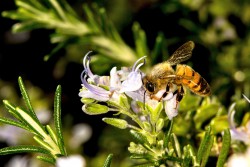
vcsPRAsset_3189465_61152_3996baaf-0743-48d1-b129-3f020503ee1f_0 Researchers from Arizona State University’s (ASU) School of Life Sciences recently discovered that the commonly accepted claim that blames nutritional deprivation for the increasing collapse of honey bee colonies is incorrect. The two studies published by ASU researchers found that the stress of short-term nutritional deprivation as larvae actually makes honey bees more resilient to starvation as adults. The findings were published this week in two papers in The Journal of Experimental Biology.

“Surprisingly, we found that short-term starvation in the larval stage makes adult honey bees more adaptive to adult starvation. This suggests that they have an anticipatory mechanism like solitary organisms do,” said Ying Wang, assistant research professor with the school and lead author of the two investigations. Wang said they found evidence of this mechanism in several areas such as behavior, endocrine physiology, metabolism and gene regulation.

The anticipatory mechanism discussed in the studies, also called Predictive Adaptive Response, explains a possible correlation between prenatal nutritional stress and adult metabolic disorders such as obesity and diabetes. These findings show for the first time that social organisms can have this mechanism.

The studies also found that when bees experience starvation as larvae, they are able to reduce their metabolic rate, maintain their blood sugar levels, and use other fuels faster than the control bees during starvation, which increased the probability of their survival under a starvation situation.

Since bees are critical to the world’s food supply, learning how bees cope with stressors is critical to understanding honey bee health and performance. Managed honey bee colonies have declined worldwide, and the current global population has decreased to 2.5 million, compared to the global bee population of 5 million in the 1940s. This phenomenon comes at a time when the global demand for food is rising to meet the nutrition needs of 7.4 billion people.

Most existing research on bee nutrition has focused on using adult honey bees, rather than their young. This new information changes the current understanding of colony collapse disorder and provides new avenues to study.

Ag Groups, Bees, Conservation, Environment, pollinators, Research, Sustainability

Pope Francis Prays for Small Farmers

Chuck Zimmerman

pope-francisEach month the Pope publishes a special prayer intention. The faithful are encouraged to add their prayers to his.

For April, 2016 he Holy Father’s universal prayer intention is: “That small farmers may receive a just reward for their precious labour”.

I say a big AMEN to that prayer and hope you’ll join in.

Pope Francis also issues a prayer intention for evangelization and for this month that is, “That Christians in Africa may give witness to love and faith in Jesus Christ amid political-religious conflicts”.

Farming, International