
 A new children’s book called Look, See the Farm! seeks to not only promote curiosity in children about the natural world around them, but also to establish the universal quality of having a connection with nature. Look, See the Farm! is the heartwarming story of two sisters visiting their grandparents’ organic farm during each of the four seasons, discovering the many interesting creatures that make the farm their home. Young readers will gain a look at farm life and the animals living on the farm, as well as discovering the wild birds that thrive there.
- Brownfield Ag News, the largest agricultural radio network in the country, is growing. Already this year, Brownfield has enjoyed a 5% increase in the number of affiliate radio stations in its 10-state footprint. The most notable growth is a nearly 12% increase in the number of affiliates in Nebraska and a 21% increase in Ohio.
- The Agricultural Relations Council (ARC) will present a webinar on Wednesday, April 18, 2018 from 12:30 PM to 1:30 PM (EDT) on the development Of The Levesol Promise Campaign. David Erickson, VP, Online Marketing, at Karwoski & Courage, shares how their Levesol Promise Campaign was developed and submitted for a Golden ARC award. Click here for more information.
- Several digital marketing professionals have joined Two Rivers Marketing. Jennifer Ruggle has been named managing director of digital services. Hanna Plants is a senior digital strategist and Stephanie Bidney joins the agency as a senior digital project manager. Erin Fry and Ashley Bash are social media specialists, and Justin Lobaito joins the team as a digital creative lead in a digital design and front-end development role.
- Earl Sears, a former executive vice president of the National Cotton Council, passed away April 3.
- The Finding Farmland Calculator, developed by the National Young Farmers Coalition (NYFC) and Fathom Information Design, brings together innovative design and practical resources to help farmers overcome two top obstacles to starting a farm—access to land and capital.
- Iowa Farm Bureau Federation has announced that Joe Johnson has been named the new executive director and secretary-treasurer of the organization. Johnson assumes his new position on April 20, 2018. He succeeds Denny Presnall who will retire after 36 years with Farm Bureau.
- Passion for Progress is the theme for the 2018 Women’s Agricultural Leadership conference, which is celebrating its 20th year. This annual conference, coordinated by Minnesota District 11 Agri-Women, includes presentations on a wide variety of topics, including agriculture policy, advocacy, technology, professional development, and marketing.
- The National Cotton Council is concerned that China’s announcement of significantly higher proposed tariffs on U.S. raw cotton shipped to that country would significantly harm the economic health of the U.S. cotton industry. For the current 2017 crop year, China stands as the second largest export market with purchases of approximately 2.5 million bales of U.S. cotton.
- The Kentucky State Fair Board has named the Kentucky Farm Bureau Federation’s top executive as its new President and CEO. David S. Beck, 63, has served as CEO of Farm Bureau since 1995, and brings over 40 years of experience in agriculture and governmental affairs to Kentucky Venues. The State Fair Board is the governing body for Kentucky Venues, which manages the Kentucky Exposition Center and Kentucky International Convention Center, which hosts the annual National Farm Machinery Show
Outrage Grows Over EPA RFS Waivers
 Farm and biofuels groups are saying “enough is enough” as outrage grows over the Environmental Protection Agency granting numerous small refinery hardship waivers, combined with the approval of the Philadelphia Energy Solutions bankruptcy agreement absolving the oil refiner of the majority of its Renewable Fuel Standard (RFS) obligations.
The National Corn Growers Association (NCGA) and state corn growers sent a letter to EPA this week demanding full transparency for small refiner exemption evaluations and an end to “backdoor reductions to the RFS.”
The Renewable Fuels Association (RFA) submitted Freedom of Information Act (FOIA) requests this week to both EPA and the Department of Energy to learn more about compliance exemptions granted to dozens of oil refineries. “We want to know how many (refineries) and how many gallons are impacted by these small refiner exemptions,” says RFA President and CEO Bob Dinneen. “And more importantly, what these companies had to demonstrate in order to claim a unique hardship under this program.”
Dinneen commented on that and other issues surrounding the waiver scandal in this edition of The Ethanol Report: Ethanol Report on EPA Small Refinery Waivers
Growth Energy sent a letter to EPA this week demanding a moratorium on waivers being issued. Growth Energy CEO Emily Skor says the increasing number of waivers corresponds to a decrease in demand for both ethanol and corn, and undermines the entire RFS. “You add on waiver after waiver, and the amount of applications being considered, you are looking at upwards of 1.5 billion gallons in cut ethanol demand, a reduction of 500 million bushels of corn demand,” said Skor.
In this interview, Skor also discusses the organization’s objections to the bankruptcy settlement with Philadelphia Energy Solutions. Interview with Growth Energy CEO Emily Skor
The White House is reportedly holding another meeting on the issue Monday.
Credenz Soybeans Building on Strong History
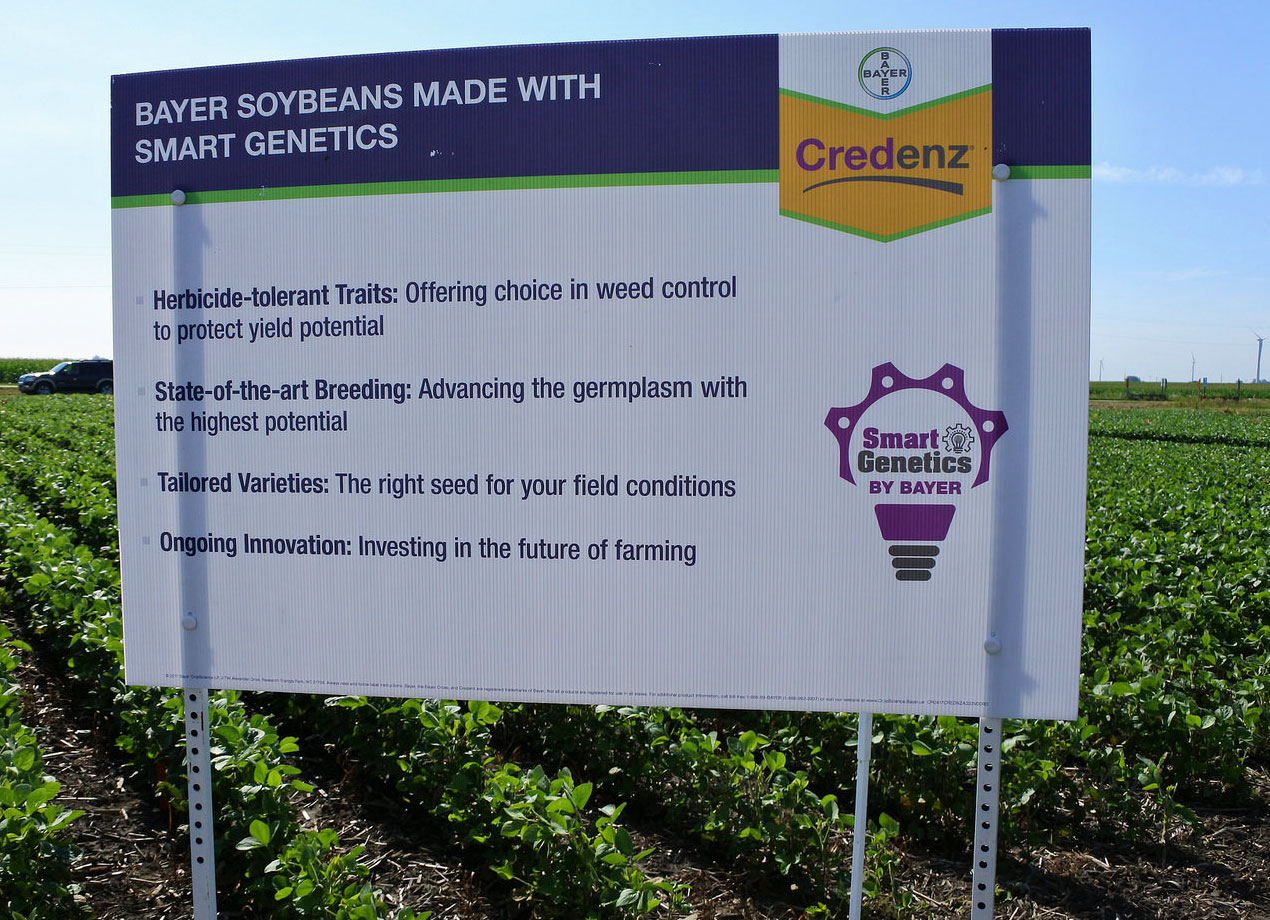 Bayer CropScience is seeing rapid growth in the use of its Credenz soybean varieties. In 2018, Credenz sales broke into the top ten out of more than 150 soybean brands available in the United States.
The strength of the Credenz soybean brand continues to be the fact that it is based on the LibertyLink system, which is outstanding for both weed control and elite genetics, according to Bayer agronomist Monty Malone.
“Going forward, Credenz will remain the same focus of being grower choice. Any trait platform that is in need that can serve as a tool to a grower, we will definitely try to provide that within the Credenz brand,” said Malone, who noted that over 90 percent of the Credenz portfolio is enabled by Liberty.
Malone was at the 2018 Commodity Classic in Anaheim.
Listen to Jamie’s interview with Monty here: Interview with Monty Malone, Bayer - Credenz History
Bayer at 2018 Commodity Classic Photo Album
Photos, video, and audio interviews from Bayer at Commodity Classic 
The U.S. Soybean in Southeast Asia
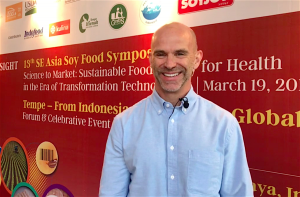 USDA Foreign Agricultural Service’s Chris Rittgers has called Jakarta, Indonesia home for nearly a year, but is a veteran when it comes to the role of agricultural counselor. Prior to this three-year position, Rittgers worked for the USDA in the Dominican Republic, Haiti, Malaysia, Iraq, Egypt and Spain. Naturally, he was the perfect person to share the role of Indonesia in the global marketplace during the 13th SE Asia Soy Food Symposium and Ag Supply Chain Asia 2018 events in Surabaya, Indonesia.
“Indonesia is unique. They import soybeans primally for food use. The objective of these events is to provide technical information for Southeast Asia on the quality characteristic of U.S. soybeans, our infrastructure, marketing system and how it’s produced. They are also getting information about our supply chain and no one can explain it better then our U.S. producers themselves. They are our best ambassadors for our sector and many are here from various states in the Midwest,” Rittgers said.
As an advocate for U.S. soybean in the southeast Asian market, Rittgers continually shares the advantages of U.S. soybeans. He said U.S. beans come with a transparent price, systematic infrastructure, consistent quality and stable supply.
Rittgers also said the history and relationship between the Indonesian buyers and the U.S. exporters is a big contributor. “It’s been several decades they have had hard, concrete and successful economic relationships,” Rittgers said.
Listen to my complete interview with Chirs to hear his overall views on the future of the Southeast Asian market beyond soy: Interview with Chris Rittgers, USDA FAS Indonesia
View and download images from the event here: USSEC SE Asia Buyers Conference Photo Album
China Adds Tariffs on Beef and Soybeans
More U.S. agricultural products are on the second list of retaliatory tariffs from China, including both soybeans and beef, of 25 percent.
 Kent Bacus, Director of International Trade and Market Access for the National Cattlemen’s Beef Association (NCBA), calls the action unsettling but not surprising. “This is a battle between two governments, and the unfortunate casualties will be America’s cattlemen and women and our consumers in China,” said Bacus.
Listen to Bacus in this special edition of Beltway Beef – Beltway Beef report with Kent Bacus
 American Soybean Association treasurer Bill Gordon, a grower from Minnesota, says the move has already cost them. “We had a 30-40 cent drop in our soybean price this morning,” said Gordon. “So just on the speculation alone of a tariff, we lost 1.7 billion.”
However, Gordon is optimistic that the situation could turn into a positive. “If it gets both countries to the table, it could create a positive trade balance, with soybeans and other ag products,” he said. “We have the products that China wants.”
Get more details from Gordon in this interview – Interview with ASA treasurer Bill Gordon, Minnesota soybean farmer
Also included on the second list of 25% tariff items are corn, cotton, and frozen orange juice.
2018 Ag Media Summit
 Just in case you didn’t get the memo, this year’s Agricultural Media Summit will be August 4-8 in Scottsdale, AZ.
In case you don’t know what this is then read on.
This is the largest gathering of agriculture’s top writers, editors, photographers, publishers and communication specialists in the U.S. This year the Association for Communication Excellence (ACE) in Agriculture, Natural Resources and Life and Human Sciences will join the American Agricultural Editors’ Association, Livestock Publications Council and the Connectiv Agri-Media Committee. With the addition of ACE, more than 850 media and communications professionals are expected to attend.
This industry-wide gathering of agricultural communicators offers one of the best opportunities for professional improvement and industry networking. The InfoExpo (trade show) annually exceeds 75 booths and provides the best place to promote your company or organization’s products and services. Sign up for your booth here.
HOTEL HEADQUARTERS:
The Westin Kierland Resort & Spa
6902 E. Greenway Parkway
Scottsdale, AZ 885254
480-624-1000
kierlandresort.com
To book your room, click here. Room rate: $149
Nebraska Water for Food at 8th World Water Forum in Brazil
 The 8th World Water Forum, held in Brazil last month, drew more than 20,000 participants from 170 countries to focus on the challenges and solutions to ensuring water security around the world. The Robert B. Daugherty Water for Food Global Institute at the University of Nebraska (DWFI) coordinated the Water for Food track of sessions with the Food and Agriculture Organization of the United Nations.
The institute organized a High Level Panel on Water for Food, moderated by DWFI executive director Peter G. McCornick, featuring international leaders who shared their views and experiences on ways organizations and nations can work together to improve food security and successful farming production, conserve natural resources and mitigate the effects of climate variability.
“We are building awareness of the urgent importance of looking at water issues differently, especially when it comes to agriculture,” said McCornick. “If we’re not including agriculture in the water security challenge, we’re ignoring 70 percent of the equation, and missing the opportunity to increase resilience in our food systems. Nebraska has a lot of expertise to share, as well as a lot to gain through our involvement with the many partners participating in the World Water Forum – developing potential projects that will further our goal of ensuring water and food security.”
DWFI also held a side event to discuss ways in which organizations can support farmer-led agricultural production, including access to irrigation for small-scale farms.
Listen to my interview with McCornick here: Interview with Peter McCornick, Daugherty Water for Food Global Institute
Farm and Ethanol Groups Slam RFS Waiver for Big Refiner
A Reuters report about EPA exempting one of the country’s largest oil refiners from complying with the Renewable Fuel Standard (RFS) touched off a backlash from farm groups and ethanol organizations Tuesday.
 The National Farmers Union (NFU) was first to respond to the report that Texas-based Andeavor received small refiner economic hardship waivers for three of its 10 refineries that exempted them from complying with 2016 blending obligations. NFU President Roger Johnson called the alleged actions “deeply disturbing,” noting that waiving RFS requirements for large refining corporations undercuts the effectiveness of the law. “What’s equally disturbing is that these actions have purportedly been taken without any transparency, which violates central tenets of responsible governance,” said Johnson. Andeavor reported a $1.5 billion net profit last year and the waiver was reportedly granted earlier this year.
“Providing a small refiner waiver to a company like Andeavor is laughable and abandons the commitment of President Trump to protect the RFS,” said Renewable Fuels Association (RFA) president and CEO Bob Dinneen. “Suffice it to say we are exploring all our options to return the RFS to what the statute intended and what the President has supported.”
The impact of the waiver removes additional Renewable Identification Numbers (RIN) from the total 2016 obligation, effectively reducing the total Renewable Volume Obligation (RVO) for the year.
“Since EPA refuses to disclose which refiners get these RFS exemptions, it blurs the transparency of the RIN market giving an advantage to refiners receiving waivers,” said American Coalition for Ethanol (ACE) CEO Brian Jennings. “Waiving RFS obligations based on ethanol use thresholds violate the intent of the RFS and invite litigation.”
The waivers impact both ethanol producers and corn farmers, who are facing their fifth year of prices at or below the cost of production. “Granting these waivers significantly reduces the number of gallons of fuel blended with ethanol hurting rural economies and the nation’s corn farmers,” said National Corn Growers Association (NCGA) president Kevin Skunes of North Dakota. “When refiners aren’t meeting their blending obligations, corn farmers pay the price.”
Two of the Andeavor refineries receiving the waivers are in North Dakota and one in Utah.
Precision Ag Bytes 4/4
 Dr. Henry Nguyen, a Curators’ distinguished professor of plant sciences in the University of Missouri College of Agriculture, Food & Natural Resources, has employed NRGene‘s DeNovoMAGICTM to assemble two genomes of soybean: “Lee,” a Glycine max variety, and a Glycine soja accession PI 483463. In addition to the United Soybean Board, funding for the sequencing project was provided by three private companies: Bayer CropScience, DOW AgroSciences and Monsanto.
- Semtech Corporation, a supplier of high performance analog and mixed-signal semiconductors and advanced algorithms, announced that Teralytic, a manufacturer of wireless soil sensors, implemented LoRa devices and wireless radio frequency technology (LoRa Technology) in its wireless sensor to detect nitrogen, phosphate and potassium (NPK) levels in soil to help farmers reduce waste and to improve crop yields. Teralytic launched its LoRa-enabled NPK soil sensor at the recent World Agri-Tech Innovation Summit in San Francisco on March 20, 2018.
- The National Corn Growers Association partnered with the USA Poultry and Egg Export Council to conduct a study on the benefits of poultry exports to corn. The study, conducted by World Perspectives, Inc., entitled “Corn and Poultry: A Great Partnership,” outlined the benefits realized by America’s corn farmers from exports of poultry and eggs.
U.S. Farmers Advocate for Trade in SE Asia
 Ag Supply Chain Asia 2018 took place in Surabaya, Indonesia March 20-22. The event, organized by the U.S. Soybean Export Council (USSEC) and U.S. Grains Council (USGC), took international attendees ‘Beyond the Horizon of Food and Agriculture.’ Relationships sit center-stage even in the international marketplace and putting a face to the U.S. farmer is pivotal for buyers of U.S. agricultural products.
This event brought buyers and U.S. farmers together to share stories, ask questions and even discuss challenges each face. I was able to sit down with a few of the farmers to learn why they are involved in such trade missions, how trade impacts their bottom line and why free trade is so important.
Meet the U.S. Farmers:
Interview with Jamie Beyer, Minnesota Farmer
Interview with Bill Bayliss, Ohio Farmer
Interview with David Droste, Illinois Farmer
Interview with Sharon Covert, Illinois Farmer
Interview with Jeff Frank, Iowa Farmer
Interview with John Longley, Illinois Farmer
Interview with Josh Miller, Indiana Farmer
Interview with Alan Moore, Michigan Farmer
Interview with Ryan Wagner, South Dakota Farmer
View and download images from the event here: USSEC SE Asia Buyers Conference Photo Album