One of the things we’ve learned in recent weeks is how many definitions there are for “sustainability.” The Alltech Symposium theme was The Sustainability Principle so it was our primary topic of discussion. At the Great Debate roundtable our panelists each took a turn answering the question, “How do you define sustainability? There were also asked to put that in terms of how the audience should be interested in it.
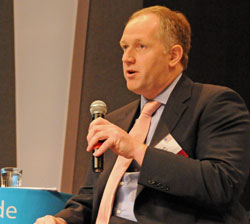 Our first panelist to tackle this question was Lutz Goedde, Deputy Director, Agricultural Development, Bill and Melinda Gates Foundation. He says the Foundation he works for looks at sustainability “through a very different lens compared to many other organizations.” He then proceeded to say that there are a billion people in the world who live on under a dollar a day and described what that is like. He says that agriculture is the primary means for most of them to get food and earn a living. He says they follow the Bill and Melinda sustainability philosophy that “every person on the planet has the right to live a healthy and productive life.” Next he says that there are normally three dimensions to sustainability which are economic, social and environmental.
Listen to Goedde’s reply here: alltech-symposium-debate-goedde.mp3
You can also download the reply here: Lutz Goedde Question Reply (mp3)
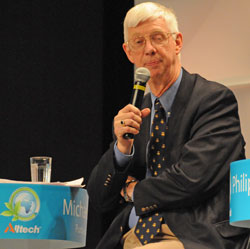 Next up was Dr. Michael Boehlje, Professor, Dept. of Agricultural Economics and the Center for Food and Agricultural Business, Purdue University. He said we could look at sustainability from a traditional farm management standpoint of carrying capacity that recognizes current and future capacity on a global basis and deals with absorbing waste in terms of the economic or production activity you’re involved in. He says that although government is involved in this issue, it will be consumers who “will be the ultimate in terms of whether in fact sustainability practices are adopted and those who adopt them are compensated for them.”
Listen to Boehlje’s reply here: alltech-symposium-debate-boehlje.mp3
You can also download the reply here: Michael Boehlje Question Reply (mp3)
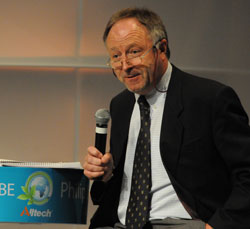 Finally we heard an answer to this question from Philip Wilkinson, Order of the British Empire, Executive Director, 2 Sisters Food Group. He said that the definition he would use is the one used by the United Nations but since that has already been brought up by earlier speakers he composed a slightly different one. He says, “A sustainable agricultural system is one which maximizes production by increases in yield while minimizing environmental impact and does not compromise animal welfare.” He says farmers are the logical custodians of the land who can accomplish this. He also quoted a former United Kingdom Minister who summed it us as, “Don’t cheat your children.”
Listen to Wilkinson’s reply here: alltech-symposium-debate-wilkinson.mp3
You can also download the reply here: Philip Wilkinson Question Reply (mp3)
Alltech Symposium Photo Album

 It looks like Woodruff Sweitzer and True Media have reason to celebrate this holiday weekend.
 Woodruff Sweitzer will partner with BIVI to develop strategic plans, advertising, sales materials and collateral for major swine vaccines (Ingelvac CircoFLEX®, Ingelvac MycoFLEX®, Ingelvac® PRRS and Enterisol® Ileitis). Beginning in July 2009, True Media will manage the media planning and buying, which is focused primarily on Web and professional trade publications.
 The
The 
 Calling all communications professionals. What is one of the most difficult challenges we face? Developing campaigns that will garnering consumer support and product adoption. An example of just how difficult this can be is the corn-ethanol industry. Consumer support has been dwindling for months and this has in part, been driving by media hostility and biased reporting.
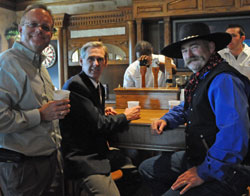 You might look at this picture and say, “That looks like a dangerous group,” but you’d be wrong. We’re just some lovable guys enjoying a frosty end-of-day beverage in the pub at Shrewsbury Hall. This is the pub next door to the
 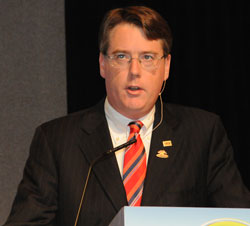 One of the highlight sessions at the Alltech Symposium is The Great Debate. This is a roundtable discussion and featured well known panelists Michael Boehlje, Professor at Purdue University, Lutz Goedde, Bill and Melinda Gates Foundation and Philip Wilkinson, 2 Sisters Food Group. The moderator (pictured) was Alltech Vice President, Aidan Connolly. The subject was “Sustainability – For realists or for dreamers?”
 I’m not saying you should go out and buy one of these today but it sure is tempting. I found this story on