
Looking back to my college days, there was one craze that my roommates and friends got into that I never got into. It’s called Virtual Farming, and it’s a new application on Facebook. I ran across an excellent column on this Virtual Farming by Gary Truitt at Hoosier Ag Today. While I always thought of it as some strange addiction that would more than likely eat up all my time (partly true), Truitt sees it as an educational opportunity for consumers (if the application was accurate).
 Let me explain how this works. On Facebook, you can join a farming community, where you can purchase livestock, plant and harvest crops, make money, build fences and join a neighborhood. Truitt writes, There are no diseases, no deaths, no market crashes, no hail storms or droughts, and no bank foreclosures. Yet the game is engaging and, if you are not careful, rather addictive. Like farming, it can get into your blood.
This game on Facebook is one of those tools that might begin a conversation with consumers about where their foods come from; however, the livestock aren’t used for meat or milk production in this game. Truitt admits there are flaws to this system when he writes, I would like to see the game developers add some new features to the higher levels. Things like confined animal feeding, biotechnology, and conservation tillage. These are simple concepts that could be easily added to the game and would enhance the players’ understanding of agricultural issues that are very much in the news today.
To read the entire column, link to Hoosier Ag Today. And, let me know if you give this virtual farming thing a shot. I haven’t tried it yet, but I might think about joining a rural community online one of these days…
 If you’re still wondering how new social media/networking platforms have become so pervasive I would suggest hearing how an expert explains it. That expert is Pope Benedict XVI.
 At the conclusion of the World Ag Congress in St. Louis last week,
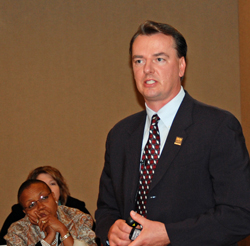 Dr. Mitloehner talked about the United Nations report that claimed livestock produce more greenhouse gases than all transportation. “This has been a very controversial report,” he said. “You can’t take these global numbers and apply them regionally. That’s one of the big issues.”
 Syngenta Crop Protection has redesigned the online face of the company,
  The workshops give agricultural aviators a chance to gather each year to test their equipment and learn about new developments in application technologies to ensure they are applying crop protection products evenly, efficiently and safely. Analysts with the Operation Self-Regulating Application and Flight Efficiency (S.A.F.E.) from across the country conduct these workshops in conjunction with state agricultural aviator associations.
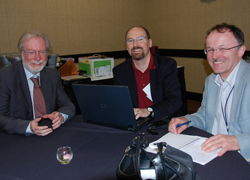 Last week’s World Agricultural Forum World Ag Congress attracted a great crop of journalists, both locally and internationally. Pictured here interviewing keynote speaker Paul Collier (left) are two leaders of the
  I missed the Association for Downloadable Media’s webcast titled, “The Podcast Consumer Revealed.” The session was conducted by Tom Webster, Edison Research. The audience for podcasting just keeps growing. The main reasons people watch or listen to podcasts is so they can do so whenever and wherever they want. Here are some key points from the session.
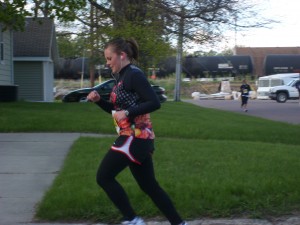 A few months ago, I signed up for a half-marathon with my sister, Courtney. To boost our motivation, we joined
 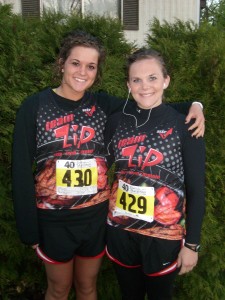 This was my first half marathon, and I was proud to hear my name called as I crossed the finish line, announcing that I was running in support of beef. My jersey proudly said, “Beef, it’s what’s for dinner,” and it earned me quite a few comments and cheers throughout the race. Although my muscles were sore from the intensity of the race, my heart was proud of myself for finishing the race within my goal time.