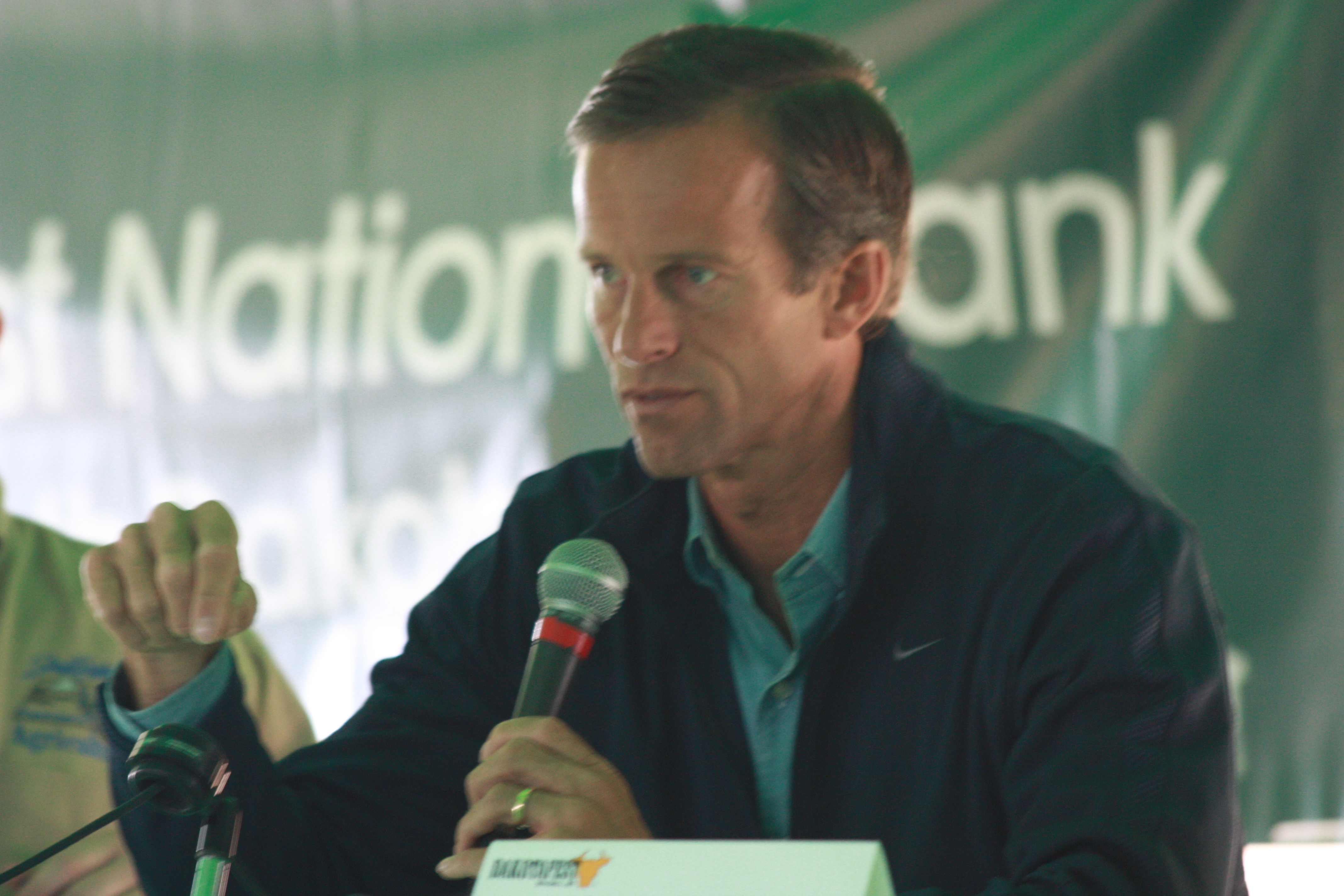
Andrew Young Discusses Advantages and Challenges to Wind Energy

Cindy Zimmerman

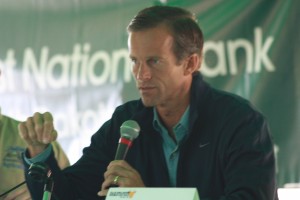
IFMA 17Wind energy is an up and coming technology in the U.S. and central Illinois. Attendees of the International Farm Management Association 17 Congress (IFMA 17) got a chance to learn more about this current, complex energy issue. Andrew Young, CDO of Horizon Wind Energy, addressed the IFMA 17 Congress today in the Brown Ballroom at Illinois State University. Young’s presentation outlined the wind energy industry, the company itself and the current policies and incentives in place to help grow the industry.

Horizon Wind Energy is the company that manages the wind farm located in McLean County. The Twin Groves Wind Farm is located five miles east of the Central Illinois Regional Airport. The wind farm produces 396 megawatts of clean energy per year enough to power around 120,000 homes in Illinois. With over 240 massive turbines the Twin Groves Wind Farm is one of the largest in the country.

One of the main factors in starting a wind project is getting land owners to sign on to the project. The ideal placement for wind farms is on open range and actively cultivated farm lands, thus relevant to many of the attendees of the IFMA 17 Congress.

Young also stressed the challenges that exist to furthering the wind energy industry in the U.S. Currently, the U.S. energy grid system is not structured to support the full potential capacity for wind farming technology. Lack of connection to the grid has tabled some wind farm projects in areas that are ideal for wind technology. Also, tax credits and incentive programs are another main factor in funding and starting a wind farm project, Also, community opposition and difficulty in obtaining permits can slow a wind project.
Read More

Uncategorized

A Posting Slowdown

Chuck Zimmerman

Okay. Cindy has tweeted “My Twittering husband, who tweets photos of what he makes for dinner, doesn’t bother to tweet that he’s in the hospital for pneumonia.” She’s right. Maybe I should have been writing about this but I just couldn’t find the right “voice” for it and it’s been one of those things that has dragged on for a couple weeks and I keep thinking it’s about to be resolved. Well we’re finally getting there (he said confidently.)

I am still in the hospital and will be for a few more days after a procedure in the morning. Hopefully that will settle the whole problem and then I’ll have to take it easy for a while after that. This is hard to say for someone who is pretty much on the go and used to jogging or biking at every chance he can get. I figured that I owed to the AgWired community to let you know in case you didn’t already. That’s why I’ve been a little light on posting and tweeting, especially for the last couple days.

Thank goodness you can use a cell phone and computer/air card in your room! I’ll be off the grid tomorrow and hope to be back on by Friday sometime with an update.

So, let me just say a huge thank you to all our sponsors and supporters, followers and friends. Without you there would be no community. I’m looking forward to being back to 100 percent as soon as possible.

Uncategorized

IFMA 17 Delegates Travel on Bio-Fuels

Cindy Zimmerman

IFMA 17IFMA 17 was not kidding when it came up with its concept for the second Congress ever held in the U.S. Conference planners have woven the theme of “Food, Fiber and Energy” throughout the past few days of the Congress. However, it may surprise a few of the international delegates to learn their transportation is also joining the IFMA 17 Congress to implement the “energy” component of the theme.

Since Sunday, delegates have had the opportunity to ride shuttle buses to and from the Congress’ events. These Peoria Charter Coach buses are currently running on bio-fuels.

This practice is not uncommon for the company, who has been running its shuttles on bio-fuels since March 2004. And in its five year history of using bio-fuels, the company is pleased with their decision.

Bill Winkler, president of Peoria Charter Coach said,” To me, it is a three win situation…It burns cleaner. It’s cheaper, and it helps the farmers.”

As delegates look to the future of the agriculture industry, the issues of sustainability and a poor economy are sure to arise. However, Winkler was quick to mention this clean-burning fuel is mixed locally, reducing the cost. With these incentives, Winkler looks forward to continuing this practice in the future.

Peoria Charter Coach Company has served over 400,000 passengers since its start in 1941.

For a complete itinerary of IFMA17 events, visit: ifma17.org.

AgWired coverage of the IFMA 17 is made possible by Syngenta

Uncategorized

Lessons Learned at 2009 Cattle Industry Summer Conference

Amanda Nolz

3730649939_b3a1127d5a Last week, Cindy and I attended the 2009 Cattle Industry Summer Conference in Denver, Colo. It was my first experience working as a photojournalist and blogger, on location, covering an entire event on behalf of America’s beef producers as the Beef Checkoff Program. Here are my top ten lessons learned while working on this event.

2009 Cattle Industry Summer Conference Photos

10. When taking photos, use the 360 degree method to capture every angle of the room.
9. Don’t be afraid to look silly or be in the way when using the 360 method.
8. Take good notes; this makes writing a blog post more efficient and concise.
7. Wear comfortable shoes. Cindy is a seasoned pro who wore flats, while I attempted high heels everyday. Hello, blisters!
6. Take advantage of the free food in the media room. Thanks to NCBA and Igentity for taking care of me all week. (The cookies rocked!)
5. Always be sure the record button is on when conducting an interview. It’s not fun discovering that after the fact!
4. Use your resources to get acquainted with the people and the topics that need to be covered throughout the meeting.
3. In one place, write down all user names and passwords for the following accounts: YouTube, Flickr, blogs, Twitter, Facebook, etc.
2. Be prepared to feel like a pack mule. With camera, flash, audio recorders, video recorders, notepad, agenda, pens, laptop, USB cables, card readers, etc., you really do start to feel like a pack mule.
1. Have fun! I had a blast covering this event, and it was a great learning experience for a young aspiring agriculture writer. Thanks to the cattlemen for their hospitality. Check out the event coverage here.

Cattle Industry Conference

4-H Flag Destined for Outer Space

Amanda Nolz

4h_mark1 4-H had a big role in shaping my life. I still remember my first purple ribbon, my first speech, my first batch of 4-H cookies, my first show steer and my first trophy. I can remember how much those “firsts” meant to me because I had spent years as a Clover Bud, waiting my turn to FINALLY be in 4-H. Without a doubt, 4-H helps fine tune kids’ talents and passions. It helps young people explore new possibilities, and it strengthens a child’s ties to agriculture. So, when I heard that 4-H was going to space in a monumental trip, I was excited to see this youth agriculture program still going strong. As reported by AgWeb Blogs, 4-H was destined for outer space.

The Space Shuttle Endeavour headed into space last week as part of the STS-127 mission. On board was the National 4-H flag. The Endeavour is delivering the final components of the Japan Aerospace Exploration Agency’s Kibo laboratory to the International Space Station. The 16-day mission included five spacewalks and the installation of two new space station components and equipment.

Azeem Ahmed, 17, who is an avid space enthusiast and 4-H member from Alabama and President of the Alabama 4-H Council, made the original request to NASA to have the flag flown with a future space shuttle mission.

“4-H is more than green and white – it is a collage,” Ahmed said in a news release. “It is agriculture and it’s also healthy living, leadership and citizenship and science, engineering and technology. Science, engineering and technology is one of the missions of 4-H, and by flying a 4-H flag into space, I hope we shine a new light on 4-H.”

Media

Zimmatic Irrigation Can Improve Biofuels ROI

Cindy Zimmerman

ZimmaticYou know that we have to love the name of this company – Zimmatic!

Lindsay Corporation, maker of Zimmatic® irrigation systems, has produced a new biofuels brochure called “Improving Biofuel ROI Through Efficient Irrigation Solutions.”

The eight-page full-color brochure includes information on key biofuel crops, the benefits of biofuels, market growth opportunities for biofuels, and irrigation management recommendations to help growers optimize the yield, size distribution and quality of biofuel crops.

“Several factors are influencing a growing worldwide interest in biofuels, including climate change, rising oil prices, future oil supplies, and exploration and drilling costs,” says Dirk Lenie, vice president of marketing and export sales at Lindsay. “Lindsay is committed to helping growers meet the increased demands of a fuel-hungry world and to providing growers with the tools needed to produce more biofuel per gallon of water used.”

The Lindsay brochure provides a step-by-step guide to properly plan and successfully complete a biofuels irrigation project.

For a copy of the biofuels brochure, go to the downloads section at www.zimmatic.com.

Agribusiness, Biofuels, Irrigation

New Farm Podcaster Tool

Chuck Zimmerman

Sony RecorderIf you don’t have a good digital audio recorder yet or are looking for a new one then Sony has introduced the PCM-M10. It’s the nice small form factor that makes these great to add to your gear bag.

The PCM-M10 is conveniently small on size, but packs in many cool features: a five-second pre-record buffer, WAV and MP3 format record and play, USB port for easy upload/downloads, Digital Pitch Control and a MicroSD/Memory Stick Micro slot. Providing 96 kHz 24-bit recording, a 4 GB built-in flash memory and user friendly operation, the PCM-M10 is the ideal choice for making live musical, nature sound and field recordings.

Equipment

National Hot Dog Day

Chuck Zimmerman

National Hot Dog DayI guess I missed it by a day but better late than never. July 21 is National Hot Dog Day and I hope you all had a chance to have yours.

I personally like them sliced and fried with eggs for breakfast as well as on a bun for lunch or dinner. If you want some tips on how to celebrate National Hot Dog Day then eHow has some great tips like:

Start your celebration with a hot dog breakfast. Try scrambling a few eggs with slices of hot dogs to enhance the taste. Top your eggs with grated cheese and a generous dab of ketchup.

The National Hot Dog & Sausage Council has all of the information you could possibly want including answers to your questions about hot dogs. Here’s what’s in them.

All hot dogs are cured and cooked sausages that consist of mainly pork, beef, chicken and turkey or a combination of meat and poultry. Meats used in hot dogs come from the muscle of the animal and looks much like what you buy in the grocer’s case. Other ingredients include water, curing agents and spices, such as garlic, salt, sugar, ground mustard, nutmeg, coriander and white pepper.

Food

AdFarm/AGROTAIN Relay Team Wins Division

Chuck Zimmerman

Race Finish LineYou might remember last week’s post about the Mt. Ranier Relay Race that AdFarm and their client AGROTAIN were participating in. I received a photo and update from Jason Streubel who was on the team. He’s a soil science PhD student at Washington State University. He says their team won their division! Jason is also a blogger and you’ll find him at Tales From a Poopsmith. Here’s an excerpt from his post about the race.

So equipped with some courage and apprehension I drove to Seattle to meet my team for the first time. One by one I was introduced to “Nine Hot Guys and Two Really Lucky Women” from AGROTAIN (a vital component to putting quality food on your table every day in an environmentally sound manner), AdFarm (the ad wizards who can make fertilizer and manure look attractive) and Dave (the DCLS rep who rallies for common sense on the hill).

Agencies, Agribusiness

IFMA17 Members Tour Chicago High School for Agricultural Sciences

Cindy Zimmerman

IFMA 17Typically farmers don’t take a city bus or elevated train to the fields each day. But Chicago High School for Agricultural Sciences isn’t your typical farm.

Every year as many as 1,500 prospective students apply for 150 spots at the far south side magnet school, and the lucky few who are chosen travel long distances to be a part of school that is producing some of the top, young Ag minds in the U.S.

“Our students have a unique opportunity, that no other students in the city of Chicago have,” said Lucille Shaw, head FFA advisor at the school.

Members of the IFMA17 congress also had a unique opportunity Tuesday afternoon to tour CHSAS, which sits on a 72-acre plot of land just down the street from another of the city’s public schools, Chicago Morgan Park.

For all intensive purposes CHSAS is a fully functioning farm, while teaching its students traditional subjects like math and history. Included on the campus is a barn for pigs, goats and horses, a fish farm and of course midwestern staple crops like corn and soybeans. There is also a machine shop for students to fix machinery and a large hive of bees, where the students harvest honey and sell it, along with other items produced by students in a small store in front of the school.

“I think this school gives kids an opportunity to be exposed to something they otherwise would not have,” Shaw said. “It was an untapped resource, especially by minorities, for so many years.”

Before spending a few hours at CHSAS, the IFMA17 members gathered for a tour of the Chicago Mercantile Exchange, where agricultural products such as corn, wheat and pork bellies are traded on the open market.

The group arrived in time to see the CME open at 9:30 a.m., to watch buyers and sellers go to work in the “pits.”

“I don’t know what to think of it,” said Heiko Zeller, a German student from the University of Applied Sciences in Eberswalde. “There’s a lot of money being made out there, but it seems a little crazy.”

Stops were also made at Millennium Park, a large vegetative outdoor area that sits in the shadow of the newly named Willis (Sears) Tower, and a lunch at the University of Illinois’ Illini Room, just a few blocks form the park.

“It’s an amazing use of a public space,” said University of Queensland senior lecturer Don Cameron said of Millennium. “You could just come here and relax with nature in the middle of the city.”

AgWired coverage of the IFMA 17 is made possible by Syngenta

Uncategorized