Animal Ag News 5/2

Carrie Muehling

  • Michigan dairy farmer Ashley Kennedy, a member of the Michigan Milk Producers Association, testified on behalf of MMPA and the National Milk Producers Federation at the Senate Agriculture Committee’s first hearing dedicated to the upcoming Farm Bill, the twice-a-decade reauthorization of all USDA programs.
  • U.S. consumer demand for retail meat remains exceptionally strong despite higher prices stemming from increased production costs and supply chain limitations. However, once the full effects of producer price inflation finally hit retail meat cases, consumer demand for meat will be tested again, according to a new report from CoBank’s Knowledge Exchange.
  • Following two Congressional hearings on the beef and cattle markets largely focused on prices producers receive for their cattle, the North American Meat Institute said the latest USDA annual report on livestock income clears up misconceptions about the state of cattle markets and shows cash receipts for the sale of cattle and calves increased 16 percent, from $63.1 billion in 2020 to $72.9 billion in 2021.
  • Elanco Animal Health Incorporated and Royal DSM have created a strategic alliance connecting two leading, sustainability-focused companies to address one of society’s most significant opportunities of the decade, mitigating climate change by reducing greenhouse gas emissions from farming. Elanco has secured the exclusive U.S. licensing rights to develop, manufacture and commercialize Bovaer® for beef and dairy cattle.
  • Leading-edge research and insights on critical issues and progress impacting the animal nutrition industry will be shared at the 2022 Animal Nutrition Conference of Canada, May 10-12 in Saskatoon.
  • The Dairy Business Association and Edge Dairy Farmer Cooperative announced the hiring of Melissa Haen as marketing and events manager.
  • Scientists with the U.S. Department of Agriculture’s Agriculture Research Service (ARS) announced that a vaccine candidate for African Swine Fever (ASF) passed an important safety test required for regulatory approval, moving the vaccine one step closer to commercial availability.
  • Join the Dairy Calf and Heifer Association for its next webinar – “Scours Prevention Starts with Colostrum” – set for May 5, at 2 p.m. Central time.



AgWired Animal, Animal Agriculture, Animal Bites

Rail Disruptions Impacting Ag and Biofuels

Cindy Zimmerman

The Surface Transportation Board (STB) heard about how agricultural and biofuels producers are being impacted by rail service challenges during a two-day hearing last week.

USDA Deputy Secretary Dr. Jewel Bronaugh told the board how rail disruptions are impacting farmers, ranchers and consumers. “Elevators are full and therefore cannot purchase more grain from farmers, and livestock operations are unable to receive the grain they need for feed,” said Bronaugh. “At the same time, ethanol and biodiesel facilities report numerous slowdowns and even shutdowns due to delays in their outbound train service—delays which permeate through the entire supply chain from farmers selling grain to customers buying fuel.”
STB hearing-USDA Deputy Bronaugh (7:37)

National Grain and Feed Association (NGFA) President and CEO Mike Seyfert testified before the board, listing several examples of rail service failures experienced by grain shippers across the country and outlining recommended actions for the STB.

“Almost every shipment made by an NGFA member via rail will be used for either human food, animal food or fuel production,” said Seyfert. “Grain and oilseeds processors, such as flour mills, crushing and biofuels facilities have experienced rail challenges on the inbound and outbound.”
STB hearing-NGFA CEO Seyfert (4:23)

Growth Energy Senior Vice President of Regulatory Affairs Chris Bliley testified on how disruptions have impacted the biofuels industry, including extreme delays in unit traffic and getting loaded trains offsite. “Nearly 70 percent of all ethanol is shipped by rail with 377,000 carloads in 2018 alone,” said Bliley. “Rail service is vital to get ethanol from our biorefineries in the Midwest to American consumers from coast to coast. It is perhaps even more important today with drivers facing high gasoline prices and ethanol continuing to trade 80 cents to a dollar less per gallon than wholesale gasoline.”
STB hearing-Chris Bliley, Growth Energy (3:22)

Audio, Corn, Ethanol, Grains, transportation

Industry Ag News 4/29

Carrie Muehling

  • Join the National Agri-Marketing Association for an exclusive look at the 2022 Ag Media Usage Study, produced by AM&P Network’s Ag Media Council, the National Agri-Marketing Association and Readex Research. The 60-minute webinar is scheduled for May 9 at 11:00 a.m. Central.
  • Agriculture’s greenhouse gas emissions fell more than four percent from 2019 to 2020, according to the U.S. Environmental Protection Agency. The most recent Inventory of U.S. Greenhouse Gas Emissions and Sinks shows agriculture continues to represent just 10 percent of total U.S. emissions, much lower than other economic sectors.
  • The American Farm Bureau Federation joined 119 other agriculture organizations in sending a letter to the Securities and Exchange Commission (SEC) asking for an extension of time to comment on its proposed rule, “The Enhancement and Standardization of Climate Related Disclosures for Investors.” Read the full letter here.
  • The National Association of Wheat Growers and U.S. Wheat Associates applaud the Biden Administration’s announcement stating the U.S. Department of Agriculture and the U.S. Agency for International Development are providing $670 million in food assistance to countries in need. Specifically, this announcement will utilize the $282 million in the Bill Emerson Humanitarian Trust and USDA will provide an additional $388 million through the Commodity Credit Corporation to help cover the transportation costs.
  • Food loss and waste globally contribute to poor human and environmental health, but solutions exist to enable value chains to become more sustainable, according to a panel of experts participating in Farm Journal Foundation’s Speaker Series.
  • National Farmers Union and Farmers Union Enterprises, owned by the state Farmers Union organizations in Wisconsin, Minnesota, North Dakota, South Dakota and Montana, are donating $125,000 to help with the humanitarian and agricultural crisis in Ukraine.
  • With policy and regulatory advocacy as one of its foundational strategic priorities, the International Fresh Produce Association is pleased to announce it has enhanced its already strong government relations practice with the addition of Rebeckah Freeman Adcock as its new Vice President of U.S. Government Relations.
  • According to a whitepaper released by the Association of Equipment Manufacturers, the global population is projected to increase to 2.2 billion by 2050, meaning farmers will have to grow 70% more food than what is now produced, with less environmental impact. This as well as 12 other trends are outlined in the Future of Food Production whitepaper, the culmination of a 2-year look at the agriculture industry through the generous contribution of time spent by a dozen AEM member leaders who participated in research, discussion, debate, and consensus building.
  • Rep. Glenn “GT” Thompson (R-PA), Republican Leader of the House Agriculture Committee, Rep. Ro Khanna (D-CA), Rep. Tom Emmer (R-MN), and Rep. Darren Soto (D-FL) issued statements after introducing H.R. 7614, the Digital Commodity Exchange Act of 2022 (DCEA).
  • The Agricultural Relations Council (ARC) has selected Lydia Johnson, daughter of Craig and Katie Johnson, Bondurant, Iowa, as the 2022 ARC/C.O.nxt scholarship recipient. Annually, ARC awards one $1,500 scholarship to a college student studying ag communications and public relations. Lyle E. Orwig, founder of Charleston|Orwig, now rebranded as C.O.nxt, generously funds this program through an endowment he established with the ARC Foundation.
Zimfo Bytes

Agri-Pulse Newsmakers Focuses on Cattle Hearings

Cindy Zimmerman

The newest edition of Agri-Pulse Newsmakers is out and this week the focus is on cattle hearings and beef politics.

The House and Senate Agriculture Committees both convened hearings to examine the beef sector this week. Now, Congress is left to determine its next steps and whether or not to pursue big reforms to the nation’s cattle sector.

Newsmakers interviews Rep. Dusty Johnson (R-SD) and then gets comments from U.S. Cattlemen’s Associations’s Lia Biondo, North American Meat Institute’s Mark Dopp, and National Cattlemen’s Beef Association’s Ethan Lane on the hearings and where Congress goes from here.

Newsmakers is also available as a podcast and/or you can sign up to get free access to Newsmakers.


Agri-Pulse, Beef, Video

NCBA President Testifies on Cattle Market Policies

Cindy Zimmerman

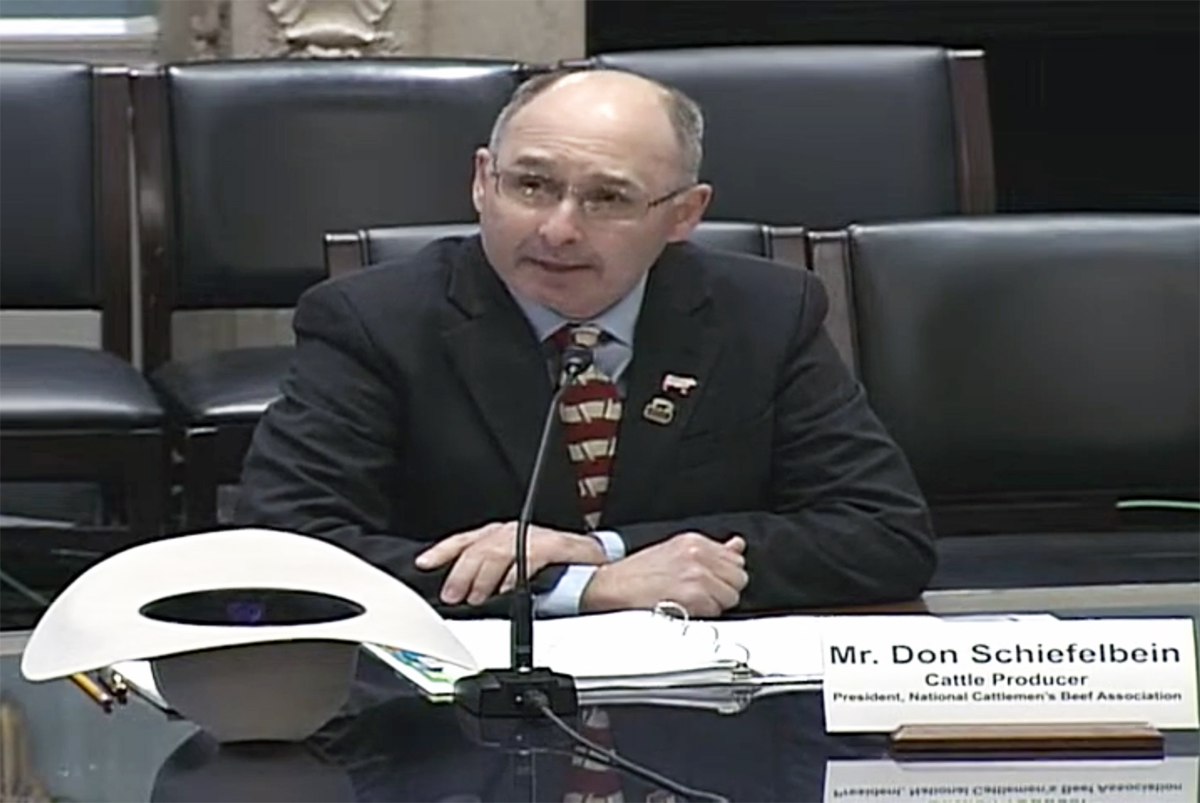
National Cattlemen’s Beef Association NCBA President Don Schiefelbein of Minnesota testified before a House Agriculture Committee hearing Wednesday on cattle market policy issues.

Schiefelbein urged House members to support key policies with broad, unified support across the entire cattle industry including a cattle contract library, Livestock Mandatory Reporting (LMR) reauthorization, and investments in small regional processing capacity expansion.

“The only people who know exactly how cattle producers should navigate these uncertain times are the individuals who work around the clock, day in and day out, to raise the safest and highest quality beef in the world—in other words: cattle producers,” said Schiefelbein.

Schiefelbein’s testimony was rooted in the policies adopted by NCBA through its century-old grassroots policymaking process. Instead of focusing on controversial matters, NCBA has encouraged Congress to support policies with wide industry backing.

“Broadly supported proposals have seen tremendous legislative success in this chamber recently,” said Schiefelbein. “However, repeatedly belaboring the same divisive issues has detracted from that collaborative work to the benefit of no one. It is time to move on and focus on areas where agreement can be reached.”

Listen to Schiefelbein’s opening remarks here:
NCBA President Don Schiefelbein (5:16)

Wednesday’s hearing included a panel consisting of the CEOs of the four major meat packing companies – Cargill, Tyson, National Beef and JBS. The hearing was based on allegations that the big four meatpackers have engaged in unfair practices that have driven down prices for cattle producers and led to distorted markets.

Audio, Beef, NCBA

National Grange Recognizes Rural America Champions

Cindy Zimmerman

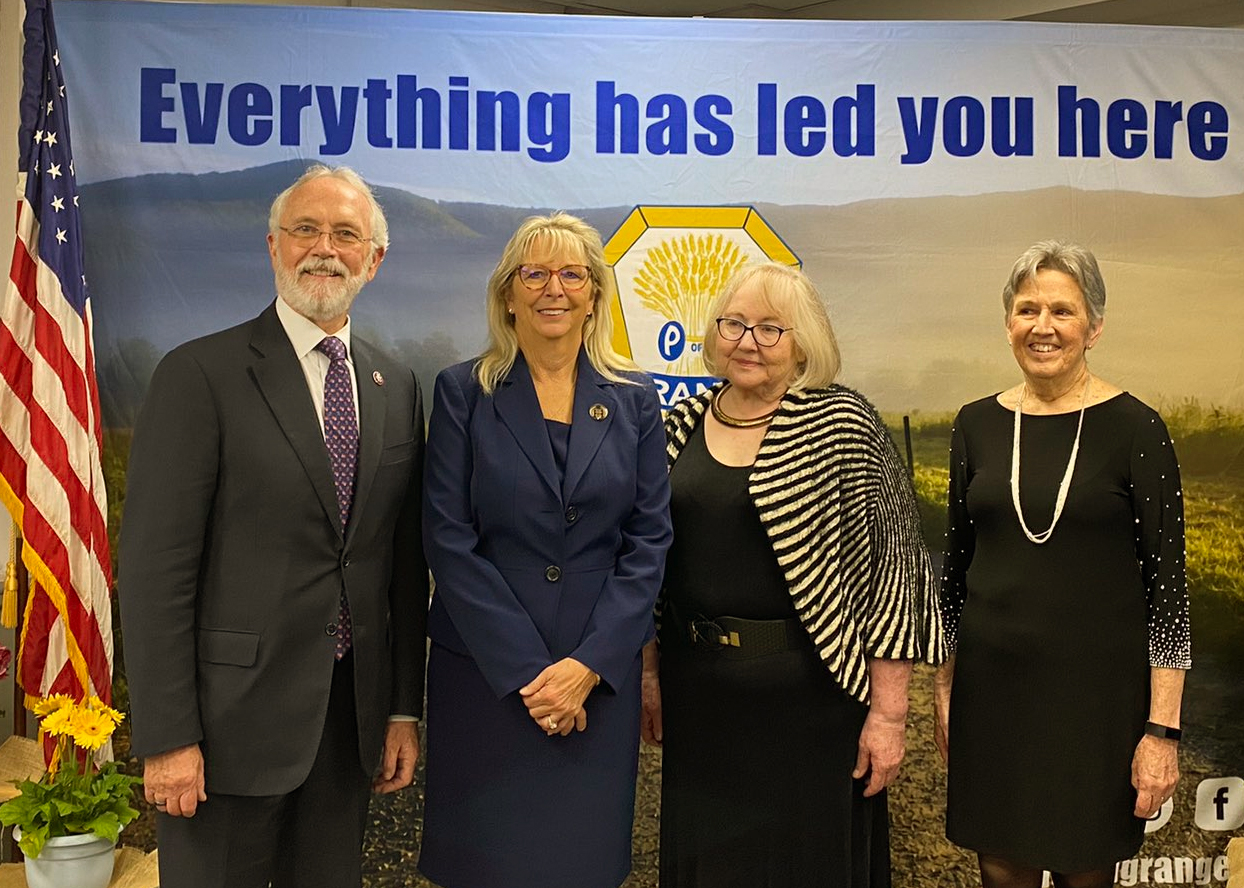
National Grange president Betsy Huber (right) with honorees Rep. Newhouse, Sara Wyant, & Nona Bear

The National Grange presented its 2022 Champion of Rural America Awards this week to four recipients who exemplify the mission of the family-focused organization founded in 1856.

The 2022 Champions of Rural America are Senator Joe Manchin (D-WV), Rep. Dan Newhouse (R-WA), Sara Wyant, founder of Agri-Pulse Communications, and patient rights advocate Nona Bear.

“This is one of the most important awards that could be given,” said National Grange President Betsy Huber. “For 155 years, the Grange has worked through nonpartisan means for America’s agricultural communities and rural residents nationwide. The process of selecting these Champions is something we take very seriously, as we want to ensure that our honorees are truly deserving because of their lifelong efforts.”

Huber said that each of this year’s honorees is a true “Champion” for the people living and working in rural America and she noted the contribution that Agri-Pulse has made. “Agri-Pulse connects the people who live in rural America directly to the people who make decisions about rural America,” said Huber.

Ag Groups, Agri-Pulse

Yara Establishes Potato Incubator Farm

Cindy Zimmerman

Yara has established a Incubator Farm in the Columbia Basin of Washington with the goal of determining how a complete potato crop nutrition program that drives productivity and grower profitability can simultaneously lead to a reduced carbon footprint.

The 260 acre trials will analyze the role of crop nutrition and practices such as 4R nutrient management in supporting the industry’s need to continue to produce high yielding, quality crops, while also implementing solutions to decarbonize the value chain.

“The global food chain continues to be under pressure to produce food for a growing world population, while also being tasked with reducing the environmental footprint. These two missions don’t have to be mutually exclusive, but take investment in research and exploration to find solutions that both improve farmer profitability and have a nature-positive impact,” said Trey Cutts, market development director, Yara North America. “The Incubator Farm network in North America is designed for this challenge, and we are excited to establish a farm that focuses on such a globally important crop such as the potato.”

The farm will enable collaborative research efforts to address sustainability and crop nutrition goals through the latest innovations in digital tools and future focused technologies in the industry. Yara’s partners and other industry stakeholders will be invited to leverage the farm’s research and findings with the opportunity to see firsthand the benefits of the crop nutrition solutions implemented.

This is the fourth incubator farm for Yara North America with three others in Modesto, CA; Auburn, AL; and Saskatoon, SK. The farms are part of Yara’s mission of “growing a nature positive food future” by building solutions to decrease carbon footprint, improve water and nitrogen use efficiency, regenerate soil sources and more.

AgWired Precision, carbon, Precision Agriculture

Precision Ag News 4/27

Carrie Muehling

  • Bayer announced that the company is pursuing an agreement whereby Ginkgo Bioworks will acquire Bayer’s West Sacramento Biologics Research & Development site and internal discovery and lead optimization platform. The contemplated transaction, projected to close before the end of 2022 pending final negotiation of the agreement terms and subject to regulatory approvals, would also bring Joyn Bio’s nitrogen-fixing technologies to Bayer, successfully closing the joint venture created between Leaps by Bayer and Ginkgo Bioworks in 2017.
  • The new ASTA Leadership Summit is coming this June in Indianapolis. In designing this program, the ASTA Board of Directors and staff have focused on developing the professional skills and educational needs to further the future leaders of our seed industry.
  • Registration is open for Tech Hub LIVE in Indianapolis July 20-21, 2022.
  • AgGateway’s Mid-Year Meeting returns to a fully in-person experience this summer, and registration is now open. The Mid-Year Meeting, set for June 13-16 at Prairie Meadows in Altoona, Iowa, connects the companies, organizations, and professionals that are actively working to bring seamless digital connectivity to the agriculture industry.
  • The annual Water for Food Research Forum serves as a culmination of yearly activities from DWFI’s Student Support Award Program and showcases students’ innovative work in water and food security. This event is free and open to the public but registration is required and space is limited. The Research Forum is scheduled for May 3, 2022 from 1-6 p.m. at the Nebraska Innovation Campus Conference Center in Lincoln, Nebraska.
  • Deere & Company has formed a joint venture with GUSS Automation, LLC, in Kingsburg, California. GUSS (Global Unmanned Spray System) is a pioneer in semi-autonomous orchard and vineyard sprayers.
  • The Milpa First Acre program is a multi-partner collaboration designed to showcase the value of crop diversity in soil health and the health of the planet, all while giving back to local communities. The expanded program seeks to enroll hundreds of farmers across the United States in growing a milpa garden, based on the Maya tradition of the milpa production cycle. The expanded initiative in Spring 2022 is done in partnership with The Nature Conservancy, Syngenta Seeds, the Comunidad Maya Pixan Ixim and RegeNErate Nebraska.
  • The National Soybean Nematode Conference (NSNC) will be held December 14-16, 2022, in Savannah, Georgia. The world’s premier event for soybean nematode research will take place at The DeSoto Hotel.
AgWired Precision, Precision Ag Bytes, Precision Agriculture

NCBA Opposes Mandate on Cattle Sales

Cindy Zimmerman

Two bills designed to address transparency and oversight within cattle marketing were the subject of a Senate Agriculture Committee hearing on Tuesday where the National Cattlemen’s Beef Association expressed opposition to a “government mandate on cattle sales.”

The hearing was specifically on the Cattle Price Discovery and Transparency Act sponsored by Sens. Deb Fischer (R-NE) and Chuck Grassley (R-IA) and another bill by Sen. John Tester (D-MT) creating additional oversight through a special office at USDA.

Kansas Livestock Association and NCBA member Shawn Tiffany testified that the legislation could potentially result in fewer marketing opportunities and less incentive for producers to invest in genetics and innovative production techniques that lead to higher-quality beef. “Every producer wants fair market value for the animals we raise and produce and many of us achieve that true value through value-based alternative marketing arrangements. Accordingly, I do not support a government mandate, of any kind,” said Tiffany. “Regardless of how well intentioned the concept of helping producers obtain fair market value for their animals, the end result will be fewer marketing options for U.S. producers.”

Sen. Fischer defended the legislation as a cattle producer and member of NCBA. “I’m not happy about mandates. I’m a rancher, I don’t like mandates on anything,” said Fischer. “But when you put forward voluntary programs and it is shown they don’t work and acknowledged by associations that they don’t work, we need to look elsewhere, and we have done that with this bill.”

American Farm Bureau Federation is also opposed to mandatory cash trade requirements, while National Farmers Union and U.S. Cattlemen’s Association are in favor of the legislation.

Listen to remarks from Tiffany and Fischer:
Shawn Tiffany, Kansas Livestock Association (5:17)

Sen. Deb Ficher (R-NE) (3:33)

Audio, Beef, Livestock, NCBA

CropTrak Adds Digital Contracting and Settlement

Cindy Zimmerman

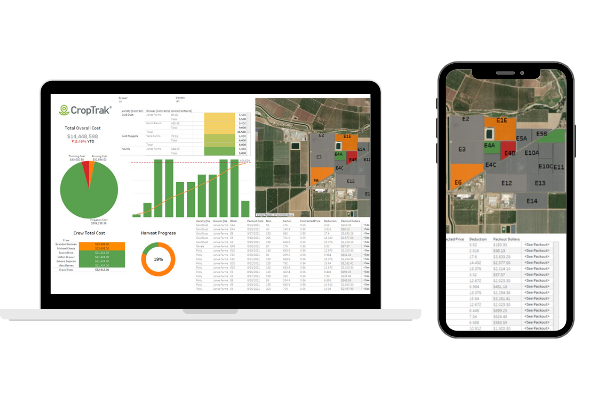
CropTrak has released a new platform update that adds digital contracting and settlement creating the ability to digitize grower contracts into a single supplier management system.

The updates provide multi-stakeholders complete visibility of the financial transactions across their ingredient supply chain so that for the first time, food and beverage companies managing grower contracts and settlements can do so in one seamless platform optimized for collaboration and insights.

“For companies who manage hundreds or thousands of field contracts, integrating the buyers, agronomics, and accounting teams into a single, real-time source of truth can save the company millions of dollars,” said Aaron Hutchinson, co-founder and CEO of CropTrak. “Our goal is to continue to lead the food industry with ongoing innovation and process improvements to help assure food is safe, affordable, and sustainable, while making paper contracts a thing of the past.”

Using a fully integrated cloud-based platform, CropTrak customers spread production demands across grower fields in the form of digital contracts. The contracts are then connected with on-farm activities and inputs during the season to ensure contract compliance before being combined with harvest, grading, and weight data to calculate the ERP payment memo for growers, haulers, and other service providers. The auditable digital record of every entry is maintained in a single-ledger cloud database that supports verification of crop, contract, and sustainability data at any time and with confidence.

Hutchinson talks about the new capabilities and the benefits for growers and others in the food system.
CropTrak CEO Aaron Hutchinson explains new capabilities (4:29)

AgWired Precision, Audio, Precision Agriculture