
 I’m really glad to see the International Federation of Agricultural Journalists move forward with a new “broadcast” award program that includes both terrestrial radio and tv broadcasts as well as web broadcasts. That’s being progressive! Interestingly, the only U.S. members of IFAJ are members of AAEA which has traditionally had a membership of publication editors. However, that’s changing. I’m a member of AAEA for example.
This move makes the idea pop up in my mind again of “Why don’t NAFB/AAEA/LCP/Etc. just merge? Aren’t they all in the same business? Would this make sense? Then they all could be members of IFAJ. Let’s face it. We all talk about being in a “global marketplace.” Why not collaborate with our peers internationally? What do you think of this idea? Note how IFAJ refers to the award as broadcast journalism instead of farm broadcasting.
I just agreed to be a judge for the Australian Council of Agricultural Journalists for their 2010 Australian Star Prize for Rural Broadcasting. Winners from their contest will be submitted as their country entries for the IFAJ awards.
The IFAJ has expanded its prestigious Star Prize award program for excellence in agricultural journalism and photography, with a new award for broadcast journalism. The award has categories for radio, television and online broadcasting. The deadline for the competitions is earlier this year to so winners can be selected in time for the early annual congress. Entries close February 1, 2010. For more information go to www.ifaj.org.
So, since only AAEA members can enter you’ve got very little time to get your entries in. You must first be selected by AAEA in order to be submitted to IFAJ. Contact the AAEA office for more details. The deadline for AAEA entries is January 15. Here are the categories:
The International Federation of Agricultural Journalists (IFAJ) Star Prize for Broadcast Journalism recognizes the best radio, television and internet broadcasting among federation member countries.
Categories
- Television – for the best piece produced primarily for broadcast on television.
- Radio – for the best piece produced primarily for broadcast on radio.
- Online radio (podcasts) – for the best audio piece produced primarily for broadcast via the internet.
- Online video – for the best audio visual piece produced primarily for broadcast via the internet.

 The
The  Alltech is now marketing its own line of Angus beef. I think my grill needs some of this!
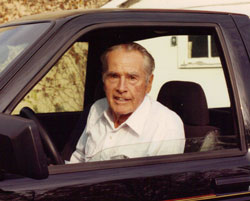 This pioneer farm broadcaster will be celebrating his 100th birthday on January 21.
 AG CONNECT Expo now has an
  Between the two of us and our hardworking freelancers, we did 4310 posts on all websites, including Agwired,
  I was surprised to see ads for
  Jim Wade of Clifton says he just finished up about two weeks before Christmas but it wasn’t as bad as 1967 when he was still had corn in January. “The biggest thing was setting in line, all of us had wet corn,” Jim told me, but overall he says “nobody got hurt.”