
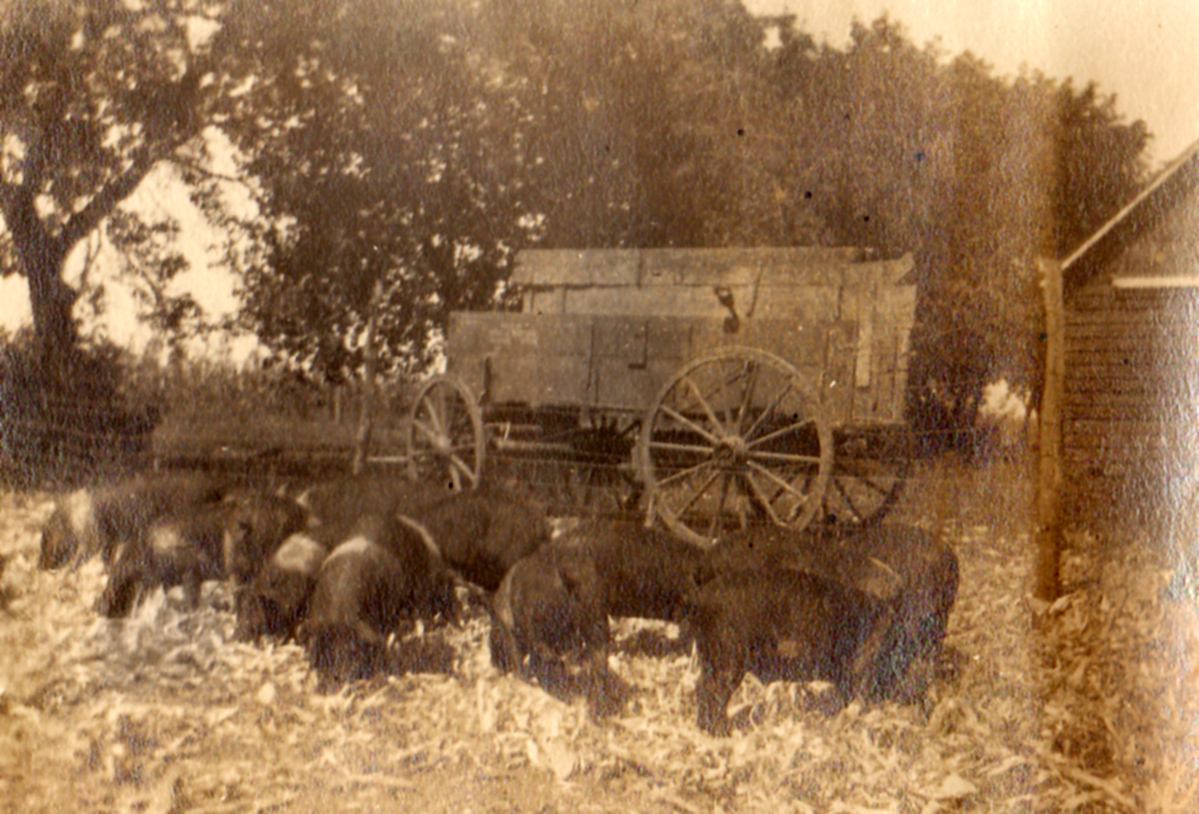
 To be told something is average has a negative or “middle of the road – not to exceed expectation” kind of connotation. But if you think of what it means, it’s just that there’s got to be someone or something higher, and someone or something lower. When my son was a baby, they’d say — “He’s in the 95th percentile on height. He’s really tall!” — as though babies in the 25th percentile were anything less than average.
In agriculture, averages can help us explain societal shifts, production changes, population growth and a whole lot more. This picture comes from my great-grandfather. He raised hogs, and on an “average” day, he’d have 12 pigs on the farm. Some for butchering and canning for personal use and some for selling. In 1992, the average number of hogs on a farm was 945. In 2004, it had risen to 4,646.
But in the same breath, I have to make note that even though the operation size has increased, they’re still family-owned and operated farms. In fact, the term “factory farming” was devised to frighten consumers into thinking modern food production is unhealthy. It’s not. It’s safe, frighteningly efficient and a family tradition that 97% of U.S. farmers take pride in.
The average beef cow herd size is 40. That’s family farming at its finest and an “average” that many farmers should be proud of.
Not everything can be as small as it was back in 1919. Our houses are bigger, cars are bigger, and yes, animal agriculture is bigger. We just have more mouths to feed.
Until we walk again …
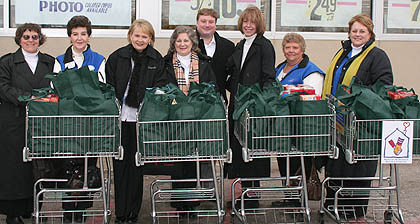
 The National Agri-Marketing Association has announced award winners.




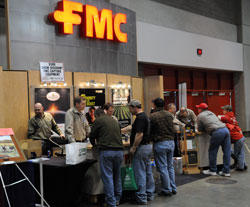 FMC has just announced an addition to the Authority line and at the National Farm Machinery Show I learned more about it from Darrin Kert.
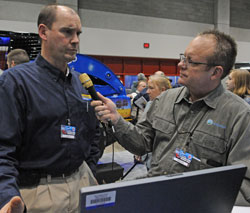 There was a lot of precision ag on display at this year’s National Farm Machinery Show. Bruce Ristau, Precision Farming Sales Mgr., New Holland, took time to tell me what the company is doing in this sector.
 At the