
 The 2012 Commodity Classic is still two weeks away, but the annual meeting of corn, soybean, wheat and sorghum growers has already shattered attendance records.
Last year, total attendance set a record of 4,826 show participants. This year, registrations for the 17th annual event have already surpassed the 5,000 mark with two more weeks left until onsite registration opens.
 “We are thrilled that more and more growers and industry professionals recognize the value of attending Commodity Classic,” said Commodity Classic co-chair Martin Barbre. “Agriculture is both an exciting and challenging way of life. Because Commodity Classic addresses farming from a grower’s perspective, attendees find they can take information they’ve gathered from the show and put what’s practical for their operations into the field.”
More farm families, first-time attendees and agribusiness representatives will be at Commodity Classic than ever before. To celebrate the record breaking attendance, Commodity Classic’s 5,000th registrant, Kirk Zinkievich from Medina, N.Y., received a complimentary registration.
If you want to be part of the record-setting 2012 Commodity Classic March 1-3 in Nashville, visit www.commodityclassic.com.
 One of the touchiest topics for cattle producers at the recent Cattle Industry Convention was last year’s bankruptcy of MF Global, which cost many of them money they have yet to get back.



 In this week’s ZimmCast you can hear about how
 At the NCGA biennial Membership Symposium last week in Florida, Chuck talked with Director of Development Tim Brackman and

 In the national 2011 NCGA Yield Contest, BASF Crop Protection products helped to capture three first-place finishes, four second-place finishes and three third-place finishes. Headline AMP was overwhelmingly the fungicide of choice, helping yield four of the top five overall national winners.
 Contrary to popular belief, eating beef is not bad for the environment and Dr. Jude Capper with the Department of Animal Sciences at Washington State University has
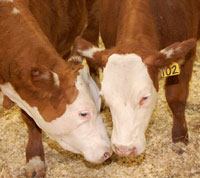 American consumers have never had a safer supply of beef, but there’s always room for improvement, according to Dr. Guy Loneragan, professor of food safety and public health at Texas Tech University,
 Guy says that there are several ways producers can do even more to avoid problems on the pre-harvest level. “The first thing I would say is for producers to stay engaged and be engaged, because knowledge is a very powerful weapon,” he said. “Beyond that, the industry has invested quite heavily into the development of several promising controls, like pro-biotics – the beneficial bacteria we find in yogurt, some strains appears to be quite effective in cattle too.”