NRCS Chief Dave White on CTIC Tour

Chuck Zimmerman

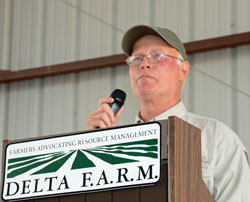
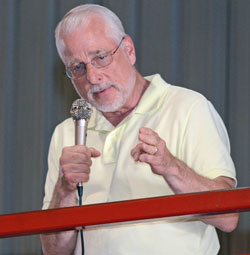
Dave WhiteThe Chief of USDA’s Natural Resources Conservation Service is Dave White. Dave was our lunch speaker during the 2012 Conservation in Action Tour. He also participated in the tour and talked about NRCS’ voluntary, incentive-based conservation work with private landowners.

I recorded Dave’s remarks for you and also interviewed him at the end of our lunch. He said there are three trends in government right now which are less money; fewer people but the same amount of work. These will compound the challenges for conservation programs and are why he’s enthused about partnership programs.

Listen to NRCS Chief White’s remarks here: Dave White Remarks

2012 Conservation in Action Tour Photo Album

AgWired coverage of the CTIC Indian Creek Watershed Field Tour is sponsored by AGROTAIN

Ag Groups, Audio, Conservation, CTIC, USDA, Video

Zimfo Bytes

Melissa Sandfort

    Zimfo Bytes

    Farmers Need to Stand Up and Advocate

    Chuck Zimmerman

    ZimmCast 352Hopefully you’re one of the thousands who have viewed the Farmers Fight – Stand Up video. I visited with the star of that video, Jasmine Dillon. Jasmine is a graduate student at Texas A&M University and part of the student led initiative called Farmers Fight.
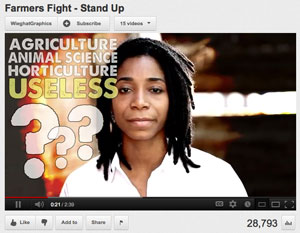
    Jasmine says the initiative started when a group of students got tired of all the negative press that agriculture receives. They decided to band together to advocate for agriculture. They are not alone of course. If you read AgWired regularly you’ll find that there are an increasing number of efforts to help non-farmers better understand and appreciate where their food comes from.

    Jasmine was encouraged to write a poem for the project which she performed for the video. It’s a type of art called spoken word or slam poetry. She first performed it for a spring training conference before it was recorded and released to kick off Farmers Fight. Hear some more of her thoughts on advocating for agriculture and the feedback she has received. We need more Jasmine Dillons!

    Listen to this week’s ZimmCast here: Farmers Fight and Advocate

    Thanks to our ZimmCast sponsors, GROWMARK, locally owned, globally strong and Monsanto, Roundup Ready Plus, for their support.

    The ZimmCast is the official weekly podcast of AgWired. Subscribe so you can listen when and where you want. Just go to our Subscribe page.

    Ag Groups, Audio, Education, Social Networking, University, ZimmCast

    Regional and Local Conservation Alliances

    Chuck Zimmerman

    Phil BassSince Delta region farm runoff makes its way eventually to the Gulf of Mexico, the 2012 Conservation in Action Tour heard from Phil Bass, acting director of the Gulf of Mexico Alliance. This is a partnership started in 2004 by the states of Alabama, Florida, Louisiana, Mississippi and Texas.
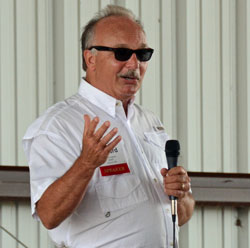
    Phil says the Alliance has survived ten governor changes which shows that the work it is doing is perceived as vitally important. He says it’s the first regional ocean project in the country. One of the things he’s proud of is that after the BP oil spill when the company had to fund independent research they turned to the Alliance. He’s “tickled to death” at what he’s seeing farmers doing in the Delta region.

    Listen to my interview with Phil here: Interview with Phil Bass

    Richard IngramManaging special projects is Richard Ingram’s specialty. He does it for the Mississippi Department of Environmental Quality. He supports the Gulf of Mexico Alliance Nutrients Priority Issue Team and co-leads the Nutrient Action 4 Work Group. By now you may be starting to understand how many different organizations there are working on water conservation in this region!
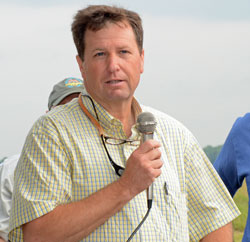
    He talked about the action plans created by other organizations like the Gulf of Mexico Alliance and how his department has helped implement them up river. He says that in Mississippi people work together and that’s why so many of the speakers on the tour are talking partnerships.

    Listen to my interview with Richard here: Interview with Richard Ingram

    2012 Conservation in Action Tour Photo Album

    AgWired coverage of the CTIC Indian Creek Watershed Field Tour is sponsored by AGROTAIN
    Ag Groups, Audio, Conservation, CTIC

    Managing Field Drainage in the Delta Region

    Chuck Zimmerman

    Rob CokerRob Coker farms corn and soybeans in Yazoo County, Mississippi. He’s currently serving as the President of the Mississippi Corn Promotion Board and just completed his term as Chair of Delta F.A.R.M. He’s a progressive conservationist who is always looking for new technologies and practices.
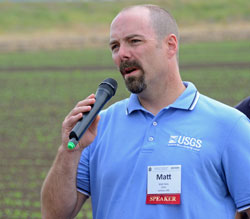
    He shared some of what he’s learned with the 2012 Conservation in Action Tour. Land forming and using pads and pipes is helping him keep sediment on the farm. He’s says the “older” farmers would say it’s all about drainage, drainage, drainage.

    2012 Conservation in Action Tour Photo Album

    AgWired coverage of the CTIC Indian Creek Watershed Field Tour is sponsored by AGROTAIN
    Ag Groups, Audio, Conservation, CTIC

    Monitoring Water Quality

    Chuck Zimmerman

    Matt HicksMatt Hicks, U.S. Geological Survey, talked to the 2012 Conservation in Action Tour about water quality monitoring. We were standing next to a monitoring station that collects data from one of the drainage ditches on the farm. You can find photos of it in the online photo album.
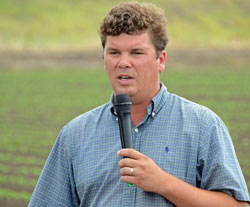
    Matt says his agency provides water quality monitoring assistance to other agencies and farmers locally. He’s been measuring water, nutrients and the health of Delta water bodies for a long time. He wanted to send the message that he can’t over emphasize how huge the partnership and cooperation that has taken place on local farms is. He talks about how they are collecting water quality data.

    Listen to Matt’s remarks here: Matt Hicks Remarks

    Buddy AllenBuddy Allen grows cotton, corn, soybeans and rice in Tunica County Mississippi. He’s highly involved in conservation organizations and invests in new technologies to improve irritation efficiency. Buddy says he’s got a great relationship with all the various groups and agencies working on conservation in the Delta area.
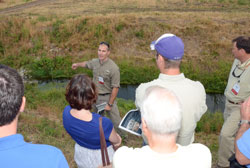
    The two main issues he sees are water quantity. He says 80 percent of the crop land is irrigated and all of it will be in the near future. The other issue is water quality due to too many nutrients going downstream the Mississippi River. Buddy talked to us about what he’s learning and doing to improve his farm practices to mitigate these issues.

    Listen to Buddy’s remarks here: Buddy Allen Remarks

    2012 Conservation in Action Tour Photo Album

    AgWired coverage of the CTIC Indian Creek Watershed Field Tour is sponsored by AGROTAIN
    Ag Groups, Audio, Conservation, CTIC, Farming

    Managing Water Quality

    Chuck Zimmerman

    Robbie KrogerWater quality was the theme of the 2012 Conservation in Action Tour stop where we met Robbie Kroger, Mississippi State University. You’ll notice a drainage ditch in the photo. After some opening remarks we got down there to see some of the creative ways that this farm is managing runoff water using pipes, pads and weirs.
    Robbie says the Delta region typically gets nearly 60 inches of rain and sometimes up to 6 inches in a three hour period. He says the region is rich in topsoil. In fact, the topsoil at the spot we were standing on was almost 24 feet deep. Typically farmers in the area don’t apply any phosphorous. He says the area has one of the highest sediment loss rates in the country. All the practices he spoke about were structural to hold back sediment from draining off the farm. It’s called controlled surface drainage. Precision ag and input management is very big. Land leveling is the highest requested cost share practice in the region. Pads and pipes are important. Pads are the raised area around a field after land leveling which allows the channeling of water runoff. Pipes are used to convey the water. Finally there’s drainage, hence the ditch you see in the photo.

    Listen to my Robbie’s remarks before getting down in the ditch here: Robbie Kroger Remarks

    2012 Conservation in Action Tour Photo Album

    AgWired coverage of the CTIC Indian Creek Watershed Field Tour is sponsored by AGROTAIN
    Ag Groups, Audio, Conservation, CTIC

    Practicing Sustainable Water Conservation

    Chuck Zimmerman

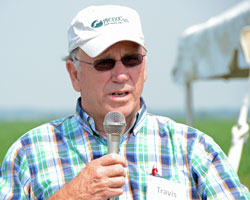
    Travis SatterfieldTravis Satterfield grows mainly rice and soybeans in Mississippi. He has also served as Chair of Delta F.A.R.M. and is a member of the Mississippi Delta Sustainable Water Resources Task Force. I visited with him during the 2012 Conservation in Action Tour.
    He got involved in the tour because of his concern about the availability and quality of water and the need to be a good steward of the land. Travis is a great example of a farmer who cares about his land. He has sons that he wants to be able to turn the farm over to and therefore he believes it’s important to practice good conservation so it will be there for them. I asked him about the task force he is a member of. He says it was formed to bring together all the organizations involved in Delta region conservation to address actionable approaches to solving water problems. One of those approaches he’s using on his farm is land forming.

    Listen to my interview with Travis here: Travis Satterfield Interview

    2012 Conservation in Action Tour Photo Album

    AgWired coverage of the CTIC Indian Creek Watershed Field Tour is sponsored by AGROTAIN
    Ag Groups, Audio, Conservation, CTIC

    Stovall Farms Putting Conservation Into Practice

    Chuck Zimmerman

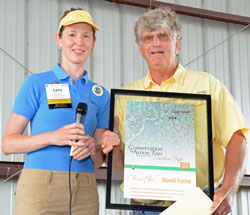
    Pete HunterThe first stop on the 2012 Conservation in Action Tour was Stovall Farms. Our host was Pete Hunter, one of the farm owners. In the photo Pete is receiving a thank you gift from Conservation Technology Information Center board member Lara Moody, The Fertilizer Institute.

    Pete provided us with a history of the farm that includes legendary blues musician Muddy Waters. He also gave an overview of the current production and conservation systems they have in place. One of the techniques they’ve put into place is land leveling which reduces topographical variation. This reduces the speed that runoff escapes the field protecting the soil from sheet and rill erosion. Pete says that farming has changed today and he believes, “We need to hold on to what we’ve got.” That means implementing a lot of conservation practices.

    Listen to Pete’s remarks here: Pete Hunter - Stovall Farms

    2012 Conservation in Action Tour Photo Album

    AgWired coverage of the CTIC Indian Creek Watershed Field Tour is sponsored by AGROTAIN
    Ag Groups, Audio, Conservation, CTIC

    World Pork Expo Introduces Mobile App

    Melissa Sandfort

    For the first time, people attending World Pork Expo, June 6-8 in Des Moines, Iowa, will be able to get the latest Expo information with a customized smartphone app. With half of today’s mobile subscribers owning smartphones and National Hog Farmer reporting that about 30 percent of its readers access the Internet using their phones, this new app is designed to help attendees make the most of their Expo visit. The National Pork Producers Council (NPPC) and National Hog Farmer partnered to develop the app for Apple, Android and Blackberry mobile devices.

    The World Pork Expo mobile app will provide up-to-date information and locations, including a complete list of the Expo’s exhibitors, a map to navigate the show and much more. The app will enable attendees to plan their day by selecting business seminars and special events to place on their personalized calendars. It also provides trade-show contacts and exhibitor descriptions, profiles of meeting activities, and a place for users to take notes.

    The World Pork mobile app can be downloaded free of charge by searching “World Pork” in the Apple Store, Android Marketand Blackberry’s App World. People also can connect to an online dashboard for easy access for downloading the app.

    Agribusiness, Apps, Pork, World Pork Expo