New USDA Rural Definition Stirs Controversy

Cindy Zimmerman

A guest post by Agri-Pulse Editor Sara Wyant

agri-pulseA proposed definition of the term “rural” submitted by the Department of Agriculture to Congress last month could have broad implications for small towns across America and not everyone is happy about it. The report, delivered two and one half years late after it was required by Congress to be delivered by June 18, 2010, was expected to assess how the various definitions in rural development programs are working and to make recommendations on ways to better target funds.

At issue is the definition’s new population limit for “rural,” now raised up to 50,000. Currently, each USDA RD program has its own population limit to correspond to its specific function. For example, USDA now has a 10,000 population limit for rural water/wastewater programs and 20,000 for community facility programs. USDA believes a new across-the-board limit “would remove confusion over what constitutes a rural area and would encourage more multi-jurisdictional collaboration,” according to the official proposal.

Critics, including House Agriculture Committee Chairman Frank Lucas, R-Okla., and ranking member Rep. Collin Peterson, D-Minn., are concerned that the new definition will crowd out smaller communities. “We are disappointed in USDA’s proposals to shift funding away from the most rural areas by inflating the definition across the board,” Lucas and Peterson said in a joint statement. “This will result in smaller communities competing with larger and more urban areas for funding.”

The new definition would force the department’s Rural Development (USDA-RD) program to “spend money in a way that’s perhaps not the best for the United States,” said Duane Ischer, former Rural Development senior advisor, in an interview with Agri-Pulse. The federal government “needs to keep (the definition) as simple as possible and probably let the states define (rural) to the extent that they can within their own state,” he said.

The report’s authors say the change would streamline funding procedures and provide “a more transparent process for accessing financial and technical assistance from the Mission Area.

Read the rest of Sara’s story here.

Agri-Pulse, USDA

New Documentary to Feature Next Gen Farmers

Chuck Zimmerman

ZimmCast 388It is very encouraging to see major film projects taking a realistic and truthful look at farming in America today. Examples are “Harvesting the High Plains” and “The Great American Wheat Harvest.” Now here’s a new one that is not yet in production. It isn’t even titled yet but was announced last week. Working with the U.S. Farmers & Ranchers Alliance is James Moll, Oscar® winning and two-time Emmy® winning filmmaker. I visited with James to learn more about the project. He admits to knowing little about agriculture but I think that is a good thing. James takes a very unbiased look at his subject matter and lets the people he interviews tell the story. That is a lot like what we do here on AgWired!

James has decided to profile farmers and ranchers in their twenties, all of whom have assumed the generational responsibility of running the family business.

Made in cooperation with U.S. Farmers & Ranchers Alliance® (USFRA®), the film will give us an up close and personal look at some of the young farmers and ranchers who grow and raise the food we consume daily, and into the latest farming procedures, practices, and technologies that are changing and improving the landscape of modern agriculture.

“I’ve always strived to make films that are unbiased testaments to the subject matter,” said Moll. “It’s about telling real stories that resonate. I’ve been looking for the right subject to tackle in my next documentary, and I’ve found the perfect topic in American agriculture.”

Learn more about James Moll’s new project in this week’s ZimmCast: New James Moll Documentary on Agriculture

Thanks to our ZimmCast sponsors, GROWMARK, locally owned, globally strong and Monsanto, Roundup Ready Plus, for their support.

The ZimmCast is the official weekly podcast of AgWired. Subscribe so you can listen when and where you want. Just go to our Subscribe page.

Ag Groups, Audio, Farming, USFRA, ZimmCast

Celebrate National Biodiesel Day

Joanna Schroeder

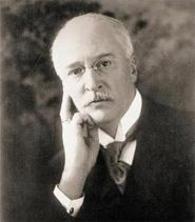
Today is National Biodiesel Day! The Iowa Biodiesel Board is asking Iowans to reflect on the contribution the biodiesel industry is making to Iowa and to the nation. March rudolf-diesel_394645698109109557518 is National Biodiesel Day because it is Rudolf Diesel’s birthday, the man who invented the engine that bears his name. He ran early models on peanut oil, and was a visionary for the renewable fuel that would one day be called biodiesel.

In a 1912 speech, Diesel said: “The use of vegetable oils for engine fuels may seem insignificant today, but such oils may become, in the course of time, as important as petroleum and the coal tar products of the present time.”

Iowa has been leading the way with 12 biodiesel plants that produced 184 million gallons of biodiesel in 2012. This accounts for about 17 percent of all U.S. biodiesel.

“With biodiesel, Iowans are leading an agricultural revolution that is making a meaningful difference in our nation’s energy security and helping our economy rebound,” said Randy Olson, executive director of the Iowa Biodiesel Board. “We truly are at the forefront of innovative American agriculture driving American energy independence.”

Recent economic studies show in 2012, Iowa biodiesel supported nearly 5,000 jobs in the state, contributed nearly $400 million to the state’s GDP and generated $236.8 million of household income. Biodiesel also benefits consumers in other ways. According to a study measuring the impact of the Iowa biodiesel industry on the Iowa agricultural economy, corn, soybean, and livestock producers all benefit from biodiesel production. Demand for vegetable oils reduces soybean meal prices, to the benefit of Iowa’s livestock producers – and that ultimately benefits the consumer at the grocery store.

Want to show your support for biodiesel today or any day? Join the Biodiesel Backers!

Biodiesel, Biofuels

Precision Pays iPad mini Giveaway Contest Winner

Chuck Zimmerman

ipad-miniOver on our sister website, Precision Pays, the winner of the iPad mini Giveaway Contest has been picked via random selection. He’s Nick Leibold of New Hampton, IA. Nick farms about 600 acres of corn and 400 acres of soybeans.

Cindy visited with Nick by phone to let him know about his winning and to learn a little bit about how precision pays for his family farming operation. He says he’s been using precision ag in his farming operation for about ten years now including auto steer, yield monitor and row shutoffs on his planter. He says, “On the planter I’ll do a split variety and that way when I harvest I know which variety is which and I can compare strips across the field. I use it a lot for variety selection.” He uses it to farm more efficiently.

When it comes to his new iPad mini he says his dealer says he can hook up an iPad to help him record the different varieties he’s planting and then take it out to the field later when he’s scouting and find spots where he has been.

Nick is also very involved with the Iowa Corn Growers serving on the Iowa Corn Promotion Board. It’s important to him to see that those corn checkoff dollars are being put to good use.

Listen to Cindy visit with Nick here: Interview with Nick Leibold

What do you think of our first Precision Pays giveaway contest? Want to see more product giveaways? Here on AgWired? Chime in using comments and let us know.

Audio, Equipment, Farming, Precision Agriculture

Farm Shorts Wants To Help Tell Farm Stories

Chuck Zimmerman

Farm ShortsA growing number of agvocates are learning how to use today’s social media platforms and that includes YouTube. How many of you farmers have given this a try? Here’s a story about a new initiative to showcase sustainable farms and farmers. Of course most farmers are sustainable. Otherwise they wouldn’t be able to stay in business. What do you think of Farm Shorts?

Not surprising to FarmShorts Founder Kala Philo, it took less than a week for Dodge Ram Truck’s “So God Made a Farmer” ad to reach 10 million online views. The Superbowl airing of the commercial provided the initial exposure, but it was the gripping content — the powerful visuals and the farmers’ resonating role in all our lives — that got everyone buzzing.

Philo, a professional video producer, understands more than most the impact video can have in promoting local, sustainable farm and food businesses, each with a story to tell. But evocative, high-quality, video-based storytelling is expensive, and typically prohibitive to cash-, technology- and time-starved farmers.

So Philo launched FarmShorts (http://www.farmshorts.com), a collaborative video project and tech-savvy marketing initiative.

FarmShorts pools time, resources and expertise to provide gorgeous web video and distributable content about, and for, sustainable farms and food producers. Through crowdfunding, sponsorship and community support, FarmShorts aims to offset what would be thousands of dollars in marketing costs for an individual farm.

Farming, Social Media, Social Networking, Video

Nothing Runs Like a Deere on Biodiesel

Joanna Schroeder

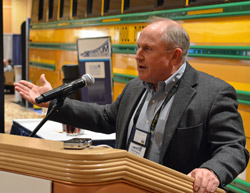
nbc-13-borgmanNothing runs like a Deere. Especially a Deere running with biodiesel. John Deere demonstrated its vast array of diesel equipment able to run on biodiesel during the Biodiesel Vehicle Showcase. Why Biodiesel? Well, in addition to security benefits for Americans, it also improves lubricity, reduces sulfur emissions, and reduces aromatics. Biodiesel has a high cetane content for faster ignition. These are just a few of the reasons that Don Borgman cites when telling attendees during the Biodiesel Vehicle Showcase John Deere approves the use of biodiesel in all its equipment. Up to B20 blends can be used.

Here is something neat that John Deere does that I learned during Borgman’s presentation. When new equipment is ready to leave the factory, it’s filled with a biodiesel blend. Deere has coined this the “biodiesel factory fill.” Now if that doesn’t prove biodiesel is safe and beneficial to run in their equipment, nothing will.

Also during his presentation, Borgman gave an update on what’s on the horizon for new and future John Deere equipment. And they gave away a Gator. I bet the winner is having fun with his new toy. We’ll have to ask the winner during next year’s conference….

Learn more about John Deere’s Biodiesel Platform by listening to Don Borgman’s presentation: Nothing Runs Like a Deere Using Biodiesel

2013 National Biodiesel Conference Photo Album

Audio, Biodiesel, Biofuels, National Biodiesel Conference

Farm Podcasting Tool

Chuck Zimmerman

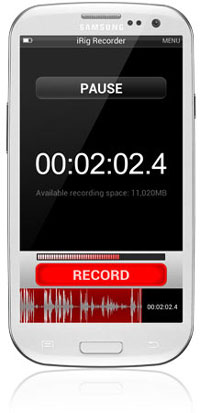
iRig Recorder AndroidYou know I’m flexible on my mobile platforms when I can share an Android app story. Here’s one worth noting. The iRig Recording app is now available for the Android platform. I’m not sure it will become my favorite recording app but I’ll be giving it a try on my Samsung Galaxy Note II.

iRig Recorder for Android is here, and it’s destined to become your favorite audio recording app on your phone or tablet. Designed for ease of use and packed with real-world useful features, iRig Recorder is a simple yet powerful recording and audio-processing app that works with Android compatible IK accessories like the iRig MIC, iRig MIC Cast and iRig PRE as well as other compatible input devices.

A Field Recorder Always in Your Pocket

Use iRig Recorder to capture interviews, performances, band rehearsals, lectures, podcasts, creative spurts of genius, viral audio snippets and more. Recording time is limited only by your device memory. Once you’ve made your recordings, iRig Recorder automatically stores them by date and automatically adds geolocation information so you can easily find them.

iRig Recorder isn’t just a “capture” app. It’s a complete audio production and polishing tool for creating broadcast quality audio. It allows you to quickly and easily trim and crop your recordings via the waveform editor, automatically adjust and normalize volume levels, remove background noise, add dynamics adjustment and polish, then share your brilliance with the world.

Apps, Media, Podcasts

Harvesting The High Plains Documentary

Chuck Zimmerman

Harvesting The High PlainsLast year’s Midwest drought evoked images of the dust bowl of the “dirty 30’s”. But how many of you really know much about it or what it took to survive those trying times? Here’s one way you can get a glimpse into those times. It’s a film documentary called, “Harvesting The High Plains.” An advance copy is now available for purchase online. Additionally, the documentary is running on local PBS stations and you might want to consider calling your local station to request that they air it. Why? Because it is a very well done historical and inspiring look at how American ingenuity took the challenge of some of the most adverse working conditions you can imagine to farm the land and essentially created a whole new way to grow and harvest a wheat crop.

I want to share a conversation with the Director of the documentary, Jay Kriss, Inspirit Creative, in which we discuss how he got involved in this project. Jay is not only works in the film industry but also still farms wheat back on the family farm in Kansas. He has a direct personal connection to one of the main characters you’ll get to know in the film. The documentary is narrated by Dirty Jobs, Mike Rowe. You’ll learn in our interview that he and Jay have a mutual connection which made Mike a perfect choice to handle this job. The documentary is sponsored by the AGCO Gleaner brand. Gleaner combine harvesters were born in Kansas and are a part of the story told in the documentary according to Kevin Bien, Gleaner brand marketing manager in a company press release.

Listen to our conversation here: Interview with Jay Kriss

Here’s the trailer to give you a taste of what you can expect in the documentary. You can find more information on the “Harvesting The High Plains” website.

Agribusiness, Audio, Farming, Harvest, Video, Wheat

Zimfo Bytes

Talia Goes

    Zimfo Bytes

  • The American Meat Science Association is hosting the AMSA 66th Reciprocal Meat Conference June 16-19, 2013 at Auburn University in Auburn, AL.
  • Syngenta announced a new approach within its dealer channel that focuses on growing and strengthening its network of Seed Advisors.
  • Farmers across the Corn-Growing Area have selected DEKALB drought-tolerant corn plants with deep, strong root structures to help withstand drought conditions and reduce yield loss.
  • Value-Added Science & Technologies is pleased to announce the launching of ePigflow an online market for weaner pigs, feeder pigs and facility spaces to help producers better manage pig flow and asset utilization.
Zimfo Bytes

USDA Deputy Secretary Resigns – Update

Cindy Zimmerman

*UPDATED with Merrigan statement*

merriganCall it kind of a surprise – the announcement late yesterday that USDA Deputy Secretary Kathleen Merrigan has resigned her position.

Agriculture Secretary Vilsack released the following statement about Merrigan’s resignation:

“USDA Deputy Secretary Kathleen Merrigan has helped USDA achieve record results over the past four years. She has played a vital role in the Department-wide focus on the Know Your Farmer, Know Your Food initiative, as well as our efforts to achieve budget efficiencies and savings during an uncertain budget time. Deputy Secretary Merrigan has led USDA’s efforts to implement important regulations, and she has been an important advocate for a strong National Organic Program. I deeply appreciate her service, and I wish her all the best in her future endeavors.”

No word as to when the resignation would be effective.

*UPDATE*

Agriculture Deputy Secretary Merrigan today made the following statement on her departure from the USDA:
“Today I am announcing that I will be leaving USDA. I am grateful to President Obama for the opportunity to serve as Deputy Secretary and be part of his leadership team. I also want to thank the US Senate for its unanimous confirmation and the many members of Congress, particularly Chairman Leahy, with whom I have worked closely to ensure support for USDA programs.
It has been an ambitious first term. From implementing the 2008 farm bill, improving school meals, expanding opportunities for American farmers, spending countless hours in the White House situation room, to shepherding USDA budgets through challenging times, it has been an honor to play a small part in history.
I hope that during my tenure, I was able to help open USDA’s doors a little wider, inviting new and discouraged constituencies to participate in USDA programs.
With Secretary Vilsack at the helm, aided by very talented and dedicated USDA employees, I am able to leave fully confident that, USDA will thrive and continue to improve its service to the American people.”

USDA