Register Today for 2013 Agvocacy 2.0 Training

Jamie Johansen

agchat-logo-no-foundationRegistration is open for the AgChat Foundation’s 2013 Agvocacy 2.0 Training Conference. This year’s conference will be held August 22-23 at the Embassy Suites in Charlotte, North Carolina. If you are wondering how you can share your passion for agriculture online with others, then this is a great opportunity to learn how to tell your farm or ranch story.

Up to 75 people representing all sectors of agriculture will be invited to participate. Deadline to apply is May 24th. The last two conferences have been sold out, so don’t wait.

Attention Agvocacy 2.0 graduates! The AgChat Foundation is accepting up to 25 alumni who also endorse a first-time applicant. This will allow for collaboration between those with beginner and advanced social media skill sets.

Author of Youtility: Why Smart Marketing Is About Help Not Hype, Jay Baer, will kickoff event. Followed by the Beyond the Choir, Ag Conversations that will help spark your mind about agriculture, food and consumers.

Register here and email training@agchat.org with questions.

Events, Social Media, Social Networking, Technology

Communicating Throughout the Food Chain

Jamie Johansen

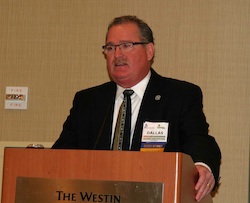
aaa-13-095_edited-2The Animal Agriculture Alliance Stakeholders Summit brought together people from across the agriculture community to discuss issues our industry is facing. Communicating with our consumers seems to be one of the most important things we need to focus on.

Dallas Hockman, Vice President of Industry Relations for the National Pork Producers Council, spoke to attendees about the value of communications throughout the food chain. He shared how the NPPC is reaching influencers and the value of choice. Choice not only for the consumer, but for the producer as well. Another thing he stressed was the importance of creating door-opening content.

“It’s not surprise to your listeners out there, especially pork producers, that our industry is under significant challenges. Being attacked and stereotyped as a factory farm, that we don’t really care, we over use of antibiotics, or whatever it may be. So, we have embarked on an effort to reach out to our retail and food service channel partners. Talking to them about the great job the industry is doing. We have gone through a complete analysis of the risks that our industry is facing as it relates to upcoming issues, whether that be on pain management, use of antibiotics or whatever they may be & having these meetings with our customers and talking to them about all the resources we have available. More importantly providing them a good resource in the event they have questions on these issues in the future.”

Listen to or download my interview with Dallas here: Interview with Dallas Hockman

Listen to or download audio of Dallas’ complete presentation here: NPPC - Dallas Hockman

Check out photos from the event: 2013 Animal Ag Alliance Stakeholders Summit Photo Album

Coverage of the Animal Agriculture Alliance Stakeholders Summit is sponsored by National Pork Producers Council and National Cattlemen’s Beef Association
Animal Agriculture, Audio, Food, NPPC, Pork

Zimfo Bytes

Talia Goes

    Zimfo Bytes

  • Hundreds of JCB employees joined in the celebrations to mark the production of the company’s one millionth machine.
  • MGEX announced total Exchange volume in April at 146,574 contracts traded, a 58.3 percent increase from March 2013.
  • Agriculture Secretary Tom Vilsack announced new rules to better target Community Connect broadband grants to areas where they are needed the most.
  • Charelston/Orwig study shows consumers value “locally sourced” food despite difficulties defining it.
Zimfo Bytes

Ag Leader Summer Dealer & Customer Training

Melissa Sandfort

Insights Weekly

Ag Leader offers a variety of SMS™ training sessions to help answer grower and dealer questions about the software.

Today, we caught up with Jessica Ahrens, Ag Leader training specialist, and asked her:
• What’s new this year?
• How do these training sessions set Ag Leader apart from other precision ag companies?
• Why is attending a training important each year?
• And most importantly, when do they start and how do growers and dealers get signed up?

Listen to our full interview with Ahrens here

Remember to visit sms.agleader.com for more information.

Become a fan of Ag Leader on Facebook today, and get the latest precision ag videos on the YouTube channel. For more information about Ag Leader products and services, or to visit the blog site, go to www.agleader.com.

Ag Leader, Agribusiness

Recap From Animal Ag Alliance Stakeholders Summit

Jamie Johansen

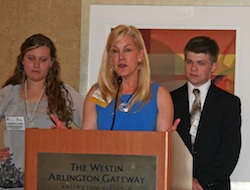
aaa-13-003_edited-2The 12th Annual Animal Agriculture Alliance Stakeholders Summit is a wrap. Each year staff and board members try to bring topics that are hot to the table for experts to share their insights into what the agriculture industry is facing. This year the theme was focused on animal activists and ways we can protect our animals, farms and food but not forget the importance of consumer confidence.

I caught Kay Johnson-Smith, President & CEO for the Animal Agriculture Alliance just after the last guest speaker finished up. She was glad to have another successful event in the books and excited to see how the information given to attendees will be put into action in the future.

Listen to or download my interview with Kay here: Interview with Kay Johnson-Smith

The Alliance also recently elected elected Paul Pressley, U.S. Poultry & Egg Association, chairman of its board of directors. USPOULTRY has been an active member of the Alliance for 24 years, and Pressley will serve a two-year term as chairman. The Alliance’s board of directors consists of representatives from all major sectors of animal agriculture.

“I look forward to working with Kay and the Alliance staff. The Alliance has been a strong voice for all of animal agriculture for over 25 years. Now, more than ever, the ability to unite the industry across species lines is critical to responding to animal welfare issues,” remarked Pressley.

Check out photos from the event: 2013 Animal Ag Alliance Stakeholders Summit Photo Album

Coverage of the Animal Agriculture Alliance Stakeholders Summit is sponsored by National Pork Producers Council and National Cattlemen’s Beef Association
Animal Activists, Animal Agriculture, Audio, Food, Meat, NCBA, NPPC

Ag Organizations Applaud Six Countries

Talia Goes

fas_logoKey members of the U.S. agricultural value chain have joined together to applaud the work of the United States and like-minded governments to promote the importance of science-based regulations to facilitate trade of agricultural commodities derived from agricultural biotechnology.

In a joint statement, the United States was joined by the governments of Argentina, Australia, Brazil, Canada and Paraguay to announce their intention to work collaboratively to remove global barriers to the trade of agricultural biotechnology and promote science-based, transparent and predictable regulatory approaches.

The U.S. agriculture sector agrees that a particular area of concern is the timeliness and efficiency of global regulatory systems. In the joint statement, the like-minded governments have highlighted their intention to promote synchronization of authorizations by regulatory authorities – in particular for food, feed and processing purposes.

Agribusiness, Trade, USDA

Warrant® Herbicide Offers Flexibility, Residual Weed Control

Cindy Zimmerman

monsanto-warrantFarmers seeking the flexibility of an early preemergence or postemergence herbicide application combined with residual control of resistant and tough-to-manage weeds in soybeans and cotton have a “go-to” solution: Warrant herbicide from Monsanto.

I talked with Monsanto Selective Chemistry Manager Tyler Hackstadt (HOCK-stet) about Warrant and how it might provide some advantages for growers facing planting delays this spring. “We’ve been recommending growers use multiple modes of action with residual herbicides as part of a comprehensive weed management system,” Hackstadt said. “When you’ve got a compressed planting window, the priority is to get the crop in the ground and sometimes we’re not able to get the pre-emerge residual herbicide applied in a timely fashion.” The pre- and post- application flexibility of Warrant allows growers to still get residual control.

Listen to or download my interview with Tyler here: Monsanto Selective Chemistry Manager Tyler Hackstadt
Warrant herbicide provides up to 30 days of residual control of waterhemp, lambsquarters, nightshade, Palmer pigweed, foxtails and other small-seeded grasses and broadleaf weeds. The herbicide’s wide application window includes preplant, at-planting, preemergence or postemergence – up to R2 growth stage in soybeans and first flower in cotton. The encapsulated, acetochlor-based technology of Warrant herbicide also provides increased crop safety for soybeans and cotton.

Compatibility with many tank mix partners, such as Roundup® agricultural herbicide, further complements the Warrant herbicide ease of use for farmers seeking to implement diversified weed management practices (DWMPs) that include residual and postemergence herbicides.

Warrant can be a key component of an effective weed management strategy that includes burndown, residual and postemergence herbicides, plus it qualifies for Roundup Ready PLUS® Weed Management Solutions incentives up to $2.50 per acre in soybeans and $4.50 per acre in cotton.

Agribusiness, Audio, Farming

USDA and EPA Release Honey Bee Health Report

Cindy Zimmerman

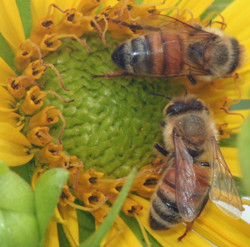
usda-beesThe U.S. Department of Agriculture (USDA) and the U.S. Environmental Protection Agency (EPA) today released a comprehensive scientific report on honey bee health. The report states that there are multiple factors playing a role in honey bee colony declines, including parasites and disease, genetics, poor nutrition and pesticide exposure.

“The challenges are complex and there is no smoking gun,” said Sonny Ramaswamy, Administrator of USDA’s National Institute of Food and Agriculture. “It is imperative that we take action to address the factors contributing to the decline in honey bees and the continuing impact that our farmers and honeybee producers are facing as well.”

“It’s a critical issue that affects virtually every American,” said Acting EPA Administrator Bob Perciasepe. “The report we’ve released today is the product of unprecedented collaboration, and our work in concert must continue. As the report makes clear, we’ve made significant progress, but there is still much work to be done to protect the honey bee population.”

When it comes to the issue of pesticide exposure, the report says that more research is needed. Other countries are moving to ban the neonicotinoids class of insecticides over fears that they are the cause of the honey bee decline. Asked why the United States doesn’t just ban the pesticide, “We let science drive the outcome of our decision-making,” said Jim Jones with the EPA Office of Chemical Safety and Pollution Prevention. “There are non-trivial costs to society if we get this wrong. These are products that not only provide meaningful benefits to the farmers who use them, but they then generate benefits to consumers as well for affordable in the United States and they also are compounds that, as a general matter for human health and the environment, are preferable to the alternative.”

Link to full report.

A press conference featuring government officials and stakeholders in the honey bee industry was held to explain the report’s findings. In addition to Ramaswamy and Perciasepe, those on the call included:
Dr. May Berenbaum, University of Illinois Urbana-Champaign
Zac Browning, Beekeeper
Steve Bradbury, EPA Office of Chemical Safety and Pollution Prevention
Dr. Jeffery Pettis, Bee Research Lead, USDA Agricultural Research Service

USDA/EPA Honey Bee Report press call

Agribusiness, Audio, Environment, USDA

Soybean Executive Named NAWG CEO

Talia Goes

palmerLongtime soybean industry executive Jim Palmer has been named chief executive officer of the National Association of Wheat Growers (NAWG). Palmer was selected by the NAWG Board of Directors after a search process led by the NAWG officers and grower-leaders of the National Wheat Foundation, NAWG’s affiliated charitable organization.

He will officially begin work with the Association and Foundation as of June 1, though he plans to meet with NAWG’s grower-leaders and staff throughout the month of May.

Palmer has worked in administrative roles for national and state agriculture organizations for the past 30 years, most of that time in the soybean industry. From 1997 until early 2012, he worked as the executive director for the Minnesota Soybean Growers Association and the Minnesota Soybean Research and Promotion Council. Earlier in his career, he was engaged in commercial agriculture credit and was the staff lead during the development of the United Soybean Board, the national soybean checkoff. Since leaving Minnesota Soybean, he has worked as an independent management and development consultant with agriculture companies around the United States.

Agribusiness, NAWG, Wheat

Paving the Way

Melissa Sandfort

Three years ago when we moved from Denver back to my rural hometown in Nebraska, I had driven to town to go to the bank and on my way out, noticed that the clock read 5:00 p.m. I immediately thought, “Oh no, leaving town right during rush hour.”

Then I laughed out loud. Rush hour in a town of 3,500 people with two stoplights…the worst that could happen is I get stuck behind a slow-moving tractor.

That instantly triggered another memory from my childhood: Each time we’d be driving down the highway and find ourselves following a piece of farm machinery, whether it be a tractor or combine, us kids would complain and say, “Aw, dad, go around him! He’s going SOOOO slow!”

Can’t you just hear the whining from the back seat?

My dad’s usual response? “Don’t complain about farmers. They paid for these roads.”

I didn’t know how true that statement actually was until I heard my grandpa tell the story about mud roads and how farmers were responsible for maintaining them.

Listen to Grandpa explain

So the next time you get stuck behind a farmer on the highway, just relax and take the opportunity to just drive a bit slower for a while and take in the scenery. And give a thank-you wave as you go around him so he knows you appreciate the roads you’re driving on!

Until we walk again …

Uncategorized