Guardian Sprayer Displays Impress at FPS

Lizzy Schultz

fps-15-nh-hardy

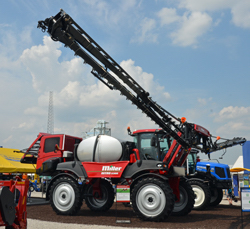
The New Holland team was busy showing off some exciting new products at their Farm Progress Show booth this year, especially after the company’s acquisition of the precision spraying equipment manufacturer Miller-St. Nazianz, Inc last December.

The first thing customers saw as they walked up to the booth was an impressive 135 foot Guardian Boom Sprayer that stretched across the entire booth space.

“There’s a lot of cool features that we’re highlighting on our new Guardian sprayers at the show,” said New Holland Marketing Manager Jason Hardy in an interview at the Farm Progress Show, “These are really impressive because of the ground clearance. That’s the key feature on them. Especially getting into late season corn, their clearance is the talk of the town.”

Another product on display was the new Guardian Injection Toolbar, which allows farmers to apply liquid nitrogen between corn rows and beneath soil roots, minimizing crop burning: “It allows customers to get in and apply liquid nitrogen when the corn needs it most, in between that four and eight leaf stage. It’s a really neat product, we’re getting a lot of interest in it,” said Hardy.

The booth also showed its support for the newly-acquitted Miller brand, displaying a Miller Nitro 5300 Sprayer with added some newly added features and options.

“Miller is part of the New Holland family and we’re really proud of that, we wanted to create awareness of that” said Hardy, “So far it’s been a great relationship. We’re supporting that dealer network and those customers as well, and we’re still going to be building the product in red for those individuals.”

Listen to Chuck’s interview with Jason:
Interview with Jason Hardy, New Holland

2015 Farm Progress Show Photo Album

Coverage of the 2015 Farm Progress Show is sponsored by
Coverage of the 2015 Farm Progress Show is sponsored by New HollandCoverage of the 2015 Farm Progress Show is sponsored by FMCCoverage of the 2015 Farm Progress Show is sponsored by Growmark
Agribusiness, Farm Progress Show, Harvest, New Holland, Uncategorized

Ag Lenders Study from @BASFAgProducts

Lizzy Schultz

BASF has released the results of a 2015 study examining the role and influence agricultural uncertainties, such as volatile markets, weather, and disease, have on the current agricultural-lending landscape, and how growers can plan to place themselves in the best position to receive a loan.

fps-basf-bradyBASF surveyed agricultural lenders, asking them about their outlook for next year, and how they’re approaching farm financing decisions. The key finding centered on the undeniable value of a grower who, regardless of uncertainties, can maintain an efficiency-centered mindset, provide a proven history of success, and also has a plan for success in the future.

“Eighty-eight percent of lenders said that if a grower brings in a plan to maximize their opportunities and mitigate their risk, they would factor that into their decision making about operating lines of credit in farm financing,” said Brady Spangenberg, BASF Market Intelligence & Research Manager, during an interview with AgWired at the 2015 Farm Progress Show, “That’s really the key. Ag lenders are looking at the long term, how a grower has managed the swings over the past 10 years and still has been consistently successful year in and year out.”

BASF is hoping that the study will help farmers see the importance of protecting their bottom line by using different tools that help make their operation more efficient by increasing yield potential, reducing costs, managing risks, and taking advantage of historically low interest rates.

“We conducted the study because we’re always interested in what’s going on in the agriculture industry at large. We’re partnering with growers and retailers, their concerns are our concerns,” said Spangenberg, “No matter what the weather brings, no matter what the markets bring, growers and the agricultural industry are delivering food to their tables, and we want to help make sure they feel successful at the end of the season.”

More information on the 2015 study: Efficiency In Agriculture – Protecting a Grower’s Bottom Line

Listen to my interview with Brady here:
Interview with Brady Spangenberg, BASF

2015 Farm Progress Show Album

Coverage of the 2015 Farm Progress Show is sponsored by
Coverage of the 2015 Farm Progress Show is sponsored by New HollandCoverage of the 2015 Farm Progress Show is sponsored by FMCCoverage of the 2015 Farm Progress Show is sponsored by Growmark
Audio, BASF, Farm Progress Show, Farming

Study Finds Illinois Land Values Down

Joanna Schroeder

David Klein, Soy Capital Ag Services.

David Klein, Soy Capital Ag Services.

According to a new study released during the Farm Progress Show last week, prices being paid for farmland across Illinois are continuing a softening trend following prices being paid for commodities with decreases between 2-7 percent. The “Snapshot Survey” is commissioned each year by the Illinois Society of Professional Farm Managers and Rural Appraisers (ISPFMRA) and conducted by Gary Schnitkey, Ph.D. with the University of Illinois College of ACES.

“Land values are continuing a general softening across the state with the exception of some regional areas where there has been very little land for sale,” said David Klein, AFM, ALC, vice president of Soy Capital Ag Services, Bloomington, IL and co-chair of the annual ISPFMRA Land Values Survey and Conference. “Decreases in farmland returns for 2015 and 2016 are seen as the main reason for the lower values. USDA projected income for 2015 is expected to be the lowest since 2010 and our survey respondents are telling us they expect the softness in land values to continue,” added Klein who expects that the price paid for a bushel of corn will be below $4 into 2016.

Gary Schnitkey, PhD, University of Illinois

Gary Schnitkey, PhD, University of Illinois

“Cash rents in 2016 are expected to be about $30 per acre lower than 2015 cash rents,” Schnitkey reported during the press conference. He cited 2016 rents for Excellent farmland to be in the range of $316 compared to current values of $350; $267 in 2016 for Good land compared with $295 for this year; $219 next year for Average land compared with $250 in 2015, and; $177 for Fair land in 2016 compared with this year’s $200 rent per acre.

However, Klein is optimistic for the future because Illinois farmland is among the most productive in the world.

Additional key points include:

  • During the first half of 2015, farmland prices decreased. Results suggest decreases between 2.5 percent and 7.3 percent, depending on quality of farmland.
  • Most respondents expect decreasing farmland prices in the second half of 2015. Decrease in 2015 returns and continued low returns in 2016 are the primary cause for farmland price decreases.

To learn more, listen to ISPFRMA press conference: ISPFRMA Land Values Press Conference

Farm Progress Photo Album

Coverage of the 2015 Farm Progress Show is sponsored by
Coverage of the 2015 Farm Progress Show is sponsored by New HollandCoverage of the 2015 Farm Progress Show is sponsored by FMCCoverage of the 2015 Farm Progress Show is sponsored by Growmark
Agribusiness, Audio, Farm Progress Show

Illinois Farm Bureau Celebrates 100th Anniversary

Joanna Schroeder

The Illinois Farm Bureau (IFB) is celebrating its 100 anniversary in 2016 and during the Farm Progress Show, kicked off its celebrations with a press conference where President Rich Guebert discussed some of their milestones, upcoming celebratory events, and highlights of key areas of emphasis for the organization.

Guebert during 2015 Farm Progress ShowGuebert noted that one reason they were formed was to help Illinois farmers come together to solve problems. Since the formation  additional companies have been created including Country Financial, that provides farmers property and life insurance, and Growmark a company that delivers fuel products to the farm including ethanol.

IFB has also been a voice for farmers in Springfield, IL but also in Washington, D.C. said Geubert. The organization was active in the Farm Bill, WOTUS, tax issues as well as other state-specific issues.

The real kick-off party will take place on January 26, 2016, the official day IFB was formed 100 hundred years ago in 1916 with additional events planned including the opening of the time capsule.

To learn more, listen to the Illinois Farm Bureau’s press conference: Illinois Farm Bureau #FPS15 Press Conference

Farm Progress Photo Album

Coverage of the 2015 Farm Progress Show is sponsored by
Coverage of the 2015 Farm Progress Show is sponsored by New HollandCoverage of the 2015 Farm Progress Show is sponsored by FMCCoverage of the 2015 Farm Progress Show is sponsored by Growmark
Agribusiness, Audio, Farm Progress Show, Farming

New from Case IH

Chuck Zimmerman

Case IH Jim WalkerCase IH welcomed agricultural media prior to the Farm Progress Show to see some new products. These include their precision planting products, their Axial Flow technology, their track products and more. Jim Walker, Vice President, North America, welcomed us to the evening event and I spoke with him afterward.

On the lot for the first time publicly was their new Optum Tractor with new ISOBUS Class 3 capabilities. This is a product especially suited for the hay and forage segment. The new ISOBUS enabled tractors work with their Federate Control System for select LB4 Series large square balers.

He also addresses the fact that the industry has gone through a downturn since 2013. He says that’s expected in a cyclical business like agriculture but the company still has to continue providing innovative products to its customers.

You can listen to my interview with Jim here: Jim Walker, Case IH

Agribusiness, Audio, Case IH, Farm Progress Show, Tractor

Asgrow, DEKALB Launch #MyFarmMyYield Contest

Kelly Marshall

asgrowAsgrow and DEKALB are inviting farmers to share their harvest success online, using the hashtag #MyFarmMyYield.  Photos are optional (although encouraged), but from Sept. 7- Dec. 6 farmers can post their yield and the Asgrow or DEKALB product number.  A random drawing will determine winners of this contest, with grand prize being a trip for two to the 2016 Commodity Classic in New Orleans (March 1-5) and second prize being two tickets to the 2016 Farm Journal Top Producer Seminar in Chicago (Jan. 27-29), plus weekly prizes of $50 merchandise credit.

dekalb“We’re excited to hear from Asgrow and DEKALB farmers about their harvest success this season,” said Jesse Hamonic, Asgrow DEKALB Brand Lead. “Farmers make important seed decisions every year, and we’re pleased that Asgrow and DEKALB products met their expectations by helping them turn in a strong performance for 2015. We also want to thank farmers who selected our brands and help celebrate their success in what has been a challenging year for many regions.”

Farmers can enter more than once with different products or fields. The contest is only open to current U.S. growers (18 or older), and no purchase is necessary. Excludes Sponsor employees, family and household members. Odds depend on number of entries. Facebook entries must be posted to official Asgrow DEKALB Facebook atwww.facebook.com/AsgrowDEKALBwall to officially enter contest.

To learn more and view full Official Rules, visit www.AsgrowDEKALB.com/MyFarmMyYield.

Agribusiness, Corn, Soybean

Caught on Camera

Melissa Sandfort

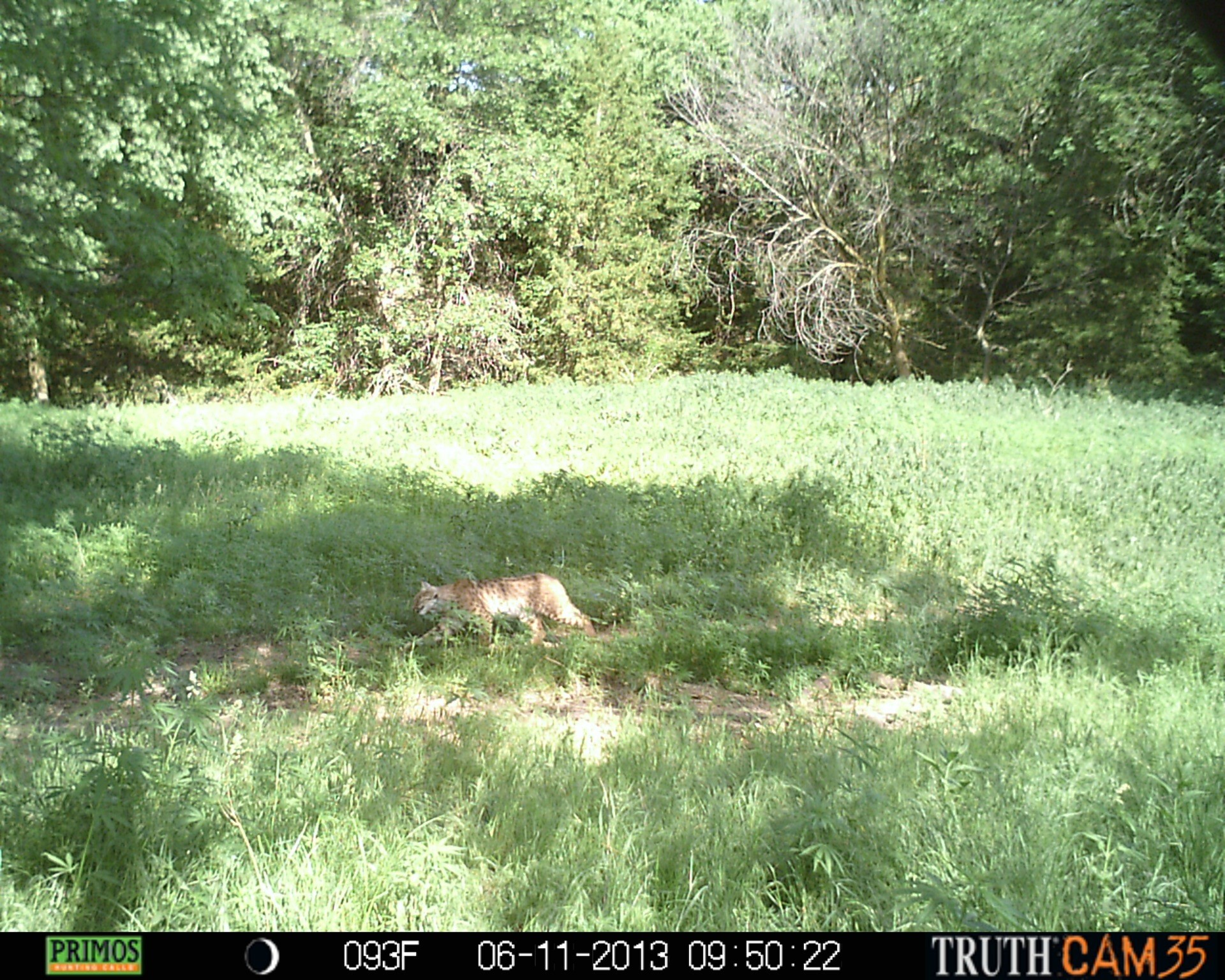
cam7Last week, I shared a photo of a longhorn and a deer candidly posing for the trail cam. Here’s another one from my nephew Jackson. Here kitty, kitty.

This is why I always tell the boys to carry a walking stick and make noise as they’re going through the tall grass.

Until we walk again …

Uncategorized

Agri-Pulse Open Mic with Dr. Robb Fraley, Monsanto

John Davis

open-micAgri-Pulse Open Mic this week features Dr. Robb Fraley, Monsanto.

Disappointed with the failed acquisition of Syngenta, Dr. Fraley discusses reasons for the pursuit of the global chemical giant and his company’s plans toward the future. While some consumers oppose genetically modified crops, Fraley gives reasons to pursue next generation innovation in chemistry, biologics, and genetics to achieve growth in the world food supply.

Click here to listen to Agri-Pulse Open Mic with Dr. Robb Fraley, Monsanto.

Agri-Pulse, Audio

DTN/Progressive Farmer Index Shows Pessimism

John Davis

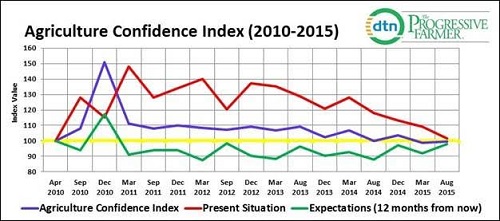
Low prices for products, along with high input costs and an expected large crop are conspiring to keep farmers historically pessimistic about the future. The DTN/The Progressive Farmer Agriculture Confidence Index (ACI) shows the concerns focus on unstable commodity prices and uncertain farm incomes linger.
agconfidenceindex1
Producers’ perceptions over their current situations have dropped steadily, if not dramatically, from 118.0 last August to 109.1 in March to 101.5 now, remaining just in the optimistic range but at the lowest level since the ACI started in 2010. The value of 100 is considered neutral. Values above 100 indicate optimism, whereas values below signify pessimism.

The confidence index, which surveyed 500 crop and livestock producers Aug. 5-17, measures the sentiments of crop and livestock producers on their overall agriculture sector impressions. DTN/The Progressive Farmer conducts the ACI three times a year – before planting, prior to harvest and after harvest. Producers also rate current and long-term input prices and net farm income to gauge their attitudes toward the present situation and future expectations.

Since last year’s record harvest producers have encountered falling commodity prices. This combination continues to weigh on producers overall confidence about the agriculture industry. Last August, producers’ confidence for the ag industry crossed into the pessimistic range for the first time at 99.8, followed by an all-time confidence index low of 98.8 in March. Producer confidence rose slightly to 99.4 in August.

“Producers’ sentiments on their current situation have eroded the past year,” said DTN Markets Editor Katie Micik, director of the confidence index. “Commodity prices have not rebounded while costs continue to rise, causing farm incomes to drop. Yet, producers think things can’t get any worse.”

The report goes on to say the USDA recently estimated 2015 net farm income at $58 billion, down 36 percent from last year. But 70 percent of those surveyed believe farm income will stay the same or improve in the next year.

Midwestern farmers are the most pessimistic about their current situation and future expectations. Southwestern farmers’ attitudes are mixed, and producers in the Southeast are optimistic overall and positive about their current situation, but they are pessimistic about their future expectations.

Uncategorized

Latest FAPRI Commodity Price Report

John Davis

fapri-logoThe prices for grains, oilseeds, cotton, milk and hogs are down sharply from record levels set in recent years. An update to the Food and Agricultural Policy Research Institute’s (FAPRI) long-term baseline report says no quick price recovery is expected.

Given all of the assumptions of the analysis, here are a few highlights of the results:

· Projected corn prices remain near the 2014/15 level of $3.70 per bushel for another two years, and only exceed $4 per bushel in 2018/19. U.S. corn acreage increases to more than 90 million acres in 2016 at the expense of other crops.

· Large global oilseed supplies contribute to a reduction in projected soybean prices, which fall to $9.12 per bushel in 2015/16 and remain near that level in 2016/17.

· Projected wheat prices also decline, to $5.10 per bushel for the 2015/16 crop, as U.S. stocks rise to the highest levels since 2010.

· A smaller U.S. crop contributes to a modest increase in cotton prices in 2015/16 to 65 cents per pound, but larger Chinese stock levels continue to weigh on global markets.

· Ethanol production prospects depend, in part, on EPA decisions about how to implement the Renewable Fuel Standard (RFS). Lower oil prices increase gasoline consumption and the use of ethanol in 10-percent blends, but discourage higher-level blends and ethanol exports.

· Increased production and a stronger dollar have contributed to sharply lower U.S. hog and milk prices in 2015. Projected prices for both remain far below the record levels of 2014.

· As U.S. cattle numbers and beef production expand, cattle prices decline from record levels. Projected fed cattle prices decline from $157 per hundredweight in 2015 to $122 by 2020.

· As retail prices for meat, milk and other products moderate, projected consumer food price inflation drops to 1.9 percent in 2015 and 1.3 percent in 2016.

Agribusiness, Corn, Cotton, Grains, Soybean, Swine