NRGene Assists in Wheat Genome Sequencing

Joanna Schroeder

The bread wheat genome has now been sequenced. Wheat is one of the most widely grown cereals in the world, and the project will help accelerate global research into crop improvement. The project was led by the International Wheat Genome Sequencing Consortium (IWGSC). Using NRGene’s DeNovoMAGICTM software, the bread wheat variety Chinese Spring genome was assembled.

Wheat Spike © Piotr Majka | Dreamstime Stock Photos

Wheat Spike © Piotr Majka | Dreamstime Stock Photos

The new data will help speed up the delivery of a high quality reference sequence of the bread wheat genome. Nils Stein, with German-based IPK Getersleben, who co-led the project, explained, “The new bread wheat de novo shotgun assembly made by NRGene represents a major breakthrough for the IWGSC integrated strategy towards delivering a high quality reference sequence for each of the 21 bread wheat chromosomes.”

According to IWGSC, wheat is the staple food for more than 35 percent of the global human population and accounts for 20 percent of all calories consumed throughout the world. To meet future demands of a projected world population of 9.6 billion by 2050, wheat productivity needs to increase by 1.6 percent each year.

Kellye Eversole, IWGSC Executive Director, welcomed the results. “The preliminary results obtained by NRGene are impressive. We have been waiting for a number of years to have a high quality whole genome sequence assembly that would complement our chromosome based strategy and accelerate the delivery of the sequence. Thus, this assembly comes exactly at the right time because it can be integrated with the IWGSC chromosome specific resources developed over the past 10 years (e.g., chromosome shotgun sequences, physical maps, and physical map-based sequencing) to deliver a high quality reference sequence for the wheat genome in less than two years.”

The whole genome assembly data will be integrated with physical-map based sequence data to produce a high-quality, ordered sequence for each wheat chromosome that precisely locates genes, regulatory elements, and markers along the chromosomes, providing invaluable tools for wheat breeders. Results of the whole genome assembly will be presented at several workshops at the Plant & Animal Genome Conference taking place in San Diego in the United States from 9 to 13 January 2016. All data will be available in the IWGSC wheat sequence repository at URGI-INRA.

Curtis Pozniak with the University of Saskatchewan’s Crop Development Centre in Canada added, “This new wheat genome sequence generated by the IWGSC and its partners is an important contribution to understanding the genetic blueprint of one of the world’s most important crops,” said Curtis Pozniak. “It will provide wheat researchers with an exciting new resource to identify the most influential genes important to wheat adaptation, stress response, pest resistance, and improved yield.”

Precision Agriculture, Wheat

HHS & USDA Announce 2015 Dietary Guidelines

Jamie Johansen

USDAThe U.S. Department of Health and Human Services and the U.S. Department of Agriculture released updated nutritional guidelines that encourage Americans to adopt a series of science-based recommendations to improve how they eat to reduce obesity and prevent chronic diseases like Type 2 diabetes, hypertension, and heart disease.

The 2015-2020 Dietary Guidelines for Americans is the nation’s trusted resource for evidence-based nutrition recommendations and serves to provide the general public, as well as policy makers and health professionals with the information they need to help the public make informed choices about their diets at home, school, work and in their communities.

“Protecting the health of the American public includes empowering them with the tools they need to make healthy choices in their daily lives,” said Secretary Burwell. “By focusing on small shifts in what we eat and drink, eating healthy becomes more manageable. The Dietary Guidelines provide science-based recommendations on food and nutrition so people can make decisions that may help keep their weight under control, and prevent chronic conditions, like Type 2 diabetes, hypertension, and heart disease.”

The newly released 8th edition of the Dietary Guidelines reflects advancements in scientific understanding about healthy eating choices and health outcomes over a lifetime. This edition recognizes the importance of focusing not on individual nutrients or foods in isolation, but on the variety of what people eat and drink—healthy eating patterns as a whole—to bring about lasting improvements in individual and population health.

“The Dietary Guidelines for Americans is one of many important tools that help to support a healthier next generation of Americans,” said Secretary Vilsack. “The latest edition of the Dietary Guidelines provides individuals with the flexibility to make healthy food choices that are right for them and their families and take advantage of the diversity of products available, thanks to America’s farmers and ranchers.”

The specific recommendations fit into five overarching guidelines in the new edition:

– Follow a healthy eating pattern across the lifespan. Eating patterns are the combination of foods and drinks that a person eats over time.
– Focus on variety, nutrient-dense foods, and amount
– Limit calories from added sugars and saturated fats, and reduce sodium intake
– Shift to healthier food and beverage choices
– Support healthy eating patterns for all

Ag Groups, Food, USDA

Hot Dog & Sausage King

Chuck Zimmerman

ZimmCast 498His real title is President of the National Hot Dog and Sausage Council. He’s Eric Mittenthal. But we need a much better title for him and perhaps you could suggest one. Eric is taking over the position from the “Queen of Wien” herself, Janet Riley. Both also work for the North American Meat Institute which oversees the NHDSC. Riley will continue to be the official Queen of Wein for the Council. Eric will also continue his position of VP of Public Affairs for NAMI.

Mittenthal will lead the NHDSC’s efforts celebrating hot dogs and sausages as the iconic American food and answering common questions related to quality, safety, nutrition and preparation of hot dogs and sausages.

National Hot Dog and Sausage Council“It takes a true hot dog aficionado to be named president of the National Hot Dog and Sausage Council and Eric has shown he’s up to the task,” said Riley. “With his mastery of hot dog and sausage facts and history, etiquette and his work growing the National Hot Dog and Sausage Council’s presence in mainstream and social media, the Council is in great hands.”

NHDSC Bumper Sticker“As someone who has always loved hot dogs and sausages, there was never any doubt working for the National Hot Dog and Sausage Council would be a perfect fit, said Mittenthal. “But getting to know the hot dog and sausage manufacturers, restaurant owners and passionate fans around the country has been an amazing experience, and it is a great honor to represent all of them as President of the Council.”

Some recent NHDSC accomplishments include settling the debate over whether a hot dog is a sandwich, creating a new hot dog bumper sticker and naming baseball’s best hot dog. Eric talks about those project and many more so you’ll need to listen is. Meanwhile, think of a title for Eric, “King of ?????” We need something creative. Help the guy out.

Listen to this week’s ZimmCast here: Eric Mittenthal, National Hot Dog & Sausage Council

Subscribe to the ZimmCast podcast here.

The ZimmCast

sponsored by
The ZimmCast podcast is sponsored by GROWMARK
Locally owned, globally strong.
Ag Groups, Audio, Meat, ZimmCast

Agri-Pulse Open Mic with Farm Bureau Pres. Bob Stallman

John Davis

open-micAgri-Pulse Open Mic this week features Bob Stallman, President of the American Farm Bureau Federation.

In this interview, Stallman reflects on his tenure as leader of the nation’s largest general farm organization and many of the changes that occurred. Stallman discusses accomplishments in the last session of Congress and identifies ominous challenges still facing the industry on Capitol Hill and in courtrooms across the country. The Texas farmer and rancher shares thoughts on the debate over GMO labeling, comprehensive tax reform, risk management and why EPA water quality regulations are such a threat to private property rights.

Click here to listen to Agri-Pulse Open Mic with Bob Stallman, President of AFBF.

AFBF, Ag Groups, Agri-Pulse, Audio, GMO

EPA Assessment Raises Honeybee Concerns

Taylor Truckey

epa environmentalToday the EPA announced a preliminary pollinator risk assessment for the neonicotinoid insecticide, imidacloprid, which, according to the assessment, is a threat to some pollinators. EPA’s assessment, prepared in collaboration with California’s Department of Pesticide Regulation, indicates that imidacloprid potentially poses risk to hives when the pesticide comes in contact with certain crops that attract pollinators.

“Delivering on the President’s National Pollinator Strategy means EPA is committed not only to protecting bees and reversing bee loss, but for the first time assessing the health of the colony for the neonicotinoid pesticides,” said Jim Jones Assistant Administrator of the Office of Chemical Safety and Pollution Prevention. “Using science as our guide, this preliminary assessment reflects our collaboration with the State of California and Canada to assess the results of the most recent testing required by EPA.”

The preliminary risk assessment identified a residue level for imidacloprid of 25 ppb, which sets a threshold above which effects on pollinator hives are likely to be seen, and at that level and below which effects are unlikely. These effects include decreases in pollinators as well as less honey produced.

For example, data shows that citrus and cotton may have residues of the pesticide in pollen and nectar above the threshold level. Other crops such as corn and leafy vegetables either do not produce nectar or have residues below the EPA identified level. Additional data is being generated on these and other crops to help EPA evaluate whether imidacloprid poses a risk to hives.

Bayer CropScience published a statement in response to the EPA assessment stating, “With hundreds of studies conducted and their demonstrated safe use on farmland across the country, we know more about the safe use of neonics to honey bees than any other pesticide. New studies continue to confirm their safety to bees and other pollinators when used appropriately.

We will review the EPA document, but at first glance it appears to overestimate the potential for harmful exposures in certain crops, such as citrus and cotton, while ignoring the important benefits these products provide and management practices to protect bees. We hope the final risk assessment is based on the best available science, as well as a proper understanding of modern pest management practices.”

The imidacloprid assessment is the first of four preliminary pollinator risk assessments for the neonicotinoid insecticides. Preliminary pollinator risk assessments for three other neonicotinoids, clothianidin, thiamethoxam, and dinotefuran, are scheduled to be released for public comment in December 2016. A preliminary risk assessment of all ecological effects for imidacloprid, including a revised pollinator assessment and impacts on other species such as aquatic and terrestrial animals and plants will also be released in December 2016.

The 60-day public comment period will begin upon publication in the Federal Register. After the comment period ends, EPA may revise the pollinator assessment based on comments received and, if necessary, take action to reduce risks from the insecticide.
In 2015, EPA proposed to prohibit the use of pesticides that are toxic to bees, including the neonicotinoids, when crops are in bloom and bees are under contract for pollination services. The Agency temporarily halted the approval of new outdoor neonicotinoid pesticide uses until new bee data is submitted and pollinator risk assessments are complete.
EPA encourages stakeholders and interested members of the public to visit the imidacloprid docket and sign up for email alerts to be automatically notified when the agency opens the public comment period for the pollinator-only risk assessment. The risk assessment and other supporting documents will be available in the docket today here.

EPA is also planning to hold a webinar on the imidacloprid assessment in early February. The times and details will be posted here.

Bayer, Environment, EPA, Insecticides

#USDA Celebrates Bob Stallman Appreciation Day

Joanna Schroeder

This month marks the last for Bob Stallman, a 16 year veteran at the helm of the American Farm Bureau Federation (AFBF). Stallman will be passing the torch during the upcoming 2016 AFBF Annual Convention& IDEAg Trade Show taking place in Orlando, Florida January 8-13, 2016.

The U.S. Department of Agriculture (USDA) honored Stallman’s efforts today with a brief ceremony led by Secretary Tom Vilsack. USDA declared today, January 6, 2016, as Bob Stallman Appreciation Day.

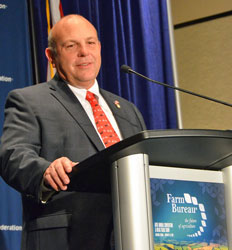
USDA declared January 6, 2016 as "Bob Stallman Appreciation Day." Stallman is stepping down this month as President of AFBF, a position he held for 16 years.

USDA declared January 6, 2016 as “Bob Stallman Appreciation Day.” Stallman is stepping down this month as President of AFBF, a position he held for 16 years.

“Bob Stallman is well-deserving of recognition for his outstanding contributions to all corners of agriculture and his commitment to strengthen rural America for the hard-working families who call it home,” said Vilsack. “For 16 years, Bob has led the American Farm Bureau Federation with a steady hand and champion’s heart. Under his leadership, the Farm Bureau’s advocacy efforts to connect the work being done in rural America to its impact on the lives of every American have evolved and grown. Stallman and the Farm Bureau have played an instrumental role in shaping, passing and implementing the 2014 Farm Bill, supported producers in the wake of historic drought conditions and other natural disasters, and expanded new market opportunities for farmers and ranchers through their support of the Trans-Pacific Partnership and other trade agreements.

“Bob is the kind of leader who makes people in the business proud of what they do. He has inspired countless agricultural leaders, past and present, including myself. I am honored to call him a strong partner and a good friend.

“Bob leaves behind big shoes to fill, and USDA looks forward to working with the Farm Bureau as they select their next leader.”

View the Bob Stallman Appreciation Day proclamation.

From the ZimmComm team, thanks Bob for all the work you have done to support America’s farmers and ranchers.

AFBF, Agribusiness

Zimfo Bytes

Talia Goes

Zimfo Bytes

  • Meet domestic and international customers, see where soybeans go beyond the elevator and evaluate the work of the soy checkoff with the See for Yourself program.
  • The National Pork Board is accepting applications for its 2016 America’s Pig Farmer of the YearSM award through March 13 at americaspigfarmer.com.
  • FLM+ will significantly expand its Minneapolis presence this spring with the relocation of its metro office to downtown Minneapolis.
  • Nine members of the American Agricultural Editors’ Association have been awarded stipends to attend the International Federation of Agricultural Journalists’ conference, which will be held July 13-17, in Bonn, Germany.
Zimfo Bytes

Credenz Spokesbeans #SoyExcited on National Bean Day

Chuck Zimmerman

Ed Edna CredenzThe folks at Bayer CropScience, friendly ZimmComm sponsors, are having some fun today, National Bean Day. Actually, it is their Credenz spokesbeans, Ed & Edna, who are #SoyExcited to be taking charge today of @Bayer4CropsUS. I’ve heard that there will be more to come during the day. Here’s what Ed & Edna have to say about today.

Hi, we’re Ed and Edna, Crop Science’s new Credenz spokesbeans, and we’re #SoyExcited for January 6th, also known as National Bean Day! We couldn’t pass up the opportunity to boast about our wonderful smart genetics, we’re taking over Crop Science US – literally! (On social media). I guess you thought we were only meant for planting…think again!

To see us in action, you’ll have to check out Crop Science US on Twitter, Instagram and Tumblr using #Credenz on National Bean Day

To see how this unfolds we’ll just have to follow along. I’ll update this post if I see or hear more later. In the meantime, enjoy National Bean Day.

Green, red, dark red, kidney, lima, soy and etc. are just a few of the different kinds of beans that are recognized and celebrated on National Bean Day which is every year on January 6.

This day celebrates the bean vegetable in all sizes, shapes and colors. Beans (legumes) are one of the longest cultivated plants dating back to the early seventh millennium BC.

Agribusiness, Bayer, Crop Science, Soybean

New Foundation Launched by @USFRA

Cindy Zimmerman

USFRA1The U.S. Farmers and Ranchers Alliance (USFRA) has launched a new foundation with a mission of furthering agricultural education and understanding of agriculture among America’s consumers including young people and millennials.

The U.S. Farming and Ranching Foundation (USFRF) is the result of a collaborative effort led by the agriculture and food industry to expand the dialogue with consumers regarding food production in America according to inaugural Chairman Jim Blome, President & CEO of Bayer CropScience LP. “This new foundation will further ag education and consumer understanding about food, by developing educational-based tools and interactive consumer programs, that serve as a unified effort to reach Americans in ways in which they want to learn about modern agriculture,” says Blome.

Post Update: Listen to Chuck’s interview with Jim about the new Foundation here: Jim Blome, Chair, USFRF

One of the foundation’s initial projects is developing a curriculum guide that will be made available to high school students nationwide. The documentary film, FARMLAND, which gives viewers the opportunity to step inside the world of agriculture for a first-hand glimpse into the lives of young farmers and ranchers, will serve as the guide’s core. The curriculum will supplement efforts to bring to life many of the themes covered in the film, and serve as an educational resource for high school teachers interested in content focused on food choices, agriculture, sustainability, entrepreneurship, food issues, antibiotics, GMOs and crop inputs in agriculture, and marketing.

In addition to Blome, USFRF’s inaugural Board of Directors includes:
• Don Borgman, inaugural USFRF Secretary-Treasurer and Director, Agricultural Industry Relations, John Deere (retired)
• Nancy Kavazanjian, USFRA Chairwoman, and United Soybean Board Director
• Forrest Roberts, former CEO, National Cattlemen’s Beef Association
• John Becherer, CEO, United Soybean Board
• Randy Krotz, inaugural USFR Foundation CEO, and CEO, U.S. Farmers and Ranchers Alliance

USFRF plans to identify, and seek funding sources that will establish and support potential scholarship opportunities as well as innovative programs designed to provide consumers with timely, honest and accurate answers about their food.

Ag Groups, Audio, Bayer, Education, USFRA

Farm Journal Media Restructuring Management

Chuck Zimmerman

Farm Journal MediaFrom a company release we’ve learned that after Farm Journal Media’s acquisition of Vance Publishing some management changes have been announced. Here you go.

Steve Custer, an 18-year veteran of Farm Journal, is promoted to President and Chief Operating Officer (COO) from Executive VP and COO. Custer will continue to run the expanded day-to-day operations of Farm Journal.

Charlene Finck, currently Senior VP of Content Development and a 26-year company veteran, is promoted to Executive VP and Chief Content Officer (CCO). In her new role, Finck not only assumes leadership of all incoming Vance content assets in addition to Farm Journal content, but also heads up a new division called Content Services, which comes with the Vance acquisition, to better partner with the overall agricultural industry to distribute content. Read More

Media