2018 #DevelopWithDeere Conference

Chuck Zimmerman

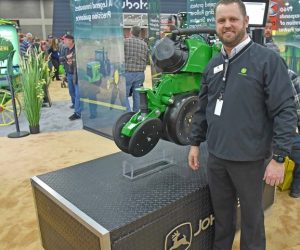
The Develop with Deere conference, Growing Solutions Together, is taking place much earlier this year in Kansas City, MO. The event is getting underway this afternoon with registration and a reception.

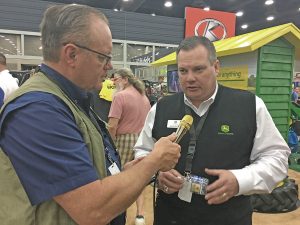
I sat down with Randy Kasparbauer, B2B Software Product Manager, John Deere, to get a preview of this year’s event. It looks like a big crowd and John Deere has invited in dealers from across the country this year as well as several other countries. In addition to dealers there are representatives from many companies that are working on integrations with John Deere and especially into the John Deere Operations Center. I like to think of this as an AgNerd’s Paradise.

I’d also like to congratulate Randy for serving as Vice Chair of the Operational Management Board for AgGateway which was just announced today.

You can listen to my interview with Randy here: Interview with Randy Kasparbauer, John Deere

You can find conference photos here: 2018 Develop with Deere Conference Photo Album

Apps, Audio, Equipment, John Deere

Welcome to #NBB18

Cindy Zimmerman

The National Biodiesel Conference & Expo opened today at the Fort Worth Convention Center with the theme of “Driven” to celebrate to 25th anniversary of the National Biodiesel Board.

“For the visionaries who launched what would become the National Biodiesel Board in 1992, we want to say ‘thank you,’” said NBB CEO Donnell Rehagan. “We look forward to taking this opportunity to reflect on those first 25 years, but we are also excited to launch into the next era of growth for America’s Advanced Biofuel.”

Following a University of Missouri study that demonstrated biodiesel had potential as a diesel fuel replacement, the Missouri Soybean Merchandising Council created the National SoyDiesel Development Board in 1992. Sensing the opportunity to utilize the vast surplus of soybean oil collected each year, while also expanding energy security and environmental benefits, other state soybean associations quickly joined the effort. The new association changed its name to the National Biodiesel Board in 1994 to reflect the diversity of fats and oils that can be made into biodiesel.

“Biodiesel is an American success story,” said Rehagen. “We have overcome countless challenges, and we will undoubtedly face many more as we continue to grow the industry. But for everyone who has pulled together for the past 25 years to make our success a reality, this conference is a great time to celebrate.”

Rehagen took to the Mainstage at Conference Central to welcome attendees and kick off the conference by talking about Biodiesel’s Bright Lights and Big Opportunities.

Listen here: NBB CEO Donnell Rehagen opens #NBB18

2018 National Biodiesel Conference


Audio, Biodiesel, National Biodiesel Conference, Soybean

Aptimmune Completes $6 Million Series B Funding

Jamie Johansen

Aptimmune Biologics has completed its Series B funding initiative, raising more than $6 million from several investors. This increases the combined total investment to almost $9 million, generated by the company through three rounds of funding.

“Aptimmune is thrilled to receive strong investor support during this critical time in our development,” said Aaron Gilbertie, Aptimmune CEO. “The Series B funds will provide the required resources to continue commercialization of BarricadeTM, our revolutionary inactivated mucosal vaccine formulation. In addition, the fresh cash infusion will allow us to expand our vaccine platform to other antigens important to veterinarians and swine producers around the globe.”

Participants in the company’s Series B funding include St. Louis Arch Angels, Arsenal Capital Management, Missouri Technology Corporation, Cultivation Capital, The Yield Lab, and various Midwest-based angel investors.

“St. Louis Arch Angels invested in Aptimmune starting in the fall 2016, and since that time we’ve observed the company’s steady progress, technically and commercially,” said Steve Wilhelm with Arch Angels. “We believe in Aptimmune’s mission and team and are pleased to extend our investment in Aptimmune as it changes vaccine paradigms and improves outcomes for customers.”

Read More

Agribusiness, AgWired Animal, Animal Agriculture, Audio, Swine

Iowa Farmers Share Commitment to Soil Health

Carrie Muehling

Being a part of the Soil Health Partnership was a natural decision for two Iowa farmers who have now been enrolled in the program for a number of years.

“I wanted to learn more about my soils and we were just getting into cover crops, so it just fit very well into what I was already doing,” said northeastern Iowa farmer Don Elsbernd, who has been part of the program for five years.

Third year participant Kevin Ross from Underwood, near Council Bluffs, said he wanted to learn about cover crops as well as forage use. Elsbernd and Ross were both at the 2018 Soil Health Summit, and agreed it was a worthwhile event.

“If you like the project, even if you’re not enrolling in it, the Summit is something you can come to every year and learn about the data of the new enrollees and the past ones and where that stuff is going, so there’s something for everyone in the Partnership,” said Ross.

The opportunity to enroll in the program has been extended and there is availability for more farmers to join. Visit www.soilhealthpartnership.org for more information.

Listen to Chuck’s interview with Kevin and Don here: Kevin Ross and Don Elsbernd, Soil Health Partnership

2018 Soil Health Summit Day One Photo Album

2018 Soil Health Summit Day Two Photo Album

Audio, Soil, Soil Health Partnership

Veal Myths Busted

Jamie Johansen

Did you know milk-fed veal calves are raised significantly different today? The American Veal Association (AVA) made a goal in 2007 to move completely to group housing over a ten-year period. Since then, AVA members have researched the best facilities to provide optimal care and the financial resources to make it happen by the end of 2017.

I had the opportunity to visit Strauss Veal Feeds and Midwest Veal just last week to see it all for myself. Dr. Marissa Hake, Midwest Veal staff veterinarian, took us through the life of a veal calf and shared all the details of group housing and how good health and well-being are maintained.

“The typical veal animal comes off the farm as a dairy bull calf. It’s about 85-100 pounds and they move into individual pens just like a heifer or dairy beef raiser. They are in those individual pens for about six weeks, which we consider a nursery. We make sure they are healthy and their immune systems are up before we move them into group housing,” Dr. Hake said.

“Going to group housing has definitely been a good move. They can stand up, lay down, turnaround, groom naturally and interact with their friends,” Dr. Hake said.

The pens we saw at a Midwest Veal farm in Northern Indiana housed five calves each. Dr. Hake said it’s just like school. Calves have different personalities. More dominant calves are grouped together giving those shy calves more time at the bunk.

Calves are fed a nutritionally balance milk-formula along with grain and roughage for up to 22 weeks of age and are marketed at 500 pounds. Dr. Hake also stressed that castration, dehorning, tail docking or tethers are not practiced on AVA member farms.

Dr. Hake said they work closely with the dairy industry because they are using a by-product of the industry. The calves on Midwest Veal farms are tagged by the dairy farm. This ensures a secure form of traceability. Total protein sampling and health assessment are also taken and given back to the dairy farm for their records.

I have grown up and still work in the cattle community but on the beef side. I will be very honest, I learned a lot and I know you will too. Listen to my complete chat with Marissa to learn more about the U.S. veal industry and tune in to This Week in Agribusiness for the complete story. Interview with Dr. Marissa Hake, Midwest Veal

AgWired Animal, Audio, Dairy, Livestock, Meat

NCGA Pleased with Soil Health Progress

Carrie Muehling

More and more farmers are signing up to be a part of the Soil Health Partnership, a fact that was evident at the 2018 Soil Health Summit. The initial goal was to enroll 100 farmers over a five-year period. Organizers reached that goal after just three years and have now extended the program to at least 10 years based on interest and funding support.

“What we’re trying to do is take a science-based, data-based approach to understanding soil health opportunities. And it’s not just looking at the soil parameters. It’s trying to link that with the yield, economic and environmental parameters that are going to help our farmers out,” said Nick Goeser, director of the Soil Health Partnership and soil health and sustainability for the National Corn Growers Association (NCGA).

Chris Novak, NCGA

NCGA CEO Chris Novak said the Summit was a great opportunity to see how the program is growing and where it’s headed. “To walk into the room and to see the number of farmers who are participating, to see the number of farmer partners who have joined this network is phenomenal, and I think truly demonstrates the benefits that farmers are seeing from utilizing cover crops, recognizing that enhancing soil quality and health is critical to their long term success,” said Novak.

Farmers in the program are trying cover crops, tillage changes, and nutrient management changes to better understand soil health. The Soil Health Partnership was officially launched in 2014 and is administered by NCGA with support from Monsanto, USDA-NRCS, Walton Family Foundation, Midwest Row Crop Collaborative, General Mills Foundation, Environmental Defense Fund, and the Nature Conservancy.

Learn more in these interviews from the Summit last week –
Interview with Nick Goeser, Soil Health Partnership/NCGA
Interview with Chris Novak, NCGA

2018 Soil Health Summit Day One Photo Album

2018 Soil Health Summit Day Two Photo Album

Audio, NCGA, Soil, Soil Health Partnership

First Soil Health Partnership Awards Presented

Cindy Zimmerman

Four “Seeds of Change” awards were presented at the 4th Annual Soil Health Partnership Summit, Jan. 18-19 in Chicago. These first awards were developed to highlight those members of the Soil Health Partnership who go above and beyond to advocate for the partnership and for soil health throughout the year. And the winners are – from left to right in the photo:

Super Spout – Andrew Reuschel, Golden, Illinois
Andrew is a first-year member of the partnership who practices reduced tillage and cover crops on his farm and became interested in expanding soil and water conservation efforts. Interview with Andrew Reuschel, SHP Super Sprout award

Champion Communicator: Mark Mueller, Waverly, Iowa
Mark often takes the initiative to tell the story of what’s happening on his farm – a vital way to encourage other farmers to consider adopting new practices, and to share the progress agriculture is making with the public. Interview with Mark Mueller, SHP Champion Communicator award

Data Digger: Tom Vaske, Masonville, Iowa
Tom Vaske started farming on his own in 2001 by renting land from a neighbor who wished to have conservation tillage practices maintained on the farm, so Tom converted an old planter into a strip till bar. Tom has been testing the use of interseeding cover crops on his farm through randomized, replicated field trials with SHP. Interview with Tom Vaske, SHP Data Digger award

Ace Agronomist: Jack Hardwick, Beardstown, Illinois
Both an agronomist and a farmer, Jack’s interest in soil health started with his degree in soil science. He then spent 12 years in various roles with FS, AgriGold, and BRANDT before going back to the family farm and starting a crop consulting business. Interview with Jack Hardwick, SHP Ace Agronomist award

2018 Soil Health Summit Day One Photo Album

2018 Soil Health Summit Day Two Photo Album

AgWired Precision, Audio, Soil, Soil Health Partnership

Animal Ag Bites 1/22

Carrie Muehling

  • The National Pork Board is seeking the next America’s Pig Farmer of the Year, with applications now open for the annual industry award at americaspigfarmer.com. The award recognizes a U.S. pork producer who demonstrates excellence in raising pigs using the We Care ethical principles and in sharing his or her story with the public. The application period is open through March 11.
  • Visitors to the Alltech booth at the 2018 Iowa Pork Congress will have the opportunity to hear from industry experts on modern pig production and achieving overall animal health.The booth will be open Wednesday, Jan. 24 and Thursday, Jan. 25 during the event at the Iowa Events Center in Des Moines. Alltech will also sponsor the Producer Recognition Reception during the event on Wednesday, Jan. 24 from 4-6 p.m.
  • The 2018 International Production & Processing Expo (IPPE) will feature the documentary, Food Evolution, from 8:30 – 10 a.m. on Tuesday, Jan. 30, at the Georgia World Congress Center. The documentary will also be shown from 8 – 9:30 a.m., followed by a 30-minute panel discussion, on Wednesday, Jan. 31. The documentary is free for viewing to all registered IPPE attendees.
  • The U.S. Poultry & Egg Harold E. Ford Foundation has named Barbara Jenkins its executive director. In addition to maintaining her role as vice president of education and student programs for the U.S. Poultry & Egg Association, Jenkins is assuming responsibility of the Foundation’s day-to-day operations.
  • The Animal Agriculture Alliance has announced that five farmers and ranchers can win a free registration to the 2018 Stakeholders Summit through a photo contest again this year. To enter, farmers and ranchers need to share a photo and caption on social media that shows and explains why they believe it is important to protect their roots. Entries must be posted with the hashtag #ProtectYourRoots with the Alliance tagged by February 14. To confirm their entry, contestants need to complete the contest form here. The 2018 Summit, themed “Protect Your Roots” will be held May 3-4 at the Renaissance Capital View Hotel in Arlington, Va.
  • Applications are being accepted for college scholarships that are awarded by America’s dairy farmers and dairy importers through the National Dairy Promotion and Research Board. Eleven scholarships worth $2,500 each will be awarded. Additionally, the NDB awards a $3,500 James H. Loper Jr. Memorial Scholarship to the outstanding scholarship recipient. Applications can be downloaded at www.dairy.org/about-dmi/scholarship-program or by sending an e-mail to Nate Janssen at nate.janssen@dairy.org. Completed applications should be submitted to the National Dairy Board c/o Nate Janssen, Dairy Management Inc., 10255 W. Higgins Road, Suite 900, Rosemont, IL 60018-5616. They must be postmarked no later than April 27.
AgWired Animal, Animal Bites

Proposed Rule to Modernize Swine Inspection

Jamie Johansen

The USDA’s Food Safety and Inspection Service (FSIS) announced its continued effort to modernize inspection systems through science-based approaches to food safety. USDA is proposing to amend the federal meat inspection regulations to establish a new voluntary inspection system for market hog slaughter establishments called the New Swine Slaughter Inspection System (NSIS), while also requiring additional pathogen sampling for all swine slaughter establishments.

The proposed rule also allows innovation and flexibility to establishments that are slaughtering market hogs. Market hogs are uniform, healthy, young animals that can be slaughtered and processed in this modernized system more efficiently and effectively with enhanced process control.

For market hog establishments that opt into NSIS, the proposed rule would increase the number of offline USDA inspection tasks, while continuing 100% FSIS carcass-by-carcass inspection. These offline inspection tasks place inspectors in areas of the production process where they can perform critical tasks that have direct impact on food safety.

“FSIS is excited to continue modernizing inspection practices, while allowing opportunities for industry to innovate and streamline food production,” said Acting Deputy Under Secretary for Food Safety Carmen Rottenberg. “There is no single technology or process to address the problem of foodborne illness, but when we focus our inspections on food safety-related tasks, we better protect American families.”

“We support the USDA’s decision to advance HIMP as it introduces new pork production efficiencies while encouraging the deployment of new food safety technologies in packing plants,” said National Pork Producers Council (NPPC) President Ken Maschhoff, a pork producer from Carlyle, Illinois. “The pilot program yielded very positive results; expanding the program is another step forward in the industry’s ongoing focus on continuous improvement of food safety and cost efficiency.”

Ag Groups, AgWired Animal, NPPC, Pork, Swine, USDA

4th Soil Health Summit Underway in Chicago

Chuck Zimmerman

The 2018 Soil Health Summit kicked off yesterday in Chicago and all of the proceedings can be found on the Soil Health Summit Blog! This is a brand new blog which is being used to feature photos, interviews and other media content from this annual event. You can subscribe to the Soil Health Summit Blog with this feed link.

This is the fourth Soil Health Partnership Summit, which has come a long way since the first one in 2015. Soil Health Partnership Director Nick Goeser welcomed participants to the opening day general session of the 2018 Soil Health Summit, setting the stage for the theme Rooted in Data, Growing in Success.

Listen to Nick’s welcome here: SHP director Nick Goeser opens 4th Soil Health Summit

Check out the official blog for all the content from the summit.

2018 Soil Health Summit Day One Photo Album

AgWired Precision, Soil, Soil Health Partnership, Sustainability