
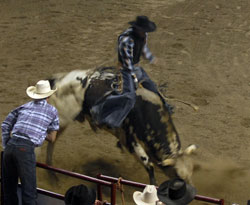
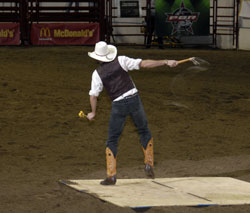
 Our after hours entertainment at the Country Living Association activities was the PBR Bull Riding Competition in Kemper Arena. It’s hard to get a good stop motion picture from up in a suite but I tried.
These guys are just plain crazy. It’s one thing to be walking through a pasture and get chased by a bull or to be working them in a cattle operation. It’s quite another to get up on top of one on purpose.
It was fun to watch though and I think there’s more tonight. I kept looking around for a Pabst Blue Ribbon but didn’t find any. I guess that’s not part of the branding for the event.
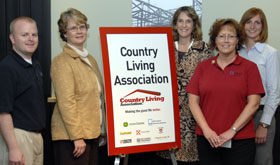 Courtney Yuskis, pictured here on the right of some of the corporate partners of the Country Living Association, gave some closing remarks at the Country Living Outlook Conference that included a summary of the organization’s first year to date.
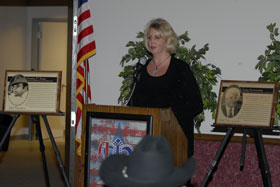 Last night the
 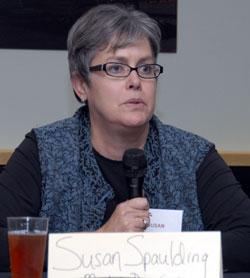 One of our speakers at the Country Living Outlook Conference was Susan Spaulding,
  The
The 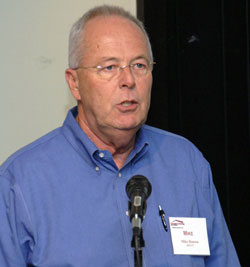 The Executive Vice President of
 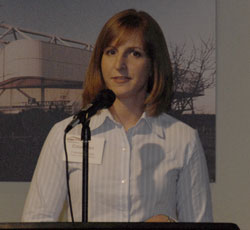 Our program moderator here at the Country Living Outlook Conference is Courtney Yuskis, Director of the
 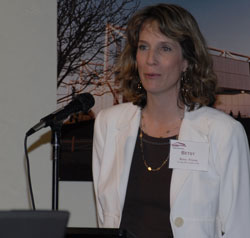 The first person on the program at the Country Living Outlook Conference is Betsy Freese, Editor-in-Chief of
 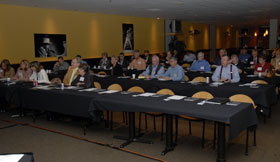 The
The