 Farm Foundation has issued an update of a report last year on “What’s Driving Food Prices?” and found the same factors affecting commodities.
“In July 2008, crude oil prices were at record levels, as were most agricultural commodity prices. Low supplies generated fears of food shortages. The rhetoric of the food-versus-fuel debate rose along with food prices. Today, despite remarkable course changes, the key drivers of food prices and their complex interactions remain the same,” according to the new report.
 The new report updates the analysis Purdue University economists Phil Abbott, Chris Hurt and Wally Tyner did just nine months ago for Farm Foundation. That report, released in July 2008, identified three major forces driving food prices: World agricultural commodity consumption exceeding production growth, leading to very low commodity inventories; the decline in value of the U.S. dollar; and the new linkage between energy and agricultural markets.
In the second half of 2008, each of these driving forces completely reversed direction. “The transitions were truly remarkable—almost a 180-degree course change—yet the key drivers of food prices remain the same: supply and utilization of grains and oilseeds; the exchange rate of the dollar and related world macroeconomic factors; and the energy/agriculture linkage,” says Tyner. “Our updated analysis verified the role of the key drivers, although they sometimes play out in somewhat different ways.”
Tyner and his colleagues are participating in a Farm Foundation forum to discuss the results of the study this morning at the National Press Club.
Listen to an interview with Wally Tyner here: farm-foundation-tyner-09.mp3
Download the interview for broadcast use here: Wally Tyner on Food Price Drivers

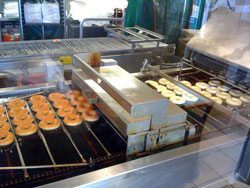 I don’t know about you but fresh Krispy Kreme glazed donuts are one of the finer things in life. On my way to Kansas City this morning I stopped and was lucky enough for the donuts to be coming right off the line.
 In this week’s program we’ll get an update on the
  July and first of August. To start things out we’re going to have a debate between former Congressman from Texas, Charlie Stenholm and Barry Flinchbaugh, Professor Emeritus, Kansas State University. That should be not only an entertaining but thought provoking session. We’ve got sessions over several days on a variety of topics from photography to writing and you can find the schedule
 Okay Commodity Classic media people. Now’s your chance to provide some feedback on this year’s media room.
 Take a look at this interesting document from USDA,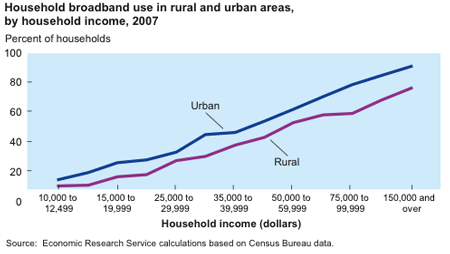

 From “Darling to Devil” in the blink of an eye – that’s what happened to the biofuels industry in the past year or so – but better communications on the part of the industry could have helped with the damage control and could still help repair some of the damage done. What’s more, the damage done to biofuels could also happen to other alternative energy products like wind, solar, geothermal, and hydrogen unless communicators implement three important lessons learned from the attack on biofuels. They will be presented by experts in the field at the upcoming