And you will go out and leap like calves released from the stall. Malachi 4:2
I discovered upon one of the cutest blogs ever the other day, and I knew I had to share it with AgWired readers. It’s called the Kid’s Cattle Blog, and it’s hosted by the farm wife who shares the tales, good and bad, ugly and pretty, from her family’s cattle operation. Whether it’s stacking bales, pulling baby calves or show cattle, she shares the beef production story in a very fun way. Here is an excerpt from her latest blog post. Check it out!
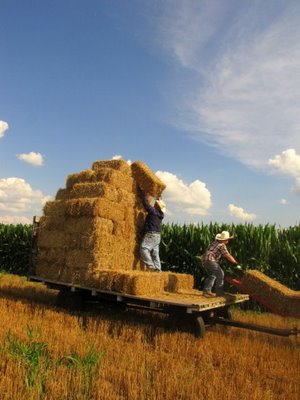 Many people who have baled hay as a kid and are now working in town or the city have a romanticized memory of how fun it was. We were even told by a friend that every red-blooded American boy should bale hay once in their lives. (This may solve the entitlement problem we have in the U.S. even among grain farmers.) These fond memories likely stem from the nature of bucking bales. It’s hot, sweaty, sticky, itchy, dirty, heavy work. Yet it is simple, basic, and pure work. Nothing technical about it unless the baler breaks down. Plus you work as a team and everybody has a job. There is always someone new who has yet to learn how to use a hook. They get the usual hazing. Everyone has a baling hay story.
But there are less cattle farms lately. Fewer farm kids know how to buck bales. It is harder to find kids who want to do the work. So large round bales and large square bales have replaced the small ones, since only one person is needed to run a tractor to mow,rake, bale, and stack. We still put up straw and hay bales for our cows. The kids complain about “it’s hot”,”I’m tired”, “Slow down, Dad”. One day they will talk about when they were young baling hay. And tell their kids how good they got it.
 The swine industry is getting very close to being able to detect the presence of disease in a herd using a rope that pigs can chew on and leave their saliva for testing and that was the topic of two presentations Friday at the
 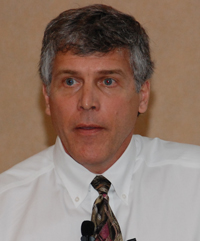 They have data on testing for a variety of diseases and now the work is moving forward with assay development, which Dr. Jeff Zimmerman of Iowa State University says is the key to making oral fluid testing affordable. “Between 12 and 18 months from now, we are going to have antibody-based assays that are ready to go,” Zimmerman said. “And that’s going to be when we start getting the costs down.”
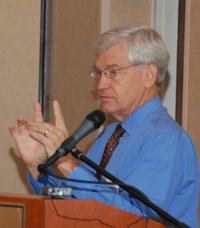 Swine producers need to carefully evaluate the costs of prevention versus treatment when it comes to disease in their herds.
 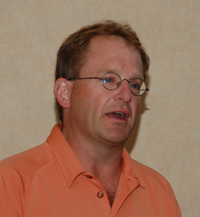 Better control of the air that hogs breathe offers the greatest promise for preventing the transmission of PRRSv that the industry has ever seen.
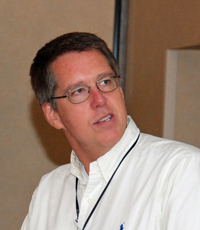
 It only seems fitting that a group known for encouraging original thought and innovative ideas for the agriculture industry would pick a man known for his irreverent style and sharp intellect to lead them. Professor of agricultural economics at Kansas State University, Barry Flinchbaugh, is now the Chair of the Board of Trustees of Farm Foundation.
  The annual
  The location is beautiful Carolina Beach at the Courtyard Marriott and the weather was beautiful this evening. The event will include a day long business session on Friday featuring the latest in swine health information for producers – and then a day of fun on Saturday for fishers, golfers and beach goers.