 Paulsen Marketing has added three new faces to the team. The new Paulsenites are (l-r) Tara, Lisa and Jordin:
Lisa Leuning, Digital Project Manager
Large Web sites can become full-time jobs unto themselves. Lisa is the project owner for large digital projects at Paulsen. It’s safe to say that we’ll be keeping her busy with site research, competitive analysis, content management, programming, usability testing, resource identification, internal project management and more.
Jordin Mueller, Account Coordinator
Jordin began working with Paulsen in January 2009 as an intern, and with her strong work ethic and enthusiasm, she earned a full-time position in May. As account coordinator, she works closely with our president, Greg Guse, learning the ropes, working with clients, juggling multiple projects, and helping to keep her assigned teams organized and on track. Previously, Jordin worked with SDN Communications in Sioux Falls. She holds a B.A. in business administration from Augustana College.
Tara Young, Digital Services Coordinator
As digital services coordinator, Tara bridges the divide between the distinctly different worlds of Web programmers, account executives, creative teams and accounting. In short, she’s the glue that keeps our Web projects together! Tara’s responsibilities include scheduling for all Paulsen Web projects and ensuring everyone stays on deadline every day. She also assists with site usability testing, proofing, quality assurance and online media invoicing.


 Soybeans are being harvested in the Missouri River bottom. This was the scene I passed while working out this afternoon.
 “Using Popular Media to Tell Dairy Farming’s Story” was the topic of a Tuesday morning seminar at
  The
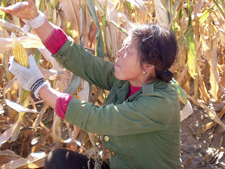
The  We met several farm families at work in the fields. One man told us he has a 3.7 acre allotment and rents an additional 21 acres. He does not like to use machines for planting or harvesting because labor is less expensive and more efficient – for instance in collecting corn stalks that may have fallen over. Twelve acres of the rented land is controlled by the local government, so it is not counted on the records and he receives no government subsidy. He said it takes 10 laborer-days to harvest 2.5 acres of corn. That means a husband-wife team can harvest their 3.7 acres in about eight days.
 It looks like the battle is on in Ohio and hopefully we won’t see another fiasco like Prop 2 in California.
 The
The  Now here’s a winning recipe for you meat lovers. Sonoma Steaks with Vegetables Bocconcini. Mmm. Mmm. That’s the winning recipe in this year’s