Alpharma Animal Health is reaching out to teach young people more about agriculture through a grassroots educational program called “Reach Teach and Learn.”
The company launched the program earlier this year at the 2009 Agriculture in the Classroom Conference in St. Louis, Missouri. The program supports local school districts and colleges through initiatives that encourage students to learn more about agriculture and how their food is produced, and to share their insights and knowledge about what they learned. I talked with Dr. Lance Fox, Alpharma’s Director of Technical Services, at their exhibit during World Dairy Expo about the purpose of the program.
 “Essentially the program is designed to reach out to our youth – elementary, high school, college-level students – our future leaders of tomorrow, to promote agricultural awareness,” Lance told me. “It’s not about products, it’s just about reaching out to the youth.”
It’s also about motivating young people to reach their own personal and professional goals, something Lance has done in his own life and he shares that story when he talks with young people of all ages. He grew up in the Wisconsin dairy industry, became a veterinarian, joined Alpharma as a technical services manager, and earlier this year achieved the personal goal of climbing to the top of Mt. Everest. “If you believe, you can achieve,” Lance says.
Find out more about the Reach Teach and Learn program, which features an essay and video contest for different age level students, at reachteachlearn.com.
Listen to or download my interview with Lance here.



 Agrisure Marketing Manager Tracy Mader says the pests are challenging because they affect all areas of the country and all growth stages of the plant. “The industry has done a very good job controlling corn borer root worm, but the next step is to control this group of broad lep pests, like black cutworm, that can attack the crop at the very early stages.”
 I’m only a little behind in saying
 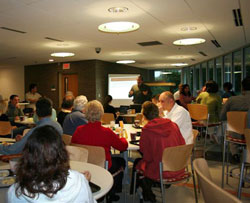 Employees were educated on nutritional quality and the benefits of eggs during egg related activities which were held throughout the day. “The complimentary meals were fantastic,” stated Sherri Armstrong, Regulatory, Novus International. “Learning that eggs are the highest quality of protein available really surprised me.”
 Natural Resources Conservation Service (NRCS) Chief Dave White announced this week that they received nearly 21,300 applications to participate in the CSP, covering more than 33 million acres nationwide.
  The United Sorghum Checkoff Program has
  The
The  It’s time for another