
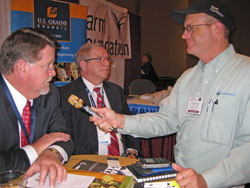
 My first stop at the NAFB Trade Talk was the U.S. Grains Council booth. I interviewed Ken Hobbie and Rick Fruth, Chairman. Today is Ken’s last day on the job as President/CEO. Let’s all wish him well as he starts “relaxing.”
In my interview they talk about the current activities of USGC, including international trade development. Speaking of which, I’ll be participating in an upcoming corn mission with the organization. I’ll be leaving at the end of November for Morocco, Egypt and Jordan and will be documenting the trip to help show how the organization works on behalf of U.S. grain producers.
You can listen to my interview with Ken and Rick below.

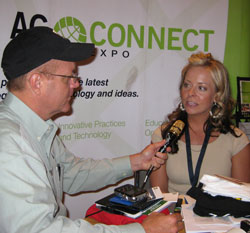 I can’t let Cindy be the only one to get her working photo on here today. I think I did 20 Trade Talk interviews at the NAFB Convention. I’m about talked out. For the moment.
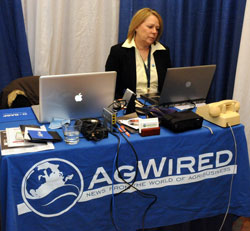 Here’s the
  This week’s NAMA Trends In Agriculture conference provided a great program opportunity for this week’s ZimmCast. You’ll get to hear from the morning panel on day two. I interviewed each of them and have included them in the program. The session focused on how agrimarketers are building new community ties.
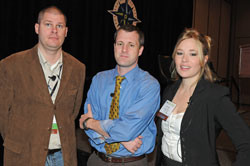 3G-enabled smart phones, the “Tweeting Farmer,” and unusual partnerships are all part of the new ag community. This general session will feature practical case studies from marketers inside and outside of agriculture that have forged new links with their customers using new media and non-traditional collaboration. Joe Grigsby, VML, Leslie Bradshaw, a farm kid and University of Chicago educated Communications Manager with New Media Strategies in Washington, D.C., and Joel Jaeger, Commodity Update shared their experiences.