 The United Soybean Board Expert Advice column this week features an update on South America from Pablo Adreani of AgriPAC Consulting. Pablo is an agronomist, journalist and trade consultant from Buenos Aires, Argentina who just happens to be in the United States this week for the American Seed Trade Association meeting in Chicago.
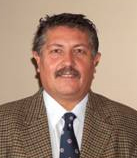 In this week’s column, Pablo talks about the impact of this year’s weather in South America. Here’s a sample:
The last rains of the middle of November did not reach Cordoba, and the drought continues to affect more than 50 percent of the province. This is the province with the greatest soybean growing area in the country, producing 11 million acres. The first crop of soybeans has already been delayed for a month. According to a report by the Buenos Aires Grain Board Exchange, 3.2 million acres have been planted; this equals 28 percent of the whole province acreage.
I called Pablo yesterday at his hotel in Chicago and talked with him about why it is important for soybean growers in the United States to keep abreast of developments in South America. You can listen to my interview with Pablo below.
The USB Expert Advice tool features a weekly column rotating between four industry experts: Pablo on South American markets, David Asbridge on U.S. markets, John Baize on soybean and soybean oil industry news and Michele Payn-Knoper on using social media in agriculture. The columns can be accessed on the USB website under the “community” tab. Farmers are encouraged to ask questions and post comments after each new article and to engage the industry experts.
Now, here is that interview with Pablo and if you have any questions, just ask the expert after you read his column on the soybean checkoff website:

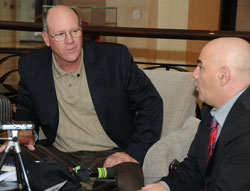 Fellow Show Me State resident and corn grower from the southeast part of Missouri, Jim Stuever, took a few moments to provide his thoughts on how the U.S. Grains Council Corn Mission team is doing after arriving in Amman, Jordan. In the photo, Jim (pictured left), is listening to a presentation we’re having from Mohamed Kraishy, USDA Ag Specialist in Jordan.
 The nation’s dairy producers are mourning the loss of an industry leader,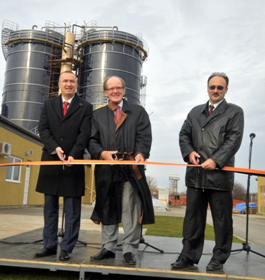
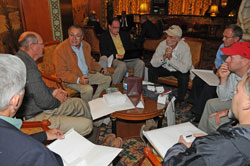 The U.S. Grains Council Corn Mission Team has concluded visiting Egypt. Tomorrow it’s on to Jordan. Before finishing today we sat down for our debrief which includes documenting our observations and making recommendations based on what we saw. Those will be provided to USGC in the form of a final report. I have updated the Eqypt photo album from our visits today.
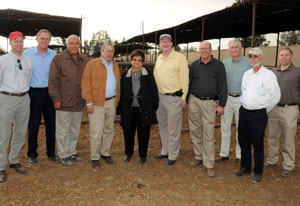 The face and voice of the U.S. Grains Council in Egypt is Dr. Hussein Soliman pictured in the center of our Corn Mission group while visiting our last stop in the country. He has been working on behalf of U.S. grain producers for almost 20 years and has not only seen Egypt become one of our top importers but can take a lot of the credit for helping make it happen. You won’t find anyone more passionate about what he does. All of us on the team are very appreciative of his assistance and guidance while visiting this week.
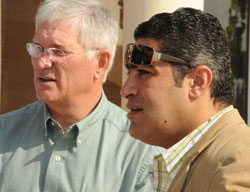 Now that the modern form of open feedlot management has come to Egypt there are an increasing number of producers using the system. One of them is Ashraf Taha, pictured on the right.