Blade Energy Crops From Ceres

Chuck Zimmerman

Cory ChristensenHave you ever wondered what switchgrass looks like? That’s it behind Cory Christensen, Director of Product Managment, Ceres, who was conducting Sunbelt Ag Expo presentations in the field. He says it’s a first season stand of their Blade energy crop. It was developed specifically for the southeast. Since it’s the first season for this crop they won’t harvest it at Sunbelt until next year. A mature yield for the crop is about 8 tons per acre of dry matter.

Switchgrass is native to the United States everywhere east of the Rockies. Ceres, has been working on varieties that will yield better in different growing environments though. Cory says that they don’t expect it to displace corn in Iowa but in the southeast with the difficulties in cotton and tobacco it becomes a viable alternative on open acres. He provides some estimates of what the crop can mean financially as the market for a fuel crop like switchgrass develops.

Cory describes the current market as a “developing market.” They have a map that shows developing opportunities where plants will be located to process energy crops. He says that biomass is a local business so you need to be located near a biorefinery. He also points to the USDA’s Biomass Crop Assistance Program that provides monetary assistance to facilitate the transition of eligible land to energy crops.

You can listen to my interview with Cory below:

Sunbelt Ag Expo 2009 Photo Album

AgWired coverage of Sunbelt Ag Expo is sponsored by Growth Energy.

Agribusiness, Audio, Biofuels, Energy, Ethanol, Sunbelt Ag Expo

Boehringer Ingelheim Closes Fort Dodge Deal

Cindy Zimmerman

BIVI logoBoehringer Ingelheim Vetmedica Inc. (BIVI) has closed a deal with Pfizer to acquire a significant portion of the Fort Dodge Animal Health business. The acquisition, which includes products in the U.S., Australia, Canada and South Africa, as well as two manufacturing and research facilities located in Fort Dodge, Iowa, significantly increases the size of Boehringer Ingelheim’s companion animal and cattle portfolios and strengthens the company’s position as a leading vaccine supplier.

BIVI George HeidgerkenI talked with BIVI president George Heidgerken about the acquisition. “We’ll be expanding our business significantly, in fact, doubling our sales in the United States,” George says. “The product assets we’ve acquired from Fort Dodge are a broad range of strong brands in the cattle vaccine business. This is part of our long term strategy to improve our product offerings and our capabilities for the U.S. cattle producers and the U.S. cattle market.”

The cattle vaccines included in the acquisition include the Triangle®, Pyramid®, and Presponse® vaccine lines. Pharmaceutical products being acquired include Cydectin® (moxidectin) for cattle and sheep as well as Polyflex® (ampicillin sodium). The dairy portfolio includes the key brands Today® and Tomorrow®.

“With regard to the brands we are acquiring, it’s business as usual,” George added. “The producers and veterinarians and distributors who handle and benefit from these wonderful brands will really see no significant change.”

Listen to or download my interview with George here:

Animal Health, Audio, Boehringer Ingelheim, Livestock

Phase II Alpharma Student Video Contest

Chuck Zimmerman

Alpharma Student Video ContestPhase II of the Alpharma Student Video Contest is now underway. This final phase of the contest ends November 23, so get your entries in asap. It’s your chance to win $5,000. You can find the contest rules here.

Thanks to those of you who submitted clips during Phase I of the Alpharma Student Video Contest. A total of 146 clips were submitted and are now available to download for the remainder of the contest. Phase I of the Student Video Contest is now closed, and it’s time to move on to Phase II, which opened Monday, October 19th.

With the kickoff of Phase II you’ll be able to view and download the clips that were submitted throughout the first phase of the contest by going to the contest Web site. You can use any number of video clips from the first phase of the contest and/or your own media to make the most creative and educational video possible for your chance to win $5,000.

We look forward to reviewing the submitted videos, but please remember you only have until November 23rd to submit them. As always, feel free to contact Amanda Eberle at aeberle@charlestonorwig.com or 262-563-5100 with questions.

Agribusiness, Animal Health

Obama Signs HR 2997 Into Law

Amanda Nolz

President Obama David Bennett with the Western Farm Press just posted this news alert about President Barack Obama signing HR 2997, a emergency stimulus package that could benefit farmers. Here is the most recent news on the topic…

President Obama has signed legislation providing fiscal 2010 appropriations — $121 billion — for the USDA, the Department of Health and Human Services, and other agencies.

The article says that 80 percent of the funds will go to school nutrition programs and food stamps.

Of the remaining HR 2997 funds, slightly over $23 billion will be spread among programs for agricultural research, conservation, food safety, housing assistance and the Food and Drug Administration (FDA). Some $290 million, aimed at helping undergird the struggling U.S. dairy industry, will fund dairy farmers with direct support. An additional $60 million will be used to purchase dairy products for food pantries and nutrition programs.

Farm Policy, Farming

The Fluidigm System

Chuck Zimmerman

Fluidigm Yong YiThe Fluidigm System starts with their Integrated Fluidic Circuits. The Product Manager who is intimately familiar with the IFC’s is Yong Yi. I spoke with him about this system and he helps explain what the IFC’s do and can do for a client company. In the picture he’s holding one of their chips containing an IFC.

It’s all about miniaturization and therefore efficiency which is particularly important in ag bio since you’re dealing with a tremendous number of samples and wide variety of species and applications. The company manufacturers the chips or IFC’s for their clients. The chips are built on semiconducter technology which uses silicon chips that allow them to be very precise. Yong says they work with a wide variety of clients including seed companies who want to use it for quality control to make sure their farmer customer is getting exactly what is ordered.

The IFC’s have become increasingly complex since they first started production and Yong says that will continue. So the chips will be able to handle increasingly complex functions as time goes on.

You can watch or listen to my interview with Yong below:


Agribusiness, Audio, Biotech, Research, Technology, Video

Jacob Edenfield Joins AdFarm

Chuck Zimmerman

Jacob EdenfieldThere’s a new copywriter at AdFarm. He’s Jacob Edenfield.

Jacob has worked on a range of agricultural and business-to-business brands and markets for companies including Monsanto, Intervet/Schering-Plough, United Soybean Board, National Pork Board, Solutia and SFP in his role as Associate Creative Director with Osborn & Barr Communications. His background also includes deep experience across the spectrum of message-delivery tools, including digital and social media.

In his new role with AdFarm, Jacob will be working with clients across the spectrum of agriculture.  In addition to copywriting, Jacob will be a key contributor to AdFarm Teams for strategic and message development, concept development, and brand and campaign work.

Agencies

Weakened Dollar Could Cause Farm Problems

Amanda Nolz

auburn_university_logo Jim Langcuster at Auburn University recently published an article in the Southeast Farm Press titled, Weakened Dollar Could Cause Farm Problems that highlights some issues farmers could be facing in times of a weakened dollar. Here is an excerpt of the article…

The mighty American greenback has fallen on hard times — so hard, in fact, that countries throughout the world are clamoring for its replacement as the world’s reserve currency. How would farming be affected by the change? One of the effects of the dollar’s replacement by another currency would almost inevitably be a vastly cheaper greenback. If history serves as any measure of the potential effect on agriculture, shouldn’t farmers be dancing for joy? After all, in historical terms, haven’t U.S. farmers traditionally favored cheap money and free trade?

“In terms of farming, economic theory says that devaluation would make our goods cheaper internationally and help us export more,” says James Novak, an Alabama Cooperative Extension System economist and Auburn University professor of agricultural economics.

But as he is the first to point out, the dollar’s loss of reserve status carries with it far more implications than the simple price of farm products. There is also the potentially wider, if not far-reaching effect on the entire U.S. economy to consider, he says.

Markets

Meet US Farm Data

Chuck Zimmerman

ZimmCast 236 - US Farm DataUS Farm Data is the new name of what we knew as GoLeads Farm. The new name goes along with a new commitment to agricultural marketing.

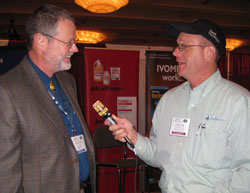
At the Sunbelt Ag Expo I spoke with Chris Sidles, National Accounts, who tells us what the company offers and why they created a new name. To start with he says they’re a full service direct marketing and database management company.

US Farm DataTheir ag database has 2.5 million U.S. farmers and ranchers. They can pull specific farmographic data like number of acres, type of crop and how they own that farm. They also cross reference the farm data with their residential database of 220 million consumers as well as a business database of 14 million of which about 1 million are specific to ag. Clients range from technology to seed to irrigation and includes small business and Fortune 500 companies.

Chris says they help a client understand their customers and figure out ways to increase their footprint and market to new customers. Strategies can include direct mail, telemarketing and email blasts. They are also looking at ways to include new social networking strategies into their campaigns.

I’d like to thank AgWired Sponsor, Fluidigm, for their support of the ZimmCast.

The program ends with some music from Music Alley. It’s a song titled, “Down On The Farm” by The Ellison Bier Band. I hope you enjoy it and thanks for listening.

You can listen to this week’s ZimmCast below.

The ZimmCast is the official weekly podcast of AgWired. Subscribe so you can listen when and where you want. Just go to our a Subscribe page.

Agribusiness, Audio, Sunbelt Ag Expo, ZimmCast

Zimfo Bytes

Melissa Sandfort

    Zimfo Bytes

  • John Deere has refined the chassis of its popular autonomous vehicle to give the go-anywhere R-Gator an independent suspension and improved ground clearance. The updated R-Gator also boasts a faster top speed, travelling up to 35 mph in manual mode.
  • A new Pfizer Animal Health was unveiled as Pfizer’s acquisition of Wyeth, including its subsidiary Fort Dodge Animal Health, was completed.
  • Bayer CropScience cotton seed brands, FiberMax and Stoneville, claimed the largest share of U.S. cotton acres in 2009, according to the USDA.
  • At the October organizational meeting, MGEX (Exchange) Board of Directors named its 2009-2010 public directors and officers, and assigned committee representatives. To view the full list, click here.
    Zimfo Bytes

    Syngenta Seeds Thinks Like a Farmer

    Cindy Zimmerman

    When Syngenta Seeds considers new products to bring to market, they think like a farmer.

    Syngenta Seeds Bruce Battles“They’re our primary customer at the end of the day and we can have the greatest technologies, the greatest genetics but if we don’t understand their business and the challenges they face, it could all be wasted,” said Agronomy Marketing Manager Bruce Battles at a recent ag media day at Syngenta Seeds new headquarters in Minnetonka, Minn.

    Bruce says they use their seed innovations to meet grower needs and one example is the aphid management system they are preparing to launch in the next year. “In this example, we have taken genetics and taken a trait and put it with the genetics for controlling aphids. But, we’ve also taken our expertise from our seed care group in using a product like Cruiser as a seed treatment to help suppress aphid pressure,” he said.

    Find out more about the Syngenta AMS, launching in 2010, here. Listen to or download my interview with Bruce in the audio player below.

    Sponsored by

    Audio, Seed, Syngenta