At least one pure bred Angus breeder is concerned that the proposed Grain Inspection, Packers and Stockyards Administration (GIPSA) rule could set the beef industry back 25 years.
 Bill Rishel of North Platte, Nebraska is president of the Nebraska Cattlemen’s Association and owner of Rishel Angus. He’s among the nation’s top Angus breeders and was one of the first to emphasize carcass merit through genetic selection. “Through most of the decade of the ’80s, we were losing substantial market share in the industry,” Bill says. “We needed to compete at a level in terms of quality and palatability.”
He says it was the producers who took the initiative to come up with value-added products for consumers. “We as producers felt like we had the ability to create a product through genetic improvement to create a product that was better than the average,” Bill said. The very first of those value-added programs was Certified Angus Beef, which is a proven alternative marketing success story. “It has increased sales exponentially, not just domestically but around the world, and continues to grow to this very day.”
 Bill is concerned that the GIPSA rule could jeopardize the alternative marketing programs that have benefited both producers and consumers if it pressures the processors to validate every price difference they would give for any greater quality of cattle. “Somewhere along the way they’re going to say “I’m not going to take all this risk, it’s just as easy for me to offer one price fits all” and it will become a commodity type business again and it will revert back 25 years to what we’ve worked so hard to get away from,” Bill said.
Bill encourages every person in the cattle industry to read the proposed rule and formulate their own opinion about it. “Instead of taking what they hear in the press or in the news from some other source or individual as to what their feeling is,” he said. He will be at the USDA/DOJ public workshop on competition in the livestock industry in Ft. Collins, Colorado on August 27 to make comments about how he thinks the rule will impact his operation and the industry. Producers who are unable to attend can provide comments via e-mail to comments.gipsa@usda.gov until November 22.
Listen to or download my complete interview with Bill here: Bill Rishel Interview


 Meet Robbie LeValley, a lifelong cow-calf producer who operates a ranch with her husband Mark and two sons in Hotchkiss, Colorado. Her family operation is one of six that together own

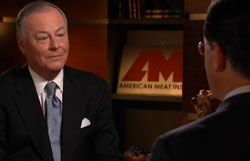
 I talked about the issue with Jerry Bohn, general manager of
  Jerry says he’s most concerned about the impact of the rule when it comes to alternative marketing arrangements. “The packer-processors will have to justify paying a premium or a discount for every group of cattle that they purchase and if they fail to do that, then there is a threat of litigation,” he explains. While the rule is supposed to help smaller producers, Jerry thinks it will have the opposite effect. “In our case, the small to medium producers are the ones who benefit most from alternative marketing arrangements” getting premiums for certain characteristics. “So, I really believe that the unintended consequence is that the small and medium producers are going to get hurt a lot worse if this law goes through,” Jerry adds, which will ultimately impact those consumers willing to pay a premium price for a consistently higher quality product that may no longer be available.
 The Impact of Digital Media on Farmers and Ranchers was the title of a NAMA Boot Camp presentation by Jack Semler,
 Communications plan? What communications plan? Sound familiar? You need a plan and helping NAMA Boot Campers with a method to create one was Beth Burgy, Broadhead+Co. Her presentation is titled, “Little Red Riding Hood and the Big Scary Communications Plan.” To learn how little red riding hood figures in you’ll need to listen to my interview with her.