
In an earlier post, Matt Jungmann, the director for the Farm Progress Show, noted that one of the reasons Farm Progress is one of the largest ag shows in the world is because of the new technologies unveiled. Last night, I was invited to a media preview of Hagie Manufacturing Company’s new self propelled sprayer, the STX10. This new product is in addition to their current lineup and is intended to be delivered into the producer market according to Alan Hagie, Vice President and COO. He is the third generation of Haigies to enter the business.
The STX10 is a single tank machine. Hagie said it is very well balanced, which is especially important this year with all of the rain. “People are starting to find out how important it is to keep a light weight balanced machine on their farm so they can protect their crops,” explained Hagie.
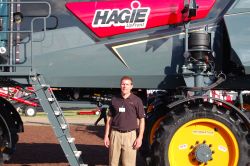 The sprayer is a fully CANBus machine. What this means is that it has a computer on board that controls all the functions of the machine. In addition, customized precision technologies can be added to the SPX10.
“We’re not a company that says you have to put our machine on it as far as precision type technology,” said Hagie. “We say, What do you want on the machine?”
The company is customers first, so they work with their customers to ensure the technology added to the machine will work best for them. This is also why the STX10 will be launched as a limited build after the first of the year. Although this machine has been tested more than any other Hagie machine, they want “every minute to test these machines” to make sure it performs above and beyond their customer’s standards.
You can check out photos of the full line-up of Hagie machines in our Farm Progress Photo Album.
Listen to the interview with Alan Hagie here: Alan Hagie Unveils New Self Propelled Sprayer, The SPX10
AgWired coverage of the 2010 Farm Progress Show
is sponsored by:  and
and  .
.
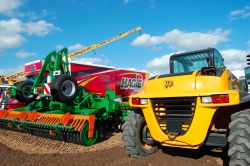
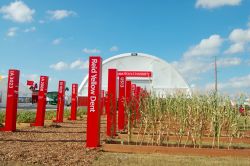


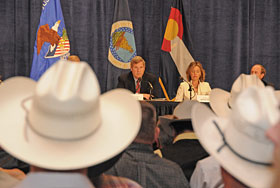
 The media got a sneak peek this week at what we can expect at the
 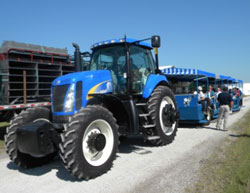 The media day is an opportunity for reporters to get a feel for the show site ahead of the big event. Riding in a tram pulled by (what else?) a New Holland tractor, the media checked out several highlights around the site including the field demonstration plots, the locations of the web cams, the cattle handling location, the hospitality tent, the Iowa State University exhibit, and