RCA Trellis Growing System Turns Acres Into Profits

Joanna Schroeder

The RCA (Rotating Cross-Arm) System from Trellis Growing Systems is turning marginal land into profits for many Midwestern farmers who have begun to plant a new cash crop – blackberries. Developed by Indiana grower Richard Barnes, the RCA System enables Midwestern growers to successfully and profitably plant blackberries by overcoming some of the traditional challenges associated with the crop.
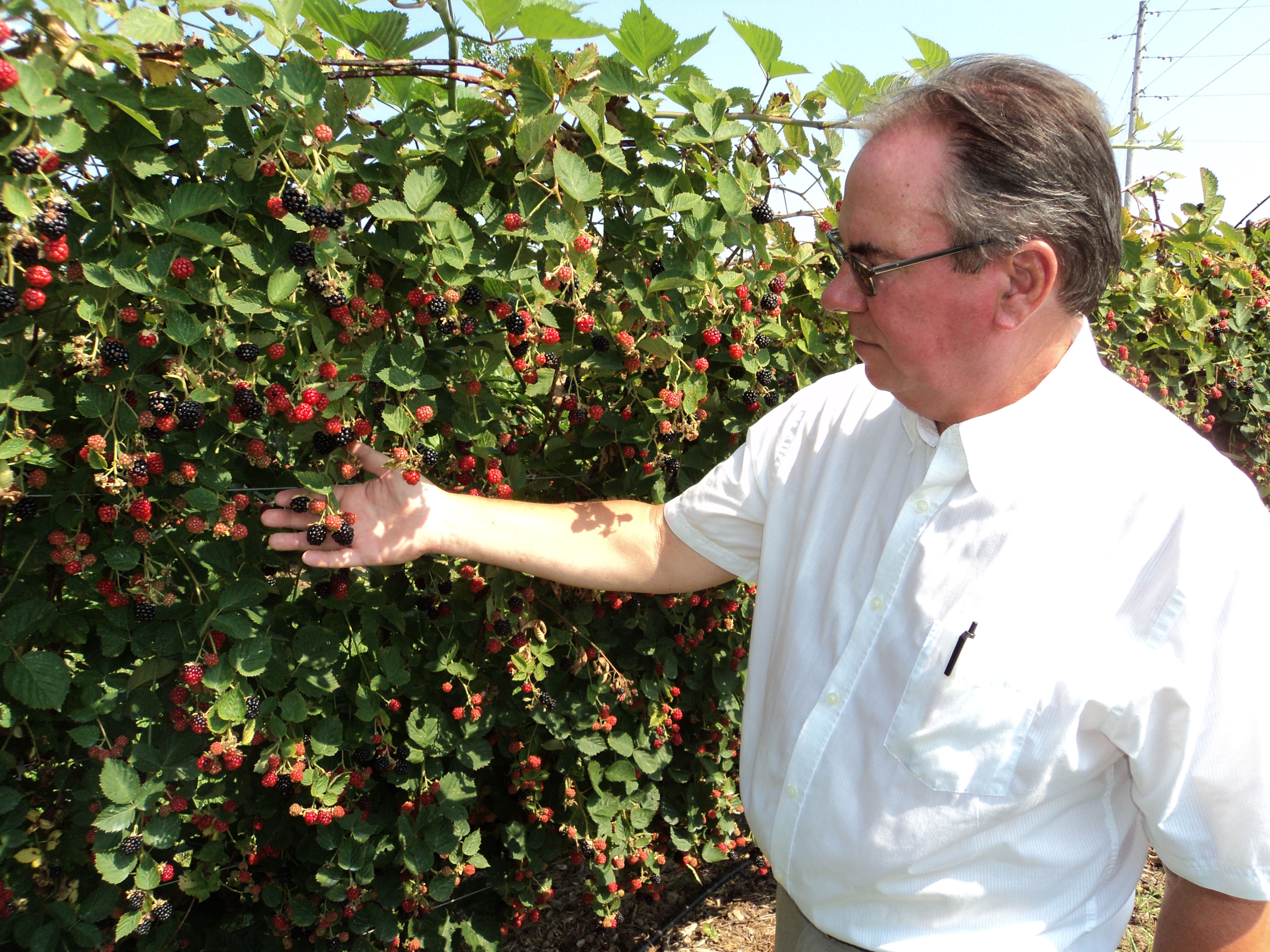
Barnes began experimenting with blackberries about 11 years ago and like most growers had issues with different aspects of their operation. He began to do research where he spoke with the USDA who was working on developing a trellis system. After receiving their first grant in 2007, Trellis Growing Systems was born and has since received several other grants.

For the most part, blackberry varieties will not survive the winters in the Midwest. Therefore most blackberries are grown in the more temperate climates of the southern Midwest and the majority of them are coming out of California. But with the development of the RCA System, the game has changed.

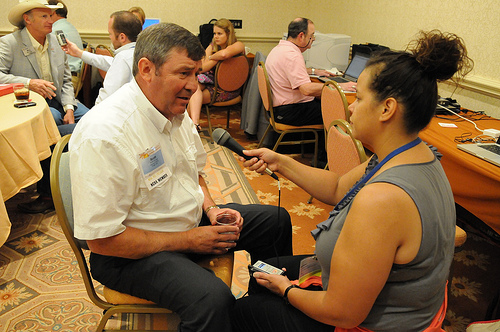
“With our technology, the RCA System, we can rotate the canes down near the ground in the winter and if necessary we can cover those canes with a floating row cover,” explained Richard Barnes, creator of the technology and founder of Trellis Growing Systems. “That enables the canes to survive the winter with little to no cane damage, and what this does is open up a whole new opportunity and industry for growers in the Midwest.”

Listen to my interview with Richard Barnes here: RCA Trellis Growing System Turns Acres Into Profits

Barnes said growers using this system have been able to earn $45,000+ in revenue per acre. One reason is that per flat prices are higher in July and August when blackberries are harvested in the Midwest, between $15 to $20 per flat. When the majority of blackberries are harvested in May or June in other regions, flat prices are around $12 to $13 per flat.

Trellis Growing Systems, along with Bedford (their manufacturing partner) will be showcasing their blackberry technology during the Farm Progress Show in Decatur, Illinois August 30-September 1, 2011 in booth 575. Barnes said growers can get a personal demonstration of the RCA System anytime during the show, or they can pre-schedule an appointment to learn more by calling him at 260-241-3128. You can also get more information on their website at www.trellisgrowingsystems.com.
Agribusiness, Audio, Farm Progress Show

Make Your iPad Do A Handstand

Chuck Zimmerman

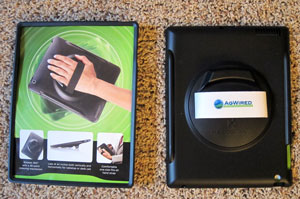
How about a customized “Handstand” for your iPad? I’ve been trying one out.

This is a new way to handle and hold your favorite tablet. They’re made for both the iPad and iPad 2. I’ve just started using the Handstand which is made by Hub International. Some of my first impressions include that it’s very sturdy and light weight. The strap stretches to fit your hand and helps you keep a firm grip on your iPad. I’m thinking this would be a good for those of you who may be considering using your iPad for some field scouting or to carry around in the cab of your truck or combine.

HandStand allows you to keep your hand in a comfortable position while turning the iPad for best viewing. It becomes an extension of your body as well as your mind. Hold it effortlessly, spin it portrait or landscape, display the screen to others — work, watch or play effortlessly. You’ll do more with your iPad and get more value out of your investment.

Hub International was founded in 2010 and the Handstand is their first consumer product. Founder Jaime Smith is currently president of Ritter Chemical, national distributor of high quality agrochemicals.

What do you think? Want one? Let ’em know on Facebook, Twitter and Youtube.

Equipment

Cold Feet

Melissa Sandfort

Maybe it’s a circulation problem, I’m not sure, but my feet are always cold. It can be 100 degrees outside and my toes can be ice cold in my flip flops. It’s a problem I’ve always had and a quite frustrating one!

The same holds true for my fingers. Maybe it’s an extremities problem.

Either way, electric blankets are no good because my overall body temperature gets too high, then I can’t sleep. Socks don’t work either – my feet get claustrophobic.

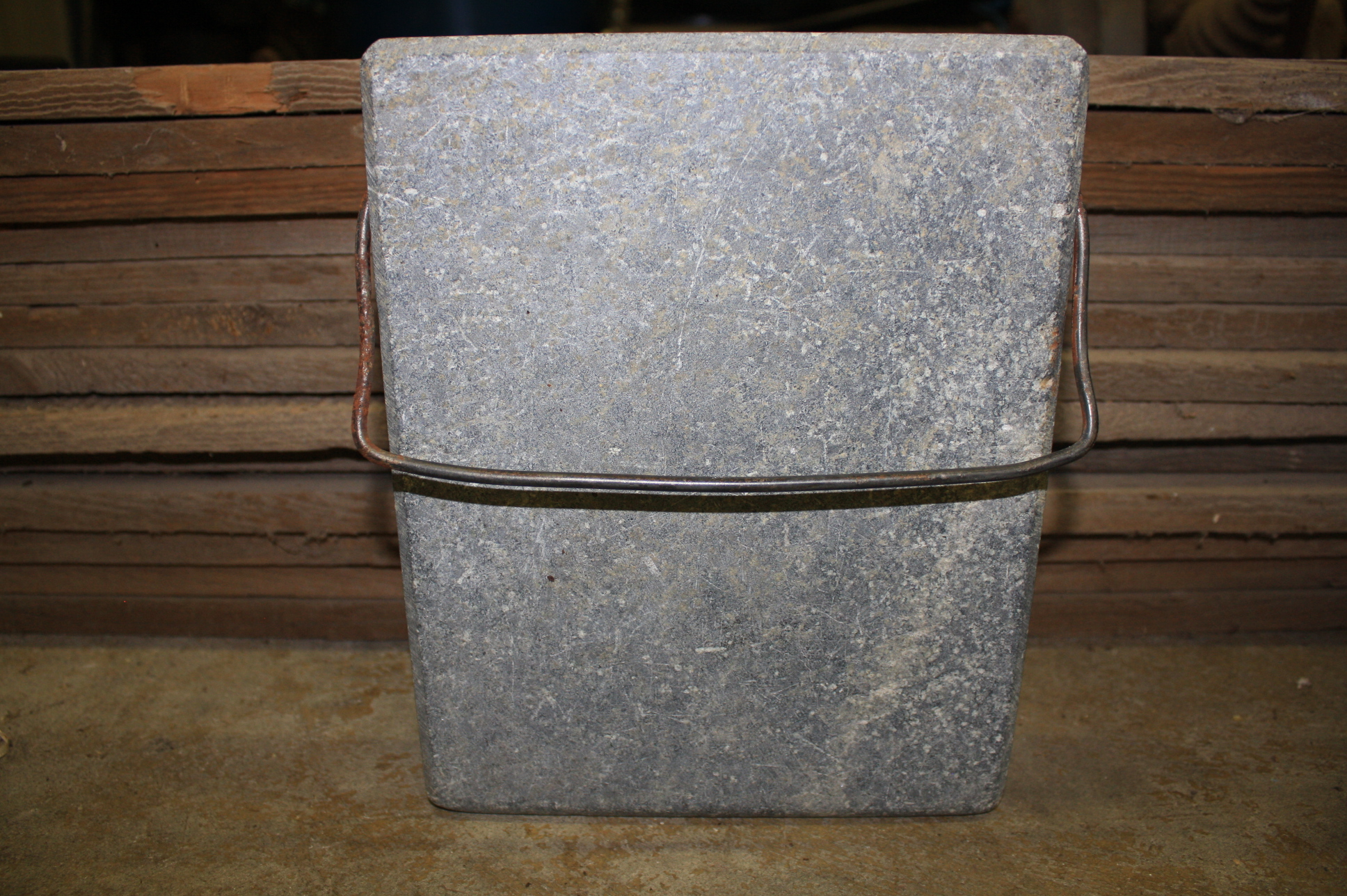
Maybe what I need is this soap stone. It’s a heavy stone that was heated in the oven, wrapped in a towel then placed next to your feet in bed. This was before central heat or boiler systems and floor heat like we have now. It was also used if you were headed out on a long road trip: heat this up and put it in the car on the floorboard to stay warm.

My husband might like it too so I don’t use his legs to warm up my feet!

Until we walk again …

Uncategorized

Zimfo Bytes

Melissa Sandfort

    Zimfo Bytes

  • The Meat Industry Hall of Fame will welcome 12 new inductees, including Clarence Becker, on Nov. 1 at the Union League Club in Chicago.
  • EPA has awarded the Missouri State Emergency Agency $30,000 to assist with outreach, education and implementation of the Clean Air Act’s Risk Management Program.
  • The National Association of Farm Broadcasting is inviting submissions for the Plambeck Award for Creative Excellence.
  • CMA announced the launch of a new identity and website that focus on the agency’s overarching mission: Building consumer trust in today’s food system.
    Zimfo Bytes

    NCBA Helping to Create Export Markets for Cattle Producers

    Joanna Schroeder

    It often appears that a major role of the National Cattlemen’s Beef Association (NCBA) is to play “defense” against all the bad policy, press and public opinion that exists. While this is a role of the organization, it is not its only function. I also learned during the Cattle Industry Summer Conference that they also focus on “offensive” tactics like spreading the good word about the nutritional benefits of beef.

    I asked Scott George, a producer from Cody, Montana who is also a Vice President of NCBA about some of the defensive issues NCBA is currently engaged in.

    “From the defensive portion we’re looking at some ag policy issues. Some of those are trade issues. We’ve been trying to get South Korean free trade agreement, the Panama free trade agreement and Colombian free trade agreement passed,” said George. “For nearly six years now they’ve been hanging on the fence and they have tremendous opportunity for our beef producers. If we can get those approved, we could start exporting produce to those countries that would help our producers.”

    George said that according to CattleFax, it is estimated if the U.S. could open those three export markets, it would add another $25 per head for producers. Right now CattleFax estimates that exports are adding $189 in value to every fed cattle coming out of the feed lots today and if the industry could add $25 a head, George said it would help those feed yard producers as well as cow calf producers to remain profitable.

    Other issues including defending the industry from the over reach of the Environmental Protection Agency (EPA). The EPA has decided to grant themselves the right to regulate all water in the United States, said George, which is a huge property rights issue as well as a state’s right issue because it threatens state water right laws as well as personal water right laws. “So we’ve been trying to get that reigned in,” said George. In addition they are dealing with GIPSA rules, dust regulations and fighting against policy that would require producers to monitor greenhouse gas emissions.

    On the positive side, NCBA has conducted a lot of research on consumer desires and is working to educate consumers about the health benefits of beef.

    You can learn a lot about current policy issues and some of the proactive NCBA campaigns in my interview with Scott George: NCBA Helping to Create Export Markets for Cattle Producers

    Photos from the conference are posted to this photo album: 2011 Cattle Industry Summer Conference Photo Album.

    Ag Groups, Audio, Beef, Cattle Industry Conference, NCBA

    Talking Bio-Forge ST With Stoller USA

    Chuck Zimmerman

    Jeff Morgan, Stoller USA is standing next to his good friend and ours, Kip Cullers. Actually it’s a Kip cutout. Jeff was on the floor of InfoExpo to talk about Bio-Forge ST a new seed treatment product that he says is “farmer driven” and has taken off this year.

    He says the first question he gets from ag journalists is “How’s it going for you?” The big thing is the crazy weather that has perhaps started to tone down.

    You can listen to my conversation with Jeff here: Jeff Morgan Interview

    2011 Ag Media Summit Photo Album

    AgWired coverage of the Ag Media Summit is sponsored by BASF and AgHaven
    Ag Media Summit, Audio

    New Products From Monty’s

    Chuck Zimmerman

    At the Ag Media Summit I visited with Monty’s Plant and Soil Products and Gary Coughlin. Thanks to whoever took the photo and posted it on the Monty’s Facebook page! So I asked him, “What’s new?”

    Gary says they’ve just released four new products, Corn Blend, Soybean Blend, Cotton Blend and Tobacco Blend. He says they all contain their humic materials, plant food, liquid sugar and appropriate amount of micro nutrients. They can all be applied in furrow, in the row on the seed to enhance the germination of the seed and soil around it.

    You can listen to my conversation with Gary here: Gary Coughlin Interview

    2011 Ag Media Summit Photo Album

    AgWired coverage of the Ag Media Summit is sponsored by BASF and AgHaven
    Ag Media Summit, Agribusiness, Audio

    Swine Health Updates at BIVI Seminar

    Cindy Zimmerman

    The Boehringer Ingelheim Vetmedica Swine Health Seminar in North Carolina offered updates in two important swine health areas – mycoplasma hyopneumoniae and PRRS.

    Dr. Erin Strait with Iowa State University talked about getting the most out of diagnostics for M. hyopneumoniae. “The biggest issue I usually see is over-interpretation of diagnostics and not understanding that those diagnostics are often skewed towards false negative,” she said. “Mycoplasma hyopneumonia in live pigs can be pretty hard to detect and the diagnostics tend to be a lagging indicator. Determining prevalence in the nursery stage can be very challenging.”

    Listen to my interview with Erin here: Dr. Erin Strait at BIVI Swine Health Seminar

    Dr. Rick Tubbs with Green River Swine Consultants is a practicing vet who serves Tosh Farms, a family-owned hog operation in Tennessee. He presented information on the impact of the modified live PRRS virus vaccine for control of PRRS in an endemically infected continuous flow finish site. He described how they ended up with a PCV2 problem which they dealt with by depopulating finisher sites, moving to a wean-to-finish operation, changing wean age and vaccinating all pigs for PCV2.
    “This particular virus disease is a constantly evolving challenge and we have to adapt to meet the challenge,” Rick says. “The PCV2 vaccine is a wonderful product. It’s been one of those home runs in the industry.”

    Listen to my interview with Rick here: Dr. Rick Tubbs at BIVI Swine Health Seminar

    BIVI Swine Health Seminar Photo Album

    Audio, Boehringer Ingelheim, Swine

    New USDA-NASS Farm Computer Usage/Ownership Report

    Chuck Zimmerman

    It’s time to analyze some new data about farm computer use and ownership. USDA’s National Agricultural Statistic Service has released a new report, “Farm Computer Usage and Ownership, August 2011.” Here’s the opening summary. It’s interesting to see that dialup access has dropped in half since the last report in 2009. Also note how high the percentages get as you increase the income of the farm.

    DSL was the most common method of accessing the Internet, with 38 percent of U.S. farms using it, up from 36 percent in 2009. Dialup access dropped from 23 percent in 2009 to 12 percent in 2011. Satellite and wireless were each reported as the primary Internet access methods on 15 and 20 percent of those U.S. farms with Internet access, respectively. Cable was reported as the primary access method on 11 percent of the farms, the same level as 2009.

    A total of 62 percent of U.S. farms now have Internet access, compared with 59 percent in 2009. Sixty-five percent of farms have access to a computer in 2011, up 1 percentage point from 2009. The proportion of U.S. farms owning or leasing a computer in 2011, at 63 percent, was up 2 percentage points from 2009. Farms using computers for their farm business remained virtually stable at 37 percent in 2011 compared to 36 percent in 2009. Read More

    Farming, Internet, USDA

    Hog Economics in the Biofuels Era

    Cindy Zimmerman

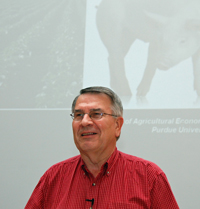
    “Hog Economics in the Biofuels Era” was the topic of a presentation by Purdue University economist Dr. Chris Hurt at the Boehringer Ingelheim Vetmedica Swine Health Seminar in North Carolina.

    Dr. Hurt says government policies like biofuels and even food stamps were built upon a “psychology of surplus” to increase prices. “We continue to see a psychology of surplus in our policy from Washington, when it turns out we are in a period of shortage of basic food ingredients,” he said.

    Hurt says that corn for ethanol has been a demand shock for the market since 2005, but another big demand shock has been soybeans to China. “If you put it on acres of land, back in 2005 we were using about 16 million acres for those two demands,” he said. “By the time we got to the 2010 crop, that was 46 million acres – almost a tripling of the acreage.”

    The hog industry has finally reduced herds enough to adjust to the higher feed prices, which has increased consumer prices for pork and that has led to stagnated growth for domestic consumption. However, Hurt says exports are increasing tremendously and now make up 20% of production, with big demand coming from Mexico and China in particular.

    Listen to my interview with Dr. Hurt here: Dr. Chris Hurt at BIVI Swine Health Seminar

    BIVI Swine Health Seminar Photo Album

    Audio, Boehringer Ingelheim, Corn, Ethanol, Swine