Farm Bill Hearing In Kansas Next Week

Chuck Zimmerman

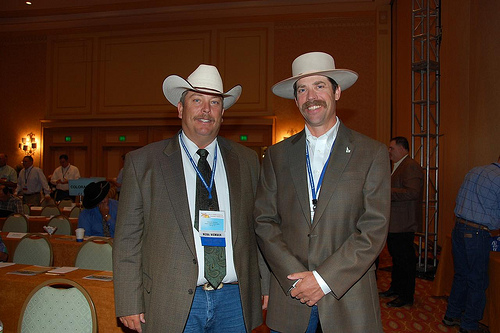
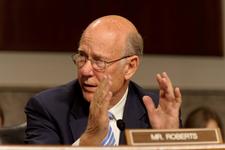
I’ll bet we see this look a lot next week when the Senate Committee on Agriculture, Nutrition & Forestry holds a hearing titled, “Looking Ahead: Kansas and the 2012 Farm Bill.” Ranking committee member Senator Pat Roberts will be hosting. He sort of set the tone for the hearing in a letter to President Obama in advance of next week’s event. Click on the link for the full letter to see the list of regulations that will be addressed.

Dear Mr. President:

I write to provide you with insight into actions your Administration is considering that could negatively impact rural America.

At a town hall meeting you hosted in Illinois earlier this week, a farmer expressed the concerns of many producers related to proposed regulations and directives impacting their farming operations. You asked the producer if there was a specific issue concerning him. He mentioned issues including dust pollution, noise pollution and water runoff. You responded, “Yes. Here’s what I’d suggest is the – if you hear something is happening, but it hasn’t happened, don’t always believe what you hear.” You then went on to imply that many of these concerns were created by lobbyists and associations in Washington.

I want to assure you that this farmer’s concerns are justified. To better inform you about the actions being taken by your Administration, included below is a list of proposed rules, directives and actions impacting rural America since your inauguration. While this list is not complete or comprehensive, it provides an overview of the increased regulations and resulting costs American agriculture and rural America face due to actual or proposed actions taken by federal agencies under your direction. The partial list of concerns is as follows:

GIPSA Rule Impacting Livestock Producers – USDA has proposed a new regulation for livestock marketing that will undo years of progress and innovation in the livestock industry. Many of the provisions of this proposed rule were rejected on a bipartisan basis during debate on the last Farm Bill, which was signed into law when you were serving in the United States Senate. (find the rest of the letter here)

The meeting will take place Thursday, August 25 2011, 9:00am – 12:00pm at the Hilton Wichita Airport Hotel, 2098 Airport Road, Wichita, KS 67209. You may participate in the hearing by submitting written testimony which will be included in the official record of the hearing. A copy of your testimony can be submitted at the hearing or can be sent to the committee no later than Sept. 1. Send your testimony to aghearing@ag.senate.gov or to U.S. Senate Committee on Agriculture Nutrition and Forestry, 328A Russell Senate Office Bldg, Washington, D.C. 20510.
Farm Bill

AGROTAIN’s Tim Healey Wears Many Hats on CTIC Tour

Cindy Zimmerman

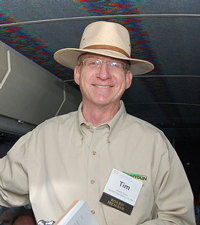
Conservation Technology Information Center (CTIC) past chairman Tim Healey of AGROTAIN wore many hats during last week’s 2011 Conservation In Action Tour, including bus monitor, sponsor, interviewee and interviewer.

“We’ve been doing this for five years now and each year the conservation tour gets better,” Tim told me at the end of the tour in northwest Ohio. “We hear from farmers who are really dedicated to instituting conservation practices to make sure that the majority of nutrients they apply in the field stay in the field.”

Listen to my interview with Tim here: Tim Healey of AGROTAIN on CTIC Tour

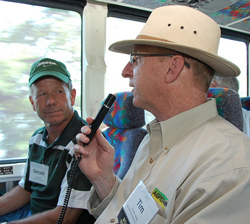
The tour had a record number of participants this year, over 200, and many of them were farmers who had the chance to learn about conservation practices from other farmers. During time on the bus, Tim did an interview with one of the farmer participants, Gerald Heck of Monroe, Michigan.

Tim asked Gerry why he decided to come on the tour. “Couple of reasons,” Gerry answered. “The opportunity to gain more knowledge about conservation tillage and the six CCUs also were a nice incentive since I’m a CCA.” Gerry says he does use continuous no-till in some fields. “Started no-tilling back the late 80s, with soybeans, then wheat and finally corn, as the equipment became available,” he said. “We moved to no-till to save on fuel and wear and tear on our iron.”

Listen to Tim’s interview with Gerry here: Tim and Gerald Heck

CTIC 2011 Conservation in Action Tour Photos

AgWired coverage of the CTIC Indian Creek Watershed Field Tour is sponsored by AGROTAIN
Audio, CTIC, Farming, Fertilizer

Zimfo Bytes

Melissa Sandfort

Zimfo Bytes

President’s Agricutlure Comments Draw Reaction

Cindy Zimmerman

As the president’s Magical Midwestern Tour rolled on, some of his comments about agriculture were getting negative reviews.

Suggestions by President Obama in Atkinson, Illinois Wednesday that farmers who are concerned about more government regulations should just “contact USDA” about it got particular attention.
The best of all came from Politico reporter MJ Lee, who decided to take the advice of the POTUS and try and contact USDA himself to get an answer to the question posed to Obama about the impact of pending regulations regarding noise, dust and water runoff on farming operations. After more than ten different phone conversations with various people on the state and national level, the reporter finally ended the quest with the response received from USDA’s main media relations department, via email:

“Secretary Vilsack continues to work closely with members of the Cabinet to help them engage with the agricultural community to ensure that we are separating fact from fiction on regulations because the administration is committed to providing greater certainty for farmers and ranchers. Because the question that was posed did not fall within USDA jurisdiction, it does not provide a fair representation of USDA’s robust efforts to get the right information to our producers throughout the country.”

The USDA Radio Newsline features a story from our friend Gary Crawford in an attempt to clarify the president’s remarks. “The president’s response was right on target,” said Vilsack. “We’ll continue at USDA to work with EPA so that they understand fully and completely the impact that proposed regulations may have on agriculture.” Listen to Gary’s report here: Gary Crawford, USDA Radio

The POTUS was challenged more directly about regulations at his last stop on the tour in Alpha, Illinois by the POTIFB – president of the Illinois Farm Bureau Philip Nelson. “And I guess my challenge, Mr. President, is that you work with the EPA Administrator to put some common sense back into some of these regulatory discussions so we don’t regulate farmers out of business,” Nelson said.

The president’s response in Alpha was similarly dismissive, although he left out the advice to call the USDA. “Some of these regulatory concerns that people have, frankly, are unfounded in the sense that if somebody even has an idea or a thought about some regulation, then right away the message is sent out, they’re coming and they’re going to make it impossible for you to farm and this and that and the other,” he said.

Obama continued the same message in an interview with National Association of Farm Broadcasting President (POTNAFB) Tom Steever of Brownfield Ag News. “A lot of times folks will get geared up before a regulation’s even been proposed because there’s a rumor that there might be some regulation out there,” said Obama, adding that he wants “specifics” and not just “general accusations that the EPA’s coming after agriculture.” Listen to Tom’s question about EPA regulations and Obama’s answer here: Tom Steever and President Obama

National Cattlemen’s Beef Association Immediate Past President (POTNCBA) Steve Foglesong said the president “is out of touch with rural America” and that he “has no clue what regulations his bureaucratic agencies are proposing or he simply doesn’t care.”

And, as the Politico reporter points out, still no real answer to the farmer’s question.

Audio, Environment, NCBA

Farm Progress Show App

Chuck Zimmerman

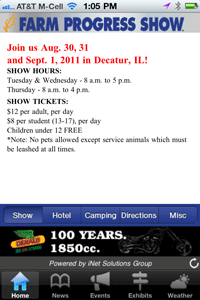
The 2011 Farm Progress Show is right around the corner and the ZimmComm Team will be on location. We’ve already got the Farm Progress Show app on our iPhones. If you don’t have it yet you should.

Track your way around the largest farm show in the United States. Find exhibitors, access category listings and manage your day on the 100-acre exhibit field. The show alternates between Decatur, IL (odd years) and Boone, IA, download and make plans to attend!

Get it in the iTunes Store or Android Market.

We’ve got a record number of sponsors of our coverage of this year’s show so Cindy and I will be busy. But we plan to bring you as many of the sights and sounds as we can including what’s new and on display.

Apps, Farm Progress Show, Farm Shows

Generations On The Farm

Chuck Zimmerman

ZimmCast 316The National Agri-Marketing Association held its annual Boot Camp this week in Kansas City. One of the sessions focused on “generations” on the farm. I visited with one of those generational presenting teams, Ken and Brad McCauley, father and son Kansas farmers. The idea of the session was to learn about the challenges and rewards faced by family farmers.

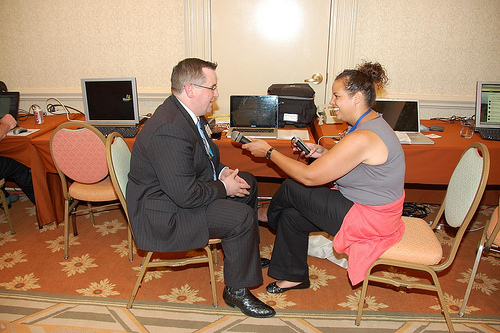
After I spoke with Ken and Brad, Sara Steever, Paulsen Marketing, took her turn (photo). I think you’ll enjoy hearing this father/son team talk about working together and transitioning from one generation to another. Brad has taken an increasingly active part in managing the farm while Ken is enjoying some “down time” and being a consultant to Brad. I hope Brad’s paying a good rate for the advice. We also covered topics like information channels they depend on and social media. Brad says it’s “internet and magazines” with the internet definitely in the lead. Ken is an iPhone/iPad guy who recently bought Brad an iPad!

Listen to my conversation with Ken and Brad in this week’s ZimmCast: Generations On The Farm

The ZimmCast ends this week with some music from Music Alley. It’s “Regenerations” by Ritchie Hernandez. I hope you enjoy it and thank you for listening.

NAMA Boot Camp 2011 Photos

Thanks to our ZimmCast sponsor, GROWMARK, locally owned, globally strong, for their support.

The ZimmCast is the official weekly podcast of AgWired. Subscribe so you can listen when and where you want. Just go to our Subscribe page.

Audio, Farming, NAMA, ZimmCast

How Public Land Policies Affect the Cattle Industry

Joanna Schroeder

Charles Lyons is a cattle producer from Mountain Home, Idaho. Unlike most ranchers I spoke with during the Cattle Industry Summer Conference, Lyons is a first generation rancher who decided to try cowboying about 12 years ago. Also, being from Idaho, a state where 65 percent of the land is federally owned, he has a few different policy issues that are affecting his business.

“The thing that probably affects us most is public land policies,” said Lyons. “We’re 65 percent federally owned. For the majority of us, our ranches are tied into public land.”

Tied into that is water quality and he said the Environmental Protection Agency’s attempt at over regulating water quality is a problem. Lyons also said the Endangered Species Act, which keeps ranchers from being able to graze cattle on public lands, has been a challenge for him and other ranchers in the state.

But these bumps in the road don’t get him down. When asked what he is most optimistic about, he is excited to be one of the ranchers that helps to feed a growing population. Not only is he going to help feed the world, but he’s doing it in a very sustainable manner.

Listen to my interview with Charles Lyons:How Public Land Policies Affect the Cattle Industry

Photos from the conference are posted to this photo album: 2011 Cattle Industry Summer Conference Photo Album.

Ag Groups, Audio, Beef, Cattle Industry Conference, NCBA

Just Add Lard

Melissa Sandfort

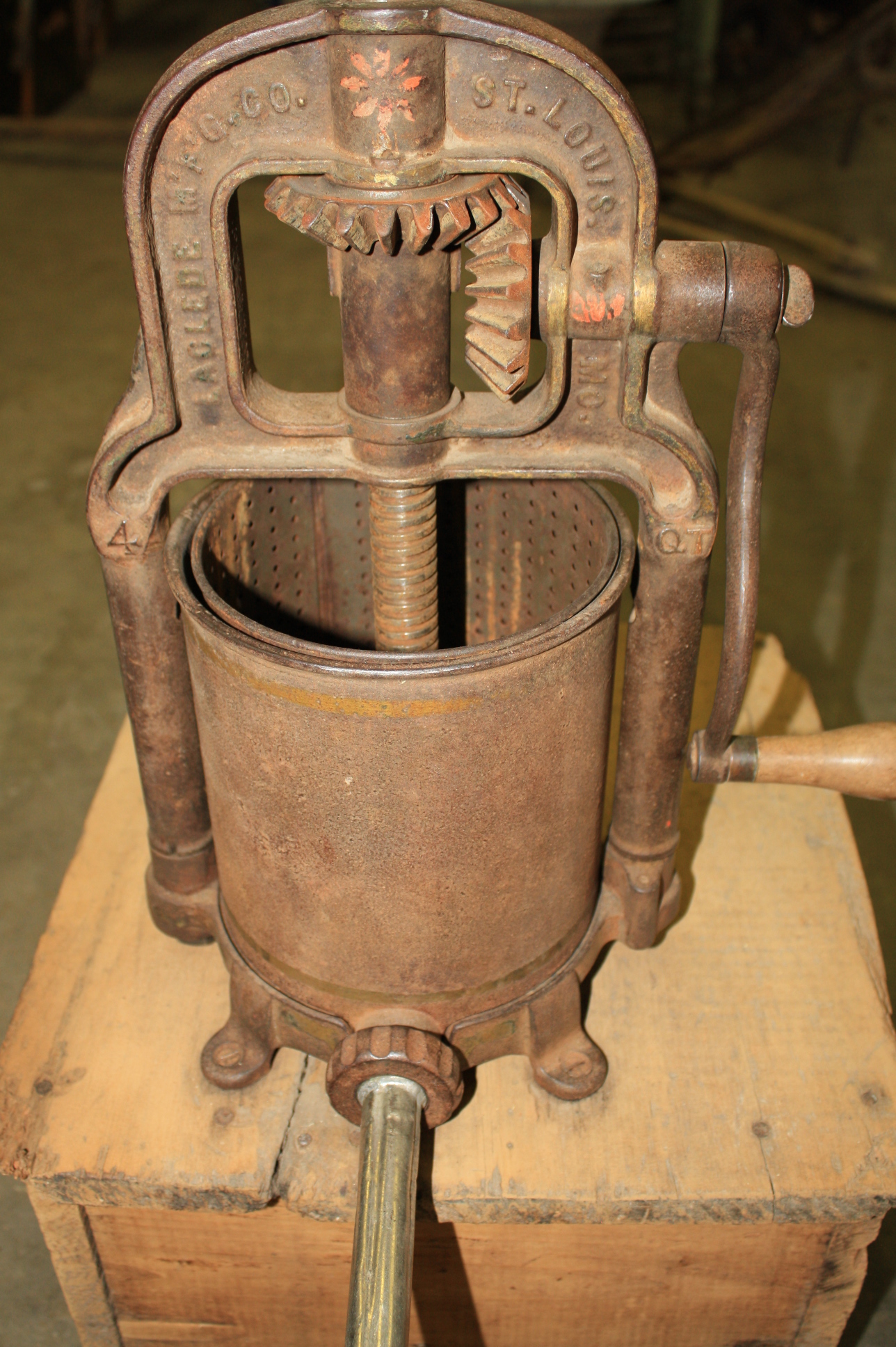
I’m not a big fan of pie (I know, it’s un-American) but as I talked to my grandfather about this old lard press, his eyes lit up and I think he even licked his lips just a bit when he said, “Lard makes the best pie crusts.” Good thing Grandma was a good pie-maker.

Patented in 1897, this lard press had dual purposes. First, after fat had been cut into pieces, you’d heat it (melt it) and put it into this press. As the handle was cranked, the lard ran out of the tube at the end and they’d put it in gallon or half gallon syrup cans to harden and use for cooking purposes later. The residue that was left after the lard was pressed out was called cracklings.

Its second purpose was to fill sausage casings. You’d slip the casing over the end of the tube, tie the loose end and stuff the casing with ground sausage.

The only kind of pie my husband will probably see is from Sara Lee and I doubt if she uses lard.

Until we walk again …

Uncategorized

Cattle Association Trade Policy Update

Joanna Schroeder

Kent Bacus, Manager of Legislative Affairs for the National Cattlemen’s Beef Association (NCBA), has a lot of important policies that he is working on in D.C. Since so many NCBA members who attended the Cattle Industry Summer Conference in Florida have various policy issues on the top of their minds, I thought it was high-time I learned more about them from the man who lives and breaths policy.

Today, one of Bacus’ key focal points is trade. He said that currently the two top buyers of American beef are in North America – Mexico and Canada. From there, he said that the far East is our next biggest customer and Korea, Japan and Taiwan our the industry’s fastest growing markets. Why? They like to buy a lot of animal parts that American’s don’t have a taste for including beef tongue and short ribs.

Bacus said our exports are doing incredibly well and currently about 10 percent of our beef is exported but the value add of these exports are tremendous. About $150 to $200 per head is credited to exports alone and Bacus said imagine how much that will increase when new markets are opened up.

Speaking of new markets, there are several trade agreements sitting on President Obama’s desk that need to be signed. Once this happens, it will allow exports in several countries including Columbia and Panama and should give the industry a good foothold in South America.

Learn more about the future of beef exports in my interview with Kent Bacus:Cattle Association Trade Policy Update

Photos from the conference are posted to this photo album: 2011 Cattle Industry Summer Conference Photo Album.

Ag Groups, Audio, Beef, Cattle Industry Conference, NCBA

Obama More than a Number at Wyffels

Cindy Zimmerman

He may have mispronounced their name at first, but it was still a great honor for Wyffels Hybrids to host President Obama during his Town Hall Meeting in Atkinson, Illinois on Wednesday.

“I want to thank the Waffles family for — (laughter) — Wyffels, rather, excuse me. I haven’t had lunch,” reads the official transcript of the president’s opening remarks at the Wyffels Hybrids Production Facility. Obama also noted that he “spent some time with some cows” at the Whiteside County Fair prior to arriving at Wyffels, so it was a very agriculture day for the POTUS. You can see some photos from the event on the Wyffels Facebook page.

The president got a couple of serious questions about agriculture during the meeting, starting with the very first one from a local corn and soybean grower, who was applauded by the crowd for telling Obama not to challenge the nation’s food producers with more rules and regulations. “We would prefer to start our day in a tractor cab or combine cab rather than filling out forms and permits to do what we’d like to do,” he told the president, noting particular concern about regulations regarding dust and water runoff.

“If you hear something is happening, but it hasn’t happened, don’t always believe what you hear,” Obama responded. “And I’m being perfectly honest, the lobbyists and the associations in Washington, they’ll get all ginned up and they’ll start sending out notices to everybody saying, look what’s coming down the pike. And a lot of times we are going to be applying common sense.” He suggested that if farmers have concerns about the administration “putting something in place that’s going to make it harder for you to farm, contact USDA. Talk to them directly. Find out what it is that you’re concerned about. My suspicion is a lot of times they’re going to be able to answer your questions and it will turn out that some of your fears are unfounded.”

That’s right, folks. If you’re worried about the impending rules and regs that the administration is considering that might impact your farming operation, you just give USDA a call and ask them about it and they will set you straight in no time.

Read the White House transcript of the meeting here and watch the video here.

Uncategorized