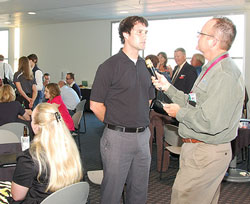
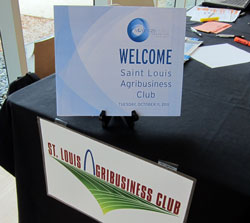
 The St. Louis Agribusiness Club held its lunch meeting today at Novus International headquarters. It has been a while since I’ve had a chance to attend one of these meetings but a “bye” week from the agriblogging highway made it work out.
Our speaker was Thad Simons, Novus International President/CEO. Thad talked about the challenges of feeding a growing world population before giving our group a current overview of Novus and its products.
After lunch the attendees were able to take a tour of the Novus headquarters and learn more about what the company is doing.
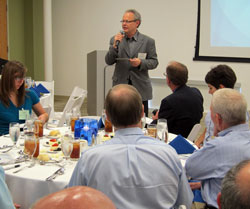 I got to add to my Thad Simons interview collection by visiting with him briefly after his remarks. Thad says he wanted our group to realize that we not only have a real need to feed a growing world population but that since the population is increasingly urbanized it is even more challenging. Besides having to produce more food we have to figure out how to get it to the people who need it.
When it comes to Novus, Thad says the company is still celebrating its 20th birthday with the next celebration being held in Spain. I attended the activities held earlier this year at Novus headquarters. Thad is now on his way to Des Moines, IA for the World Food Prize activities.
You can listen to my interview with Thad here: Thad Simons Interview
 The AFBF board of directors elected Potts last week to succeeds Dick Newpher who retired after 19 years of service with AFBF, the last seven as executive vice president. Newpher previously worked 19 years with the Pennsylvania Farm Bureau in various capacities.

 It was just a year ago that Cindy interviewed Mark Gale,


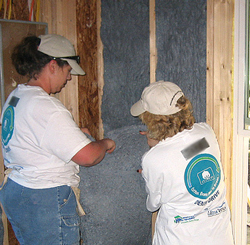 Don’t throw out those old blue jeans – they could be used to insulate someone’s house.
  The program has partnered with many organizations, including Habitat for Humanity affiliates, to install home insulation for victims of disasters such as Hurricane Katrina, and for those needing help to finish their homes. They also offer grants to improve community buildings and partner with college and university campuses to host denim collection drives.