DuPont Pioneer recently received all necessary regulatory approvals for import into major world markets of grain grown from Optimum AcreMax XTreme products.
Christie Communications announced that NaturaTech Sustainable Growing Solutions has retained the agency to develop and manage their strategic branding and communications campaign.
The U.S. Department of Agriculture is seeking nominations for the Peanut Standards Board.
National 4-H Council announced the launch of the fall 2012 4-H Paper Clover Campaign in partnership with Tractor Supply Company.
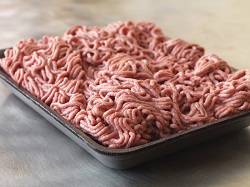
Meat packing giant BPI has filed a lawsuit against broadcaster ABC, three of its reporters, and others for “knowingly and intentionally publishing false and disparaging statements regarding BPI and its product, lean finely textured beef (LFTB).” This news release from BPI says the network and others launched a concerted disinformation campaign against the meat packer, costing the company money and 700 workers their jobs:
“For more than 30 years, our family has built and operated companies that are committed to providing consumers with wholesome, safe and nutritious lean beef. We’ve created thousands of good jobs for Americans and our lean finely textured beef has made the leaner ground beef that consumers desire more affordable,” said Eldon Roth, founder and CEO of BPI. “The blatantly false and disparaging statements made about our lean beef have done more than hurt my family and our companies; they have jeopardized the future of our employees and their families.”
In their complaint, filed Thursday in Circuit Court in Union County, South Dakota, BPI alleges that ABC and the individuals named in the suit knowingly made false, defamatory and disparaging statements regarding BPI and LFTB during a disinformation campaign this spring. These statements were made even after BPI and others sent ABC factual information about LFTB, including conclusions from USDA, FDA, food safety organizations and numerous beef industry experts that LFTB is a safe, nutritious lean beef. As a result of the disinformation campaign, BPI sales declined from approximately five million pounds of LFTB per week to less than two million pounds per week, three BPI facilities closed and more than 700 employees lost their jobs.
The suit is asking for more than $1 billion in compensatory and statutory damages, plus punitive damages. You can read BPI’s charges at www.beefisbeef.com.
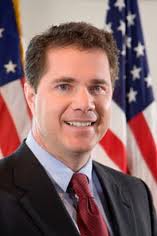
“After 65 days of dithering and distraction, Speaker Boehner has finally allowed the bill to be released from Committee,” Braley said in a statement urging colleagues to sign the petition. “Now that we, a group of Democrats and Republicans, have filed this discharge petition, and it’s available for signatures, we’ll see who really supports the Farm Bill Now.”
Secretary of Agriculture Tom Vilsack was pleased to hear the news. “That’s an encouraging sign because it gives representatives who are keenly aware of the need for a farm bill the opportunity to compel House leadership to bring a farm bill up for a vote,” Vilsack told USDA Radio Thursday.
Meanwhile Rep. Kristi Noem (R-SD) and others sent a letter to House Majority Leader Eric Cantor requesting a meeting to discuss the farm bill. Noem spoke passionately about the need for new farm legislation Wednesday, both at the Farm Bill Now rally and on the House floor. In an effort to put a face on those in agriculture, she read excerpts of a letter from a South Dakota farming couple. You can watch her speech below:
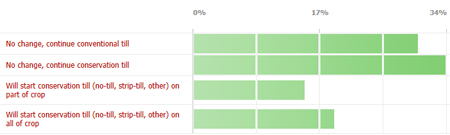
Our latest ZimmPoll asked the question, ” What tillage practice changes will you make due to drought?”
Our poll results: Thirty-one percent said No change, continue conventional till; 35% said No change, continue conservation till; 15% said Will start conservation till (no-till, strip-till, other) on part of crop; and 19% said Will start conservation till (no-till, strip-till, other) on all of crop.
Our new ZimmPoll is now live and asks the question, ” Do you plan to buy an iPhone 5?” It’s taller, thinner, lighter weight and has a bigger screen. Or do you just love your Android? Or not want a smartphone at all? What do you think?
ZimmPoll is sponsored by Rhea+Kaiser, a full-service advertising/public relations agency.
Thomas M. DeNisco, Vice-President, General Manager & CFO of Knouse Foods Cooperative, Inc. has been elected Chairman of the Apple Processors Association (APA). DeNisco will serve a two-year term as industry leader of the 25-year old association charged with representing and improving the nation’s apple processing industry.
DeNisco is a 20-year financial executive with the apple processing industry, and a native of Buffalo, New York. He was named Vice-President and Chief Financial Officer of Knouse Foods Cooperative, Inc. in November, 1992, elected the firm’s Treasurer in November, 2000, and became General Manager in 2005. He has been a Certified Public Accountant since 1974, and is a member of the American Institute of Certified Public Accountants, Financial Executives Institute, and the Institute of Cooperative Financial Officers.
DeNisco has served on the Apple Processors Association board since 2010, and has been instrumental in decision-making effecting national legislative and regulatory issues, as well as product production, marketing, sales, and foreign trade.
I proudly work for the beef industry and up until I was in high school, my dad had a small feedlot. He has since rented the pens out to a neighbor to use for feeding, but the bunks are still there. I remember my dad loading up steers in the late evening hours and making the trip to the Omaha stockyards in the old semi; me in tow in the sleeper bed reading a book or napping while he sold cattle. My in-laws also run a mid-sized cow/calf operation in Kansas, so I guess it’s “all in the family”.
“In 1955, Omaha’s livestock market became the largest in the world. Some market days, the livestock trucks would be lined up from 36th and L Streets all the way west to 72nd Street. Stockmen would have to serve as traffic cops to keep the trucks moving, and still it would take hours to unload.”
Unfortunately, the sale at our local auction market is on Wednesdays, right in the middle of my work day, so our son hasn’t been to a sale in quite some time.
My grandfather worked for a cattle feeder when he was younger and he, too, has some stories to tell.
At the recent Farm Progress Show, Bayer CropScience showcased its “One World to Grow On” theme… a holistic approach that helps producers figure out how to maximize harvests in the short and long terms. “Our purpose is to propel farming’s future,” said Inci Dannenberg, VP commercial operations for Bayer CropScience. “The whole idea was to take a look at what are the critical aspects that our agricultural industry is looking at and facing, and specifically growers, in order to be able to maximize their output to feed that planet out there and what can we offer to help that producer maximize.”
Dannenberg said Bayer CropScience “offers a balanced portfolio of innovation,” from seeds to crop protection products. Plus, the company’s recent acquisition of AgraQuest gives the company an inroad on biologicals. “[This acquisition provides] an opportunity for a programmed approach for sustainable products, long term,” as well as a variety of seed treatments.
“[The One World to Grow On theme] is an incredible opportunity for BayerCrop Science, and we’re very proud to work for such a noble cause as the American grower and feeding the planet,” Dannenberg concluded.
About 500 people turned out for the Farm Bill Now rally near the Capitol on Wednesday, which featured members of Congress as well as representatives from a number of the nearly 100 organizations who make up the coalition calling for a comprehensive, five year food, farm and jobs legislation before the current bill expires at the end of this month.
The event was co-hosted by American Farm Bureau Federation president Bob Stallman and National Farmers Union president Roger Johnson. “Perhaps never in the history of farm legislation have so many diverse farmer and rancher voices joined together for such a common call for action on a farm bill,” said Stallman. “We gather here under a banner adorned with three words. FARM. BILL. NOW. And we are here to raise our voices toward Capitol Hill.”
House Agriculture Committee Ranking Member Collin Peterson told the rally that there’s no good reason why the House has not yet brought the farm bill passed out of his committee to the floor for a vote. “People say we don’t have the votes, I don’t agree with that,” he said. “We just need the opportunity to have this bill come up and work on it.”
However, Peterson believes that if nothing changes between now and the end of the month, the bill will be put off indefinitely. “This rally is a good starting point, but what we need is 100-200 calls from people in their districts to these members. If you don’t do that, we’re not going to get a farm bill.”
Peterson praised Senate Ag Committee Chair Debbie Stabenow for getting a bill passed by the Senate, and she gave credit to her entire committee for working together to get it done. “We could pay for the national deficit if we had a dollar for every person that said we couldn’t get this done,” Stabenow said. “There’s no reason this farm bill can’t get passed by the House. You just have to want to get it done.”
Stabenow stressed only 18 days are left before the current farm bill expires. On the first day Congress was back in Washington on Monday, she went to the floor of the Senate urging the House leadership to pass a bill in that time. Watch that speech from YouTube.
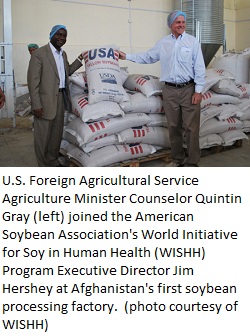
“It’s great to see the Afghan and U.S. partners get this soybean processing facility up and operating,” [FAS Agriculture Minister Counselor Quintin] Gray says. “It will help Afghanistan agriculture continue to develop.”
Through USDA’s Food for Progress Program, WISHH and its partners have established Afghanistan’s first commercial soybean value chain as part of the Soybeans in Agricultural Renewal of Afghanistan Initiative (SARAI). As a result, Iowa-made processing equipment from Insta-Pro now has soybeans from Afghanistan as well as Ohio, Michigan and other states flowing through it. An Afghan company provided the land and the building as well as employs the staff.Read More
It’s here (almost). The newest gadget to make agricultural communications fun. It’s the iPhone 5, announced by Apple today. If you missed the announcement you can read back through live coverage on Engadget. You can begin pre-ordering online this Friday or buy in Apple stores on September 21.
Some of the things that stood out for me include:
It will be thinner, taller, same width.
Will have Ultrafast Wireless and LTE supported by AT&T, Verizon and Sprint.
Will have better battery life than 4S model.
Camera will be 8 megapixel with f/2.4 aperture. It already was best phone camera!
Three microphones. Sound great for farm podcasting!
So, if you’ve been waiting then the wait is over. Apple also announced new iPods, iTunes updating and EarPods which will replace the age old white ear buds.


 ZimmPoll is sponsored by