AgFanatics Talk Crop Insurance

Cindy Zimmerman

agfanatics-2With co-host Nick Klump under the weather last week, Cory Winstead picked GROWMARK plant food risk management analyst Graham Utter to guest host AgFanatics episode #9 on Crop Insurance.

The guys talk Crop Insurance and bring in the expert Bob Dewey of Country Financial to discuss and answer some questions. They discuss things from Revenue Protection to base price and Yield Protection. Also will prices increase or decrease this year??

AgFanatics can be found on Itunes or right from the front page at www.agrivisor.com.

GROWMARK, Insurance

Ready For 2013 AG CONNECT Expo

Chuck Zimmerman

ZimmCast 381It is almost time for the 2013 AG CONNECT Expo & Summit. The show runs January 29 to 31 in Kansas City, MO. Yours truly will be there taking photos and conducting interviews to share. ZimmComm New Media is proud to be the official new media sponsor of the show once again.

AG CONNECT Expo 2013This special edition of the ZimmCast previews the Expo and features Rusty Fowler, official Expo spokesperson and President/CEO, Krone NA. Rusty says to expect a show “that’s different from other trade shows that you normally go to.” He says it is different because they started out to make it different. The idea for the show goes back a number of years even before the first Expo when a group of ag executives got together to create a show “made by the industry for the industry.” It is different because the attending customer will be able to talk with top people at the companies who are exhibiting. This is a commitment each exhibitor has made.

You’ll be able to find lots of coverage of the show right here on AgWired as well as Precision Pays.com. And you can also follow along on Twitter by following AG CONNECT Expo at @AgConnect or on Facebook.

Learn more about what you can expect when you attend the 2013 AG CONNECT Expo in this week’s program.

Listen to this week’s ZimmCast here: AG CONNECT Expo Preview

Thanks to our ZimmCast sponsors, GROWMARK, locally owned, globally strong and Monsanto, Roundup Ready Plus, for their support.

The ZimmCast is the official weekly podcast of AgWired. Subscribe so you can listen when and where you want. Just go to our Subscribe page.

Agribusiness, Audio, Equipment, ZimmCast

BASF Listens to Growers

Cindy Zimmerman

At last week’s BASF Crop Protection innovation symposium, I had the chance to meet some of the growers who help BASF learn what they need to get the most out of every acre.

basf-grower-3Scott Parr, a potato and vegetable farmer from Wisconsin, says he was invited to served on the BASF Grower Advisory Panel in 2011. “When you first went, you thought you’re going to get sold something and they really turned that around,” Scott said. While he was pleased to be able to provide input toward BASF product development, Scott says it was a great learning experience for him as well.

Listen to my interview with Scott here: Scott Parr, Wisconsin farmer

basf-grower-1Iowa farmer Jay Drees says he’s one of the smallest farmers on the panel. “But we all seem to have the same concerns,” he said, adding that he is encouraged by the new products coming such as more drought resistant corn and treatments to help the ground hold more water, as well as new sites of action for resistant weeds.

Listen to my interview with Jay here: Jay Drees, Iowa farmer

basf-grower-2Mike Cox is a corn and soybean farmer from Indiana really enjoyed the grower symposium in Ft. Lauderdale and interacting with fellow producers from around the country and learning more about tools to help him produce more every year. “We like to do a good job and it takes continuous education and effort to make that happen,” said Mike.

Listen to my interview with Mike here: Mike Cox, Indiana farmer

These growers, like all of the 275 who attended the BASF event, are always looking to do better every year. Watch for profiles of them on PrecisionPays.com.

Audio, BASF, Crop Protection, Farming

Zimfo Bytes

Talia Goes

AFBF, ASA, USDA, Wheat, Zimfo Bytes

Get More of Ag Leader’s Insights Magazine!

Melissa Sandfort

Insights Weekly

Want to know more about the SMS software learning curve, or how Ag Leader products help farmers produce a variety of vegetables, in addition to corn and soybeans, or how tile drainage brings the water table down and yields up? You can find it all, and more, in Ag Leader’s Insights Magazine.

“We want our customers to know that the people who are working on developing these new products are the same types of people they are,” says Lori Costello, Ag Leader Marketing Communications Manager. “A lot of Ag Leader employees either come from a farming background or are currently actively involved in farming. They are key to helping growers learn about their products and be able to keep them maintained and doing what they want them to do out in the field.”

Listen to Costello explain

AgLeader-Insights-Winter.pdfPrecision ag isn’t a “one size fits all” product, and Costello says Insights hopes to open up growers’ minds to the possibilities of different farming practices and uses of precision ag technology outside of their own geographic region.

Listen to Costello explain

So what kind of content will Insights deliver in 2013? Listen to more from Costello.

Listen to Costello explain

And, the magazine had such a great response after its first three issues in 2012 that they’ve added a fourth, making it a FREE quarterly magazine. Growers can either view Insights online (http://www.agleader.com/subscription/) or sign up to have a free copy mailed to their home or business.

Become a fan of Ag Leader on Facebook today, and get the latest precision ag videos on the YouTube channel. For more information about Ag Leader products and services, or to visit the blog site, go to www.agleader.com.

Ag Leader, Agribusiness, Audio

Protecting Your Crop Yield Potential

Chuck Zimmerman

Monsanto Roundup Ready PlusMonsanto is suggesting that farmers get proactive with early-season weed control as we near the 2013 season.

As farmers head into 2013, it’s never too soon to plan for spring planting. That’s why Monsanto is encouraging planned, proactive steps to prevent and manage resistant and tough-to-control weeds. That means putting down residual herbicides, according to Chris Reat, Monsanto marketing manager.

“A farmer has to have residual herbicides and overlapping modes of action with residuals for weed control in today’s cropping systems,” says Reat. “Weed competition at planting can make it more difficult to get a crop established. Additionally, weeds damaged by the planter are often harder to kill with later herbicide applications. With proper planning and a proactive management approach using residual herbicides, farmers can achieve effective, economical weed control throughout the season.”

Using residual herbicides in combination with Roundup® agricultural herbicides provides multiple modes of action to help reduce the risk of resistant weeds developing. Research shows that soybean farmers can realize a two- to three-bushel-per-acre greater yield advantage when weed management programs include the use of residual herbicides.

“Ultimately, when you apply residual herbicides in front of soybeans, you take care of a lot of problems before they come out of the ground. Being proactive in this way is the most impactful value that Roundup Ready PLUS™ Weed Management Solutions provides,” explains Reat.

These and other weed management recommendations are part of Monsanto’s Roundup Ready PLUS Weed Management Solutions. Roundup Ready PLUS offers integrated and diverse management practices for weeds developed in conjunction with leading academics, agronomists and other industry partners for control of all your weeds, including tough-to-manage and glyphosate-resistant weeds. Roundup Ready PLUS also offers financial incentives to help farmers offset the cost of qualifying residual herbicides and other weed management resources.

For more information, please visit www.RoundupReadyPLUS.com.

Agribusiness, Farming, weed management

Managing Your Equipment Maintenance

Chuck Zimmerman

ZimmCast 379There are lots of companies that have developed products or services without realizing how valuable they may be to the agricultural industry. In this week’s program we’ll meet one of them, eMaint Enterprises. I had an enjoyable conversation yesterday with Rona Palmer.

emaint logoWhen it comes to farming, eMaint offers farmers a system to keep track of equipment maintenance and it can be scaled from a one user, one tractor operation to a very large fleet operation. The first thing I learned is what CMMS stands for (see below). Rona says the system is very user friendly and that you don’t need a degree in computer management to use their service. Service plans start at $40/month. The service is managed by web browser access which you can do from any internet connected computer or tablet or smartphone. Find out some of the ways eMaint is helping a farmer’s bottom line in this week’s program.

eMaint Enterprises has been providing innovative CMMS (Computerized Maintenance Management Software) solutions since 1986. eMaint was one of the first CMMS providers to develop a completely web-based “Software as a Service” (SaaS) model for more rapid implementation at a lower total cost of ownership.

Our growing client-base consists of over 16,000 users worldwide across 1,000 sites ranging from small & medium sized organizations to Fortune 500 corporations including manufacturers, service providers, fleet operators, energy and utility companies, health care facilities, universities, municipalities, and facility and property managers, among others.

Listen to this week’s ZimmCast here: Maintain Your Equipment with eMaint

Thanks to our ZimmCast sponsors, GROWMARK, locally owned, globally strong and Monsanto, Roundup Ready Plus, for their support.

The ZimmCast is the official weekly podcast of AgWired. Subscribe so you can listen when and where you want. Just go to our Subscribe page.

Audio, Equipment, Precision Agriculture, Technology, ZimmCast

From Celery to Corn

Melissa Sandfort

celeryI live in the Midwest, which means I’m accustomed to seeing corn and soybean fields that stretch for miles. About 10 years ago I went on a tour to Canada and when we were in the test plots, I was “ooing and awing” over canola while other attendees were thrilled to see field corn. Once you get outside your own state’s borders, it’s amazing what the world of agriculture has to offer.

Over the years, I’ve learned about grape harvesters, took a cotton tour in Mississippi (even flew in a crop duster!), seen a pecan grove, visited a strawberry farm (they should’ve weighed us before and after because I swear I ate 10 pounds of strawberries!) and even rode on a tomato harvester. Needless to say, when I got off that thing, I wished I hadn’t worn a light colored shirt.

But the way we grow and harvest our food in this country is a thing of beauty. The technology behind it all … like the optic “eye” that detects a tomato’s color and kicks the green ones back off into the field as quality control; or the GPS equipment that allows growers to vary the rate at which they apply pesticides and nitrogen to a corn field. It’s amazing.

My uncle just had the opportunity to travel to Florida with BASF as a Nebraska representative where he went to A. Duda Farms. The tour group saw celery, cabbage, sweet corn and sugarcane being harvested. For the celery, they cut it right in the field, trim it to the purchaser’s needs, rinse it, put it in the bag, box it, and it is on its way to stores across the country. As they were harvesting, another crew was replanting the crop to replace what was harvested.

I’ve never seen a celery or sugarcane field but would like to someday.

So do you know where your food comes from? Do you appreciate the farmers who have grown that food for you? Did you also know we have one of the most affordable food sources in the world, right here in our own back yards? Be nice to those farmers – they grow what keeps us going.

Until we walk again …

* Photo courtesy of Dan Shaw.

Uncategorized

AgFanatics Market Talk

Cindy Zimmerman

agfanatics-2Cory Winstead and Nick Klump with AgriVisor have a new AgFanatics podcast discussing export and domestic demand along with other market related topics. The guys also touch on evaluating your marketing plan setting targets and reevaluate the plan. Also we learn about not only one but two things Nick does in his spare time.

Listen here – AgFanatics #8 - Market Talk

AgFanatics can be found on Itunes or right from the front page at www.agrivisor.com.

Audio, GROWMARK

How Many Machines are on Your Farm?

Talia Goes

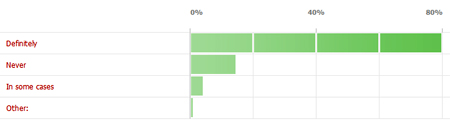
Our latest ZimmPoll asked the question, “Should we sit down with HSUS in ‘common cause’?”

The results of this poll are skewed due to the hacking by HSUS. In the end, the poll read that eighty one percent voted Definitely, fifteen percent said Never, and four percent thought we Should in some cases. The attempt to affect our poll reflects the HSUS/PETA goal of an end to animal agriculture. They are working to get the livestock industry to make concessions that drastically change production methods. When that happens it becomes a very slippery slope very quickly. It will only be a short matter of time before allowing chickens more room in cages becomes allowing all animals the right to life. Treating animals humanely is not the same as treating them like they are humans – but many activists see no difference.

The hacking we are referring to was having almost 400 poll responses to the Definitely answer come in during a few hours one night last week and none since. If you take them out, the answer Never would have been the highest result by far.

1.23.12graph

Our new ZimmPoll is now live and asks the question, “How many machines (tractors, etc.) does your farm own?” Some of the urban folk believe that if you own more than 1-2 pieces of machinery, that would classify you as a large farmer. We disagree with that. So let’s see how many pieces of equipment most farmers/ranchers own. Let us know!

ZimmPoll is sponsored by New Holland Agriculture.

Animal Activists, Animal Agriculture, ZimmPoll