BASF Shows How Priaxor Performs

Cindy Zimmerman

Spring is officially here, at least by the calendar, and Midwest farmers are preparing for a new year with the 2012 drought in the rearview mirror and a new BASF Crop Protection fungicide that combines two powerful active ingredients into the most advanced chemistry ever developed for a range of products, including soybeans.

basf-fellowsDuring the 2013 Commodity Classic, BASF was able to show farmers how Priaxor™ fungicide worked last year to control disease, improve Plant Health and drive yield, despite the record drought conditions.

Technical Market Manager for Plant Health Dr. Gary Fellows explained that they performed nearly 60 on-farm trials last year comparing Priaxor to BASF’s premier fungicide Headline. “Over those locations, Priaxor outyielded Headline by two bushels to the acre,” he said. “Not only that, it was much more consistent in its level of response.”

Priaxor is powered by Xemium® fungicide, a new active ingredient that continuously distributes its chemistry throughout the leaf to deliver more consistent disease protection, combined with F500®, the same active ingredient in Headline®. “The addition of Xemium to Headline does increase the disease control and the spectrum is better with Priaxor,” said Fellows. “On the growth efficiency side, we can show that Priaxor actually has a better plant health effect than Headline by itself.” Perhaps most importantly, Priaxor has shown to outperform Headline in stress situations, like drought.

Listen to my interview with Gary here: Interview with Dr. Gary Fellows

You can find out even more about Priaxor in lots of previous posts, including several from Classic – from Jennifer Holland – from Caren Schmidt – from Brianne Reeves – and from some growers.

Check out more photos from BASF at Commodity Classic here

Audio, BASF, Commodity Classic, Farming, Soybean

Ag Relations Council New President

Chuck Zimmerman

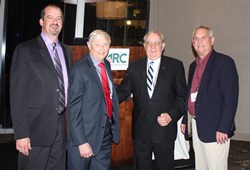
Ag Relations CouncilThe Agricultural Relations Council annual meeting is taking place in Oklahoma City. Wish I could be there but . . .

Thanks to Janice Person, Monsanto, for sharing a picture of the passing of the gavel. Pictured are now past ARC President Mace Thornton, AFBF, (left) and Mike Opperman, Charleston Orwig, now new President.

I will plan to share more information from this year’s conference when I get it.

Ag Groups, ARC

National Ag Day Contest Winners

Chuck Zimmerman

Whitney Bowman at Ag DayAt the National Ag Day banquet in Washington, DC, the winner of the written essay contest read her essay to us. She’s Whitney Bowman, Mount Jackson, VA. Here’s where you can find her essay titled “American Agriculture: Nourishing Opportunities.”

Other winners include Lebo Molefe, Naperville, IL – Video Essay Contest – see below and April Fox, Wayne State University – Poster Contest.

You can listen to Whitney’s essay here: Whitney Bowman Ag Day Essay

2013 National Ag Day Activities Photo Album

Coverage of the National AgDay Activities is sponsored by the BCS think tank and American Seed Trade Association
Ag Day, Ag Groups, Audio, Video

BCS Communications Celebrating Ten Years

Chuck Zimmerman

Leigh Ann Cleaver and Kelly SchwalbeHere are a couple of farm kids doing good in the big city. Leigh Ann Cleaver and Kelly Schwalbe of BCS Communications (our sponsor) attended National Ag Day Activities and we visited about what’s new with the agency.

BCS Communications supports National Ag Day because it’s “second nature to us” says Kelly. Additionally, most of their clients are involved in agriculture and that includes companies like John Deere and Boehringer Ingelheim Vetmedica. The big news though comes from Leigh Ann who says they’re celebrating their 10 year anniversary! Happy anniversary.

You can listen to my interview with Leigh Ann and Kelly here: What's New With BCS Communications

2013 National Ag Day Activities Photo Album

Coverage of the National AgDay Activities is sponsored by the BCS think tank and American Seed Trade Association
Ag Day, Ag Groups, Agencies

Soybean Registration for BASF Zidua Herbicide

Cindy Zimmerman

There’s a new class of chemistry available now for soybean growers to help fight resistant weeds, including Palmer amaranth and waterhemp.

basf-arnelBASF’s Crop Protection division is pleased to announce federal registration of Zidua® herbicide in soybeans.

According to 10 years of research and field trials, the residual weed control provided by Zidua herbicide lasts up to two weeks longer than other herbicides currently on the market, which helps protect growers’ yield potential.1 Research also shows Zidua herbicide provides up to 10 percent better performance than other residual herbicides in controlling Palmer amaranth and waterhemp.2

“Zidua herbicide provides growers with a new class of chemistry and is an excellent product on its own, but can also be used effectively with Kixor® herbicide technology,” said Greg Armel, Ph.D., Technical Market Manager, BASF. “Soybean growers can now combine the fast, effective burndown and enhanced residual control benefits of Kixor with the residual control of Zidua herbicide for long-lasting weed control.”

Zidua herbicide can be tank-mixed with Kixor herbicide technology products to form a preplant and preemerge combination that combats tough, resistant weeds with up to three different sites of action. Zidua herbicide can also be applied with a range of use rates, allowing soybean growers to select the best rate for their specific needs, based on soil textures in their fields.

Greg did a presentation on Zidua during one of the WIN Sessions at the 2013 Commodity Classic, when they had just heard the soybean residue tolerances had been established. “We’re very excited that Zidua is finally coming along and with its extended residual weed control on Palmer amaranth and waterhemp, it couldn’t have come at a better time,” Greg said. BASF received registration for Zidua in corn last June.

Listen to my interview with Greg here where he talks about Zidua and the importance of different sites of action to control resistant weeds: Interview with Greg Armel

Audio, BASF, Commodity Classic, Crop Protection, Farming, Soybean

Senate Spending Bill Saves Meat Inspectors

Cindy Zimmerman

The U.S. Senate yesterday passed a continuing budget resolution that would keep the federal government operating through the end of the fiscal year on September 30th and keep meat inspectors off the chopping block.

blunt-pryorThe Senate unanimously passed an amendment introduced by Senators Roy Blunt (R-MO) and Mark Pryor (D-AR) to the Continuing Resolution (CR) solves a funding gap for the Food Safety and Inspection Service (FSIS) that threatened to furlough meat inspectors under the sequester.

The Pryor/Blunt amendment will protect Americans’ jobs at meat, poultry, and egg production facilities nationwide. It’s estimated that the U.S. Department of Agriculture’s (USDA) projected food inspector furloughs would have closed nearly 6,300 food inspection facilities across America. As a result, over 500,000 industry workers would have lost nearly $400 million in wages.

The amendment transfers $55 million in existing agriculture funds to FSIS in order to ensure food inspectors are not furloughed. These facilities are required by law to have federal inspectors on the production line in order to operate. It adds no additional cost to the bill. Instead, it moves one-time funding for school equipment grants and deferred maintenance on buildings and facilities at USDA.

The Senate spending bill was approved 73-26 and now goes to the House.

USDA

Zimfo Bytes

Talia Goes

    Zimfo Bytes

  • Jim Spradlin, GROWMARK Vice President, Agronomy, announced organizational changes in the Agronomy Division, effective March 16, 2013.
  • United Fresh congratulates Deputy Secretary Kathleen Merrigan for her many years of service to USDA and American agriculture.
  • DuPont Pioneer announced plans to increase capacity at its Hermiston, Ore., IMPACT Research location.
  • Zoetis, formerly Pfizer Animal Health, announces the return of the Cattle Call grant program and is accepting research proposals for improving cattle reproduction or developing models for managing cattle pain.
Zimfo Bytes

Supporting the Renewable Fuel Standard

Talia Goes

Our latest ZimmPoll asked the question, “Have you recently purchased a gun?”

Our poll results: Thirty-three percent said Yes, Already Own Guns while twenty-nine percent said No, Don’t Own Any. Nineteen percent said No, Have Enough, Eleven percent said Planning To, five percent said Yes, First Gun Purchase, and three percent said Other. Looks like most of you have one or more guns. Let’s hope that ammo for those guns becomes available again soon! Right now it’s very difficult to find any and we all know that to be proficient in using a gun, it takes practice/practice/practice.

Untitled

Our new ZimmPoll is now live and asks the question, “Do you support continuing the Renewable Fuel Standard (RFS)?” The Renewable Fuels Standard, or RFS, program was first created under the Energy Policy Act of 2005, and established the first renewable fuel volume mandate in the United States. It was expanded in 2007 and increased the volume of renewable fuel required to be blended into transportation fuel from 9 billion gallons in 2008 to 36 billion gallons by 2022. The program includes ethanol, biodiesel and advanced biofuels with the goal of helping America become less dependent on foreign petroleum.

The RFS continues to be challenged by the oil industry, some livestock and poultry interests and food retailers for various reasons but the biofuels industry contends the program is working as intended and has resulted in lower imports of foreign oil. What do you think?

ZimmPoll is sponsored by New Holland Agriculture.

ZimmPoll

The Science Behind BASF’s Herbicides

Jamie Johansen

basf-classic13-lukeThe research and development teams are the key to making BASF a household name among farmers. These biologists and chemists make it possible for BASF to stay innovative, provide solutions and create relationships with growers.

During Commodity Classic I was introduced to Luke Bozeman, Technical Marketing Manager in herbicides at BASF. Herbicide resistance is a on-going problem no matter what crop you grow and Luke shared what we will being seeing soon from BASF to solve this prevalent dilemma.

“Herbicide resistance has been a growing problem over the last several years and at BASF we’re excited about a new product that we haven’t developed yet or available yet, but Engenia has been designed to control some key resistant weeds including palmer pigweed, water hemp and ragweed in soybeans. We are excited about those technologies and how Engenia is going to help the farmers control those weeds in crops.”

“We are hopeful in 2014 all the approvals will be in place and we’ll be able to commercialize. There are still a lot of activities to go between now and then, but things are on track. It’s a very good technology and we’re excited it will be available in 2014.”

Luke and I also discussed what BASF is doing to face challenges and changes growers across the industry are seeing each growing season.

“We have an excellent R & D group that begins with our chemist in Germany and United States. Then our biology team in the United States range from field based biologists to biologists that are in our greenhouses and labs in North Carolina. They look out 8-10 years to try and define and determine what those key needs are going to be for growers and begin developing their programs to address those needs.”

Listen to my interview with Luke from here: Interview with Luke Bozeman

2013 Commodity Classic Photo Album

Audio, BASF, Commodity Classic, Research

Secretary of Ag Tom Vilsack at Ag Day

Chuck Zimmerman

Secretary of Agriculture Tom VilsackOur U.S. Secretary of Agriculture Tom Vilsack spoke at the annual National Ag Day banquet in the USDA Whitten Bldg. First up in his remarks was a sales pitch for moderator, The Big O, Orion Samuelson’s book, “You Can’t Dream Big Enough.” I’ll bet that didn’t hurt sales! If you like Orion’s Ole and Lena jokes then you’ll really enjoy The Big O’s book which contains many of them.

Secretary Vilsack wished everyone a Happy Ag Day and then talked about American farm productivity pointing to a chart showing how high the ag sector is compared to other industries. He also had a chart to show us how consumers benefit from farm productivity that results in low cost food. He also talked about the need for a new farm bill and the budget impact of sequestration, including furloughing food inspectors.

You can listen to or download Sec. Vilsack’s remarks here: Ag Secretary Vilsack Remarks

2013 National Ag Day Activities Photo Album

Coverage of the National AgDay Activities is sponsored by the BCS think tank and American Seed Trade Association
Ag Day, Audio, USDA